
This Rocket Is About To Hit The Moon
 ·
· 0m53s
This SpaceX rocket is about to hit the moon at seven times the speed of sound. It launched over a year ago and was left drifting in space until gravity pulled it in towards the Moon. We’re keeping a close eye on what happens to learn how future impacts could affect astronauts that we send to the moon! To see what we learn, subscribe! #moon #spaceX #falcon9 #rocket #moon #explosion
How Ocarina Of Time Builds An Entire WORLD With 5 Notes
 ·
· 18m58s
Koji Kondo's BRILLIANT use of 5 notes wound up making Ocarina of Time's themes unforgettable. And now you can make unforgettable music with the Better Piano System! https://shop.betterpiano.com/ 0:00 Intro 0:16 Saria's Song 9:03 Zelda's Lullaby 13:22 Song of Storms 14:45 Bolero of Fire 18:04 Outro Follow me! Instagram: https://bit.ly/2WoR7W1 Facebook: https://bit.ly/2K4rHq8 TikTok: https://bit.ly/2X7pnlN

The Saint Anne Portal | The Age of Cathedrals with R. Howard Bloch
 ·
· 6m6s
Long before the birth of Christ there was a childless couple, Anne and Joachim, whose story is carved across the oldest portal of Notre-Dame's west facade. Professor R. Howard Bloch reads the Saint Anne portal alongside the Golden Legend, from Saint Marcel on the trumeau to Joachim's rejection at the temple, the angel's promise at the Golden Gate, Mary's betrothal to the aged Joseph and his miraculously flowering rod, and finally the Nativity. Staged like a play in sculpture, the portal traces Christ's royal genealogy back through Solomon and David and was meant to be read scene by scene. Chapters: 00:00 The trumeau of Saint Marcel 00:34 Anne and Joachim, childless 02:33 Rejected at the temple 04:11 The angel's promise 06:51 Mary's betrothal 09:22 The birth of Christ Learning objectives: After watching, you'll be able to: - Identify Saint Marcel and the scenes on the Saint Anne portal - Summarize the story of Anne and Joachim from the Golden Legend - Explain how the portal traces Christ's royal genealogy - Interpret the frieze as narrative sculpture read alongside a text 📚 About the Course: An introduction to some of the most astonishing architectural monuments the world has ever known: the Gothic cathedrals of medieval France. Through the art, literature, intellectual life, economics, and new social arrangements that arose in the shadow of the cathedrals, you will explore the revival of cities in the twelfth and thirteenth centuries and come to a richer appreciation of the High Middle Ages, a world that is still recognizably our own. But what does that mean in practice? When you take this course, you will: Understand how the great cathedrals were built: Trace the engineering and architectural innovations, from Romanesque origins to Gothic stone and the delicate "house of glass," that made these structures possible. Learn to read cathedrals as art: Interpret the sculpture, stained glass, and relics of Saint-Denis, Notre-Dame de Paris, Chartres, and the Sainte-Chapelle, and see how their images served as the "Bible of the poor." Explore the world around the cathedrals: Discover the literature, learning, religion, and economic life of medieval cities, from Peter Abelard and the birth of the university to the everyday life lived in the cathedral's shadow. Course Takeaways: Appreciate the architecture and engineering of Gothic cathedrals Interpret medieval sculpture, stained glass, and religious art Understand the culture, religion, and society of the High Middle Ages 📺 Watch the full playlist on YouTube: https://www.youtube.com/playlist?list=PLJmpIR0QQnbQ 🎓 Enroll on Coursera for assessments and a certificate: https://www.coursera.org/learn/age-of-cathedrals 🌐 Explore more learning opportunities on Yale Online: https://online.yale.edu/courses/age-cathedrals

The James Webb Telescope is making cosmologists question the Big Bang | Bjørn Ekeberg
 ·
· 17m22s
Bjørn Ekeberg examines new observations from the James Webb Space Telescope that challenge the standard cosmic story. Do you agree that cosmologists should be more humble about what they actually know? With a free trial, you can watch the full talk NOW at https://iai.tv/video/the-james-webb-telescopes-threat-to-the-big-bang?utm_source=YouTube&utm_medium=description We think that our theories of cosmology are getting better at explaining the origins of the universe. But what if they're inherently limited by how we interpret light itself? Join philosopher of science Bjørn Ekeberg as he examines new observations from the James Webb Space Telescope that challenge the standard cosmic story. Early galaxies appear too large, too structured, too soon: the data doesn't fit the theory, and the gap between theory and evidence is vast. Ekeberg explores how modern cosmology is built entirely on reading faint traces of ancient light, and how anomalies may reveal not just cracks in a theory, but limits in our way of seeing. #bigbang #jameswebb #cosmology Bjørn Ekeberg is a Norwegian philosopher of science, author, entrepreneur, and cultural creator whose work challenges orthodox thinking in cosmology, scientific knowledge, and human understanding. He holds a Ph.D. in philosophy of science from the University of Victoria (Canada) and has combined rigorous academic inquiry with creative and practical ventures. Ekeberg’s philosophical writing spans cosmology, metaphysics, and the limits of scientific knowledge, exemplified by his book Metaphysical Experiments: Physics and the Invention of the Universe, which critiques assumptions in modern physics and invites fresh perspectives on how we understand the universe. The Institute of Art and Ideas features videos and articles from cutting edge thinkers discussing the ideas that are shaping the world, from metaphysics to string theory, technology to democracy, aesthetics to genetics. Subscribe today! https://iai.tv/subscribe?utm_source=YouTube&utm_medium=description&utm_campaign=https://iai.tv/video/the-james-webb-telescopes-threat-to-the-big-bang 0:00 Intro 0:38 How the James Webb Telescope looks 'back in time' 4:20 Why cosmologists were so excited about the Webb 5:57 The Webb's findings which strain the Big Bang theory 8:00 Where has gravity been tested? 12:55 What does the telescope actually see? For debates and talks: https://iai.tv For articles: https://iai.tv/articles For courses: https://iai.tv/iai-academy/courses

Israeli Settler Brags: '1 Jewish Life Worth 10 Million Palestinians'
 ·
· 16m20s
Krystal and Saagar discuss the BBC interviewing a self proclaimed racist Israeli settler. Sign up for a PREMIUM Breaking Points subscriptions for full early access to uncut shows and LIVE AMAs with the hosts every week: https://breakingpoints.supercast.com/ Merch Store: https://shop.breakingpoints.com/ To listen to Breaking Points as a podcast, check them out on Apple and Spotify Apple: https://podcasts.apple.com/us/podcast/breaking-points-with-krystal-and-saagar/id1570045623 Spotify: https://open.spotify.com/show/033kFeszOZEgO3Wy6ziXKR Instagram: https://www.instagram.com/breakingpoints.yt Facebook: https://www.facebook.com/people/Breaking-Points/61575893472315/ #news #politics #youtube
Building Notre-Dame: The First Campaigns | The Age of Cathedrals with R. Howard Bloch
·
· 7m43s
By the time Notre-Dame went up, the Gothic was no longer experimental: it had hit its stride, at the center of a capital that was reinventing commerce, law, and learning. Professor R. Howard Bloch traces the building in stages from 1163, when the master mason (magister cementarius) laid out the eastern chevet with a compass and concentric circles. The choir was consecrated in 1182, and the transepts and nave were essentially complete by 1220. Bloch also reads the cathedral's place in medieval Paris, next to markets, law courts, and the young university on Mount Sainte-Genevieve, where faith, money, and justice met. Chapters: 00:00 Notre-Dame hits its stride 02:22 A center of commerce and law 03:32 The university nearby 03:51 Building in stages 05:09 Laying out the choir 06:55 Transepts and nave Learning objectives: After watching, you'll be able to: - Describe how Notre-Dame was built in successive campaigns - Explain the role of the master mason in laying out the choir - Summarize the cathedral's place in the commercial and legal life of Paris - Connect cathedral building to the rise of the University of Paris 📚 About the Course: An introduction to some of the most astonishing architectural monuments the world has ever known: the Gothic cathedrals of medieval France. Through the art, literature, intellectual life, economics, and new social arrangements that arose in the shadow of the cathedrals, you will explore the revival of cities in the twelfth and thirteenth centuries and come to a richer appreciation of the High Middle Ages, a world that is still recognizably our own. But what does that mean in practice? When you take this course, you will: Understand how the great cathedrals were built: Trace the engineering and architectural innovations, from Romanesque origins to Gothic stone and the delicate "house of glass," that made these structures possible. Learn to read cathedrals as art: Interpret the sculpture, stained glass, and relics of Saint-Denis, Notre-Dame de Paris, Chartres, and the Sainte-Chapelle, and see how their images served as the "Bible of the poor." Explore the world around the cathedrals: Discover the literature, learning, religion, and economic life of medieval cities, from Peter Abelard and the birth of the university to the everyday life lived in the cathedral's shadow. Course Takeaways: Appreciate the architecture and engineering of Gothic cathedrals Interpret medieval sculpture, stained glass, and religious art Understand the culture, religion, and society of the High Middle Ages 📺 Watch the full playlist on YouTube: https://www.youtube.com/playlist?list=PLJmpIR0QQnbQ 🎓 Enroll on Coursera for assessments and a certificate: https://www.coursera.org/learn/age-of-cathedrals 🌐 Explore more learning opportunities on Yale Online: https://online.yale.edu/courses/age-cathedrals

Architectural Innovations of the Gothic | The Age of Cathedrals with R. Howard Bloch
·
· 12m51s
Gothic cathedrals were built without measuring their materials: every dimension came from proportion and geometry, not a ruler. That fact sits at the heart of how medieval masons made stone appear to soar. Professor R. Howard Bloch works through the technical breakthroughs, composite piers, ribbed vaults, and pointed arches that are 25 to 30 percent stronger than round ones, then the flying buttress that carries thrust to the ground, illustrated by Viollet-le-Duc. He connects modular bay construction to "scholasticism in stone," traces the Arabic mathematics of Euclid and al-Khwarizmi that reached France through Spain, and shows how a cathedral's ratios were believed to mirror the divine proportions God gave Noah, Moses, and Solomon. Chapters: 00:00 Recap and the central question 01:27 Composite piers and shafts 02:31 The ribbed vault 03:31 Pointed arches 04:03 The flying buttress 04:57 How the buttress channels force 06:57 Building in modular bays 08:34 Building by proportion, not measurement 09:44 Arabic science and geometry 11:02 Cathedrals as divine proportion Learning objectives: After watching, you'll be able to: - Explain how composite piers, ribs, and pointed arches strengthened Gothic buildings - Describe how the flying buttress transfers thrust to the ground - Analyze the link between modular bay construction and scholastic philosophy - Trace the influence of Arabic mathematics on Gothic building - Interpret the cathedral as an embodiment of divine proportion and number 📚 About the Course: An introduction to some of the most astonishing architectural monuments the world has ever known: the Gothic cathedrals of medieval France. Through the art, literature, intellectual life, economics, and new social arrangements that arose in the shadow of the cathedrals, you will explore the revival of cities in the twelfth and thirteenth centuries and come to a richer appreciation of the High Middle Ages, a world that is still recognizably our own. But what does that mean in practice? When you take this course, you will: Understand how the great cathedrals were built: Trace the engineering and architectural innovations, from Romanesque origins to Gothic stone and the delicate "house of glass," that made these structures possible. Learn to read cathedrals as art: Interpret the sculpture, stained glass, and relics of Saint-Denis, Notre-Dame de Paris, Chartres, and the Sainte-Chapelle, and see how their images served as the "Bible of the poor." Explore the world around the cathedrals: Discover the literature, learning, religion, and economic life of medieval cities, from Peter Abelard and the birth of the university to the everyday life lived in the cathedral's shadow. Course Takeaways: Appreciate the architecture and engineering of Gothic cathedrals Interpret medieval sculpture, stained glass, and religious art Understand the culture, religion, and society of the High Middle Ages 📺 Watch the full playlist on YouTube: https://www.youtube.com/playlist?list=PLJmpIR0QQnbQ 🎓 Enroll on Coursera for assessments and a certificate: https://www.coursera.org/learn/age-of-cathedrals 🌐 Explore more learning opportunities on Yale Online: https://online.yale.edu/courses/age-cathedrals

The Parts of a Gothic Cathedral | The Age of Cathedrals with R. Howard Bloch
·
· 8m8s
From crypt to clerestory, a Gothic cathedral has a vocabulary all its own, and once you know it, the whole building starts to move. Professor R. Howard Bloch names the parts, crypt, apse, choir, nave, transept, side aisles, and ambulatory, and shows how they form the shape of a cross. He walks up the four levels of the wall at Laon, traces how Gothic sculpture detaches from the surface and blossoms into tracery, gargoyles, and even carved scenes of Paris student life, and explains the "optical relativism" that makes a Gothic interior feel dynamic and alive where Romanesque feels heavy and frontal. Chapters: 00:00 The parts of a cathedral 03:39 Four levels of the wall 04:06 Detached sculpture and tracery 05:47 Gargoyles and other carvings 06:29 The optical energy of Gothic Learning objectives: After watching, you'll be able to: - Identify the main parts of a Gothic cathedral and their functions - Distinguish the four levels of the Gothic wall elevation - Explain how Gothic sculpture differs from Romanesque relief carving - Compare the optical experience of Gothic and Romanesque churches 📚 About the Course: An introduction to some of the most astonishing architectural monuments the world has ever known: the Gothic cathedrals of medieval France. Through the art, literature, intellectual life, economics, and new social arrangements that arose in the shadow of the cathedrals, you will explore the revival of cities in the twelfth and thirteenth centuries and come to a richer appreciation of the High Middle Ages, a world that is still recognizably our own. But what does that mean in practice? When you take this course, you will: Understand how the great cathedrals were built: Trace the engineering and architectural innovations, from Romanesque origins to Gothic stone and the delicate "house of glass," that made these structures possible. Learn to read cathedrals as art: Interpret the sculpture, stained glass, and relics of Saint-Denis, Notre-Dame de Paris, Chartres, and the Sainte-Chapelle, and see how their images served as the "Bible of the poor." Explore the world around the cathedrals: Discover the literature, learning, religion, and economic life of medieval cities, from Peter Abelard and the birth of the university to the everyday life lived in the cathedral's shadow. Course Takeaways: Appreciate the architecture and engineering of Gothic cathedrals Interpret medieval sculpture, stained glass, and religious art Understand the culture, religion, and society of the High Middle Ages 📺 Watch the full playlist on YouTube: https://www.youtube.com/playlist?list=PLJmpIR0QQnbQ 🎓 Enroll on Coursera for assessments and a certificate: https://www.coursera.org/learn/age-of-cathedrals 🌐 Explore more learning opportunities on Yale Online: https://online.yale.edu/courses/age-cathedrals

The Origins of the Word Gothic | The Age of Cathedrals with R. Howard Bloch
·
· 3m51s
The word Gothic began as an insult, a synonym for barbarism and bad taste, long before it named the greatest churches in Europe. Its history is stranger than the buildings it describes. Professor R. Howard Bloch presents Gothic as an urban, international style rooted in the Ile-de-France, in the art historian Henri Focillon's phrase, "the Romanesque of the Ile-de-France." He lays out the staggering build times, from 17 years at Glastonbury to 688 at Bristol, and traces the term through Rabelais, Goethe, and Raphael, including the old idea that pointed arches imitate the bent branches of living trees. Chapters: 00:00 An urban, international style 00:39 How long a cathedral took to build 02:05 The trouble with the word "Gothic" 03:00 Cathedrals as trees Learning objectives: After watching, you'll be able to: - Explain why Gothic is described as an urban and international style - Summarize how long Gothic cathedrals typically took to build - Trace the origins and shifting meanings of the word "Gothic" - Describe the metaphor linking Gothic arches to trees 📚 About the Course: An introduction to some of the most astonishing architectural monuments the world has ever known: the Gothic cathedrals of medieval France. Through the art, literature, intellectual life, economics, and new social arrangements that arose in the shadow of the cathedrals, you will explore the revival of cities in the twelfth and thirteenth centuries and come to a richer appreciation of the High Middle Ages, a world that is still recognizably our own. But what does that mean in practice? When you take this course, you will: Understand how the great cathedrals were built: Trace the engineering and architectural innovations, from Romanesque origins to Gothic stone and the delicate "house of glass," that made these structures possible. Learn to read cathedrals as art: Interpret the sculpture, stained glass, and relics of Saint-Denis, Notre-Dame de Paris, Chartres, and the Sainte-Chapelle, and see how their images served as the "Bible of the poor." Explore the world around the cathedrals: Discover the literature, learning, religion, and economic life of medieval cities, from Peter Abelard and the birth of the university to the everyday life lived in the cathedral's shadow. Course Takeaways: Appreciate the architecture and engineering of Gothic cathedrals Interpret medieval sculpture, stained glass, and religious art Understand the culture, religion, and society of the High Middle Ages 📺 Watch the full playlist on YouTube: https://www.youtube.com/playlist?list=PLJmpIR0QQnbQ 🎓 Enroll on Coursera for assessments and a certificate: https://www.coursera.org/learn/age-of-cathedrals 🌐 Explore more learning opportunities on Yale Online: https://online.yale.edu/courses/age-cathedrals

The Romanesque Church | The Age of Cathedrals with R. Howard Bloch
·
· 6m44s
Before the soaring Gothic came the Romanesque: squat, fortress-like churches with massive walls, small windows, and no flying buttresses to hold them up. Understanding them is the key to seeing what the Gothic changed. Professor R. Howard Bloch explains how the style grew out of the defensive retreat that followed the collapse of the Carolingian Empire. The thick walls were not just for show; without external buttressing, they had to absorb the whole lateral thrust of the vaults from the inside. Bloch reads the barrel and groin vaults, the low-relief carving that mixed sacred and profane, and the monastic and pilgrimage settings, from Vezelay and Conques to Compostela, where these buildings took shape. Chapters: 00:00 Recap and today's plan 01:35 The fortress church 02:52 Thick walls and carved surfaces 03:44 The problem of lateral thrust 05:01 Vaults and the pilgrimage church Learning objectives: After watching, you'll be able to: - Describe the fortress-like features of Romanesque churches - Explain why thick walls were needed to resist lateral thrust - Distinguish barrel vaults from groin vaults - Connect Romanesque architecture to monasticism and pilgrimage routes 📚 About the Course: An introduction to some of the most astonishing architectural monuments the world has ever known: the Gothic cathedrals of medieval France. Through the art, literature, intellectual life, economics, and new social arrangements that arose in the shadow of the cathedrals, you will explore the revival of cities in the twelfth and thirteenth centuries and come to a richer appreciation of the High Middle Ages, a world that is still recognizably our own. But what does that mean in practice? When you take this course, you will: Understand how the great cathedrals were built: Trace the engineering and architectural innovations, from Romanesque origins to Gothic stone and the delicate "house of glass," that made these structures possible. Learn to read cathedrals as art: Interpret the sculpture, stained glass, and relics of Saint-Denis, Notre-Dame de Paris, Chartres, and the Sainte-Chapelle, and see how their images served as the "Bible of the poor." Explore the world around the cathedrals: Discover the literature, learning, religion, and economic life of medieval cities, from Peter Abelard and the birth of the university to the everyday life lived in the cathedral's shadow. Course Takeaways: Appreciate the architecture and engineering of Gothic cathedrals Interpret medieval sculpture, stained glass, and religious art Understand the culture, religion, and society of the High Middle Ages 📺 Watch the full playlist on YouTube: https://www.youtube.com/playlist?list=PLJmpIR0QQnbQ 🎓 Enroll on Coursera for assessments and a certificate: https://www.coursera.org/learn/age-of-cathedrals 🌐 Explore more learning opportunities on Yale Online: https://online.yale.edu/courses/age-cathedrals

The Anagogical and Moses Windows | The Age of Cathedrals with R. Howard Bloch
·
· 5m33s
In Suger's windows, Saint Paul grinds grain at a mill and Moses lifts a veil, images built to turn the Old Testament into the New. Thanks to a rare survival, we still have Suger's own written descriptions of what each scene means. Professor R. Howard Bloch reads the anagogical window, where Paul's mystic mill is flanked by figures of Synagogue and Church, and the Moses cycle of the ark, the burning bush, the Red Sea, and the golden calf. The guiding idea is that as is painting, so is poetry: through allegory, the glass makes the invisible visible and lets the eye lead the mind toward final things. The cathedral, in short, works as a spiritual teaching tool. Chapters: 00:00 The anagogical window and Saint Paul 01:20 Synagogue and church at the mill 02:40 The Moses windows 05:06 The cathedral as teaching tool Learning objectives: After watching, you'll be able to: - Interpret the anagogical window's image of Saint Paul at the mill - Explain the typological link between the Old and New Testaments - Describe the Moses scenes depicted in the stained glass - Assess how the windows functioned as spiritual teaching tools 📚 About the Course: An introduction to some of the most astonishing architectural monuments the world has ever known: the Gothic cathedrals of medieval France. Through the art, literature, intellectual life, economics, and new social arrangements that arose in the shadow of the cathedrals, you will explore the revival of cities in the twelfth and thirteenth centuries and come to a richer appreciation of the High Middle Ages, a world that is still recognizably our own. But what does that mean in practice? When you take this course, you will: Understand how the great cathedrals were built: Trace the engineering and architectural innovations, from Romanesque origins to Gothic stone and the delicate "house of glass," that made these structures possible. Learn to read cathedrals as art: Interpret the sculpture, stained glass, and relics of Saint-Denis, Notre-Dame de Paris, Chartres, and the Sainte-Chapelle, and see how their images served as the "Bible of the poor." Explore the world around the cathedrals: Discover the literature, learning, religion, and economic life of medieval cities, from Peter Abelard and the birth of the university to the everyday life lived in the cathedral's shadow. Course Takeaways: Appreciate the architecture and engineering of Gothic cathedrals Interpret medieval sculpture, stained glass, and religious art Understand the culture, religion, and society of the High Middle Ages 📺 Watch the full playlist on YouTube: https://www.youtube.com/playlist?list=PLJmpIR0QQnbQ 🎓 Enroll on Coursera for assessments and a certificate: https://www.coursera.org/learn/age-of-cathedrals 🌐 Explore more learning opportunities on Yale Online: https://online.yale.edu/courses/age-cathedrals
The Uplifting Church | The Age of Cathedrals with R. Howard Bloch
·
· 4m38s
How could a monk justify a church dripping with gold and gems when so much of medieval thought mistrusted the body and the senses? Abbot Suger argued that beautiful things, seen with the eyes, could lift the mind from the material world toward the divine. Professor R. Howard Bloch sets Suger's philosophy against the older Augustinian split between matter and spirit. For Suger the cathedral is a house of God and a threshold to heaven, a continuum rather than a break, and contemplating its gems could carry him, in his words, "in an anagogical manner" toward a higher world. That word opens onto the four levels of medieval scriptural interpretation: literal, typological, moral, and anagogical. Chapters: 00:00 Luxury and the mistrust of the material 01:01 A new philosophical order 01:48 Contemplating the gems 02:57 The four levels of meaning Learning objectives: After watching, you'll be able to: - Explain how Suger reconciled material splendor with religious devotion - Contrast his philosophy with the Augustinian view of the senses - Define the anagogical way of moving from material to spiritual - Distinguish the four levels of medieval biblical interpretation 📚 About the Course: An introduction to some of the most astonishing architectural monuments the world has ever known: the Gothic cathedrals of medieval France. Through the art, literature, intellectual life, economics, and new social arrangements that arose in the shadow of the cathedrals, you will explore the revival of cities in the twelfth and thirteenth centuries and come to a richer appreciation of the High Middle Ages, a world that is still recognizably our own. But what does that mean in practice? When you take this course, you will: Understand how the great cathedrals were built: Trace the engineering and architectural innovations, from Romanesque origins to Gothic stone and the delicate "house of glass," that made these structures possible. Learn to read cathedrals as art: Interpret the sculpture, stained glass, and relics of Saint-Denis, Notre-Dame de Paris, Chartres, and the Sainte-Chapelle, and see how their images served as the "Bible of the poor." Explore the world around the cathedrals: Discover the literature, learning, religion, and economic life of medieval cities, from Peter Abelard and the birth of the university to the everyday life lived in the cathedral's shadow. Course Takeaways: Appreciate the architecture and engineering of Gothic cathedrals Interpret medieval sculpture, stained glass, and religious art Understand the culture, religion, and society of the High Middle Ages 📺 Watch the full playlist on YouTube: https://www.youtube.com/playlist?list=PLJmpIR0QQnbQ 🎓 Enroll on Coursera for assessments and a certificate: https://www.coursera.org/learn/age-of-cathedrals 🌐 Explore more learning opportunities on Yale Online: https://online.yale.edu/courses/age-cathedrals

Saint-Denis, a Storehouse of Treasure | The Age of Cathedrals with R. Howard Bloch
·
· 7m21s
Abbot Suger cataloged the gold, sapphires, and pearls of Saint-Denis like a miser counting his hoard, and haggled over gems with the cool eye of a dealer. His love of dazzling objects is one of the defining traits of the age. Professor R. Howard Bloch walks through the treasury in Suger's own words: a lost golden altarpiece set with 42 marks of gold, nobles tossing rings into the work, and monks who turned up to sell a decade's worth of gems at a bargain. The surviving objects, Dagobert's restored throne, Eleanor of Aquitaine's Jugum vase, a sardonyx chalice, and the eagle vase, show a deep Byzantine and Eastern influence, and are now scattered across the Louvre and Washington. Chapters: 00:00 A church of glittering objects 01:52 Suger and the art of the deal 03:47 Dagobert's throne 04:30 Precious vases and Eastern influence Learning objectives: After watching, you'll be able to: - Describe the treasures Suger assembled at Saint-Denis - Explain how commerce and money shaped his acquisition of gems - Identify the liturgical objects that survive from the abbey - Trace the Eastern and Byzantine influence on their design 📚 About the Course: An introduction to some of the most astonishing architectural monuments the world has ever known: the Gothic cathedrals of medieval France. Through the art, literature, intellectual life, economics, and new social arrangements that arose in the shadow of the cathedrals, you will explore the revival of cities in the twelfth and thirteenth centuries and come to a richer appreciation of the High Middle Ages, a world that is still recognizably our own. But what does that mean in practice? When you take this course, you will: Understand how the great cathedrals were built: Trace the engineering and architectural innovations, from Romanesque origins to Gothic stone and the delicate "house of glass," that made these structures possible. Learn to read cathedrals as art: Interpret the sculpture, stained glass, and relics of Saint-Denis, Notre-Dame de Paris, Chartres, and the Sainte-Chapelle, and see how their images served as the "Bible of the poor." Explore the world around the cathedrals: Discover the literature, learning, religion, and economic life of medieval cities, from Peter Abelard and the birth of the university to the everyday life lived in the cathedral's shadow. Course Takeaways: Appreciate the architecture and engineering of Gothic cathedrals Interpret medieval sculpture, stained glass, and religious art Understand the culture, religion, and society of the High Middle Ages 📺 Watch the full playlist on YouTube: https://www.youtube.com/playlist?list=PLJmpIR0QQnbQ 🎓 Enroll on Coursera for assessments and a certificate: https://www.coursera.org/learn/age-of-cathedrals 🌐 Explore more learning opportunities on Yale Online: https://online.yale.edu/courses/age-cathedrals
God Is Light: The Doctrine Behind the Gothic | The Age of Cathedrals with R. Howard Bloch
·
· 7m38s
Romanesque churches were dark boxes with thick walls and small windows. The Gothic replaced those walls with sheets of colored glass, and the idea came largely from a single book: the Celestial Hierarchies of Pseudo-Dionysius. Professor R. Howard Bloch traces how a Greek manuscript, gifted to Charlemagne's grandson and later held at Saint-Denis, carried a doctrine that God is light and that nearness to God means nearness to light. Abbot Suger built to that principle, so the whole church would "shine with the wonderful and uninterrupted light of most luminous windows." An inscription over the door announces it, and in the Tree of Jesse window Suger placed an image of himself setting the glass in place. Chapters: 00:00 Dark Romanesque walls 02:01 Pseudo-Dionysius and the Celestial Hierarchies 04:02 God defined as light 05:13 The inscription over the door 06:15 A wall of stained glass Learning objectives: After watching, you'll be able to: - Contrast Romanesque and Gothic walls in their use of light - Explain the doctrine that God is light drawn from Pseudo-Dionysius - Trace how the Celestial Hierarchies reached Saint-Denis - Describe how stained glass replaced painted Romanesque walls 📚 About the Course: An introduction to some of the most astonishing architectural monuments the world has ever known: the Gothic cathedrals of medieval France. Through the art, literature, intellectual life, economics, and new social arrangements that arose in the shadow of the cathedrals, you will explore the revival of cities in the twelfth and thirteenth centuries and come to a richer appreciation of the High Middle Ages, a world that is still recognizably our own. But what does that mean in practice? When you take this course, you will: Understand how the great cathedrals were built: Trace the engineering and architectural innovations, from Romanesque origins to Gothic stone and the delicate "house of glass," that made these structures possible. Learn to read cathedrals as art: Interpret the sculpture, stained glass, and relics of Saint-Denis, Notre-Dame de Paris, Chartres, and the Sainte-Chapelle, and see how their images served as the "Bible of the poor." Explore the world around the cathedrals: Discover the literature, learning, religion, and economic life of medieval cities, from Peter Abelard and the birth of the university to the everyday life lived in the cathedral's shadow. Course Takeaways: Appreciate the architecture and engineering of Gothic cathedrals Interpret medieval sculpture, stained glass, and religious art Understand the culture, religion, and society of the High Middle Ages 📺 Watch the full playlist on YouTube: https://www.youtube.com/playlist?list=PLJmpIR0QQnbQ 🎓 Enroll on Coursera for assessments and a certificate: https://www.coursera.org/learn/age-of-cathedrals 🌐 Explore more learning opportunities on Yale Online: https://online.yale.edu/courses/age-cathedrals
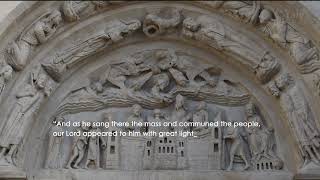
The North and South Portals of Saint-Denis | The Age of Cathedrals with R. Howard Bloch
·
· 5m20s
The side portals of Saint-Denis tell the martyrdom of the saint who, legend says, picked up his own severed head and walked two miles still carrying it. It is one of the strangest and most famous miracles of the Middle Ages. Professor R. Howard Bloch draws the story from Jacobus de Voragine's Golden Legend: Denis imprisoned by a Roman provost, given communion by Christ himself, then beheaded at Montmartre, the "hill of martyrs." The sculpture narrates each scene for viewers who could not read. It also carries a wry footnote from the critic Sainte-Beuve on the miracle of walking while carrying one's head: the first step, he said, is the hardest. Chapters: 00:00 The legend of Saint Denis 01:11 Imprisonment and a miraculous mass 02:52 Led to execution 03:41 The saint who carried his head Learning objectives: After watching, you'll be able to: - Summarize the martyrdom of Saint Denis from the Golden Legend - Describe how the north and south portals narrate his imprisonment and death - Explain the miracle of cephalophoria and its link to Montmartre - Interpret the portal sculpture as visual storytelling for the illiterate 📚 About the Course: An introduction to some of the most astonishing architectural monuments the world has ever known: the Gothic cathedrals of medieval France. Through the art, literature, intellectual life, economics, and new social arrangements that arose in the shadow of the cathedrals, you will explore the revival of cities in the twelfth and thirteenth centuries and come to a richer appreciation of the High Middle Ages, a world that is still recognizably our own. But what does that mean in practice? When you take this course, you will: Understand how the great cathedrals were built: Trace the engineering and architectural innovations, from Romanesque origins to Gothic stone and the delicate "house of glass," that made these structures possible. Learn to read cathedrals as art: Interpret the sculpture, stained glass, and relics of Saint-Denis, Notre-Dame de Paris, Chartres, and the Sainte-Chapelle, and see how their images served as the "Bible of the poor." Explore the world around the cathedrals: Discover the literature, learning, religion, and economic life of medieval cities, from Peter Abelard and the birth of the university to the everyday life lived in the cathedral's shadow. Course Takeaways: Appreciate the architecture and engineering of Gothic cathedrals Interpret medieval sculpture, stained glass, and religious art Understand the culture, religion, and society of the High Middle Ages 📺 Watch the full playlist on YouTube: https://www.youtube.com/playlist?list=PLJmpIR0QQnbQ 🎓 Enroll on Coursera for assessments and a certificate: https://www.coursera.org/learn/age-of-cathedrals 🌐 Explore more learning opportunities on Yale Online: https://online.yale.edu/courses/age-cathedrals

The Central Portal of Saint-Denis | The Age of Cathedrals with R. Howard Bloch
·
· 9m38s
Before you even stepped inside Saint-Denis, the central doorway staged the Last Judgment above your head, sorting the saved from the damned. The message was blunt: enter on the right side of the moral equation. Professor R. Howard Bloch reads the central portal in detail, from the biblical idea of Christ as "the door" in the Gospel of John to the tympanum crowded with the Passion, the resurrection, the Trinity, and the 24 elders of the Apocalypse. Abbot Suger placed himself at Christ's right foot, on the side of the saved. A vivid Romanesque precedent at Conques, complete with a gaping hell-mouth and carved inscriptions, shows how old and how theatrical this warning to worshippers really was. Chapters: 00:00 Christ as the door 02:07 Reading the tympanum 04:49 Judgment at Conques 07:05 The saved and the damned Learning objectives: After watching, you'll be able to: - Explain the biblical idea of Christ as the door of the church - Describe the Last Judgment program carved on the central tympanum - Compare the Saint-Denis portal with the Romanesque tympanum at Conques - Interpret the portal as a moral warning to those entering 📚 About the Course: An introduction to some of the most astonishing architectural monuments the world has ever known: the Gothic cathedrals of medieval France. Through the art, literature, intellectual life, economics, and new social arrangements that arose in the shadow of the cathedrals, you will explore the revival of cities in the twelfth and thirteenth centuries and come to a richer appreciation of the High Middle Ages, a world that is still recognizably our own. But what does that mean in practice? When you take this course, you will: Understand how the great cathedrals were built: Trace the engineering and architectural innovations, from Romanesque origins to Gothic stone and the delicate "house of glass," that made these structures possible. Learn to read cathedrals as art: Interpret the sculpture, stained glass, and relics of Saint-Denis, Notre-Dame de Paris, Chartres, and the Sainte-Chapelle, and see how their images served as the "Bible of the poor." Explore the world around the cathedrals: Discover the literature, learning, religion, and economic life of medieval cities, from Peter Abelard and the birth of the university to the everyday life lived in the cathedral's shadow. Course Takeaways: Appreciate the architecture and engineering of Gothic cathedrals Interpret medieval sculpture, stained glass, and religious art Understand the culture, religion, and society of the High Middle Ages 📺 Watch the full playlist on YouTube: https://www.youtube.com/playlist?list=PLJmpIR0QQnbQ 🎓 Enroll on Coursera for assessments and a certificate: https://www.coursera.org/learn/age-of-cathedrals 🌐 Explore more learning opportunities on Yale Online: https://online.yale.edu/courses/age-cathedrals

Reasons Spiritual and Worldly | The Age of Cathedrals with R. Howard Bloch
·
· 8m13s
Why does the first Gothic cathedral carry pagan zodiac signs on its doors? Abbot Suger built Saint-Denis as a Janus-faced building, looking back to Rome and the pagan past while pointing toward a Christian future. Professor R. Howard Bloch reads the west facade for both spiritual and worldly meaning. Suger's motto, "recollection of the past is the promise of the future," runs through a triple portal modeled on the Arch of Constantine, the same design echoed centuries later at Yale. Taurus, Aries, and Libra share the doorway with the labors of the months, and the parable of the wise and foolish virgins is carved on either side to teach a single lesson: be ready, because you never know the hour of judgment. Chapters: 00:00 Spiritual or worldly reasons? 01:37 The past as promise of the future 02:12 A Janus-faced building 03:22 The zodiac and labors of the months 05:02 The wise and foolish virgins Learning objectives: After watching, you'll be able to: - Distinguish the spiritual and worldly reasons for rebuilding Saint-Denis - Explain Suger's motto linking the past to the future - Identify the Roman and zodiacal sources behind the cathedral's portals - Interpret the parable of the wise and foolish virgins as a teaching image 📚 About the Course: An introduction to some of the most astonishing architectural monuments the world has ever known: the Gothic cathedrals of medieval France. Through the art, literature, intellectual life, economics, and new social arrangements that arose in the shadow of the cathedrals, you will explore the revival of cities in the twelfth and thirteenth centuries and come to a richer appreciation of the High Middle Ages, a world that is still recognizably our own. But what does that mean in practice? When you take this course, you will: Understand how the great cathedrals were built: Trace the engineering and architectural innovations, from Romanesque origins to Gothic stone and the delicate "house of glass," that made these structures possible. Learn to read cathedrals as art: Interpret the sculpture, stained glass, and relics of Saint-Denis, Notre-Dame de Paris, Chartres, and the Sainte-Chapelle, and see how their images served as the "Bible of the poor." Explore the world around the cathedrals: Discover the literature, learning, religion, and economic life of medieval cities, from Peter Abelard and the birth of the university to the everyday life lived in the cathedral's shadow. Course Takeaways: Appreciate the architecture and engineering of Gothic cathedrals Interpret medieval sculpture, stained glass, and religious art Understand the culture, religion, and society of the High Middle Ages 📺 Watch the full playlist on YouTube: https://www.youtube.com/playlist?list=PLJmpIR0QQnbQ 🎓 Enroll on Coursera for assessments and a certificate: https://www.coursera.org/learn/age-of-cathedrals 🌐 Explore more learning opportunities on Yale Online: https://online.yale.edu/courses/age-cathedrals

Suger, the Producer of the First Gothic Cathedral | The Age of Cathedrals with R. Howard Bloch
·
· 8m36s
There were no architects in the Middle Ages, so how did the first Gothic cathedral get built? Abbot Suger acted less like a designer than a producer, gathering the resources, hiring the talent, and even hauling the materials himself. Professor R. Howard Bloch shows how Suger assembled an international team, bronze founders and jewelers from the Rhine, masons from Normandy and Burgundy, glass masters from many regions, while writing a unique account of the whole effort. The master mason was the closest thing to an architect, a cement master who knew stone in all its weight and grain. And when the great columns had to be moved, nobles and commoners alike tied ropes to their arms and dragged them like draft animals, in what became known as the crusade of the cathedrals. Chapters: 00:00 Suger, builder and thinker 02:00 Signing his name in the cathedral 03:42 Master masons and medieval builders 04:45 Suger as the producer 06:30 The crusade of the cathedrals Learning objectives: After watching, you'll be able to: - Explain why the Middle Ages had no architects in the modern sense - Describe the role of the master mason on a Gothic building site - Compare Abbot Suger's role to that of a modern film producer - Summarize how communities hauled stone in the "crusade of the cathedrals" 📚 About the Course: An introduction to some of the most astonishing architectural monuments the world has ever known: the Gothic cathedrals of medieval France. Through the art, literature, intellectual life, economics, and new social arrangements that arose in the shadow of the cathedrals, you will explore the revival of cities in the twelfth and thirteenth centuries and come to a richer appreciation of the High Middle Ages, a world that is still recognizably our own. But what does that mean in practice? When you take this course, you will: Understand how the great cathedrals were built: Trace the engineering and architectural innovations, from Romanesque origins to Gothic stone and the delicate "house of glass," that made these structures possible. Learn to read cathedrals as art: Interpret the sculpture, stained glass, and relics of Saint-Denis, Notre-Dame de Paris, Chartres, and the Sainte-Chapelle, and see how their images served as the "Bible of the poor." Explore the world around the cathedrals: Discover the literature, learning, religion, and economic life of medieval cities, from Peter Abelard and the birth of the university to the everyday life lived in the cathedral's shadow. Course Takeaways: Appreciate the architecture and engineering of Gothic cathedrals Interpret medieval sculpture, stained glass, and religious art Understand the culture, religion, and society of the High Middle Ages 📺 Watch the full playlist on YouTube: https://www.youtube.com/playlist?list=PLJmpIR0QQnbQ 🎓 Enroll on Coursera for assessments and a certificate: https://www.coursera.org/learn/age-of-cathedrals 🌐 Explore more learning opportunities on Yale Online: https://online.yale.edu/courses/age-cathedrals

The Fair of Lendit | The Age of Cathedrals with R. Howard Bloch
·
· 4m29s
Abbot Suger tripled the revenues of Saint-Denis largely through one event: the fair of Lendit, a twice-yearly market where the bishop collected a cut of every transaction, much like a modern sales tax. Professor R. Howard Bloch uses fifteenth-century paintings of the fair to show medieval commerce up close: shoemakers and cloth sellers, money changers, and even a traveling tavern, all watched over by the bishop and his monks. That cut was not a free fee but payment for guaranteeing honest dealing and safe roads. The word Lendit comes from the Latin for judgment, and from the start it links three things that would define the cathedral town: sacred space, law, and money. Chapters: 00:00 An exempt, endowed abbey 01:08 Bernard's attack on its luxury 01:43 The fair of Lendit 02:44 Merchants, money changers, and taxes Learning objectives: After watching, you'll be able to: - Explain how the fair of Lendit tripled the abbey's revenues - Describe the goods and traders gathered at a medieval fair - Summarize Bernard of Clairvaux's criticism of Saint-Denis - Analyze the link between sacred space, commerce, and legal judgment 📚 About the Course: An introduction to some of the most astonishing architectural monuments the world has ever known: the Gothic cathedrals of medieval France. Through the art, literature, intellectual life, economics, and new social arrangements that arose in the shadow of the cathedrals, you will explore the revival of cities in the twelfth and thirteenth centuries and come to a richer appreciation of the High Middle Ages, a world that is still recognizably our own. But what does that mean in practice? When you take this course, you will: Understand how the great cathedrals were built: Trace the engineering and architectural innovations, from Romanesque origins to Gothic stone and the delicate "house of glass," that made these structures possible. Learn to read cathedrals as art: Interpret the sculpture, stained glass, and relics of Saint-Denis, Notre-Dame de Paris, Chartres, and the Sainte-Chapelle, and see how their images served as the "Bible of the poor." Explore the world around the cathedrals: Discover the literature, learning, religion, and economic life of medieval cities, from Peter Abelard and the birth of the university to the everyday life lived in the cathedral's shadow. Course Takeaways: Appreciate the architecture and engineering of Gothic cathedrals Interpret medieval sculpture, stained glass, and religious art Understand the culture, religion, and society of the High Middle Ages 📺 Watch the full playlist on YouTube: https://www.youtube.com/playlist?list=PLJmpIR0QQnbQ 🎓 Enroll on Coursera for assessments and a certificate: https://www.coursera.org/learn/age-of-cathedrals 🌐 Explore more learning opportunities on Yale Online: https://online.yale.edu/courses/age-cathedrals
Saint-Denis, Burial Place of Kings | The Age of Cathedrals with R. Howard Bloch
·
· 5m39s
For four centuries Saint-Denis held the bones of French kings, along with a treasury of crowns, scepters, and crosses that revolutionaries scattered during the Terror of 1793. Some of those objects now sit in the Louvre, the National Gallery in Washington, and the Walters in Baltimore. Professor R. Howard Bloch shows how the abbey was literally built from its own past, reusing Merovingian stone uncovered in Sumner Crosby's Yale excavations, and how it became the sanctuary of French monarchy: burial place of 52 kings and 32 queens, site of coronation, and keeper of the Oriflamme, the blood-red banner carried into battle in The Song of Roland. In an age when longevity meant legitimacy, a flag traced back to Saint Peter was worth more than any crown. Chapters: 00:00 Saint-Denis and its reused stone 01:38 A treasury of kings and queens 02:06 Pillaged in the Revolution 03:32 Charlemagne and the Oriflamme Learning objectives: After watching, you'll be able to: - Explain how older masonry was reused to build the twelfth-century cathedral - Describe Saint-Denis as the burial place and treasury of French royalty - Summarize how the Revolution scattered the abbey's tombs and relics - Interpret the Oriflamme banner as a symbol of royal and national legitimacy 📚 About the Course: An introduction to some of the most astonishing architectural monuments the world has ever known: the Gothic cathedrals of medieval France. Through the art, literature, intellectual life, economics, and new social arrangements that arose in the shadow of the cathedrals, you will explore the revival of cities in the twelfth and thirteenth centuries and come to a richer appreciation of the High Middle Ages, a world that is still recognizably our own. But what does that mean in practice? When you take this course, you will: Understand how the great cathedrals were built: Trace the engineering and architectural innovations, from Romanesque origins to Gothic stone and the delicate "house of glass," that made these structures possible. Learn to read cathedrals as art: Interpret the sculpture, stained glass, and relics of Saint-Denis, Notre-Dame de Paris, Chartres, and the Sainte-Chapelle, and see how their images served as the "Bible of the poor." Explore the world around the cathedrals: Discover the literature, learning, religion, and economic life of medieval cities, from Peter Abelard and the birth of the university to the everyday life lived in the cathedral's shadow. Course Takeaways: Appreciate the architecture and engineering of Gothic cathedrals Interpret medieval sculpture, stained glass, and religious art Understand the culture, religion, and society of the High Middle Ages 📺 Watch the full playlist on YouTube: https://www.youtube.com/playlist?list=PLJmpIR0QQnbQ 🎓 Enroll on Coursera for assessments and a certificate: https://www.coursera.org/learn/age-of-cathedrals 🌐 Explore more learning opportunities on Yale Online: https://online.yale.edu/courses/age-cathedrals
Abbot Suger and the Old Church of Saint-Denis | The Age of Cathedrals with R. Howard Bloch
·
· 6m3s
Abbot Suger began rebuilding Saint-Denis for a blunt reason: the old church was dangerously overcrowded. On feast days, he wrote, worshippers were pressed like grapes in a wine press, women cried out as if in labor, and pilgrims sometimes escaped the crush by climbing out the windows with the relics. Professor R. Howard Bloch introduces Suger, who rose from humble birth to become schoolmate, advisor, ambassador, and biographer of King Louis the Fat. Saint-Denis had been the burial place of French kings for four centuries, and Suger's fear of losing its relics in the chaos points to a larger story: a twelfth-century surge in population, driven by a warming climate, that filled the churches and fed the rise of cities. Chapters: 00:00 Who was Abbot Suger 02:38 A church too small 03:18 The danger of the crowds 04:55 Climate, population, and cities Learning objectives: After watching, you'll be able to: - Describe Abbot Suger's rise from humble birth to royal advisor - Explain why Suger judged the old abbey church inadequate - Summarize the crowding and safety problems on feast days - Connect twelfth-century population growth to a warming climate and the rise of cities 📚 About the Course: An introduction to some of the most astonishing architectural monuments the world has ever known: the Gothic cathedrals of medieval France. Through the art, literature, intellectual life, economics, and new social arrangements that arose in the shadow of the cathedrals, you will explore the revival of cities in the twelfth and thirteenth centuries and come to a richer appreciation of the High Middle Ages, a world that is still recognizably our own. But what does that mean in practice? When you take this course, you will: Understand how the great cathedrals were built: Trace the engineering and architectural innovations, from Romanesque origins to Gothic stone and the delicate "house of glass," that made these structures possible. Learn to read cathedrals as art: Interpret the sculpture, stained glass, and relics of Saint-Denis, Notre-Dame de Paris, Chartres, and the Sainte-Chapelle, and see how their images served as the "Bible of the poor." Explore the world around the cathedrals: Discover the literature, learning, religion, and economic life of medieval cities, from Peter Abelard and the birth of the university to the everyday life lived in the cathedral's shadow. Course Takeaways: Appreciate the architecture and engineering of Gothic cathedrals Interpret medieval sculpture, stained glass, and religious art Understand the culture, religion, and society of the High Middle Ages 📺 Watch the full playlist on YouTube: https://www.youtube.com/playlist?list=PLJmpIR0QQnbQ 🎓 Enroll on Coursera for assessments and a certificate: https://www.coursera.org/learn/age-of-cathedrals 🌐 Explore more learning opportunities on Yale Online: https://online.yale.edu/courses/age-cathedrals

What We'll Study in This Course | The Age of Cathedrals with R. Howard Bloch
·
· 5m24s
This course treats the Gothic cathedral as two things at once: one of the great engineering feats in history, and the center of medieval religious, economic, and cultural life. Professor R. Howard Bloch lays out the full arc here. The path runs from the first churches at Saint-Denis and Notre-Dame to the delicate "house of glass" of the Sainte-Chapelle and the flamboyant late Gothic of Milan. Along the way the course looks at who actually built these churches, from stone hewers to master masons, and reads their sculpture and stained glass as a "Bible of the poor" for an age when few could read. It closes on the wider world of the cathedral: the birth of vernacular literature, the everyday life of medieval towns, and the way these living buildings still shape our own. Chapters: 00:00 A great engineering feat 01:17 Who built the cathedrals 02:35 Sculpture, glass, and relics 03:13 Literature and everyday life 04:17 From the Middle Ages to today Learning objectives: After watching, you'll be able to: - Preview the cathedrals the course examines, from Saint-Denis to the Sainte-Chapelle - Describe the labor and craft that went into building a Gothic cathedral - Explain how sculpture and stained glass served as the "Bible of the poor" - Connect cathedral building to the birth of vernacular literature and urban life 📚 About the Course: An introduction to some of the most astonishing architectural monuments the world has ever known: the Gothic cathedrals of medieval France. Through the art, literature, intellectual life, economics, and new social arrangements that arose in the shadow of the cathedrals, you will explore the revival of cities in the twelfth and thirteenth centuries and come to a richer appreciation of the High Middle Ages, a world that is still recognizably our own. But what does that mean in practice? When you take this course, you will: Understand how the great cathedrals were built: Trace the engineering and architectural innovations, from Romanesque origins to Gothic stone and the delicate "house of glass," that made these structures possible. Learn to read cathedrals as art: Interpret the sculpture, stained glass, and relics of Saint-Denis, Notre-Dame de Paris, Chartres, and the Sainte-Chapelle, and see how their images served as the "Bible of the poor." Explore the world around the cathedrals: Discover the literature, learning, religion, and economic life of medieval cities, from Peter Abelard and the birth of the university to the everyday life lived in the cathedral's shadow. Course Takeaways: Appreciate the architecture and engineering of Gothic cathedrals Interpret medieval sculpture, stained glass, and religious art Understand the culture, religion, and society of the High Middle Ages 📺 Watch the full playlist on YouTube: https://www.youtube.com/playlist?list=PLJmpIR0QQnbQ 🎓 Enroll on Coursera for assessments and a certificate: https://www.coursera.org/learn/age-of-cathedrals 🌐 Explore more learning opportunities on Yale Online: https://online.yale.edu/courses/age-cathedrals

Notre-Dame and the Wave of Cathedral Building | The Age of Cathedrals with R. Howard Bloch
·
· 7m19s
When Notre-Dame's radical new wall went up, one Norman monk said nothing would ever compare with it, and a Paris theologian called it a sin of epidemic proportions. Both were reacting to the flying buttress, the innovation that let medieval builders go higher than anyone thought possible. Professor R. Howard Bloch follows Notre-Dame from the cornerstone laid in 1163 under Bishop Maurice de Sully through the flying buttress that braced its walls, drawn here from Viollet-le-Duc's nineteenth-century restoration. He then traces the height race that followed, as Chartres, Reims, and Amiens each overtook Paris and Beauvais reached so high its vault collapsed in 1284. The deeper shift is cultural: after the year 1000, innovation itself became something to prize. Chapters: 00:00 Paris as a sacred site 01:58 Building Notre-Dame and the flying buttress 05:02 The race to build higher 06:05 Innovation as a new value Learning objectives: After watching, you'll be able to: - Explain how the flying buttress made Notre-Dame's high walls possible - Trace the height rivalry among Chartres, Reims, Amiens, and Beauvais - Describe medieval reactions to building on such an unprecedented scale - Analyze how innovation became a core value after the year 1000 📚 About the Course: An introduction to some of the most astonishing architectural monuments the world has ever known: the Gothic cathedrals of medieval France. Through the art, literature, intellectual life, economics, and new social arrangements that arose in the shadow of the cathedrals, you will explore the revival of cities in the twelfth and thirteenth centuries and come to a richer appreciation of the High Middle Ages, a world that is still recognizably our own. But what does that mean in practice? When you take this course, you will: Understand how the great cathedrals were built: Trace the engineering and architectural innovations, from Romanesque origins to Gothic stone and the delicate "house of glass," that made these structures possible. Learn to read cathedrals as art: Interpret the sculpture, stained glass, and relics of Saint-Denis, Notre-Dame de Paris, Chartres, and the Sainte-Chapelle, and see how their images served as the "Bible of the poor." Explore the world around the cathedrals: Discover the literature, learning, religion, and economic life of medieval cities, from Peter Abelard and the birth of the university to the everyday life lived in the cathedral's shadow. Course Takeaways: Appreciate the architecture and engineering of Gothic cathedrals Interpret medieval sculpture, stained glass, and religious art Understand the culture, religion, and society of the High Middle Ages 📺 Watch the full playlist on YouTube: https://www.youtube.com/playlist?list=PLJmpIR0QQnbQ 🎓 Enroll on Coursera for assessments and a certificate: https://www.coursera.org/learn/age-of-cathedrals 🌐 Explore more learning opportunities on Yale Online: https://online.yale.edu/courses/age-cathedrals

The Early History of Paris | The Age of Cathedrals with R. Howard Bloch
·
· 4m25s
Before Notre-Dame, Paris was a swampy Gallo-Roman town called Lutetia, sacked by Viking longships that sailed straight up the Seine. This is the backstory that made cathedral building possible. Professor R. Howard Bloch traces Paris from the Celtic Parisii and the Roman settlement through Clovis, Charlemagne, and the raids that followed his death, to the peace treaty with the Viking leader Rollo in 911. That long peace let the city's population climb from about 20,000 to a quarter million, opening the trade routes, markets, guilds, and universities that gave rise to the Gothic cathedral. Chapters: 00:00 Roman Lutetia 01:13 Christianization and the Franks 02:02 Viking invasions 02:54 Peace, growth, and the rise of cities Learning objectives: After watching, you'll be able to: - Trace Paris's development from the Celtic Parisii to a Gallo-Roman settlement - Describe the Viking raids on Paris and the treaty that ended them - Explain how sustained peace drove population and economic growth - Connect the rise of cities to money, commerce, and new institutions 📚 About the Course: An introduction to some of the most astonishing architectural monuments the world has ever known: the Gothic cathedrals of medieval France. Through the art, literature, intellectual life, economics, and new social arrangements that arose in the shadow of the cathedrals, you will explore the revival of cities in the twelfth and thirteenth centuries and come to a richer appreciation of the High Middle Ages, a world that is still recognizably our own. But what does that mean in practice? When you take this course, you will: Understand how the great cathedrals were built: Trace the engineering and architectural innovations, from Romanesque origins to Gothic stone and the delicate "house of glass," that made these structures possible. Learn to read cathedrals as art: Interpret the sculpture, stained glass, and relics of Saint-Denis, Notre-Dame de Paris, Chartres, and the Sainte-Chapelle, and see how their images served as the "Bible of the poor." Explore the world around the cathedrals: Discover the literature, learning, religion, and economic life of medieval cities, from Peter Abelard and the birth of the university to the everyday life lived in the cathedral's shadow. Course Takeaways: Appreciate the architecture and engineering of Gothic cathedrals Interpret medieval sculpture, stained glass, and religious art Understand the culture, religion, and society of the High Middle Ages 📺 Watch the full playlist on YouTube: https://www.youtube.com/playlist?list=PLJmpIR0QQnbQ 🎓 Enroll on Coursera for assessments and a certificate: https://www.coursera.org/learn/age-of-cathedrals 🌐 Explore more learning opportunities on Yale Online: https://online.yale.edu/courses/age-cathedrals

Welcome to the Age of Cathedrals | The Age of Cathedrals with R. Howard Bloch
·
· 3m14s
Professor R. Howard Bloch opens the course with a deceptively simple question: what is a cathedral? The answer runs from the Latin cathedra, an easy chair that became the seat of a bishop, to the roughly 80 Gothic cathedrals built across France in a single 150-year span. Bloch, Sterling Professor of French at Yale, sets out the ground the course will cover: the seat of a bishop and the diocese it governs, the first cathedrals in Italy, Spain, and Gaul in the fourth century, and the great age of building that began in the twelfth century in the Ile-de-France. Almost all of those churches are still standing, and the invitation here is to explore why they still hold meaning for our own age. Learning objectives: After watching, you'll be able to: - Define the word cathedral and trace its origin in the Latin cathedra - Explain the role of a cathedral as the seat of a bishop within a diocese - Summarize when and where cathedrals first appeared in the Christian West - Identify the Ile-de-France as the birthplace of the Gothic age 📚 About the Course: An introduction to some of the most astonishing architectural monuments the world has ever known: the Gothic cathedrals of medieval France. Through the art, literature, intellectual life, economics, and new social arrangements that arose in the shadow of the cathedrals, you will explore the revival of cities in the twelfth and thirteenth centuries and come to a richer appreciation of the High Middle Ages, a world that is still recognizably our own. But what does that mean in practice? When you take this course, you will: Understand how the great cathedrals were built: Trace the engineering and architectural innovations, from Romanesque origins to Gothic stone and the delicate "house of glass," that made these structures possible. Learn to read cathedrals as art: Interpret the sculpture, stained glass, and relics of Saint-Denis, Notre-Dame de Paris, Chartres, and the Sainte-Chapelle, and see how their images served as the "Bible of the poor." Explore the world around the cathedrals: Discover the literature, learning, religion, and economic life of medieval cities, from Peter Abelard and the birth of the university to the everyday life lived in the cathedral's shadow. Course Takeaways: Appreciate the architecture and engineering of Gothic cathedrals Interpret medieval sculpture, stained glass, and religious art Understand the culture, religion, and society of the High Middle Ages 📺 Watch the full playlist on YouTube: https://www.youtube.com/playlist?list=PLJmpIR0QQnbQ 🎓 Enroll on Coursera for assessments and a certificate: https://www.coursera.org/learn/age-of-cathedrals 🌐 Explore more learning opportunities on Yale Online: https://online.yale.edu/courses/age-cathedrals
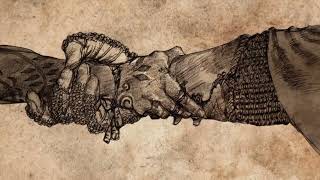
Truth Set in Stone: The Theophilus Story | The Age of Cathedrals with R. Howard Bloch
·
· 8m27s
The Theophilus story turns up everywhere in the age of cathedrals, in manuscripts, in stained glass at Beauvais, in stone at Notre-Dame, and it reveals a habit of mind at the heart of the Gothic: forms nested within forms. Professor R. Howard Bloch tracks the tale across media, from the feudal gesture of homage in the pact with the devil to the poet Rutebeuf's version and the Virgin's sword-wielding rescue. He shows how the story becomes a tale within a tale and sculpture within sculpture, a mise-en-abyme that mirrors both Thomas Aquinas's nested arguments and the cathedral's own modular bays and gables within gables. Chapters: 00:00 Theophilus everywhere 00:55 The Beauvais windows 02:05 Notre-Dame's version in stone 03:10 Rutebeuf's poem 05:38 A tale within a tale 06:29 Scholasticism in stone Learning objectives: After watching, you'll be able to: - Trace the Theophilus story across manuscripts, glass, and stone - Explain the feudal gesture of homage in the pact with the devil - Analyze the mise-en-abyme of a tale within a tale - Connect nested forms in Gothic architecture to scholastic thought 📚 About the Course: An introduction to some of the most astonishing architectural monuments the world has ever known: the Gothic cathedrals of medieval France. Through the art, literature, intellectual life, economics, and new social arrangements that arose in the shadow of the cathedrals, you will explore the revival of cities in the twelfth and thirteenth centuries and come to a richer appreciation of the High Middle Ages, a world that is still recognizably our own. But what does that mean in practice? When you take this course, you will: Understand how the great cathedrals were built: Trace the engineering and architectural innovations, from Romanesque origins to Gothic stone and the delicate "house of glass," that made these structures possible. Learn to read cathedrals as art: Interpret the sculpture, stained glass, and relics of Saint-Denis, Notre-Dame de Paris, Chartres, and the Sainte-Chapelle, and see how their images served as the "Bible of the poor." Explore the world around the cathedrals: Discover the literature, learning, religion, and economic life of medieval cities, from Peter Abelard and the birth of the university to the everyday life lived in the cathedral's shadow. Course Takeaways: Appreciate the architecture and engineering of Gothic cathedrals Interpret medieval sculpture, stained glass, and religious art Understand the culture, religion, and society of the High Middle Ages 📺 Watch the full playlist on YouTube: https://www.youtube.com/playlist?list=PLJmpIR0QQnbQ 🎓 Enroll on Coursera for assessments and a certificate: https://www.coursera.org/learn/age-of-cathedrals 🌐 Explore more learning opportunities on Yale Online: https://online.yale.edu/courses/age-cathedrals

From Mars to Minerva: Peter Abelard | The Age of Cathedrals with R. Howard Bloch
·
· 6m38s
Peter Abelard gave up a knight's inheritance to fight with words instead of weapons, trading the court of Mars for the feet of Minerva. His move captures a larger shift in the age of cathedrals. Professor R. Howard Bloch opens with the return of writing to a largely oral medieval culture, then introduces Abelard, the itinerant scholar from Brittany who settled on Paris's Left Bank and helped give rise to both the university and the scholastic method of debate. Bloch ties Abelard's world to the carved dado scenes of student life on the south side of Notre-Dame, where books, teachers, and mixed social life all appear in stone. Chapters: 00:00 Theophilus and the rise of writing 02:56 Introducing Peter Abelard 03:26 From Brittany to Paris 04:54 The cathedral and the university Learning objectives: After watching, you'll be able to: - Explain how writing returned to a largely oral medieval culture - Describe Abelard's move from Brittany to Paris - Connect the rise of the university to cathedral building - Interpret the dado carvings of student life at Notre-Dame 📚 About the Course: An introduction to some of the most astonishing architectural monuments the world has ever known: the Gothic cathedrals of medieval France. Through the art, literature, intellectual life, economics, and new social arrangements that arose in the shadow of the cathedrals, you will explore the revival of cities in the twelfth and thirteenth centuries and come to a richer appreciation of the High Middle Ages, a world that is still recognizably our own. But what does that mean in practice? When you take this course, you will: Understand how the great cathedrals were built: Trace the engineering and architectural innovations, from Romanesque origins to Gothic stone and the delicate "house of glass," that made these structures possible. Learn to read cathedrals as art: Interpret the sculpture, stained glass, and relics of Saint-Denis, Notre-Dame de Paris, Chartres, and the Sainte-Chapelle, and see how their images served as the "Bible of the poor." Explore the world around the cathedrals: Discover the literature, learning, religion, and economic life of medieval cities, from Peter Abelard and the birth of the university to the everyday life lived in the cathedral's shadow. Course Takeaways: Appreciate the architecture and engineering of Gothic cathedrals Interpret medieval sculpture, stained glass, and religious art Understand the culture, religion, and society of the High Middle Ages 📺 Watch the full playlist on YouTube: https://www.youtube.com/playlist?list=PLJmpIR0QQnbQ 🎓 Enroll on Coursera for assessments and a certificate: https://www.coursera.org/learn/age-of-cathedrals 🌐 Explore more learning opportunities on Yale Online: https://online.yale.edu/courses/age-cathedrals

'VIRTUALLY ALL' US Missiles USED In Iran War
·
· 15m33s
Krystal and Saagar discuss the US blowing nearly all advanced missiles during the Iran war. Sign up for a PREMIUM Breaking Points subscriptions for full early access to uncut shows and LIVE AMAs with the hosts every week: https://breakingpoints.supercast.com/ Merch Store: https://shop.breakingpoints.com/ To listen to Breaking Points as a podcast, check them out on Apple and Spotify Apple: https://podcasts.apple.com/us/podcast/breaking-points-with-krystal-and-saagar/id1570045623 Spotify: https://open.spotify.com/show/033kFeszOZEgO3Wy6ziXKR Instagram: https://www.instagram.com/breakingpoints.yt Facebook: https://www.facebook.com/people/Breaking-Points/61575893472315/ #news #politics #youtube

"DRIVIN' & DRINKIN'" 1969 CHEVROLET ANTI-DUI DRINKING AND DRIVING FILM DRIVER'S EDUCATION GG47345
 ·
· 12m44s
Join this channel to get access to perks: https://www.youtube.com/channel/UCddem5RlB3bQe99wyY49g0g/join Join us on Patreon. Visit https://www.patreon.com/PeriscopeFilm Visit our website www.PeriscopeFilm.com Created by GM Photographic on behalf of Chevrolet and targeted at teenage drivers, "Drivin' & Drinkin'" (1969) explores the serious consequences of drinking and driving. It begins by emphasizing the importance and responsibility of driving, highlighting it as a symbol of growing up. The discussion then shifts to alcohol use among high school students, noting that a majority have tried it, often in social situations that involve driving. It explains how even in small amounts, alcohol quickly enters the bloodstream and impairs brain function. It debunks common myths about sobering up and outlines how alcohol affects individuals differently based on factors like weight, mood, and food intake. Even drivers below the legal limit exhibited dangerously poor performance after drinking. Statistics from various states underline the strong link between alcohol and fatal car accidents, especially among young drivers. It also warns of long-term risks like alcoholism and how alcohol contributes to criminal behavior. It closes with a clear message: driving and drinking must be kept separate. 0:00 The dangers of drinking and driving. 0:37: Driving is portrayed as a key part of growing up—a symbol of independence and maturity. Young drivers often feel a sense of pride and responsibility when they start driving, and it's emphasized how critical it is to take that responsibility seriously. 1:29:Driving marks a shift into adulthood and should be treated with respect due to the responsibility it entails. 1:47: Most high school students have been exposed to drinking at least once, with exposure rates varying from 50% to 90%. 2:18: Drinking often occurs in social settings where driving is also involved making the potential for danger even greater. 2:30: Alcohol is quickly absorbed into the bloodstream and affects the brain directly. It’s a depressant, not a stimulant, impairing judgment, memory, and coordination even at low levels. 3:22:Alcohol is primarily broken down by the liver at a constant rate, regardless of efforts like drinking coffee, taking cold showers, or exercising. There’s no shortcut to sobering up. 4:04: Individual reactions to alcohol vary based on physical size, mood, health, and food intake. For smaller or emotionally unstable individuals, alcohol can have more severe effects more quickly, even if food slightly slows absorption. 5:00: If alcohol consumption is spread out, the body can manage it, but consuming a lot in a short time leads to significant impairment. A person can be severely drunk after just a few shots if taken rapidly. 5:49: Mixing alcohol with medications—even simple ones like aspirin or cold tablets—can be dangerous. 6:17: A GM experiment tested how alcohol affected driving skills. Volunteers performed well sober but showed impaired coordination and judgment after just one drink. After three or four drinks, they could no longer complete basic driving tasks safely. 7:30:Drivers missed turns, hit obstacles, and could not properly navigate courses—even if their blood alcohol levels were below the legal limit. 8:53: Alcohol is involved in a significant percentage of fatal accidents, particularly among young drivers aged 15 to 20, with some studies showing 65% of them had been drinking. 9:10:Even minor accidents can lead to financial burdens, strained family relationships, and possible legal trouble. Teenagers are often grounded or punished severely for drinking-related incidents. 10:06: Teen drivers are subject to heightened scrutiny by law enforcement. Even if they aren’t at fault, the presence of alcohol can bias a situation against them. 10:27: Alcoholism and its severe long-term health consequences. Alcoholism can affect anyone. 11:19: Alcohol also plays a major role in crime. 11:33: Taking responsibility and thinking ahead is essential—it can happen to anyone. 12:13: Conclusion: if you're going to drink and drive, do them at different times. Keep them separate. It can save lives. Motion picture films don't last forever; many have already been lost or destroyed. For almost two decades, we've worked to collect, scan and preserve the world as it was captured on 35mm, 16mm and 8mm movies -- including home movies, industrial films, and other non-fiction. If you have endangered films you'd like to have scanned, or wish to donate celluloid to Periscope Film so that we can share them with the world, we'd love to hear from you. Contact us via the weblink below. This film is part of the Periscope Film LLC archive, one of the largest historic military, transportation, and aviation stock footage collections in the USA. Entirely film backed, this material is available for licensing in 24p HD, 2k and 4k. For more information visit http://www.PeriscopeFilm.com

Abelard: Introducing Reason into Faith | The Age of Cathedrals with R. Howard Bloch
·
· 7m2s
Abelard's students demanded reasons, not just words: nothing, they said, could be believed unless it was first understood. That demand put him on a collision course with the church. Professor R. Howard Bloch presents Abelard as a young challenger to the theological establishment, above all Anselm of Laon, who insisted on reading scripture directly and turned the tools of pagan logic on Christian doctrine. The heart of the lesson is the medieval debate over universals, realism versus nominalism, and Abelard's daring attempt to resolve the problem of the Trinity in strictly logical terms. Chapters: 00:00 From Mars to Minerva 00:56 Against Anselm of Laon 02:12 Turning logic on theology 02:52 Reading scripture without commentary 04:43 Realism versus nominalism 05:56 The problem of the Trinity Learning objectives: After watching, you'll be able to: - Explain Abelard's shift from theology toward philosophy and logic - Describe his challenge to Anselm of Laon and the lectio divina - Distinguish realism from nominalism in the debate over universals - Summarize Abelard's logical treatment of the Trinity 📚 About the Course: An introduction to some of the most astonishing architectural monuments the world has ever known: the Gothic cathedrals of medieval France. Through the art, literature, intellectual life, economics, and new social arrangements that arose in the shadow of the cathedrals, you will explore the revival of cities in the twelfth and thirteenth centuries and come to a richer appreciation of the High Middle Ages, a world that is still recognizably our own. But what does that mean in practice? When you take this course, you will: Understand how the great cathedrals were built: Trace the engineering and architectural innovations, from Romanesque origins to Gothic stone and the delicate "house of glass," that made these structures possible. Learn to read cathedrals as art: Interpret the sculpture, stained glass, and relics of Saint-Denis, Notre-Dame de Paris, Chartres, and the Sainte-Chapelle, and see how their images served as the "Bible of the poor." Explore the world around the cathedrals: Discover the literature, learning, religion, and economic life of medieval cities, from Peter Abelard and the birth of the university to the everyday life lived in the cathedral's shadow. Course Takeaways: Appreciate the architecture and engineering of Gothic cathedrals Interpret medieval sculpture, stained glass, and religious art Understand the culture, religion, and society of the High Middle Ages 📺 Watch the full playlist on YouTube: https://www.youtube.com/playlist?list=PLJmpIR0QQnbQ 🎓 Enroll on Coursera for assessments and a certificate: https://www.coursera.org/learn/age-of-cathedrals 🌐 Explore more learning opportunities on Yale Online: https://online.yale.edu/courses/age-cathedrals

The Story of Abelard's Misfortunes | The Age of Cathedrals with R. Howard Bloch
·
· 5m17s
Condemned to burn his own book and later excommunicated, Abelard still found time for the most famous love affair of the Middle Ages. Professor R. Howard Bloch traces the fall: the Council of Sens, the enforced silence, and the humanist who loved classical authors and letters. Hired to tutor the learned Eloise, Abelard used learning itself as a means of seduction. The couple married secretly and named their son Astrolabe, after the new sciences of the age. It was the marriage, not the affair, that drove her uncle Fulbert to have Abelard castrated, a mutilation Abelard, ever the egoist, read as a sign of divine election. Chapters: 00:00 Condemned and silenced 00:58 A humanist in love with letters 02:15 Abelard and Eloise 03:21 Marriage and a son named Astrolabe 03:48 Revenge and its aftermath Learning objectives: After watching, you'll be able to: - Summarize Abelard's condemnation and excommunication - Describe how letters and learning served Abelard as seduction - Explain why the marriage provoked Fulbert's revenge - Interpret how Abelard reframed his castration in religious terms 📚 About the Course: An introduction to some of the most astonishing architectural monuments the world has ever known: the Gothic cathedrals of medieval France. Through the art, literature, intellectual life, economics, and new social arrangements that arose in the shadow of the cathedrals, you will explore the revival of cities in the twelfth and thirteenth centuries and come to a richer appreciation of the High Middle Ages, a world that is still recognizably our own. But what does that mean in practice? When you take this course, you will: Understand how the great cathedrals were built: Trace the engineering and architectural innovations, from Romanesque origins to Gothic stone and the delicate "house of glass," that made these structures possible. Learn to read cathedrals as art: Interpret the sculpture, stained glass, and relics of Saint-Denis, Notre-Dame de Paris, Chartres, and the Sainte-Chapelle, and see how their images served as the "Bible of the poor." Explore the world around the cathedrals: Discover the literature, learning, religion, and economic life of medieval cities, from Peter Abelard and the birth of the university to the everyday life lived in the cathedral's shadow. Course Takeaways: Appreciate the architecture and engineering of Gothic cathedrals Interpret medieval sculpture, stained glass, and religious art Understand the culture, religion, and society of the High Middle Ages 📺 Watch the full playlist on YouTube: https://www.youtube.com/playlist?list=PLJmpIR0QQnbQ 🎓 Enroll on Coursera for assessments and a certificate: https://www.coursera.org/learn/age-of-cathedrals 🌐 Explore more learning opportunities on Yale Online: https://online.yale.edu/courses/age-cathedrals

The Fabliaux: The Crucified Priest | The Age of Cathedrals with R. Howard Bloch
·
· 9m15s
The fabliaux are the raunchy, streetwise flip side of the age of cathedrals: short comic tales in Old French where wit, timing, and money win out over almost everything else. Professor R. Howard Bloch introduces this urban genre, filled with merchants, students, and worldly priests, then reads "The Crucified Priest." A carver of crucifixes traps his wife's lover, who hides naked among the holy statues, and the joke turns on a sacred symbol reduced to an object bought and sold at market. Bloch sets the tale's comic castration against the metaphysical anguish of Abelard's, showing two very different Middle Ages side by side. Chapters: 00:00 Abelard and urban values 01:08 The fabliaux 02:22 The Crucified Priest 04:44 The husband's revenge 05:42 The moral of the tale 06:40 Sacred symbols as objects of exchange Learning objectives: After watching, you'll be able to: - Describe the fabliaux as a genre of urban comic tales - Summarize the plot and moral of "The Crucified Priest" - Analyze how the tale reduces a sacred symbol to an object of exchange - Contrast its comic castration with the seriousness of Abelard's 📚 About the Course: An introduction to some of the most astonishing architectural monuments the world has ever known: the Gothic cathedrals of medieval France. Through the art, literature, intellectual life, economics, and new social arrangements that arose in the shadow of the cathedrals, you will explore the revival of cities in the twelfth and thirteenth centuries and come to a richer appreciation of the High Middle Ages, a world that is still recognizably our own. But what does that mean in practice? When you take this course, you will: Understand how the great cathedrals were built: Trace the engineering and architectural innovations, from Romanesque origins to Gothic stone and the delicate "house of glass," that made these structures possible. Learn to read cathedrals as art: Interpret the sculpture, stained glass, and relics of Saint-Denis, Notre-Dame de Paris, Chartres, and the Sainte-Chapelle, and see how their images served as the "Bible of the poor." Explore the world around the cathedrals: Discover the literature, learning, religion, and economic life of medieval cities, from Peter Abelard and the birth of the university to the everyday life lived in the cathedral's shadow. Course Takeaways: Appreciate the architecture and engineering of Gothic cathedrals Interpret medieval sculpture, stained glass, and religious art Understand the culture, religion, and society of the High Middle Ages 📺 Watch the full playlist on YouTube: https://www.youtube.com/playlist?list=PLJmpIR0QQnbQ 🎓 Enroll on Coursera for assessments and a certificate: https://www.coursera.org/learn/age-of-cathedrals 🌐 Explore more learning opportunities on Yale Online: https://online.yale.edu/courses/age-cathedrals

The Fabliaux: The Peekaboo Priest | The Age of Cathedrals with R. Howard Bloch
·
· 3m35s
A priest caught in the act simply insists he is only sitting down to dinner, and the gullible husband believes him. That is the upside-down moral world of the fabliaux. Professor R. Howard Bloch reads "The Peekaboo Priest," a comic tale in which wit outruns morality, then turns to the "other Middle Ages" it belongs to: the obscene carvings on Romanesque and Gothic churches and the ribald doodles in the margins of manuscripts, from Saint-Radegonde in Poitiers to the Bayeux Tapestry. It is the world of the body and the senses, and it sets up the turn toward Chartres. Learning objectives: After watching, you'll be able to: - Summarize the plot of "The Peekaboo Priest" - Explain how the tale privileges wit over conventional morality - Identify examples of bawdy imagery in medieval churches and manuscripts - Recognize the "other Middle Ages" of the body and the senses 📚 About the Course: An introduction to some of the most astonishing architectural monuments the world has ever known: the Gothic cathedrals of medieval France. Through the art, literature, intellectual life, economics, and new social arrangements that arose in the shadow of the cathedrals, you will explore the revival of cities in the twelfth and thirteenth centuries and come to a richer appreciation of the High Middle Ages, a world that is still recognizably our own. But what does that mean in practice? When you take this course, you will: Understand how the great cathedrals were built: Trace the engineering and architectural innovations, from Romanesque origins to Gothic stone and the delicate "house of glass," that made these structures possible. Learn to read cathedrals as art: Interpret the sculpture, stained glass, and relics of Saint-Denis, Notre-Dame de Paris, Chartres, and the Sainte-Chapelle, and see how their images served as the "Bible of the poor." Explore the world around the cathedrals: Discover the literature, learning, religion, and economic life of medieval cities, from Peter Abelard and the birth of the university to the everyday life lived in the cathedral's shadow. Course Takeaways: Appreciate the architecture and engineering of Gothic cathedrals Interpret medieval sculpture, stained glass, and religious art Understand the culture, religion, and society of the High Middle Ages 📺 Watch the full playlist on YouTube: https://www.youtube.com/playlist?list=PLJmpIR0QQnbQ 🎓 Enroll on Coursera for assessments and a certificate: https://www.coursera.org/learn/age-of-cathedrals 🌐 Explore more learning opportunities on Yale Online: https://online.yale.edu/courses/age-cathedrals

The Dizzying Heights of Chartres | The Age of Cathedrals with R. Howard Bloch
·
· 6m39s
Chartres rises to dizzying heights on lacy flying buttresses, and at the center of its floor lies a labyrinth no one can fully explain. Professor R. Howard Bloch introduces the cathedral, spared the worst of the Revolution, and the rare survival of Jean le Marchant's Miracles of Our Lady of Chartres, which record the drive to rebuild bigger and better after the fire of 1194. He reads the soaring ribbed vaults and buttresses and the great labyrinth, variously linked to a journey to Jerusalem, the path of life, and the myth of Theseus and the Minotaur. Chapters: 00:00 Recap and today's turn to Chartres 01:47 The miracles of Our Lady of Chartres 03:43 Dizzying vaults and buttresses 04:30 The labyrinth Learning objectives: After watching, you'll be able to: - Describe the architectural features that give Chartres its height - Explain the significance of Jean le Marchant's miracle tales - Summarize the leading interpretations of the Chartres labyrinth - Recognize why Chartres survived the Revolution better than most 📚 About the Course: An introduction to some of the most astonishing architectural monuments the world has ever known: the Gothic cathedrals of medieval France. Through the art, literature, intellectual life, economics, and new social arrangements that arose in the shadow of the cathedrals, you will explore the revival of cities in the twelfth and thirteenth centuries and come to a richer appreciation of the High Middle Ages, a world that is still recognizably our own. But what does that mean in practice? When you take this course, you will: Understand how the great cathedrals were built: Trace the engineering and architectural innovations, from Romanesque origins to Gothic stone and the delicate "house of glass," that made these structures possible. Learn to read cathedrals as art: Interpret the sculpture, stained glass, and relics of Saint-Denis, Notre-Dame de Paris, Chartres, and the Sainte-Chapelle, and see how their images served as the "Bible of the poor." Explore the world around the cathedrals: Discover the literature, learning, religion, and economic life of medieval cities, from Peter Abelard and the birth of the university to the everyday life lived in the cathedral's shadow. Course Takeaways: Appreciate the architecture and engineering of Gothic cathedrals Interpret medieval sculpture, stained glass, and religious art Understand the culture, religion, and society of the High Middle Ages 📺 Watch the full playlist on YouTube: https://www.youtube.com/playlist?list=PLJmpIR0QQnbQ 🎓 Enroll on Coursera for assessments and a certificate: https://www.coursera.org/learn/age-of-cathedrals 🌐 Explore more learning opportunities on Yale Online: https://online.yale.edu/courses/age-cathedrals

The History of Chartres | The Age of Cathedrals with R. Howard Bloch
·
· 4m53s
Long before the cathedral, Chartres was a Druid sanctuary where, according to legend, pagans raised an altar to a virgin who would give birth. Professor R. Howard Bloch traces the site from the Celtic Carnutes and Caesar's account of the Druids through its transformation into the chief shrine of the Virgin in Western Europe, complete with a Black Virgin. He draws out a recurring pattern, pagan site turned Christian, the link between justice and sacred ground, and the rivalry among cathedrals, and ends with Charles the Bald's gift of the holy tunic Mary supposedly wore when she gave birth to Christ. Chapters: 00:00 A Druid shrine of the Carnutes 02:41 The Black Virgin 03:05 Four things to keep in mind 03:53 Fires, kings, and the holy tunic Learning objectives: After watching, you'll be able to: - Trace Chartres from a Druid shrine to a Christian sanctuary - Explain the legend of the Virgo Paritura and the Black Virgin - Connect the site to patterns of justice, commerce, and rival cathedrals - Identify the holy tunic and how it came to Chartres 📚 About the Course: An introduction to some of the most astonishing architectural monuments the world has ever known: the Gothic cathedrals of medieval France. Through the art, literature, intellectual life, economics, and new social arrangements that arose in the shadow of the cathedrals, you will explore the revival of cities in the twelfth and thirteenth centuries and come to a richer appreciation of the High Middle Ages, a world that is still recognizably our own. But what does that mean in practice? When you take this course, you will: Understand how the great cathedrals were built: Trace the engineering and architectural innovations, from Romanesque origins to Gothic stone and the delicate "house of glass," that made these structures possible. Learn to read cathedrals as art: Interpret the sculpture, stained glass, and relics of Saint-Denis, Notre-Dame de Paris, Chartres, and the Sainte-Chapelle, and see how their images served as the "Bible of the poor." Explore the world around the cathedrals: Discover the literature, learning, religion, and economic life of medieval cities, from Peter Abelard and the birth of the university to the everyday life lived in the cathedral's shadow. Course Takeaways: Appreciate the architecture and engineering of Gothic cathedrals Interpret medieval sculpture, stained glass, and religious art Understand the culture, religion, and society of the High Middle Ages 📺 Watch the full playlist on YouTube: https://www.youtube.com/playlist?list=PLJmpIR0QQnbQ 🎓 Enroll on Coursera for assessments and a certificate: https://www.coursera.org/learn/age-of-cathedrals 🌐 Explore more learning opportunities on Yale Online: https://online.yale.edu/courses/age-cathedrals

Ivo and Romesh on this iconic moment 🍉 - BBC
 ·
· 1m2s
Listen back to Romesh’s chat with the orange-loving comedian on @BBCSounds 🎧 Subscribe and 🔔 to the BBC 👉 https://bit.ly/BBCYouTubeSub Watch the BBC first on iPlayer 👉 https://bbc.in/iPlayer-Home

The Holy Tunic of Chartres | The Age of Cathedrals with R. Howard Bloch
·
· 4m59s
According to legend, the shirt Mary wore when she gave birth to Christ hung on the walls of Chartres and blinded a Viking army. Professor R. Howard Bloch traces the holy tunic from a Byzantine gift to Charlemagne to Chartres's most sacred relic, believed powerful because it touched both mother and child. He reads Jean le Marchant's miracle of the 911 siege, when Bishop Gantelme displayed the tunic on the ramparts against Rollo's Vikings. The relic's power drives Rollo to convert and settle in Normandy, part of what is called the Norman Miracle. Chapters: 00:00 The most sacred relic 01:08 A relic proved by miracles 02:13 The Viking siege of Chartres 04:13 Rollo's conversion and the Norman miracle Learning objectives: After watching, you'll be able to: - Explain why the holy tunic was considered so powerful a relic - Trace how the tunic came from Byzantium to Chartres - Summarize the miracle of the 911 Viking siege - Connect Rollo's conversion to the Norman settlement 📚 About the Course: An introduction to some of the most astonishing architectural monuments the world has ever known: the Gothic cathedrals of medieval France. Through the art, literature, intellectual life, economics, and new social arrangements that arose in the shadow of the cathedrals, you will explore the revival of cities in the twelfth and thirteenth centuries and come to a richer appreciation of the High Middle Ages, a world that is still recognizably our own. But what does that mean in practice? When you take this course, you will: Understand how the great cathedrals were built: Trace the engineering and architectural innovations, from Romanesque origins to Gothic stone and the delicate "house of glass," that made these structures possible. Learn to read cathedrals as art: Interpret the sculpture, stained glass, and relics of Saint-Denis, Notre-Dame de Paris, Chartres, and the Sainte-Chapelle, and see how their images served as the "Bible of the poor." Explore the world around the cathedrals: Discover the literature, learning, religion, and economic life of medieval cities, from Peter Abelard and the birth of the university to the everyday life lived in the cathedral's shadow. Course Takeaways: Appreciate the architecture and engineering of Gothic cathedrals Interpret medieval sculpture, stained glass, and religious art Understand the culture, religion, and society of the High Middle Ages 📺 Watch the full playlist on YouTube: https://www.youtube.com/playlist?list=PLJmpIR0QQnbQ 🎓 Enroll on Coursera for assessments and a certificate: https://www.coursera.org/learn/age-of-cathedrals 🌐 Explore more learning opportunities on Yale Online: https://online.yale.edu/courses/age-cathedrals

The Merchant Donors of Chartres | The Age of Cathedrals with R. Howard Bloch
·
· 7m14s
Look at the bottom of the windows at Chartres and you find bakers, shoemakers, and money changers: the craftsmen who paid for them, signed in glass. Professor R. Howard Bloch presents Chartres as an intellectual rival to Paris, home of Platonism and Fulbert's cathedral school, then the rebuilding after fire through the extraordinary "Campaign of Carts." Kings, Blanche of Castile, and local merchants all funded the work, and more than 100 window scenes record the trades of a bustling urban economy, from the master mason with his measuring rod to furriers and carpenters. Chapters: 00:00 Chartres as a rival to Paris 01:35 Fire and the Campaign of Carts 02:38 Royal and merchant donors 03:43 The building trades in glass 04:57 Trades of the city 06:12 A unified cathedral Learning objectives: After watching, you'll be able to: - Explain Chartres's role as an intellectual center rival to Paris - Describe the Campaign of Carts and the rebuilding after fire - Identify the royal and merchant donors who funded Chartres - Interpret the window scenes depicting medieval trades 📚 About the Course: An introduction to some of the most astonishing architectural monuments the world has ever known: the Gothic cathedrals of medieval France. Through the art, literature, intellectual life, economics, and new social arrangements that arose in the shadow of the cathedrals, you will explore the revival of cities in the twelfth and thirteenth centuries and come to a richer appreciation of the High Middle Ages, a world that is still recognizably our own. But what does that mean in practice? When you take this course, you will: Understand how the great cathedrals were built: Trace the engineering and architectural innovations, from Romanesque origins to Gothic stone and the delicate "house of glass," that made these structures possible. Learn to read cathedrals as art: Interpret the sculpture, stained glass, and relics of Saint-Denis, Notre-Dame de Paris, Chartres, and the Sainte-Chapelle, and see how their images served as the "Bible of the poor." Explore the world around the cathedrals: Discover the literature, learning, religion, and economic life of medieval cities, from Peter Abelard and the birth of the university to the everyday life lived in the cathedral's shadow. Course Takeaways: Appreciate the architecture and engineering of Gothic cathedrals Interpret medieval sculpture, stained glass, and religious art Understand the culture, religion, and society of the High Middle Ages 📺 Watch the full playlist on YouTube: https://www.youtube.com/playlist?list=PLJmpIR0QQnbQ 🎓 Enroll on Coursera for assessments and a certificate: https://www.coursera.org/learn/age-of-cathedrals 🌐 Explore more learning opportunities on Yale Online: https://online.yale.edu/courses/age-cathedrals

The West Facade of Chartres | The Age of Cathedrals with R. Howard Bloch
·
· 10m18s
The west facade of Chartres carves the whole medieval curriculum in stone: grammar, logic, geometry, astronomy, each paired with its ancient master. Professor R. Howard Bloch reads the Royal Portal's drama of the incarnation, the seven liberal arts ringing the tympanum alongside figures like Aristotle, Cicero, Euclid, and Ptolemy, the ascension on the north portal, and the second coming at the center framed by the tetramorph drawn from Ezekiel. He closes on the jamb statues and their part in the genealogical rivalry between the Plantagenet and Angevin dynasties. Chapters: 00:00 The Royal Portal and the incarnation 01:02 The seven liberal arts 03:57 The ascension on the north portal 05:30 Zodiac and the labors of the months 06:08 The central portal and the tetramorph 07:58 The capital friezes 08:33 The jamb statues and royal genealogy Learning objectives: After watching, you'll be able to: - Describe the incarnation program of the Royal Portal - Identify the seven liberal arts and their classical masters - Explain the tetramorph and its Old Testament origin - Connect the jamb statues to dynastic claims of legitimacy 📚 About the Course: An introduction to some of the most astonishing architectural monuments the world has ever known: the Gothic cathedrals of medieval France. Through the art, literature, intellectual life, economics, and new social arrangements that arose in the shadow of the cathedrals, you will explore the revival of cities in the twelfth and thirteenth centuries and come to a richer appreciation of the High Middle Ages, a world that is still recognizably our own. But what does that mean in practice? When you take this course, you will: Understand how the great cathedrals were built: Trace the engineering and architectural innovations, from Romanesque origins to Gothic stone and the delicate "house of glass," that made these structures possible. Learn to read cathedrals as art: Interpret the sculpture, stained glass, and relics of Saint-Denis, Notre-Dame de Paris, Chartres, and the Sainte-Chapelle, and see how their images served as the "Bible of the poor." Explore the world around the cathedrals: Discover the literature, learning, religion, and economic life of medieval cities, from Peter Abelard and the birth of the university to the everyday life lived in the cathedral's shadow. Course Takeaways: Appreciate the architecture and engineering of Gothic cathedrals Interpret medieval sculpture, stained glass, and religious art Understand the culture, religion, and society of the High Middle Ages 📺 Watch the full playlist on YouTube: https://www.youtube.com/playlist?list=PLJmpIR0QQnbQ 🎓 Enroll on Coursera for assessments and a certificate: https://www.coursera.org/learn/age-of-cathedrals 🌐 Explore more learning opportunities on Yale Online: https://online.yale.edu/courses/age-cathedrals

The North and South Transepts of Chartres | The Age of Cathedrals with R. Howard Bloch
·
· 3m14s
The transept portals of Chartres crown the Virgin as Queen of Heaven on one side and stage the Last Judgment on the other. Professor R. Howard Bloch reads the north portal, begun around 1204 after Chartres received the supposed head of St. Anne, where jamb figures like Melchizedek, Abraham, and Moses prefigure Christ as priest, sacrifice, and lawgiver. On the south, the Last Judgment unfolds much as at Notre-Dame, with the Archangel Michael weighing souls and the twelve apostles trampling their oppressors underfoot. Chapters: 00:00 The north portal and the Virgin 01:15 Prefigurations of Christ as priest 02:11 The south portal and the Last Judgment Learning objectives: After watching, you'll be able to: - Describe the coronation and assumption program of the north portal - Explain how Old Testament figures prefigure Christ as priest - Identify the Last Judgment imagery of the south portal - Connect the north portal to the relic of St. Anne's head 📚 About the Course: An introduction to some of the most astonishing architectural monuments the world has ever known: the Gothic cathedrals of medieval France. Through the art, literature, intellectual life, economics, and new social arrangements that arose in the shadow of the cathedrals, you will explore the revival of cities in the twelfth and thirteenth centuries and come to a richer appreciation of the High Middle Ages, a world that is still recognizably our own. But what does that mean in practice? When you take this course, you will: Understand how the great cathedrals were built: Trace the engineering and architectural innovations, from Romanesque origins to Gothic stone and the delicate "house of glass," that made these structures possible. Learn to read cathedrals as art: Interpret the sculpture, stained glass, and relics of Saint-Denis, Notre-Dame de Paris, Chartres, and the Sainte-Chapelle, and see how their images served as the "Bible of the poor." Explore the world around the cathedrals: Discover the literature, learning, religion, and economic life of medieval cities, from Peter Abelard and the birth of the university to the everyday life lived in the cathedral's shadow. Course Takeaways: Appreciate the architecture and engineering of Gothic cathedrals Interpret medieval sculpture, stained glass, and religious art Understand the culture, religion, and society of the High Middle Ages 📺 Watch the full playlist on YouTube: https://www.youtube.com/playlist?list=PLJmpIR0QQnbQ 🎓 Enroll on Coursera for assessments and a certificate: https://www.coursera.org/learn/age-of-cathedrals 🌐 Explore more learning opportunities on Yale Online: https://online.yale.edu/courses/age-cathedrals

Opnieuw inbraak bij brandweerkazerne
 ·
· 1m26s
Uit brandweerkazerne Willem aan de Ringdijk is in de nacht van zondag op maandag levensreddend gereedschap gestolen. Het is al voor de derde keer in drie weken tijd dat er bij een Amsterdamse kazerne wordt ingebroken en dat dit soort spullen worden meegenomen. En dat leidt tot grote woede, zeker bij de commandant van de Amsterdamse brandweer Steven van de Looij. Als er maandagochtend rond 06.30 uur brandweerlieden bij de kazerne aankomen om te gaan werken, zien ze een groot gat in een ruit in een van de rolluiken van het gebouw. Op camerabeelden zien ze vervolgens dat er eerder die nacht is ingebroken. Op het moment van de inbraak liggen er collega's te slapen in het pand, die er niets van hebben gemerkt. "Het geeft ontzettend veel gevoelens van onveiligheid en angst als mensen je woonomgeving binnendringen, want dat is het op dat moment", zegt Steven van de Looij, sinds juni van dit jaar de nieuwe brandweercommandant van de stad. Als er maandagochtend rond 06.30 uur brandweerlieden bij de kazerne aankomen om te gaan werken, zien ze een groot gat in een ruit in een van de rolluiken van het gebouw. Op camerabeelden zien ze vervolgens dat er eerder die nacht is ingebroken. Op het moment van de inbraak liggen er collega's te slapen in het pand, die er niets van hebben gemerkt. "Het geeft ontzettend veel gevoelens van onveiligheid en angst als mensen je woonomgeving binnendringen, want dat is het op dat moment", zegt Steven van de Looij, sinds juni van dit jaar de nieuwe brandweercommandant van de stad. De inbrekers nemen zogenoemd redgereedschap mee uit de kazerne. "Dat is zwaar hulpverleningsmateriaal, bijvoorbeeld om mensen uit auto's te halen. En dan telt iedere seconde", vertelt Van de Looij. "Ik moet er niet aan denken dat ze iemand moeten redden en dat deze belangrijke apparatuur ontbreekt. Dan kan dat uiteindelijk zelfs fataal zijn. Ik ben hier ontzettend kwaad over en mijn collega's zijn er ook enorm van geschrokken en gefrustreerd over." Landelijke trend Die frustratie zit 'm mede in het feit dat deze inbraak niet op zichzelf staat. In het weekend van 18 en 19 juli werd er al twee keer ingebroken bij een kazerne in Noord. Ook daar werd levensreddend gereedschap gestolen. En ook landelijk zijn de inbraken bij kazernes een trend. Vorige maand nog sloeg de landelijke brandweer alarm. Op dat moment stond het aantal Nederlandse kazernes dat in 2026 doelwit was geworden van een inbraak al op 35. Sindsdien is dat aantal alleen nog maar gestegen. Ook vannacht nog werd er bij twee kazernes ingebroken. Eentje in Vlaardingen en een in Krommenie. Bij die laatste kazerne werd vorige week ook al ingebroken. Vermoedelijk zijn de gereedschappen zo geliefd omdat je er makkelijk sloten of zware deuren mee open kunt krijgen. De brandweer neemt nu maatregelen, zo vertelt Van de Looij. "Denk dan bijvoorbeeld aan het neerzetten van tijdelijke camera's, zoals dat ook bij bouwterreinen gebeurt. Dat is een van de maatregelen waar we nu mee bezig zijn en die je ook heel binnenkort bij brandweerkazernes zult zien." Er worden ook wat meer onzichtbare maatregelen getroffen, maar daar doet de brandweer op dit moment geen uitspraak over, zodat mensen die willen inbreken niet weten waar dit om gaat. De politie heeft nog niemand aangehouden voor de Amsterdamse inbraken. De recherche en forensische opsporing hebben maandag onderzoek gedaan bij de kazerne in Oost. Politie en brandweer vragen om uit te kijken naar de gestolen spullen. Als dat wordt hen door de politie verzocht om contact op te nemen. ❌ ❌ ❌ AT5 - Echt Amsterdams Nieuws Abonneer hier op ons youtubekanaal: https://www.youtube.com/AT5 Tips of opmerkingen? Whatsapp: 06 511 909 38 Telefoon: 020 555 1155 Volg AT5: www.at5.nl Instagram: instagram.com/at5.nl Facebook: facebook.com/at5nl Twitter: twitter.com/at5

The Stained Glass Lancets of Chartres | The Age of Cathedrals with R. Howard Bloch
·
· 7m14s
The windows of Chartres glow with a blue found almost nowhere else, thanks to glass three times thicker than usual and lapis lazuli that may have traveled the Silk Road from Afghanistan. Professor R. Howard Bloch enters the cathedral and reads the great lancet windows: the Tree of Jesse tracing Christ's genealogy, the incarnation window from the annunciation to the enthroned Virgin, the famous Belle Verriere with its surviving 12th-century glass, and the Passion and Resurrection window from the transfiguration to the supper at Emmaus. Chapters: 00:00 The deep blue glass of Chartres 01:26 The Tree of Jesse 03:04 The incarnation window 05:11 La Belle Verriere 05:27 The Passion and Resurrection window Learning objectives: After watching, you'll be able to: - Explain what gives the glass at Chartres its distinctive blue - Describe the genealogical program of the Tree of Jesse window - Summarize the scenes of the incarnation window - Identify La Belle Verriere and the Passion window 📚 About the Course: An introduction to some of the most astonishing architectural monuments the world has ever known: the Gothic cathedrals of medieval France. Through the art, literature, intellectual life, economics, and new social arrangements that arose in the shadow of the cathedrals, you will explore the revival of cities in the twelfth and thirteenth centuries and come to a richer appreciation of the High Middle Ages, a world that is still recognizably our own. But what does that mean in practice? When you take this course, you will: Understand how the great cathedrals were built: Trace the engineering and architectural innovations, from Romanesque origins to Gothic stone and the delicate "house of glass," that made these structures possible. Learn to read cathedrals as art: Interpret the sculpture, stained glass, and relics of Saint-Denis, Notre-Dame de Paris, Chartres, and the Sainte-Chapelle, and see how their images served as the "Bible of the poor." Explore the world around the cathedrals: Discover the literature, learning, religion, and economic life of medieval cities, from Peter Abelard and the birth of the university to the everyday life lived in the cathedral's shadow. Course Takeaways: Appreciate the architecture and engineering of Gothic cathedrals Interpret medieval sculpture, stained glass, and religious art Understand the culture, religion, and society of the High Middle Ages 📺 Watch the full playlist on YouTube: https://www.youtube.com/playlist?list=PLJmpIR0QQnbQ 🎓 Enroll on Coursera for assessments and a certificate: https://www.coursera.org/learn/age-of-cathedrals 🌐 Explore more learning opportunities on Yale Online: https://online.yale.edu/courses/age-cathedrals

The Rose Windows of Chartres | The Age of Cathedrals with R. Howard Bloch
·
· 9m26s
The phrase "dwarfs standing on the shoulders of giants" was born at Chartres, and you can see it in glass: Old Testament prophets carrying the New Testament evangelists on their backs. Professor R. Howard Bloch reads the three rose windows: the north rose given by Blanche of Castile with its Old Testament kings, the south rose donated by the rebel Pierre Mauclerc, and the west rose Last Judgment with Michael weighing souls above a hell-mouth. Old Testament prefigures New throughout, making the whole cathedral, in his phrase, a Bible of the poor. Chapters: 00:00 The north rose and Blanche of Castile 01:37 The north lancets 03:52 The south rose and Pierre Mauclerc 05:44 Dwarfs on the shoulders of giants 06:20 The west rose and the Last Judgment 08:23 The Bible of the poor Learning objectives: After watching, you'll be able to: - Distinguish the programs of the north, south, and west rose windows - Explain how the windows link Old and New Testament figures - Identify the donors Blanche of Castile and Pierre Mauclerc - Interpret the "dwarfs on the shoulders of giants" image in glass 📚 About the Course: An introduction to some of the most astonishing architectural monuments the world has ever known: the Gothic cathedrals of medieval France. Through the art, literature, intellectual life, economics, and new social arrangements that arose in the shadow of the cathedrals, you will explore the revival of cities in the twelfth and thirteenth centuries and come to a richer appreciation of the High Middle Ages, a world that is still recognizably our own. But what does that mean in practice? When you take this course, you will: Understand how the great cathedrals were built: Trace the engineering and architectural innovations, from Romanesque origins to Gothic stone and the delicate "house of glass," that made these structures possible. Learn to read cathedrals as art: Interpret the sculpture, stained glass, and relics of Saint-Denis, Notre-Dame de Paris, Chartres, and the Sainte-Chapelle, and see how their images served as the "Bible of the poor." Explore the world around the cathedrals: Discover the literature, learning, religion, and economic life of medieval cities, from Peter Abelard and the birth of the university to the everyday life lived in the cathedral's shadow. Course Takeaways: Appreciate the architecture and engineering of Gothic cathedrals Interpret medieval sculpture, stained glass, and religious art Understand the culture, religion, and society of the High Middle Ages 📺 Watch the full playlist on YouTube: https://www.youtube.com/playlist?list=PLJmpIR0QQnbQ 🎓 Enroll on Coursera for assessments and a certificate: https://www.coursera.org/learn/age-of-cathedrals 🌐 Explore more learning opportunities on Yale Online: https://online.yale.edu/courses/age-cathedrals

The Zodiac Window at Chartres | The Age of Cathedrals with R. Howard Bloch
·
· 4m38s
The zodiac window at Chartres is a medieval calendar in glass, pairing each month's star sign with the season's labor, from pruning vines to slaughtering the pig. Professor R. Howard Bloch reads the window month by month, matching Aquarius with the peasant by the fire, Gemini with a soldier setting off to a seasonal war, and so on around the year. Christ in majesty, flanked by Alpha and Omega, crowns the whole annual cycle, a reminder of how much of the pagan past lived on inside the Christian cathedral. Chapters: 00:00 Pagan holdovers in the glass 01:26 The zodiac and the labors of the months 04:10 Christ crowning the year Learning objectives: After watching, you'll be able to: - Explain how the zodiac window pairs star signs with seasonal labors - Identify examples of the labors of specific months - Interpret Christ crowning the cycle between Alpha and Omega - Recognize the survival of pagan imagery within the cathedral 📚 About the Course: An introduction to some of the most astonishing architectural monuments the world has ever known: the Gothic cathedrals of medieval France. Through the art, literature, intellectual life, economics, and new social arrangements that arose in the shadow of the cathedrals, you will explore the revival of cities in the twelfth and thirteenth centuries and come to a richer appreciation of the High Middle Ages, a world that is still recognizably our own. But what does that mean in practice? When you take this course, you will: Understand how the great cathedrals were built: Trace the engineering and architectural innovations, from Romanesque origins to Gothic stone and the delicate "house of glass," that made these structures possible. Learn to read cathedrals as art: Interpret the sculpture, stained glass, and relics of Saint-Denis, Notre-Dame de Paris, Chartres, and the Sainte-Chapelle, and see how their images served as the "Bible of the poor." Explore the world around the cathedrals: Discover the literature, learning, religion, and economic life of medieval cities, from Peter Abelard and the birth of the university to the everyday life lived in the cathedral's shadow. Course Takeaways: Appreciate the architecture and engineering of Gothic cathedrals Interpret medieval sculpture, stained glass, and religious art Understand the culture, religion, and society of the High Middle Ages 📺 Watch the full playlist on YouTube: https://www.youtube.com/playlist?list=PLJmpIR0QQnbQ 🎓 Enroll on Coursera for assessments and a certificate: https://www.coursera.org/learn/age-of-cathedrals 🌐 Explore more learning opportunities on Yale Online: https://online.yale.edu/courses/age-cathedrals

Charlemagne in Glass | The Age of Cathedrals with R. Howard Bloch
·
· 17m11s
The Charlemagne window at Chartres reads like a graphic novel in glass, and it ends on a secret so dark it could only be confessed through an angel's scroll. Professor R. Howard Bloch works up the window panel by panel: Constantine's dream, Charlemagne's conquest of Jerusalem and his return with relics, the march into Spain guided by St. James and the Milky Way, the giant Ferracutus, and the betrayal and death of Roland at Roncesvalles. He ties it to the Song of Roland and the Capetian kings' claim to Charlemagne, and closes on the mass of St. Giles and the emperor's unnameable sin. Chapters: 00:00 The Charlemagne window 01:42 The Song of Roland and history 03:34 The Capetians and Charlemagne 04:51 The furrier donors 06:11 Constantine's dream 07:54 Jerusalem and the relics 09:52 The road to Spain 11:57 Rebuilding Santiago 13:40 The giant Ferracutus 14:20 Roland's betrayal and death 15:57 Charlemagne's secret sin Learning objectives: After watching, you'll be able to: - Explain the placement and donors of the Charlemagne window - Summarize the legend of Charlemagne's conquests read in the glass - Connect the window to the Song of Roland and Capetian legitimacy - Interpret the mass of St. Giles and Charlemagne's secret sin 📚 About the Course: An introduction to some of the most astonishing architectural monuments the world has ever known: the Gothic cathedrals of medieval France. Through the art, literature, intellectual life, economics, and new social arrangements that arose in the shadow of the cathedrals, you will explore the revival of cities in the twelfth and thirteenth centuries and come to a richer appreciation of the High Middle Ages, a world that is still recognizably our own. But what does that mean in practice? When you take this course, you will: Understand how the great cathedrals were built: Trace the engineering and architectural innovations, from Romanesque origins to Gothic stone and the delicate "house of glass," that made these structures possible. Learn to read cathedrals as art: Interpret the sculpture, stained glass, and relics of Saint-Denis, Notre-Dame de Paris, Chartres, and the Sainte-Chapelle, and see how their images served as the "Bible of the poor." Explore the world around the cathedrals: Discover the literature, learning, religion, and economic life of medieval cities, from Peter Abelard and the birth of the university to the everyday life lived in the cathedral's shadow. Course Takeaways: Appreciate the architecture and engineering of Gothic cathedrals Interpret medieval sculpture, stained glass, and religious art Understand the culture, religion, and society of the High Middle Ages 📺 Watch the full playlist on YouTube: https://www.youtube.com/playlist?list=PLJmpIR0QQnbQ 🎓 Enroll on Coursera for assessments and a certificate: https://www.coursera.org/learn/age-of-cathedrals 🌐 Explore more learning opportunities on Yale Online: https://online.yale.edu/courses/age-cathedrals
The Song of Roland: Lords and Vassals | The Age of Cathedrals with R. Howard Bloch
·
· 9m0s
When Ganelon snaps at Roland, "you're not my man and I'm not your lord," he names the exact bond that held feudal society together. Professor R. Howard Bloch turns from the Charlemagne window to the Song of Roland, the first epic in Old French, rooted in a real ambush of 778 and the legend that grew around it. He uses the quarrel between Roland and his stepfather Ganelon to explain the lord-vassal relationship of counsel and aid, illustrated by the Bayeux Tapestry, and notes how the poem shows only the warrior aristocracy, leaving out the serfs and nearly all women. Chapters: 00:00 Roland at Chartres 01:41 The real Charlemagne 03:28 The Song of Roland 04:47 War, peace, and Ganelon's fury 06:09 Lords and vassals 07:53 Who the poem leaves out Learning objectives: After watching, you'll be able to: - Distinguish the historical event behind Roland from its legend - Explain the lord-vassal bond of counsel and military aid - Describe how the poem depicts feudal society and its limits - Connect the epic's revival to Capetian claims on Charlemagne 📚 About the Course: An introduction to some of the most astonishing architectural monuments the world has ever known: the Gothic cathedrals of medieval France. Through the art, literature, intellectual life, economics, and new social arrangements that arose in the shadow of the cathedrals, you will explore the revival of cities in the twelfth and thirteenth centuries and come to a richer appreciation of the High Middle Ages, a world that is still recognizably our own. But what does that mean in practice? When you take this course, you will: Understand how the great cathedrals were built: Trace the engineering and architectural innovations, from Romanesque origins to Gothic stone and the delicate "house of glass," that made these structures possible. Learn to read cathedrals as art: Interpret the sculpture, stained glass, and relics of Saint-Denis, Notre-Dame de Paris, Chartres, and the Sainte-Chapelle, and see how their images served as the "Bible of the poor." Explore the world around the cathedrals: Discover the literature, learning, religion, and economic life of medieval cities, from Peter Abelard and the birth of the university to the everyday life lived in the cathedral's shadow. Course Takeaways: Appreciate the architecture and engineering of Gothic cathedrals Interpret medieval sculpture, stained glass, and religious art Understand the culture, religion, and society of the High Middle Ages 📺 Watch the full playlist on YouTube: https://www.youtube.com/playlist?list=PLJmpIR0QQnbQ 🎓 Enroll on Coursera for assessments and a certificate: https://www.coursera.org/learn/age-of-cathedrals 🌐 Explore more learning opportunities on Yale Online: https://online.yale.edu/courses/age-cathedrals

The Song of Roland: Plunder and Wealth | The Age of Cathedrals with R. Howard Bloch
·
· 5m18s
In the world of Roland, a knight's coat of mail cost as much as three war horses or twelve cattle, and nobody bought it with money. Professor R. Howard Bloch reads the Song of Roland for the material culture of a warrior society before the cash economy, where wealth is land, held as fiefs and "honors," and movable goods change hands as gifts, plunder, or exchange rather than sale. He tracks the staggering cost and rising weight of armor across the centuries and the poem's delight in gold and gems flashing amid the blood and carnage of battle. Chapters: 00:00 An economy without money 01:17 How goods circulated 02:16 Movable wealth and plunder 03:08 The staggering cost of arms 04:23 The aesthetic of armor Learning objectives: After watching, you'll be able to: - Explain how wealth was held as land and movable goods - Describe how goods circulated without a money economy - Summarize the cost and value of arms in warrior society - Interpret the poem's aesthetic delight in armor 📚 About the Course: An introduction to some of the most astonishing architectural monuments the world has ever known: the Gothic cathedrals of medieval France. Through the art, literature, intellectual life, economics, and new social arrangements that arose in the shadow of the cathedrals, you will explore the revival of cities in the twelfth and thirteenth centuries and come to a richer appreciation of the High Middle Ages, a world that is still recognizably our own. But what does that mean in practice? When you take this course, you will: Understand how the great cathedrals were built: Trace the engineering and architectural innovations, from Romanesque origins to Gothic stone and the delicate "house of glass," that made these structures possible. Learn to read cathedrals as art: Interpret the sculpture, stained glass, and relics of Saint-Denis, Notre-Dame de Paris, Chartres, and the Sainte-Chapelle, and see how their images served as the "Bible of the poor." Explore the world around the cathedrals: Discover the literature, learning, religion, and economic life of medieval cities, from Peter Abelard and the birth of the university to the everyday life lived in the cathedral's shadow. Course Takeaways: Appreciate the architecture and engineering of Gothic cathedrals Interpret medieval sculpture, stained glass, and religious art Understand the culture, religion, and society of the High Middle Ages 📺 Watch the full playlist on YouTube: https://www.youtube.com/playlist?list=PLJmpIR0QQnbQ 🎓 Enroll on Coursera for assessments and a certificate: https://www.coursera.org/learn/age-of-cathedrals 🌐 Explore more learning opportunities on Yale Online: https://online.yale.edu/courses/age-cathedrals

QuickLick: TastySounds Audio Lollipop
 ·
· 5m23s
A QUICK look at a digital music playing lolly. FAQ: Q: Is it the whole song? A: Yes MERCHANDISE Techmoan Merchandise is available from https://nerdkeyz.etsy.com/ SUBSCRIBE http://www.youtube.com/user/Techmoan?sub_confirmation=1 COMMENTS YouTube AUTO-moderates comments itself to prevent spam etc. Sometimes normal comments get caught in this net too. SUPPORT This channel can be supported through Patreon https://www.patreon.com/techmoan *******Patrons usually have early access to videos******* OUTRO MUSIC Over Time - Vibe Tracks https://youtu.be/VSSswVZSgJw AFFILIATED LINKS/ADVERTISING NOTICE All links are Affiliated where possible. When you click on links to various merchants posted here and make a purchase, this can result in me earning a commission. Affiliate programs and affiliations include, but are not limited to, the eBay Partner Network & Amazon. I am a participant in the Amazon Services LLC Associates Program, an affiliate advertising program designed to provide a means for sites to earn advertising fees by advertising and linking to AMAZON Sites (including, but not limited to Amazon US/UK/DE/ES/FR/NL/IT/CAN
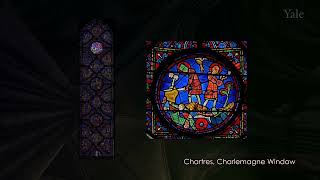
Roland's Reliquary Sword | The Age of Cathedrals with R. Howard Bloch
·
· 5m10s
Roland's sword Durendal held a tooth of St. Peter and a scrap of Mary's robe in its golden pommel, and he would rather die than let it fall into enemy hands. Professor R. Howard Bloch reads the hero's near-personal bond with his relic-filled sword, given to Charlemagne by an angel along with the horn Oliphant. The name Durendal echoes the verb "to endure," and the blade is inscribed with a whole history of conquests. Above all, Roland guards his honor, refusing to sound his horn for help until it is too late to save him. Chapters: 00:00 Roland's sacred sword Durendal 01:39 A sword that must endure 02:47 A sword inscribed with conquests 04:02 Honor over life Learning objectives: After watching, you'll be able to: - Explain why Roland's sword is treated as a sacred object - Describe the relics said to be held in its pommel - Interpret the meaning of the name Durendal - Analyze Roland's choice of honor over survival 📚 About the Course: An introduction to some of the most astonishing architectural monuments the world has ever known: the Gothic cathedrals of medieval France. Through the art, literature, intellectual life, economics, and new social arrangements that arose in the shadow of the cathedrals, you will explore the revival of cities in the twelfth and thirteenth centuries and come to a richer appreciation of the High Middle Ages, a world that is still recognizably our own. But what does that mean in practice? When you take this course, you will: Understand how the great cathedrals were built: Trace the engineering and architectural innovations, from Romanesque origins to Gothic stone and the delicate "house of glass," that made these structures possible. Learn to read cathedrals as art: Interpret the sculpture, stained glass, and relics of Saint-Denis, Notre-Dame de Paris, Chartres, and the Sainte-Chapelle, and see how their images served as the "Bible of the poor." Explore the world around the cathedrals: Discover the literature, learning, religion, and economic life of medieval cities, from Peter Abelard and the birth of the university to the everyday life lived in the cathedral's shadow. Course Takeaways: Appreciate the architecture and engineering of Gothic cathedrals Interpret medieval sculpture, stained glass, and religious art Understand the culture, religion, and society of the High Middle Ages 📺 Watch the full playlist on YouTube: https://www.youtube.com/playlist?list=PLJmpIR0QQnbQ 🎓 Enroll on Coursera for assessments and a certificate: https://www.coursera.org/learn/age-of-cathedrals 🌐 Explore more learning opportunities on Yale Online: https://online.yale.edu/courses/age-cathedrals

Vengeance or Treason: The Trial of Ganelon | The Age of Cathedrals with R. Howard Bloch
·
· 6m48s
Ganelon admits he destroyed Roland, but insists it was revenge, not treason, and the whole trial turns on that single word. Professor R. Howard Bloch reads the end of the Song of Roland, where trial by judicial combat still means the judgment of God, yet Ganelon's defense hinges on a distinction of words. In the old feudal world, an openly declared vendetta was not treason. But a new figure, Thierry, argues that a crime against a man in the king's service is a crime against the state, marking the rise of Capetian sovereignty and a more subtle, compromising legal mind. Chapters: 00:00 Judicial battle and the judgment of God 01:26 Ganelon's trial 03:14 Treason or vengeance? 04:39 Thierry and the sovereign state 05:56 A compromise verdict Learning objectives: After watching, you'll be able to: - Explain trial by judicial combat as the judgment of God - Distinguish the feudal meanings of treason and vengeance - Analyze how Thierry's argument asserts the sovereignty of the state - Interpret the compromise verdict as a sign of changing values 📚 About the Course: An introduction to some of the most astonishing architectural monuments the world has ever known: the Gothic cathedrals of medieval France. Through the art, literature, intellectual life, economics, and new social arrangements that arose in the shadow of the cathedrals, you will explore the revival of cities in the twelfth and thirteenth centuries and come to a richer appreciation of the High Middle Ages, a world that is still recognizably our own. But what does that mean in practice? When you take this course, you will: Understand how the great cathedrals were built: Trace the engineering and architectural innovations, from Romanesque origins to Gothic stone and the delicate "house of glass," that made these structures possible. Learn to read cathedrals as art: Interpret the sculpture, stained glass, and relics of Saint-Denis, Notre-Dame de Paris, Chartres, and the Sainte-Chapelle, and see how their images served as the "Bible of the poor." Explore the world around the cathedrals: Discover the literature, learning, religion, and economic life of medieval cities, from Peter Abelard and the birth of the university to the everyday life lived in the cathedral's shadow. Course Takeaways: Appreciate the architecture and engineering of Gothic cathedrals Interpret medieval sculpture, stained glass, and religious art Understand the culture, religion, and society of the High Middle Ages 📺 Watch the full playlist on YouTube: https://www.youtube.com/playlist?list=PLJmpIR0QQnbQ 🎓 Enroll on Coursera for assessments and a certificate: https://www.coursera.org/learn/age-of-cathedrals 🌐 Explore more learning opportunities on Yale Online: https://online.yale.edu/courses/age-cathedrals