
Case Study | Why Healthcare.gov Failed: Lessons in Project Management — Medical Software Course
 ·
· 6m51s
·
· 6m51s
Have you ever wondered why a massive government website could fail so spectacularly on its launch day? In this lesson, we dive deep into the infamous Healthcare.gov rollout, examining the critical missteps in its development, from an unyielding timeline and insufficient testing to the challenges of implementing an Agile methodology with constantly changing requirements. Discover the key factors that led to its initial disastrous launch and the crucial changes that ultimately brought the project back from the brink. 🎯 Learning Objectives • Understand the context of Healthcare.gov within the Affordable Care Act. • Identify the key technical and managerial failures that led to Healthcare.gov's disastrous launch. • Analyze the impact of a compressed timeline and inadequate end-to-end testing on project success. • Examine the challenges of implementing an Agile model with constantly changing requirements and a lack of 'done is done' enforcement. • Learn about the recovery strategies and cultural shifts that ultimately salvaged the Healthcare.gov platform.

MODEL STEAM ENGINES - TOP TIP TIME - PART #79
 ·
· 10m52s
·
· 10m52s
Model Steam Engines - Top Tip Time - Part #79. In this episode I show the fitting of a Stuart Water Gauge to a Stuart Boiler and an attempt to repair the Drain Tap. This method usually works, but in this case it was unsuccessful. However, in the end I came up with a novel idea that did work. https://www.patreon.com/keithappleton IF YOU ENJOY WATCHING THESE DETAILED TUTORIAL VIDEOS THAT I PRODUCE TO HELP BEGINNERS TO THE HOBBY, THEN PLEASE BECOME A PATRON OF MY YOUTUBE CHANNEL VIA "PATREON" AND ALLOW ME THE TIME TO MAKE EVEN MORE OF THESE SPECIALIST AND HIGHLY DETAILED TUTORIAL VIDEOS. AS A PATREON SUPPORTER YOU ARE ABLE TO ACCESS MANY OF MY VIDEOS THAT ARE NOT FOR PUBLIC VIEW ON YOUTUBE. PLEASE VISIT MY WEBSITE FOR THE VERY EASY TO USE COMPREHENSIVE PLAYLIST INDEX OF ALL OF MY YOUTUBE VIDEOS: www.mainsteam.co.uk OR CLICK HERE FOR PATREON: https://www.patreon.com/keithappleton Please become a member of my Youtube Channel to get access to extra videos: https://www.youtube.com/channel/UCgeQiJg-PIH5MZQn0aRd1mg/join
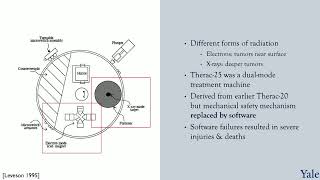
Case Study | The Therac-25 Tragedy: Software Errors Led to Fatal Overdoses | Medical Software Course
·
· 8m39s
In this lesson, we delve into the infamous Therac-25 case study, a sobering example of how medical software development can go catastrophically wrong. We will explore the series of software failures in a radiation therapy machine that led to multiple patient injuries and deaths from massive radiation overdoses, highlighting critical issues in design, testing, user interface, and the manufacturer's response, ultimately shaping modern medical device regulations. 🎯 Learning Objectives • Understand the critical role of software in medical device safety and the potential for catastrophic failure • Analyze the specific technical and procedural failures that led to the Therac-25 radiation overdose incidents • Identify the organizational and regulatory shortcomings in the response to early complaints and incidents • Explain how the Therac-25 case study significantly impacted medical device development, testing, and regulatory processes

Garrick Ohlsson Babysits Chopin's 4 Delinquent Children
 ·
· 37m6s
·
· 37m6s
Listen to The Chopin Podcast Season 2 Episode 5: ~ Apple: https://podcasts.apple.com/us/podcast/sonatas/id1765998900?i=1000723394440 ~ Spotify: https://open.spotify.com/episode/0NOYkgPLpEuMhueQtpwYwR?si=jGWf-iN0TKi4TxU5DVytfw The Chopin Podcast: https://chopinpodcast.com Chopin Foundation: https://chopin.org 0:00 Chopin's most famous (and morbid) tune 5:42 IV. Finale: Presto 9:58 III. "Marche funèbre": Lento 18:13 II. Scherzo 25:00 I. Grave – Doppio movimento 35:09 From Miami to Warsaw Created and hosted by Ben Laude. Special thanks to Ethan Chilton and Abby Tilton for their assistance in the production of this video. This podcast is produced in partnership with the Chopin Foundation of the United States, which presents the National Chopin Competition every 5 years. For more, visit https://chopin.org The Chopin Foundation is a national non-profit organization founded by its President, Blanka A. Rosenstiel in 1977, and inspired by the first US Chopin Competition she presented in Miami in 1975. Support the Chopin Foundation: https://chopin.org/donate Access uncut interviews with Garrick Ohlsson and other guests: https://patreon.com/BenLaude https://www.facebook.com/chopinpodcast https://www.instagram.com/benlawdy

12.5 | Master the Art of Fundraising:How to Raise Capital for Your Startup | Medical Software Course
·
· 22m42s
In this lesson, we dive deep into the crucial world of raising capital for your medical software venture. Discover when and how to approach different funding stages, from seed rounds to venture capital, and learn the essential strategies for presenting your ideas to investors. We'll explore common reasons why startups fail and equip you with the knowledge to navigate the fundraising landscape successfully, emphasizing the importance of market validation and strategic partnerships. 🎯 Learning Objectives • Understand key terminology and stages in capital raising, including seed, angel, venture capital, and private equity. • Identify the primary reasons why startups fail and how to mitigate these risks. • Develop effective strategies for pitching your medical software venture to potential investors. • Explore alternative funding sources such as grants, accelerators, and incubators. • Recognize the critical importance of early sales, market validation, and fair team equity distribution in securing investment.

12.4 | Finding Your First Paying Customer: The Pillpack Success Story | Medical Software Course
·
· 17m45s
Ready to land your first paying customer? In this insightful lesson, we dive deep into the strategic process of acquiring your initial customers, using the compelling case study of Pillpack. Discover how to identify critical pain points, distinguish between customer needs and wants, stratify your market effectively, and target the ideal early adopters who will champion your product, even against established competitors. 🎯 Learning Objectives • Learn a framework for identifying your first paying customer. • Differentiate between what customers "need" versus what they "want." • Understand the significance of market stratification and targeting early adopters. • Analyze the Pillpack case study to apply customer acquisition strategies.

Is Planet 9 Real?
 ·
· 0m54s
·
· 0m54s
There may be a hidden planet in our solar system…with a mass 5 to 10 times Earth and an orbit that takes more than 10,000 Earth years to go around the Sun! Scientists call it Planet 9, and they fiercely debate whether it really exists. We keep filling in the picture of what’s REALLY out there. For more optimistic science and tech stories, subscribe! #shorts #science #planet #planetnine #mystery

12.3 | Avoid Healthcare Startup Failure: Find Your Problem & Customers | Medical Software Course
·
· 18m59s
Are you considering launching a new healthcare venture? In this lesson, we delve into the essential steps for setting up a successful medical software business. We'll explore how to identify critical problems and target paying customers, understand the complex landscape of stakeholders, and navigate crucial regulatory requirements, emphasizing a human-centered design approach to avoid common startup pitfalls. 🎯 Learning Objectives • Identify the foundational questions for starting a healthcare venture: what problem to solve and for whom. • Understand the process of finding and validating your first paying customer. • Learn to conduct stakeholder mapping to identify key influencers and decision-makers. • Apply human-centered design principles (design thinking) to healthcare product development. • Recognize the importance of regulatory compliance and assembling a supportive team for entrepreneurial success.

12.2 | Healthcare's Shifting Landscape: New Business Models Led by Software| Medical Software Course
·
· 15m39s
How are healthcare business models adapting to a rapidly changing world? In this lesson, we explore the significant drivers behind the evolution of healthcare business models, from increasing costs and technological advancements to new approaches like value-based care. We'll examine various strategic models adopted by health systems and delve into the impact of patient-driven technologies and the role of software in fostering sustainable innovation. 🎯 Learning Objectives • Understand the forces driving changes in healthcare business and revenue models. • Identify and differentiate between key strategic models for health systems, such as leader, experience, integrator, and manager. • Explore the concepts of value-based healthcare and the learning healthcare system, recognizing their impact on patient outcomes and cost. • Recognize how patient-driven technologies and on-demand healthcare are empowering consumers and transforming service delivery. • Learn about the RAPID framework for achieving sustainable innovation in healthcare through regulatory, alternatives, patients, innovation, and data considerations.
12.1 | Unlocking Growth: The Key Value Drivers in Digital Medicine | Medical Software Course
·
· 12m6s
In this lesson, we shift from technical aspects to the crucial business side of launching medical software into the real world. Discover the fundamental forces driving the rapid expansion of digital medicine, including patient empowerment, innovative digital therapeutics, continuous data from biomarkers, substantial venture capital funding, and supportive government regulations. This session provides a vital overview of the ecosystem propelling digital health forward. 🎯 Learning Objectives • Identify the primary value drivers propelling the digital medicine field forward • Understand the shift towards patient empowerment and its role in healthcare transformation • Recognize examples of successful digital therapeutics and their impact on patient care • Explain how digital biomarkers and continuous patient data are revolutionizing medical understanding • Discuss the influence of venture capital funding and government regulation (FDA) on digital health innovation

Glyn Johns: Recording The Beatles, The Stones, Led Zeppelin, The Who, Eagles...
 ·
· 1h3m
·
· 1h3m
In this episode I finally have a a chance to sit down with legendary engineer and producer Glyn Johns. Johns had a heavy hand in some of rock's most classic albums, from The Beatles, to Led Zeppelin, The Rolling Stones, The Who, Eagles and Eric Clapton. His techniques and insight changed the sound of recorded music forever. My Beato Club supporters: Justin Scott Terence Mark Jason Murray Lucienne Kilpatrick Alexander Young Jason Wagner Todd Ladner Rob Kline Nicholas Long Tim Benson Leonardo Martins da Costa Rodrigues Eddie Perez David Solomon MICHAEL JOYCE Stephen Stubbs colin stead Jonathan Wentworth-Linton Patrick Payne MATTHEW KARIS Matthew Barouch Shaun Samuels Danny Kurywchak Gregory Reedy Sean Coleman Alexander Verbitskiy CL Turner Jason Pappafotis John Fulford Margaret Carno Robert C David M Combs Eric Flatt Reto Spoerli Herr Moritz Adam Monte St. Johns Jon Beezley Peter DeVault Eric Nabstedt Eric Beggs Rich Germano Brian Bloom Peter Pillitteri Piush Dahal Toby Guidry
11.6 | Navigating AI/ML Challenges in Medical Software Development — Medical Software Course
·
· 15m45s
In this lesson, Professor John Onofrey delves into the unique practical issues and challenges that Artificial Intelligence and Machine Learning applications encounter throughout the medical software life cycle. He contrasts these with traditional software development, highlighting the critical role of training data, risk assessment from sources like distributional shifts and adversarial attacks, and the necessity for robust system design to manage the inherent 'black box' nature and potential failures of AI/ML models in clinical settings. 🎯 Learning Objectives • Differentiate the unique requirements and challenges of AI/ML applications within the medical software life cycle from traditional software. • Identify and understand critical risk factors for AI/ML systems, such as distributional shifts, adversarial attacks, and performance drift. • Explain the intrinsic link between training data, model development, and the importance of reproducibility and quality control. • Articulate the concept of treating AI/ML components as "unsafe" and designing robust systems with failure mitigation strategies, including human-in-the-loop approaches. • Describe the distinct workflows for training and deploying AI/ML models and the need for continuous post-market monitoring.

11.5 | Navigating Singapore AI/ML Med Device Regs: A Dive into Guidelines — Medical Software Course
·
· 9m4s
How are AI/ML medical devices regulated in Singapore? In this lesson, we take a detailed look at the Health Sciences Authority's (HSA) regulatory guidelines for software medical devices, focusing specifically on artificial intelligence and machine learning applications. We'll explore the unique requirements for pre-market submissions, delve into considerations for continuously learning systems, and understand the critical aspects of post-market monitoring to ensure safety and effectiveness. 🎯 Learning Objectives • Understand Singapore's regulatory framework for AI/ML medical devices. • Identify key pre-market submission requirements for AI-MDs, including dataset and model documentation. • Explain considerations for continuously learning AI/ML systems, such as bias prevention and rollback capabilities. • Describe the importance of post-market monitoring for AI/ML medical devices to prevent performance drift. • Recognize the challenges and future outlook for regulating AI/ML in medical software.

11.4 | Navigating AI/ML Regulations: Global Guidance for Medical Software Course
·
· 15m58s
In this lesson, we delve into the evolving landscape of regulatory guidance for artificial intelligence and machine learning in medical software. As AI/ML technologies hold immense promise for healthcare, regulators worldwide are grappling with the challenge of fostering innovation while ensuring patient safety, particularly concerning self-updating algorithms and the critical role of data management. We explore various international frameworks and the complexities of ensuring robust, explainable AI in medical applications. 🎯 Learning Objectives • Understand the regulatory challenges associated with AI/ML in medical software, balancing innovation with patient safety. • Identify key aspects of international regulatory guidance from Germany, China, and the FDA, including AI life cycle, data management, and validation. • Differentiate between interpretable AI and explainable AI in the context of regulatory requirements like the GDPR’s “right to an explanation.” • Recognize the paradigm shift from code to data as the most critical aspect in developing and regulating machine learning models. • Explain the importance of robust testing and validation strategies for AI/ML algorithms, including prospective vs. retrospective trials and independent evaluation.

11.3 | Demystifying Deep Learning: Neural Networks & Med. AI Applications – Medical Software Course
·
· 16m44s
Ever wondered how machines learn to interpret complex data like medical images? In this lesson, Prof. Nicha Dvornek provides a comprehensive introduction to deep learning, a powerful subfield of machine learning inspired by the human brain. We'll explore the foundational concepts of neural networks, understand how different layers like convolutional and recurrent networks process information, and discover their transformative applications across healthcare, from image analysis to genetic data processing. 🎯 Learning Objectives • Define deep learning as a subfield of machine learning and its neural network foundation. • Explain the basic computational model of a neuron and how multiple layers form a neural network. • Understand the purpose and function of various deep learning layers, including convolutional filters, LSTM, dropout, and pooling. • Identify common neural network architectures, such as the U-Net, and their applications in medical image analysis. • Discuss the diverse applications of deep learning in healthcare and name popular deep learning toolkits.

11.2 | Evaluate ML Methods Ethically: Avoid P-Hacking for Reprod. Results | Medical Software Course
·
· 8m45s
In this lesson, we delve into the critical aspects of evaluating machine learning methods and the vital importance of data integrity. We'll explore fundamental concepts like separate training and testing sets, cross-validation techniques, and the significant challenge of 'p-hacking' that can undermine research reproducibility. Understanding these issues is crucial for developing robust and trustworthy medical software. 🎯 Learning Objectives • Understand the core principles of evaluating machine learning models. • Differentiate between training and testing data, and the importance of generalization. • Explain K-fold and leave-one-out cross-validation techniques. • Recognize the prevalence and impact of data cleaning in real-world machine learning applications. • Define 'p-hacking' and its implications for the reliability and reproducibility of machine learning research.

11.1 | Demystifying AI & ML: A Core Introduction for Medical Software Course
·
· 17m6s
What exactly are Artificial Intelligence and Machine Learning, and how do they apply to the critical field of medical software? In this lesson, we dive into the foundational concepts of AI and ML, exploring their definitions, applications, and the unique challenges they present when integrated into healthcare systems. We also touch upon the crucial regulatory aspects and the distinction between supervised learning, classification, and regression. This introduction lays the groundwork for understanding how these powerful technologies are shaping the future of medical diagnostics and treatment. 🎯 Learning Objectives • Define Artificial Intelligence (AI), Machine Learning (ML), and Deep Learning within the medical software context. • Understand the fundamental concepts of supervised learning, including its training and application phases. • Differentiate between classification and regression as common machine learning applications. • Identify key challenges in implementing machine learning, such as data scarcity, high dimensionality, and overfitting. • Recognize the importance of regulatory considerations for AI/ML in medical software.

10.5 | Medical Software's Lifespan: Maintenance & Safe Retirement Strategy | Medical Software Course
·
· 11m56s
Have you considered the full lifespan of medical software beyond its initial release? In this lesson, we delve into the often-overlooked yet critical phases of medical software maintenance and retirement. You'll learn why maintenance is the longest and most challenging part of a software's life, involving continuous updates, bug fixes, and urgent cybersecurity patches. We'll also explore the controlled and deliberate process of retiring software, from providing ample warning to ensuring secure data migration and privacy protection as systems reach their end-of-life. 🎯 Learning Objectives • Understand the importance and challenges of medical software maintenance throughout its lifecycle. • Identify the key steps and procedures involved in effective software maintenance, including problem analysis and risk evaluation. • Recognize the critical role of cybersecurity in continuous software maintenance and vulnerability reporting. • Explain the structured process of medical software retirement and decommissioning, including providing customer support and safeguarding data privacy. • Appreciate the complexities of maintaining legacy code and the impact of clean coding practices.

10.4 | Deploying Medical Software: From Lab to User Safely | Medical Software Course
·
· 7m46s
In this lesson, we delve into the critical process of deploying medical software, moving it from development to the end-user environment. We explore why planning for deployment must begin at the project's inception, addressing challenges like mobile app store gatekeepers. Key steps include ensuring software verification, finalizing documentation, identifying potential anomalies, and establishing repeatable delivery and installation procedures. The discussion also covers essential user training, setup configuration, and the vital role of risk management, including informing users about residual risks and hazards, as demonstrated by the Therac-25 case. Finally, we highlight the continuous nature of post-market clinical follow-up for ongoing safety and performance. 🎯 Learning Objectives • Explain the crucial steps involved in deploying medical software, from development to end-user delivery. • Understand why deployment considerations must be integrated from the very beginning of a project. • Identify key pre-deployment tasks, including verification, documentation, and anomaly management. • Discuss the importance of user training, configuration documentation, and repeatable deployment processes. • Recognize the critical role of risk management and post-market surveillance in ensuring the safety of deployed medical software.

I Solved Klotski
 ·
· 12m20s
·
· 12m20s
http://brilliant.org/2swap/ - Click here for a 30 day Brilliant free trial and 20% discount on an annual premium subscription! If you liked this, please support me on Patreon! https://www.patreon.com/c/2swap You can support the musician, 6884, on Kofi: https://ko-fi.com/iam6884 Check out his music here! https://6884.bandcamp.com/ Video animated with SwapTube: https://github.com/2swap/swaptube Thanks to Lim Kai Yi for letting me use the Klotski Guinness WR footage! https://www.youtube.com/@limkaiyiworldrecord Play with the graph interactively online: https://2swap.github.io/Klotski-Webpage/ Join our discord server about math, computer science, and other miscellaneous nerd stuff! https://discord.com/invite/XDb7x2BZAE

10.3 | Crafting Your Medical Software Validation Plan: Principles & Steps | Medical Software Course
·
· 9m48s
In this lesson, we dive into the fundamental principles of creating a robust validation plan for medical software. You'll learn how to translate qualitative user needs into objective, quantitative criteria, understand the structure of a comprehensive plan, and discover why early engagement with a statistician is paramount for successful validation studies. 🎯 Learning Objectives • Understand the foundational principles for creating a medical software validation plan. • Learn to define specific, quantitative, and testable goals for validation studies. • Grasp the four key components of a validation plan: goal, rationale, methods, and data analysis. • Recognize the critical importance of early consultation with a statistician for effective study design and analysis. • Explore examples of how to validate new solutions against existing methods or the standard of care.

10.2 | Unlocking Clinical Trials: Design, Ethics & Regulatory Pathways – Medical Software Course
·
· 9m1s
Have you ever wondered what goes into bringing a new medical device or drug to market? In this lesson, we delve into the world of clinical trials, covering their fundamental design, the crucial regulatory landscape, and the ethical principles that safeguard human subjects. From understanding prospective and randomized studies to navigating FDA approvals and the various phases of drug development, this segment provides a comprehensive overview of how medical innovations are safely and effectively tested. 🎯 Learning Objectives • Understand the definition and purpose of clinical trials, including the importance of preregistration to ensure research integrity. • Differentiate between prospective and randomized clinical trial designs and their significance as the "gold standard." • Explain the regulatory pathways for testing medical devices, including IRB approval and Investigational Device Exemptions (IDEs), and describe feasibility and pivotal studies. • Outline the phases of drug development (Phase 1, 2, 3, and post-market) and their respective objectives. • Discuss the core ethical considerations in clinical research, specifically informed consent and the importance of diversity in study populations, referencing the Helsinki Declaration.

10.1 | Unlocking Medical Software Validation: Efficacy, FDA, Clinical Eval – Medical Software Course
·
· 11m29s
10.1 | Unlocking Medical Software Validation: Efficacy, FDA & Clinical Evaluation – Medical Software Course Have you ever wondered what it takes to ensure medical software truly meets patient needs and performs reliably in a clinical setting? In this lesson, we conclude our exploration of the medical software lifecycle by delving into the critical process of validation. We'll uncover how validation goes beyond mere functionality, focusing on the software's ability to deliver clinically meaningful outcomes, guided by FDA principles of efficacy, safety, and security, with a special emphasis on proving efficacy through objective, quantitative criteria. 🎯 Learning Objectives • Define software validation as distinct from verification, emphasizing its focus on user needs and clinical efficacy. • Outline the three core components of clinical evaluation for medical software: Valid Clinical Association, Analytical Validation, and Clinical Validation. • Differentiate between standalone testing and user-plus-system testing in the context of computer-aided diagnosis, and explain their roles in demonstrating clinical performance. • Explain the importance of independent review in the validation process, particularly for higher-risk medical software, and its implications for AI/machine learning models.

9.8 | Unmasking Bias: Why Randomization is Crucial in Medical Trials - Medical Software Course
·
· 5m48s
In this lesson, we delve into the critical role of randomization in clinical trials and software validation. Discover how assigning participants by chance eliminates hidden biases and prevents misleading results, as famously illustrated by Simpson's paradox. We'll explore why proper randomization is the gold standard for demonstrating effective interventions in medical and technological studies. 🎯 Learning Objectives • Understand the fundamental concept of randomization in scientific studies. • Recognize why randomization is crucial for eliminating hidden biases in drug trials and software validation. • Learn about Simpson's paradox and how it demonstrates the dangers of failing to randomize. • Apply the principles of randomization to ensure robust and reliable results in medical software development.

9.7 | From Guinness to Clinical Trials: The Story of T-Distribution | Medical Software Course
·
· 10m46s
Ever wondered where the t-distribution came from? In this lesson, we conclude our exploration of statistical significance by delving into the fascinating history of the t-distribution, born out of the Guinness Brewery. We then transition to its crucial role in modern clinical trials, explaining power analysis, type I and type II errors, and the importance of sample size. Finally, we discuss critical caveats and common misinterpretations of statistical significance and p-values. 🎯 Learning Objectives • Explore the historical origins of the t-distribution, including its connection to the Guinness Brewery. • Understand the characteristics of the t-distribution, particularly its "fatter tails" and higher probability of extreme values. • Learn about power analysis and its use in determining appropriate sample sizes for clinical trials. • Differentiate between Type I and Type II errors and grasp the concept of statistical power. • Recognize the limitations and common misinterpretations of statistical significance, including the issue of p-hacking.

9.6 | What is Statistical Significance? Clinical Trials Explained - Medical Software Course
·
· 11m12s
Have you ever wondered what 'statistically significant' truly means in a clinical trial? In this lesson, we demystify this critical concept, differentiating it from real-world clinical importance. We'll explore the foundational mathematical techniques useful for designing and interpreting clinical trials, including the process of hypothesis testing, the role of p-values, the t-test, and how sample size influences our conclusions. We'll also examine the historical context of the p 0.05 threshold. Our goal is for you to confidently understand the vocabulary and methods behind these crucial statistical analyses. 🎯 Learning Objectives • Distinguish between real and statistical significance in clinical trials • Understand the core principles of hypothesis testing, including the null hypothesis • Explain how p-values are calculated and interpreted to determine statistical significance • Describe the components and application of an unpaired T-test • Recognize the impact of sample size on statistical significance and trial power

9.5 | Signal Detection & ROC Curves: Optimizing Medical Software Decisions | Medical Software Course
·
· 12m9s
How do we make critical decisions from data, especially when mistakes can be costly? In this lesson, we delve into the fundamental problem of signal detection, exploring its origins in radar and its vital applications in medical software, such as cancer screening. We'll uncover the delicate balance between false positives and false negatives, understand the concepts of sensitivity and specificity, and learn how Receiver Operating Characteristic (ROC) curves and Area Under the Curve (AUC) are used to evaluate and optimize the performance of detection algorithms. 🎯 Learning Objectives • Understand the fundamental problem of signal detection and its relevance in medical applications. • Identify and differentiate between true positives, false negatives, false positives, and true negatives. • Define and explain the concepts of sensitivity and specificity in the context of detection algorithms. • Analyze the trade-off between sensitivity and specificity when setting detection thresholds. • Interpret Receiver Operating Characteristic (ROC) curves and Area Under the Curve (AUC) to evaluate algorithm performance.

9.4 | Demystify Probability Density Functions - Medical Software Course
·
· 6m37s
Have you ever wondered how we predict the likelihood of events in complex medical scenarios? In this lesson, we delve into the critical statistical procedure of estimating probability density functions. We'll explore the necessity of using large, representative samples, the role of prior knowledge, and the fundamental differences between parametric and non-parametric estimation methods to ensure accurate predictions and reliable clinical trial results. 🎯 Learning Objectives • Understand the process and importance of estimating probability density functions. • Differentiate between samples and populations, emphasizing the need for representative samples. • Discuss the role and controversies of incorporating prior knowledge in statistical estimation. • Compare and contrast parametric and non-parametric methods for PDF estimation. • Identify when to apply parametric versus non-parametric techniques based on data characteristics.

9.3 | Intro to Statistics: Unlocking Data for Medical Software Course
·
· 9m55s
Have you ever wondered how data informs critical decisions in medical software development? In this lesson, we dive into a foundational introduction to statistics, exploring its crucial role in validating software. We'll uncover what statistics are, how to draw meaningful conclusions from samples to understand entire populations, and differentiate between point and interval estimation. We'll also examine the fundamental Central Limit Theorem and the Law of Large Numbers, crucial concepts for robust statistical analysis. 🎯 Learning Objectives • Define statistics and their core function in software validation • Distinguish between samples and populations in statistical inference • Grasp the principles of point and interval estimation • Understand the significance of the Central Limit Theorem and the Law of Large Numbers
9.2 | Master Conditional Probability with Bayes' Rule & Medical Scenarios | Medical Software Course
·
· 7m28s
In this lesson, we dive deeper into probability theory, exploring how to calculate probabilities for multiple events. We'll uncover the crucial concept of independent events and introduce Bayes' Rule, a foundational principle for 'belief updating' in the face of new information. Through engaging examples ranging from coin flips and dice rolls to critical medical diagnostic scenarios, you'll learn how to interpret and apply conditional probabilities to make informed assessments. 🎯 Learning Objectives • Understand the definition and implications of independent events in probability • Apply the formula for calculating the joint probability of independent events • Learn Bayes' Rule and its significance in determining posterior probabilities • Grasp the concept of "belief updating" using conditional probability • Analyze real-world examples, including medical diagnoses, to illustrate the practical application of multiple event probabilities

9.1 | From Coin Flips to Clinical Trials: Introduction to Probability - Medical Software Course
·
· 11m35s
Why is probability essential for medical software development? In this lesson, we take a crucial detour from the software lifecycle to explore the mathematical foundations of probability and statistics. We'll introduce key concepts from an engineering perspective, demonstrating their application in critical areas like signal detection and the design of robust clinical trials and validation studies, which are vital for reliable medical software. 🎯 Learning Objectives • Distinguish between deterministic and stochastic systems in an engineering context. • Define and differentiate between discrete and continuous probability density functions (PDFs). • Explain the application of probability in medical software, including signal detection and clinical trial design. • Understand the concepts of cumulative distribution functions (CDFs) and survival functions. • Identify and interpret multivariate probability distributions.

8.5 | Essential Medical Software Verification & Testing Strategies | Medical Software Course
·
· 11m42s
In this lesson, we explore the crucial regulatory guidance for medical software verification and testing, examining its profound implications for risk management. You'll learn how to develop a comprehensive testing plan, covering everything from initial unit tests to real-world interoperability and even user satisfaction, ensuring your medical software meets the highest standards of safety and effectiveness. 🎯 Learning Objectives • Summarize regulatory guidance for medical software verification and testing. • Explain how risk classification influences medical software testing requirements. • Distinguish between unit, integration, and system testing stages for medical software. • Discuss the importance of real-world, interoperability, and user delight testing. • Outline key elements for developing a comprehensive medical software testing plan.

8.4 | Master Real-Time fMRI Integration Testing with Simulators | Medical Software Course
·
· 7m51s
Have you ever wondered how complex medical software is tested when it interacts with expensive, specialized hardware? In this lesson, we delve into the world of integration testing within real-time fMRI systems, highlighting the unique challenges of connecting custom software with existing MRI scanners and feedback computers. You'll discover how innovative simulation strategies overcome these hurdles, enabling efficient development and debugging without constant access to live equipment. 🎯 Learning Objectives • Understand the core concepts and applications of real-time fMRI. • Identify the software and hardware components within a real-time fMRI setup. • Recognize the specific challenges of integration testing in complex medical imaging environments. • Explain how simulators are effectively utilized to facilitate integration testing for medical software. • Appreciate the benefits of simulation for parallel development and cost-effective testing.

Do Chords Like THIS Work With DISTORTION?
 ·
· 0m45s
·
· 0m45s
Careful with the distortion if you want to play chords like this! Watch the full video here: https://bit.ly/453empZ



Exploring the Heart of Iran and Uzbekistan: Nowruz, Sufis & Traditions | Full Documentary
 ·
· 43m7s
·
· 43m7s
The impressive desert and mountainous areas of Iran and Uzbekistan are a traveler’s dream destination. In the desert city of Yazd we encounter places and traditions of the Persian Zoroastrian religion. In Kerman we get intimate impressions of a family’s preparations for the New Year’s celebration Nowruz. Then it’s on to bigger adventures: snowy mountains, incredible heights, salt deserts and finally the incredible desert scenery of Kalout. Our way is also paved by the fascinating and open people we meet: a camel breeder, women who share their stories of peasant life, a Sufi Master and herbalist who lets us in on the secrets of his trade and religious practice. More Get.factual Documentaries: https://youtu.be/OkQOQUrayxo *This video has been re-uploaded for your enjoyment due to a previous video error* -- Welcome to the official Get.factual youtube channel! 🌍 We are a documentary streaming channel covering history, science, technology, and nature. Explore worlds distant, forgotten, and unknown; from the depths of ocean trenches to the far reaches of the cosmos. New uploads of full-length documentaries and docu-series every week! Subscribe here: https://bit.ly/GetfactualSUB

Why Fictional Religions Feel So Fake
 ·
· 19m37s
·
· 19m37s
Compare news coverage. Spot media bias. Avoid algorithms. Try Ground News today and get 40% off your subscription by going to https://ground.news/religionforbreakfast Why do fictional religions feel so fake? This video explores what fantasy and sci-fi often miss about real-world religion—like ritual, syncretism, and lived practice—and how adding these elements can make your worldbuilding feel more authentic and alive. Join our Patreon community! https://www.patreon.com/religionforbreakfast Select imagery/video supplied by Getty Images and Reuters 00:00 Intro 3:00 Syncretism 6:45 Ritualization 11:08 Religious Materiality 13:26 Lived Religion

The Godfather… on a 2025 Falko Römmich 🎸
 ·
· 0m58s
·
· 0m58s
🎸This guitar is available in our Siccas Guitars shop: https://www.siccasguitars.com/shop/guitar/falko-roemmich-2025/ Support our channel and become a SiccasGuitars Member with exclusive classical guitar nerd perks: https://www.youtube.com/channel/UCR39sLAZ5wS_vrMo4tRylHw/join ‾‾‾‾‾‾‾‾‾‾‾‾‾‾‾‾‾‾‾‾‾‾‾‾‾‾‾‾‾‾‾‾‾‾‾‾‾‾‾‾‾‾‾‾‾‾‾‾‾‾‾‾‾‾‾‾‾‾‾‾‾‾‾‾ Follows us on: ► Instagram: https://www.instagram.com/siccasguitars/ ► TikTok: https://www.tiktok.com/@siccasguitars ► Facebook: https://www.facebook.com/siccasguitars/ ► Twitter: https://twitter.com/siccasguitars WEBSITES: ► https://www.siccasmedia.com/ ► https://www.siccasguitars.com/ ► https://playsomethingcool.com/ NEWSLETTER: ► http://bit.ly/SiccasGuitars CONTACT US: ► info@siccasguitars.com ► 76137 Karlsruhe, Roonstr. 31, Germany ‾‾‾‾‾‾‾‾‾‾‾‾‾‾‾‾‾‾‾‾‾‾‾‾‾‾‾‾‾‾‾‾‾‾‾‾‾‾‾‾‾‾‾‾‾‾‾‾‾‾‾‾‾‾‾‾‾‾‾‾‾‾‾‾ ►►ANA VIDOVIC https://www.youtube.com/playlist?list=PLWOAHYyavpQhzY5wkpHE0_AGu72x7JjdN ►►J S BACH https://www.youtube.com/playlist?list=PLWOAHYyavpQiRD8C05bGImSEXp5KLpMSk ►► ALBUMS & CONCERTS https://www.youtube.com/playlist?list=PLWOAHYyavpQj1YvhqLIO5EGz9ikpYTc2m ‾‾‾‾‾‾‾‾‾‾‾‾‾‾‾‾‾‾‾‾‾‾‾‾‾‾‾‾‾‾‾‾‾‾‾‾‾‾‾‾‾‾‾‾‾‾‾‾‾‾‾‾‾‾‾‾‾‾‾‾‾‾‾‾ Classical guitars are our passion! We are specialized in the highest quality concert guitars as well as historic guitars from around the world. Our passion for these unique instruments and the joy to give guitarists, passionate players, and collectors the possibility to purchase their own appropriate instrument is the motivation that drives us. Another focus is to work closely with established and young, largely unknown luthiers. Together we want to develop new ideas and share experiences with our customers. We also recorded pieces for many great composers such as Johann Sebastian Bach, Astor Piazzolla and Isaac Albeniz (Asturias). You will also find almost all the classical music composers that wrote for the classical guitar. Make sure to discover Agustin Barrios Mangoré, Manuel Maria Ponce, Heitor Villa-Lobos and many more if you don't know their compositions already You can find our showroom in 76137 Karlsruhe, Roonstr. 31, Germany ‾‾‾‾‾‾‾‾‾‾‾‾‾‾‾‾‾‾‾‾‾‾‾‾‾‾‾‾‾‾‾‾‾‾‾‾‾‾‾‾‾‾‾‾‾‾‾‾‾‾‾‾‾‾‾‾‾‾‾‾‾‾‾‾ #SiccasGuitars # # ‾‾‾‾‾‾‾‾‾‾‾‾‾‾‾‾‾‾‾‾‾‾‾‾‾‾‾‾‾‾‾‾‾‾‾‾‾‾‾‾‾‾‾‾‾‾‾‾‾‾‾‾‾‾‾‾‾‾‾‾‾‾‾‾ Lighted by Nyta: https://www.nyta.eu/en/

$50 Coffee Grinder Vs Pre-ground From A $3,500 Grinder
 ·
· 20m31s
·
· 20m31s
Grab your Discovery Box from Cometeer here: https://www.cometeer.com/jameshoffmann Prima Coffee's Original Test: https://prima-coffee.com/learn/article/grinder-basics/it-always-better-grind-fresh/32594 This was a super fun experiment to revisit, and the results were not entirely what I expected! Other Links: Patreon: https://www.patreon.com/jameshoffmann Limited Edition Merch: https://geni.us/TensHundredsThousands Instagram: https://www.instagram.com/jimseven Twitter: https://www.twitter.com/jimseven My Books: How to Make The Best Coffee At Home*: https://geni.us/howtomakethebestcoffee The World Atlas of Coffee*: http://geni.us/atlasofcoffee The World Atlas of Coffee Audiobook*: https://bit.ly/worldatlasofcoffeeaudio The Best of Jimseven*: https://geni.us/bestofjimseven Things I use and like: My old glasses: http://bit.ly/boldlondon My new glasses (Sept 2024 onwards): https://bit.ly/thenewglasses My hair product of choice*: https://geni.us/forthehair (*Affiliate links which may earn us a commission)

Sahana | Featuring Supriya Raja & Srividya Vadlamani
 ·
· 8m36s
·
· 8m36s
To be informed about Madrasana events join the whatsapp group by clicking here https://chat.whatsapp.com/JJY7vXBaEHCDwHldTcP7CB To Contribute to MadRasana, please click the 'Thanks' button under the video. It will help us make more such videos in future. If you are a musician and want to be considered for featuring in our channel click the link below https://forms.gle/bDdZnamY33rqZXoW7 Series: MadRasana Duet | Medley Chapters 0:00 Sahana Medley | Sahana Artists Vocal : Supriya Raja & Srividya Vadlamani Sahana is a rāga that combines softness with depth, its rakthitva shining through every nuanced phrase and emotive line. It is this quality that makes it both soothing and captivating. This medley weaves together a mix of popular and rare compositions, chosen to present a concert setlist experience: 1. Riri swaroditam - Parama Pujya Sri Ganapathy Sachchidananda Swamiji's Swaradevata composition 2. Varnam - Karunimpa - Adi 3. Navavarnam - Sri Kamalambikayam ( Karadhrutha veena vadinyam) - Muthuswami Dikshitar - Triputa 4. E Vasudha - Chittaiswaram - Tyagaraja - Adi 5. Vandanamu Raghunandana - Tyagaraja - Adi 6. Chittam Irangadadenayya - Papanasam Sivan - Misra Chapu (Kalpana swaram rounds alternating) 7. Jaya jaya raghurama - Swathi Tirunal - Misra Chapu ( Nayana jitha kamala ) 8. Rama ika nannu - Patnam Subramanya Iyer - Rupakam ( Aarushatruvulanu ) 10. Giripai nelakonna - Tyagaraja 11. Padam - Ini ennanpechirukudu po po - Subbarama Iyer - Rupakam 12. Thiruppugazh - Palakalum unnai thozhuvirgal - Arunagirinathar 13. Thillana - Mysore T Chowdiah - Adi Credits Vocal - Supriya Raja & Srividya Vadlamani Audio Recording, Mix and Master : MT Aditya Srinivasan Cinematography & Post Production: M Muthukrishnan Concept and Production: Mahesh Venkateswaran #madrasana #madrasanaduet #sahana
A Beauty from Italy! Weekly Guitar Meeting #170 - Römmich, Weissgerber, Nannoni, Meeus, T'kindt...
·
· 37m27s
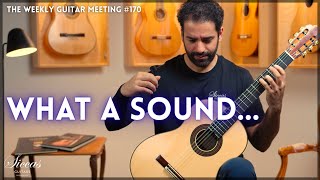
Welcome to The Weekly Guitar Meeting, your go-to video series for staying updated on the latest, finest, and most thrilling classical guitars hitting the international market. At Siccas Guitars, we've been curating the finest classical guitars for over a decade from our Germany-based shop, and we unveil new masterpieces for sale every week. Join us as professional guitarists and Siccas Guitars team member, Jouyan Tarzaban, shares exciting insights, delves into the background of these instruments, and most importantly, let you experience their sound firsthand. 😊 Enjoy the show! https://www.knoblochstrings.com/product-page/edc-erithacus-medium-high-34-0 00:00 Richard Jacob Weissgerber - 1936 - Torres / Simplicio - 64 cm 🎸 Guitar: https://www.siccasguitars.com/shop/guitar/richard-jacob-weissgerber-1936-torres-simplicio 07:06 Giancarlo Nannoni - 2025 Contemporary 🎸 Guitar: https://www.siccasguitars.com/shop/guitar/giancarlo-nannoni-2025-contemporary 13:03 Kristof Meeus - 2025 Lattice 64 cm 🎸 Guitar: https://www.siccasguitars.com/shop/guitar/kristof-meeus-2025-lattice-64-cm 19:00 Falko Römmich - 2025 🎸 Guitar: https://www.siccasguitars.com/shop/guitar/falko-roemmich-2025 24:45 Johannes T'Kindt - 2025 🎸 Guitar: https://www.siccasguitars.com/shop/guitar/johannes-tkindt-2025 30:42 Rafal Turkowiak - 2025 Opus Prime No. 721 🎸 Guitar: https://www.siccasguitars.com/shop/guitar/rafal-turkowiak-2025-opus-prime-no-721 Support our channel and become a SiccasGuitars Member with exclusive classical guitar nerd perks: https://www.youtube.com/channel/UCR39sLAZ5wS_vrMo4tRylHw/join ‾‾‾‾‾‾‾‾‾‾‾‾‾‾‾‾‾‾‾‾‾‾‾‾‾‾‾‾‾‾‾‾‾‾‾‾‾‾‾‾‾‾‾‾‾‾‾‾‾‾‾‾‾‾‾‾‾‾‾‾‾‾‾‾ Follows us on: ► Instagram: https://www.instagram.com/siccasguitars/ ► TikTok: https://www.tiktok.com/@siccasguitars ► Facebook: https://www.facebook.com/siccasguitars/ ► Twitter: https://twitter.com/siccasguitars WEBSITES: ► https://www.siccasmedia.com/ ► https://www.siccasguitars.com/ ► https://playsomethingcool.com/ NEWSLETTER: ► http://bit.ly/SiccasGuitars CONTACT US: ► info@siccasguitars.com ► 76137 Karlsruhe, Roonstr. 31, Germany ‾‾‾‾‾‾‾‾‾‾‾‾‾‾‾‾‾‾‾‾‾‾‾‾‾‾‾‾‾‾‾‾‾‾‾‾‾‾‾‾‾‾‾‾‾‾‾‾‾‾‾‾‾‾‾‾‾‾‾‾‾‾‾‾ ►►ANA VIDOVIC https://www.youtube.com/playlist?list=PLWOAHYyavpQhzY5wkpHE0_AGu72x7JjdN ►►J S BACH https://www.youtube.com/playlist?list=PLWOAHYyavpQiRD8C05bGImSEXp5KLpMSk ►► ALBUMS & CONCERTS https://www.youtube.com/playlist?list=PLWOAHYyavpQj1YvhqLIO5EGz9ikpYTc2m ‾‾‾‾‾‾‾‾‾‾‾‾‾‾‾‾‾‾‾‾‾‾‾‾‾‾‾‾‾‾‾‾‾‾‾‾‾‾‾‾‾‾‾‾‾‾‾‾‾‾‾‾‾‾‾‾‾‾‾‾‾‾‾‾ Classical guitars are our passion! We are specialized in the highest quality concert guitars as well as historic guitars from around the world. Our passion for these unique instruments and the joy to give guitarists, passionate players, and collectors the possibility to purchase their own appropriate instrument is the motivation that drives us. Another focus is to work closely with established and young, largely unknown luthiers. Together we want to develop new ideas and share experiences with our customers. We also recorded pieces for many great composers such as Johann Sebastian Bach, Astor Piazzolla and Isaac Albeniz (Asturias). You will also find almost all the classical music composers that wrote for the classical guitar. Make sure to discover Agustin Barrios Mangoré, Manuel Maria Ponce, Heitor Villa-Lobos and many more if you don't know their compositions already You can find our showroom in 76137 Karlsruhe, Roonstr. 31, Germany ‾‾‾‾‾‾‾‾‾‾‾‾‾‾‾‾‾‾‾‾‾‾‾‾‾‾‾‾‾‾‾‾‾‾‾‾‾‾‾‾‾‾‾‾‾‾‾‾‾‾‾‾‾‾‾‾‾‾‾‾‾‾‾‾ #SiccasGuitars #guitarreview #newarrivals ‾‾‾‾‾‾‾‾‾‾‾‾‾‾‾‾‾‾‾‾‾‾‾‾‾‾‾‾‾‾‾‾‾‾‾‾‾‾‾‾‾‾‾‾‾‾‾‾‾‾‾‾‾‾‾‾‾‾‾‾‾‾‾‾ Lighted by Nyta: https://www.nyta.eu/en/

Seiko "Pogue" Quick Set Calendar
 ·
· 0m36s
·
· 0m36s
This Seiko "Pogue" from the 70's has a lot going on, like a feature to quickly set the date. #watches #watchmaking #watchrepair

Being a reserve currency is like shepherding delinquent children | David McWilliams
 ·
· 1m50s
·
· 1m50s
With a free trial, you can watch the full debate at https://iai.tv/video/the-us-dollar-and-the-future-of-the-world #economics #centralbanking #currency #financialcrisis

100 Hours in Europe's Most Underrated City - Baku, Azerbaijan 🇦🇿
 ·
· 14m5s
·
· 14m5s
I traveled to Azerbaijan to see the Belt and Road Initiative. What I found was an incredible country and story. Azerbaijan is forging a bold new path moving forward and in today's video I take you to the streets of Baku to learn more about the Ancient Silk Road and how Azerbaijan is planning an incredible future with China 00:00 - Intro to the Silk Road 00:39 - Why Azerbaijan is So Important 01:58 - Azerbaijan's Fire Mountain 02:50 - How Oil Transformed Azerbaijan 03:49 - Baku's Old City 04:37 - Azerbaijan Carpet Museum 05:12 - The Port of Baku 06:00 - How Baku Transformed With Urban Development 07:10 - Baku's White City 08:04 - How Azerbaijan is Using Renewable Energy 09:40 - The People of Azerbaijan 10:22 - How Diversity Shapes Azerbaijan's Future 11:48 - Why We Need More Win Win Partnerships 12:57 - Conclusion ✅ Join our new Locals Community here: https://cyrusjanssen.locals.com/ ✅ Join this channel to get access to perks: https://www.youtube.com/channel/UCxEQsjgRRfGWiJJu_PDygxw/join -------------------------- If you'd like to support the channel / 如果你想支持我的频道: 🅿️ Patreon: https://www.patreon.com/cyrusjanssen ☕ Buy me a Coffee: https://www.buymeacoffee.com/cyrusjanssen 🧧 WeChat / 微信: https://prnt.sc/u3inr6 ➡️ PayPal: https://www.paypal.com/cgi-bin/webscr?cmd=_s-xclick&hosted_button_id=8VB8979JHJ97W ₿ Bitcoin: 32go3tLiu88jibJhWgK3RstmXsW2FFELJ8 -------------------------- ✅ Subscribe to my newsletter: http://cyrusjanssen.substack.com ✅ YouTube: https://www.youtube.com/cyrusjanssen?sub_confirmation=1 ✅ Facebook: https://www.facebook.com/cyrustalkschina ✅ Twitter: https://twitter.com/thecyrusjanssen ✅ 西瓜视频:https://www.ixigua.com/home/4468069057169668 ✅ B站视频:https://space.bilibili.com/1052709457 ✅ 抖音:@温哥华老外 -------------------------- 📸 Products I use to Produce my Vlogs: Camera: https://amzn.to/2M9pWqx Tripod: https://amzn.to/2OUz2dh Microphone: https://amzn.to/2u1oJNs Lighting: https://amzn.to/2UWkSw8 Drone: https://amzn.to/3jw1WxF #china #azerbaijan #silkroad

Zedd Hears "Cowboys From Hell" For The First Time
 ·
· 17m12s
·
· 17m12s
Take a sneak peek inside the mind of Zedd! Watch as he listens to "Cowboys From Hell" by Pantera for the very first time, and attempts to play along. What is he listening for? How does he immediately craft an appropriate drum part on the spot? Tune in and find out! Try 7 Days Of Drumeo FREE! ► https://www.drumeo.com/trial?vid=BranTypKQsw Gear Breakdown: ► https://www.drumeo.com/beat/gear-breakdown-zedd/ Check out the microphones used in your favorite Drumeo videos (Earthworks x Musora) ► https://earthworksaudio.com/musora _______________ Chapters: 00:00 - Intro 00:24 - Introducing Zedd! 00:51 - Zedd's Drumming Background 01:31 - The Challenge 01:51 - First Listen 02:33 - Initial Reactions 03:11 - Zedd's Approach To Learning Songs 03:46 - First Take 04:44 - Thoughts On Song Structure, Electronic Music & Memorization 05:42 - Second Take & Vinnie Paul's Ride Cymbal 06:54 - Figuring Out The Ending 08:00 - Final Take 12:20 - Revealing The Song 13:18 - Listening To The Original 14:24 - Final Thoughts 15:34 - Zedd's Advice On Drumming 16:20 - Reaction From Charlie Benante (Pantera) _______________ Follow @zedd ►Instagram: https://www.instagram.com/zedd ►Facebook: https://www.facebook.com/Zedd/ ►TikTok: https://www.tiktok.com/@zedd ►X/Twitter: https://x.com/zedd Follow @BrandonToews ►Instagram: https://www.instagram.com/brandon.toews/ ►Facebook: https://www.facebook.com/brandon.toews.drums/ ►TikTok: https://www.tiktok.com/@brandon.toews ►X/Twitter: https://twitter.com/btoews_drums Follow @DrumeoOfficial ►The Drumeo Beat: https://www.drumeo.com/beat/ ►Facebook: http://facebook.com/drumeo/ ►Instagram: http://instagram.com/drumeoofficial/ ►TikTok: https://www.tiktok.com/@drumeoofficial _______________ #Drumeo #Zedd #Pantera #Yamaha #Remo #Sabian #Promark

Trump's Toll on the U.S. Economy, Famine Declared in Gaza, a Friday News Quiz | The Headlines
 ·
· 13m37s
·
· 13m37s
Today’s top news stories, all in about 10 minutes. Listen every weekday morning, with insight and analysis from New York Times reporters all over the world. For more on this episode: https://www.nytimes.com/2025/08/22/podcasts/the-headlines/trump-economy-alligator-alcatraz.html What we're covering: Gaza City and Surrounding Areas Are Officially Under Famine, Monitors Say (https://www.nytimes.com/2025/08/22/world/middleeast/famine-gaza-city-israel.html) , by Vivian Yee Trump’s Attacks on Institutions Threaten a Bulwark of Economic Strength (https://www.nytimes.com/2025/08/22/business/trump-federal-reserve-bls.html) , by Ben Casselman and Colby Smith Immigrant Population in U.S. Drops for the First Time in Decades (https://www.nytimes.com/2025/08/21/us/immigration-decline-united-states-trump.html) , by Miriam Jordan Judge Orders That ‘Alligator Alcatraz’ Detention Center Be Shut Down for Now (https://www.nytimes.com/2025/08/21/us/alligator-alcatraz-florida-ruling.html) , by Patricia Mazzei and David C. Adams Divided Court Eliminates Trump’s Half-Billion-Dollar Fine in Fraud Case (https://www.nytimes.com/2025/08/21/nyregion/trump-fraud-james.html) , by Jonah E. Bromwich and Ben Protess Menendez Hasn’t Been a ‘Model Prisoner,’ Board Says in Denying Parole (https://www.nytimes.com/live/2025/08/21/us/menendez-brothers-parole-hearing) , by Tim Arango and Matt Stevens Tune in every weekday morning. To get our full audio journalism and storytelling experience, download (https://apps.apple.com/us/app/nyt-audio/id1549293936) the New York Times Audio app — available to Times news subscribers on iOS — and sign up (https://www.nytimes.com/newsletters/audio) for our weekly newsletter. Tell us what you think at: theheadlines@nytimes.com.

I took my smoky beef ribs with barbeque sauce and turned it into a @RedRockDeliAustralia chip.🔥🥩
 ·
· 0m42s
·
· 0m42s
My @RedRockDeliAustralia Smoky Beef Ribs with Barbeque Sauce is now stocked in Coles and Woolies.

From Chaos to Crüe Energy #drumeo #codyash #mötleycrüe
·
· 1m0s
Check out the microphones used in your favorite Drumeo videos (Earthworks x Musora) ► https://earthworksaudio.com/musora _______________ Cody Ash is back! This time it’s all about Tommy Lee. We gave him a Motley Crüe-inspired drumless track with a wild checklist: double bass, cymbal chokes, cowbell, the "Dr. Feelgood" groove, the "Kickstart My Heart" snare groove, a drum solo, and even a Solo cup drink mid-performance. Watch Cody tackle the chaos, channel his inner Tommy Lee, and bring the Crüe energy to life.
![Thumbnail for Sunday Scaries, XKYLAR - Want That [Official Visualizer]](https://i.ytimg.com/vi/Bztv39dDXhg/mqdefault.jpg)
Sunday Scaries, XKYLAR - Want That [Official Visualizer]
 ·
· 3m23s
·
· 3m23s
Stream & Download 'Want That' here: https://scaries.lnk.to/wnttht Text us: +1 (424) 251-8038 ► Subscribe for more: https://www.youtube.com/channel/UChtk7uuOD4VnQ_5Ffx019aA?sub_confirmation=1 ► Shop exclusive merch: https://sundayscariesmusic.com/ ► Follow SS online: IG • https://www.instagram.com/sundayscariesdj TikTok • https://www.tiktok.com/@sundayscariesmusic Snapchat • https://snapchat.com/add/sunday_scaries YouTube • https://www.youtube.com/channel/UChtk7uuOD4VnQ_5Ffx019aA/ Spotify • https://open.spotify.com/artist/0PavAVTZWBEpaj4iJdKCyj?si=ygJ7qEz6Q-C8Mj2tV3qJgQ&nd=1 Apple • https://music.apple.com/us/artist/sunday-scaries/1490223516 #sundayscaries #xkylar #wantthat Edited by Henry Francis (@henryfrxncis) / © 2025 10K Projects /

This Is the Ultimate Tommy Lee Tribute from Cody Ash #drumeo #codyash #mötleycrüe
·
· 1m5s
Check out the microphones used in your favorite Drumeo videos (Earthworks x Musora) ► https://earthworksaudio.com/musora _______________ Cody Ash is back! This time it’s all about Tommy Lee. We gave him a Motley Crüe-inspired drumless track with a wild checklist: double bass, cymbal chokes, cowbell, the "Dr. Feelgood" groove, the "Kickstart My Heart" snare groove, a drum solo, and even a Solo cup drink mid-performance. Watch Cody tackle the chaos, channel his inner Tommy Lee, and bring the Crüe energy to life.