
Russiagate: The truth behind Putin's alleged interference in the US elections | Aaron Maté
 ·
· 8m44s
·
· 8m44s
Aaron Maté discusses the US presidential elections that led to Trump, and why the media alarm around Russia's interference is simply factually untrue. Why do you think the establishment was so taken with this narrative? With a free trial, you can watch the full talk NOW at https://iai.tv/video/the-russia-hoax?utm_source=YouTube&utm_medium=description The US and the rest of the West have been embroiled in disputes over Russia allegedly manipulating the outcome of both the 2016 and 2024 US elections. But is Russia guilty? Join left-wing journalist Aaron Maté as he argues that Russiagate was a falsehood perpetrated by the leadership of both political parties that directly led to the Russian invasion of Ukraine. #russiaukrainewar #russia #putin Aaron Maté is an independent journalist, author, and commentator known for his analysis of international relations, U.S. foreign policy, and media coverage of geopolitics. He has contributed to various outlets, including The Nation, RealClearPolitics, and Grayzone News, where he serves as a senior writer. The Institute of Art and Ideas features videos and articles from cutting edge thinkers discussing the ideas that are shaping the world, from metaphysics to string theory, technology to democracy, aesthetics to genetics. Subscribe today! https://iai.tv/subscribe?utm_source=YouTube&utm_medium=description&utm_campaign=the-russia-hoax 00:00 Introduction 00:20 Russian hacking 03:10 Democratic and media elite interests 06:20 Trump's reaction For debates and talks: https://iai.tv For articles: https://iai.tv/articles For courses: https://iai.tv/iai-academy/courses

The Stanford Prison Experiment EXPOSED: Ethics & Flaws They Edited Out
 ·
· 5m28s
·
· 5m28s
The Stanford Prison Experiment EXPOSED: Ethics & Flaws They Edited Out What really happened in Phil Zimbardo’s 1971 Stanford Prison Experiment? Beyond the sensational headlines lies a far more complex—and ethically fraught—story. In this video, we unpack: Discover how Zimbardo’s overlap of investigator and prison superintendent led to unchecked abuse, why the study ended early, how women guards behaved differently, and why some participants never slipped into cruelty at all. By restoring these omitted chapters, we can draw more responsible lessons about power, authority, and ethical research design. 🔔 If you enjoyed this deep dive, hit Subscribe and ring the bell! 👍 Like the video to help spread the real story 💬 Comment below: Which part surprised you most? Further Reading & Sources • Zimbardo, P. G. (1973). The Stanford Prison Experiment: A Simulation Study of the Psychology of Imprisonment. • Haney, C., Banks, C., & Zimbardo, P. (1973). A study of prisoners and guards in a simulated prison. • Reicher, S., & Haslam, S. (2006). Rethinking the psychology of tyranny: The BBC Prison Study. #StanfordPrisonExperiment #Psychology #Ethics #SocialPsychology #Zimbardo 0:00 Introduction: Beyond the “Evil Guards” Caricature 0:49 Zimbardo’s Dual Role: Scientist vs. Warden 1:44 Early Shutdown: Ethical Alarm Bells & Intervention 2:48 Female-Only Replications: Empathy Over Coercion 3:38 The Resistors: Guards Who Refused to Abuse 4:37 Conclusion: Responsible Lessons on Power & Research

AMSTERDAMS GLORIE: VAN DER LINDE - VOOR IEDEREEN | FANCLUB CENTRUM
 ·
· 0m45s
·
· 0m45s
Op de Nieuwendijk, tussen alle grote ketens en massa’s winkelend publiek, zit banketbakkerij Van der Linde, waar al rijen stonden láng voordat TikTok bestond en waar je nog altijd een ijsje kan kopen voor een redelijke prijs. Groot kans dat je deze parel wel kent, want menig Amsterdammer is met hun lekkernijen opgegroeid. En omdat het interieur al decennia onveranderd is, stap je hier letterlijk even terug in de tijd. Nog altijd staan mensen in de rij voor hun bekende ‘warme’ slagroomijs, maar ook de chocoladetruffels, schuimtaarten en mergpijpen zijn bij velen favoriet. Enne… niet vergeten; neem cash mee! #fccentrum #fanclubcentrum #amsterdam #centrum #vooriedereen #ijs #vanderlinde #ijssalon #ijsje #slagroomijs #nieuwendijk #mokum

Invisible Extinction From Space – Gamma Ray Bursts
 ·
· 0m59s
·
· 0m59s
Gamma ray bursts are the most powerful explosions in the universe. They are bright enough to outshine entire galaxies. If one hit Earth, it could destroy our ozone layer in seconds and trigger mass extinction. #kurzgesagt #inanutshell #kurzgesagt_inanutshell #learnwithshorts #science #GammaRayBurst #Astrophysics #Space Sources & further reading: https://sites.google.com/view/kgs-tiktok-sources Follow us for more sciencey content! 🦆 OUR CHANNELS ▀▀▀▀▀▀▀▀▀▀▀▀▀▀▀▀▀▀▀▀▀▀▀▀▀▀ German: https://kgs.link/youtubeDE Spanish: https://kgs.link/youtubeES French: https://kgs.link/youtubeFR Portuguese: https://kgs.link/youtubePT Arabic: https://kgs.link/youtubeAR Hindi: https://kgs.link/youtubeHI Japanese: https://kgs.link/youtubeJA Korean: https://kgs.link/youtubeKO HOW CAN YOU SUPPORT US? ▀▀▀▀▀▀▀▀▀▀▀▀▀▀▀▀▀▀▀▀▀▀▀▀▀▀ This is how we make our living and it would be a pleasure if you support us! Get Products designed with ❤ https://shop.kgs.link/shorts Become a Part of kurzgesagt by joining the Patreon Bird Army 🐧 https://kgs.link/patreon DISCUSSIONS & SOCIAL MEDIA ▀▀▀▀▀▀▀▀▀▀▀▀▀▀▀▀▀▀▀▀▀▀▀▀▀▀ Instagram: https://kgs.link/instagram TikTok: https://kgs.link/tiktok Reddit: https://kgs.link/reddit Discord: https://kgs.link/discord Twitter: https://kgs.link/twitter Bluesky: https://kgs.link/bluesky Facebook: https://kgs.link/facebook Newsletter: https://kgs.link/newsletter OUR VOICE ▀▀▀▀▀▀▀▀▀▀▀▀▀▀▀▀▀▀▀▀▀▀▀▀▀▀ The Kurzgesagt voice is from Steve Taylor: https://kgs.link/youtube-voice OUR MUSIC ♬♪ ▀▀▀▀▀▀▀▀▀▀▀▀▀▀▀▀▀▀▀▀▀▀▀▀▀▀ 700+ minutes of Kurzgesagt Soundtracks by Epic Mountain: Spotify: https://kgs.link/music-spotify Soundcloud: https://kgs.link/music-soundcloud Bandcamp: https://kgs.link/music-bandcamp Youtube: https://kgs.link/music-youtube Facebook: https://kgs.link/music-facebook

Some Galaxies Move Faster Than the Speed of Light
·
· 0m48s
Can something really move faster than the speed of light? Thanks to cosmic expansion, the answer is… kind of. Some galaxies move faster away from us than light itself. That's also why we’ll never reach 95% of all galaxies. #kurzgesagt #inanutshell #kurzgesagt_inanutshell #learnwithshorts #science Sources & further reading: https://sites.google.com/view/kgs-tiktok-sources Follow us for more sciencey content! 🦆 OUR CHANNELS ▀▀▀▀▀▀▀▀▀▀▀▀▀▀▀▀▀▀▀▀▀▀▀▀▀▀ German: https://kgs.link/youtubeDE Spanish: https://kgs.link/youtubeES French: https://kgs.link/youtubeFR Portuguese: https://kgs.link/youtubePT Arabic: https://kgs.link/youtubeAR Hindi: https://kgs.link/youtubeHI Japanese: https://kgs.link/youtubeJA Korean: https://kgs.link/youtubeKO HOW CAN YOU SUPPORT US? ▀▀▀▀▀▀▀▀▀▀▀▀▀▀▀▀▀▀▀▀▀▀▀▀▀▀ This is how we make our living and it would be a pleasure if you support us! Get Products designed with ❤ https://shop.kgs.link/shorts Become a Part of kurzgesagt by joining the Patreon Bird Army 🐧 https://kgs.link/patreon DISCUSSIONS & SOCIAL MEDIA ▀▀▀▀▀▀▀▀▀▀▀▀▀▀▀▀▀▀▀▀▀▀▀▀▀▀ Instagram: https://kgs.link/instagram TikTok: https://kgs.link/tiktok Reddit: https://kgs.link/reddit Discord: https://kgs.link/discord Twitter: https://kgs.link/twitter Bluesky: https://kgs.link/bluesky Facebook: https://kgs.link/facebook Newsletter: https://kgs.link/newsletter OUR VOICE ▀▀▀▀▀▀▀▀▀▀▀▀▀▀▀▀▀▀▀▀▀▀▀▀▀▀ The Kurzgesagt voice is from Steve Taylor: https://kgs.link/youtube-voice OUR MUSIC ♬♪ ▀▀▀▀▀▀▀▀▀▀▀▀▀▀▀▀▀▀▀▀▀▀▀▀▀▀ 700+ minutes of Kurzgesagt Soundtracks by Epic Mountain: Spotify: https://kgs.link/music-spotify Soundcloud: https://kgs.link/music-soundcloud Bandcamp: https://kgs.link/music-bandcamp Youtube: https://kgs.link/music-youtube Facebook: https://kgs.link/music-facebook

What to Expect From Trump’s New Trade Drama
 ·
· 31m15s
·
· 31m15s
After months of delaying his most extreme tariffs, President Trump is now threatening to revive the most aggressive version of his global trade war. America’s trading partners, investors and consumers are bracing for impact. The Times journalists Natalie Kitroeff, Ana Swanson, Maggie Haberman and Ben Casselman sit down to discuss what we can expect and what Mr. Trump’s endgame might be. Guest: • Ana Swanson (https://www.nytimes.com/by/ana-swanson) , who covers trade and international economics for The New York Times. • Maggie Haberman (https://www.nytimes.com/by/maggie-haberman) , a White House correspondent for The New York Times. • Ben Casselman (https://www.nytimes.com/by/ben-casselman) , the chief economics correspondent for The New York Times. Background reading: • Mr. Trump revived his trade war (https://www.nytimes.com/2025/07/07/us/politics/trump-tariffs-japan-south-korea.html) , threatening steep tariffs on allies unless they reach deals with the U.S. • What is a trade deal? (https://www.nytimes.com/2025/07/08/us/politics/trump-trade-deal.html) He takes an expansive view. • The threatened tariffs aim to settle scores with countries (https://www.nytimes.com/2025/07/09/business/economy/trump-tariffs-global-trade.html) , no matter their size. For more information on today’s episode, visit nytimes.com/thedaily (http://nytimes.com/thedaily?smid=pc-thedaily) . Transcripts of each episode will be made available by the next workday. Photo: Alyssa Schukar for The New York Times Subscribe today at nytimes.com/podcasts (http://nytimes.com/podcasts) or on Apple Podcasts and Spotify. You can also subscribe via your favorite podcast app here https://www.nytimes.com/activate-access/audio?source=podcatcher. For more podcasts and narrated articles, download The New York Times app at nytimes.com/app.

Placebo Power: It’s Not Merely Sugar Pills
·
· 4m49s
Placebo Power: It’s Not Merely Sugar Pills Placebos are often dismissed as inert “sugar pills,” but decades of research reveal they engage real neurobiological systems—and can sometimes outperform sham treatments or even no treatment at all. In this video, we’ll explore: Neurobiological Mechanisms – How placebos trigger endorphins, dopamine, and immune modulation Open-Label Placebos – Why honesty isn’t the enemy of placebo efficacy The “No Treatment” Paradox – When abstaining from interventions outshines sham procedures By the end, you’ll understand the genuine power—and important limitations—of placebo responses, and how to integrate ethical placebo-based strategies into clinical and everyday practice. If you found this illuminating, like, subscribe, and share your questions below! 0:00 Introduction: Placebos Beyond Sugar Pills 0:45 One: Neurobiological Pathways – Endorphins, Dopamine & Immunity 2:00 Two: Open-Label Placebos – Healing with Transparency 3:13 Three: The “No Treatment” Paradox – When Doing Nothing Works Better 4:19 Conclusion: Ethical Integration & Boundary Conditions

Pavlov’s Dogs Beyond the Bell: Timing, Hierarchies & Context
·
· 5m32s
Pavlov’s Dogs Beyond the Bell: Timing, Hierarchies & Context Textbook “ring the bell, drool” summaries miss the rich complexity of Pavlovian conditioning. In this video, we’ll dive into three critical extensions: Temporal Dynamics: How delay vs. trace conditioning recruit different neural circuits and alter learning speed Higher-Order Associations: From second-order to sensory preconditioning, how animals build chains of predictive cues Context & State Modulation: Why environmental cues, internal states, and renewal phenomena shape when and how responses appear By the end, you’ll appreciate how timing, associative hierarchy, and context weave together to drive classical conditioning—and what this means for applications like behavioral therapy and training. If you enjoyed this deep dive, like, subscribe, and share your questions or examples below! 0:00 Introduction: Beyond “Bell → Saliva” 0:31 One: Delay vs. Trace Conditioning (Temporal Dynamics) 2:03 Two: Higher-Order Conditioning (Second-Order & Sensory Preconditioning) 3:13 Three: Context & State-Dependent Modulation 4:42 Conclusion: Practical Implications & Takeaways

Mirror Neurons: The “Empathy Cells” That Might Not Be
·
· 6m16s
Mirror Neurons: The “Empathy Cells” That Might Not Be Since their discovery in macaque monkeys, mirror neurons—cells that fire both when performing and observing an action—have been hailed as the biological basis of empathy and imitation. But do true mirror neurons even exist in humans, and can they alone explain complex social cognition? In this video, we’ll explore: Controversies: Monkey single-cell recordings vs. indirect human evidence Alternative Network Accounts: Predictive coding, mentalizing circuits, and Hebbian sensorimotor learning Pop-Culture Phenomenon: How mirror neurons became a neuroscience trope By the end, you’ll understand why social understanding likely emerges from broad, dynamic brain networks—not just a handful of “mirror” cells. If you enjoyed this deep dive, like, subscribe, and let us know your take in the comments! 0:00 Introduction: Mirror Neuron Origins & Hype 0:50 Controversy: Monkey Discoveries vs. Human Evidence 2:00 Alternative Network Models: Predictive Coding & Mentalizing 3:30 Sensorimotor Associations: Hebbian Learning Perspective 4:45 Pop-Culture Rise: Mirror Neurons as a Neuroscience Trope 5:55 Conclusion: From Metaphor to Mechanism

Working Memory Under the Microscope: Beyond “7 ± 2”
·
· 4m14s
Working Memory Under the Microscope: Beyond “7 ± 2” George Miller’s famous “7 ± 2” rule launched decades of research into short-term memory—but modern work reveals a far more nuanced system. In this video, we’ll dive into: Chunking Strategies: How organizing items into meaningful units expands capacity Domain Expertise: Why chess masters and musicians shatter the “seven-item” limit Multicomponent Models: Baddeley & Hitch’s separate buffers for verbal, spatial, and integrative memory Neural Oscillations: How theta-gamma rhythms may underlie discrete memory slots By the end, you’ll see working memory not as a rigid box, but as a dynamic interplay of strategy, knowledge, architecture, and brain rhythms. If you enjoyed this deep dive, like, subscribe, and let us know your favorite memory hacks in the comments! 0:00 Introduction: Miller’s “7 ± 2” Rule & Its Legacy 0:39 Chunking Strategies: More with Less 1:26 Domain-Specific Capacity: Expertise in Action 2:09 Baddeley & Hitch Multicomponent Model 2:53 Neural Oscillations & Memory Slots 3:32 Conclusion: A Dynamic Working Memory System

Maslow’s Hierarchy of Needs: A Pyramid Too Pretty to Be True
·
· 4m27s
Maslow’s Hierarchy of Needs: A Pyramid Too Pretty to Be True Maslow’s iconic pyramid—physiological needs at the base, self-actualization at the top—has captivated educators and leaders for decades. But real-world data tell a more tangled story. In this video, we’ll explore three challenges to the classic model: Real-World Exceptions: How artists, activists, and everyday people pursue higher-order goals amid deprivation Cross-Cultural Variation: Why collectivist and rapidly modernizing societies reorder or blend Maslow’s need tiers Modern Theoretical Refinements: Alternative frameworks (ERG theory, Self-Determination Theory) that emphasize fluid, overlapping needs By the end, you’ll see why human motivation is less a neat ascent and more a multi-threaded tapestry—and how we can apply more flexible, culturally sensitive strategies to foster true flourishing. If you found this helpful, like, subscribe, and share your own examples of needs in action! 0:00 Introduction: The Allure of Maslow’s Pyramid 0:36 One: Thriving Creativity Amid Deprivation 1:36 Two: Cross-Cultural Variations in Need Prioritization 2:52 Three: Beyond the Pyramid—ERG & Self-Determination Theory 4:13 Conclusion: Embracing Motivation’s Complex Tapestry

Oxytocin’s Double-Edged Sword: Bonding, Bias & Jealousy
·
· 3m38s
Oxytocin’s Double-Edged Sword: Bonding, Bias & Jealousy Often hailed as the “love hormone,” oxytocin plays a key role in trust and bonding—but it can also fuel out-group suspicion and romantic jealousy. In this video, we’ll unpack three critical dimensions: Contextual Effects – How oxytocin amplifies in-group solidarity and out-group defensiveness Dose & Delivery – Why intranasal vs. peripheral administration, and dosing schedules, shape its impact Human vs. Animal Models – The limits of rodent and primate research for understanding complex human sociality By the end, you’ll appreciate why oxytocin isn’t a universal social panacea and how context, biology, and methodology matter. If you found this insightful, like, subscribe, and let us know your thoughts in the comments! Timestamps makefile Copy Edit 0:00 Introduction: Oxytocin’s Dual Nature 0:21 One: Contextual Effects – In-Group Trust vs. Out-Group Bias 1:30 Two: Dose & Delivery – Intranasal, Peripheral & Tolerance 2:17 Three: Human vs. Animal – Species Differences & Complexity 3:27 Conclusion: Nuances for Clinical & Social Applications Often hailed as the “love hormone,” oxytocin plays a key role in trust and bonding—but it can also fuel out-group suspicion and romantic jealousy. In this video, we’ll unpack three critical dimensions: Contextual Effects – How oxytocin amplifies in-group solidarity and out-group defensiveness Dose & Delivery – Why intranasal vs. peripheral administration, and dosing schedules, shape its impact Human vs. Animal Models – The limits of rodent and primate research for understanding complex human sociality By the end, you’ll appreciate why oxytocin isn’t a universal social panacea and how context, biology, and methodology matter. If you found this insightful, like, subscribe, and let us know your thoughts in the comments! 0:00 Introduction: Oxytocin’s Dual Nature 0:21 One: Contextual Effects – In-Group Trust vs. Out-Group Bias 1:30 Two: Dose & Delivery – Intranasal, Peripheral & Tolerance 2:17 Three: Human vs. Animal – Species Differences & Complexity 3:27 Conclusion: Nuances for Clinical & Social Applications

Left Brain vs. Right Brain: Debunking the Hemispheric Myth
·
· 4m31s
Left Brain vs. Right Brain: Debunking the Hemispheric Myth The idea that you’re either a “left-brain” logical thinker or a “right-brain” creative dreamer is a pop-culture staple—but it doesn’t hold up to neuroscience. In this video, we’ll explore: Interhemispheric Connectivity: How the corpus callosum and resting-state networks knit both hemispheres into unified, dynamic circuits Task-Based Imaging: Why language, logic, creativity, and emotion all light up both sides of the brain “Brain-Type” Quizzes: How popular left/right brain tests rest on Barnum statements, not neural data By the end, you’ll see why no one side “owns” logic or creativity—and how our brains actually collaborate to produce every thought and skill. If you enjoyed this deep dive, like, subscribe, and let us know your questions below! 0:00 Introduction: The Hemispheric Myth Explained 0:35 Interhemispheric Connectivity & Resting-State Networks 1:51 Task-Based Imaging & Bilateral Activation 2:54 The Folly of “Brain-Type” Quizzes 3:57 Conclusion: Embracing Integrated Brain Function

The Hawthorne Effect Deconstructed: More Than “Workers Work Harder When Watched”
·
· 4m39s
The Hawthorne Effect Deconstructed: More Than “Workers Work Harder When Watched” The classic Hawthorne effect suggests that simply observing workers boosts their productivity—but the real story is far richer. In this video, we’ll uncover: What “Attention” Really Meant: Beyond passive observation—interpersonal engagement, feedback, and improved amenities Flawed Baselines & Data Bias: How regression to the mean, changing measurement practices, and non-parallel groups skewed the original findings Modern Replications & Context: Why today’s studies show only brief, context-specific effects—and sometimes the opposite when surveillance feels intrusive By peeling back the layers of the Hawthorne studies, you’ll learn why meaningful connection and thoughtful changes trump mere monitoring for sustained performance. If you enjoyed this analysis, like, subscribe, and share your insights or questions below! 0:00 Introduction: The Myth of the Hawthorne Effect 0:49 One: What “Attention” Really Meant in the Original Studies 1:43 Two: Flawed Baseline Measures & Data Bias 2:48 Three: Modern Replications & Context-Dependent Outcomes 3:53 Conclusion: Engagement vs. Surveillance for Lasting Impact

Gardner’s Multiple Intelligences: Eight Minds or Wishful Thinking?
·
· 4m9s
Gardner’s Multiple Intelligences: Eight Minds or Wishful Thinking? Howard Gardner’s Multiple Intelligences theory has reshaped classrooms by celebrating diverse talents—from musical and spatial to interpersonal and naturalistic. But how well does it hold up to scientific scrutiny? In this video, we’ll critically examine: Psychometric Foundations: Why MI’s measurement tools struggle to demonstrate eight independent “intelligences.” Neuroscience & the g Factor: How brain imaging and factor analyses point toward a unified intelligence architecture. Educational Endurance: What explains MI’s popularity despite shaky empirical support—and how to use its strengths without ignoring its limits. If you found this analysis helpful, like, subscribe, and share your thoughts: How have you used—or questioned—MI in your own teaching or learning? 0:00 Introduction: Gardner’s MI Theory & Its Appeal 0:34 Weak Psychometric Foundations & Measurement Problems 1:38 Brain Imaging, Factor Analysis & the General Intelligence Factor 2:29 Why MI Persists in Education: Narrative Power & Pedagogical Fit 3:56 Conclusion: Balancing MI’s Inspiration with Scientific Rigor

Beyond “Survival of the Sexiest”: The Real Story of Evolutionary Psychology
·
· 4m35s
Beyond “Survival of the Sexiest”: The Real Story of Evolutionary Psychology Evolutionary psychology often gets boiled down to “survival of the sexiest,” but human preferences—from who we find attractive to what we like to eat—are far more complex. In this video, we’ll unpack: Cultural Plasticity: How learning and fashion trends reshape tastes faster than genes can change Gene–Culture Co-Evolution: The feedback loop between innovations like dairy farming and our biology Adaptive Storytelling Pitfalls: Why “just-so” narratives risk explaining everything (and nothing) without rigorous tests By the end, you’ll see why evolutionary psychology needs nuance, robust methods, and a healthy skepticism of seductive but unfalsifiable tales. If you enjoyed this deep dive, like, subscribe, and let us know what topic we should tackle next! 0:00 Introduction: Why “Survival of the Sexiest” Falls Short 0:35 Cultural Plasticity: How Culture Shapes Preferences 1:41 Gene–Culture Co-Evolution: Biology Meets Innovation 2:56 Pitfalls: Avoiding Seductive “Just-So” Stories 4:04 Conclusion: Embracing Complexity & Rigor

The Dunning-Kruger Effect, Demystified: Task Types, Statistics & Culture
·
· 4m51s
The Dunning-Kruger Effect, Demystified: Task Types, Statistics & Culture The Dunning-Kruger effect is usually reduced to “incompetent people overestimate themselves,” but the reality is far richer. In this video, we’ll go beyond the catchphrase to explore: Task Characteristics: Why objective vs. subjective tasks yield very different confidence patterns Statistical Artifacts: How regression toward the mean and scale compression create the classic over-/underconfidence curve Cultural & Domain Moderators: Why self-assessment varies across cultures, professions, and incentive structures By understanding these nuances, you’ll learn how to calibrate your own self-evaluation, interpret research more accurately, and foster environments that reward honest insight. If you find this helpful, please like, subscribe, and let us know in the comments what topic you’d like us to unpack next! 0:00 Introduction to Dunning-Kruger Nuances 0:32 Three Key Dimensions We’ll Explore 0:44 Task Characteristics & Confidence Bias 1:17 Objective vs. Subjective Tasks 2:02 Regression Artifacts: The Statistical Mirage 2:30 Scale Compression & Correcting for Artifacts 3:06 Cultural & Domain-Specific Moderators 3:32 Professional Socialization & Incentives 4:04 Conclusion & Practical Takeaways

You Do What You Gotta Do When It Comes to Oiling Old Pocket Watches
 ·
· 1m0s
·
· 1m0s
On old watches I basically just use best oiling techniques as I was taught, as it's rare to find any kind of spec sheet or anything like that. I also look for areas of wear and look for places where oil probably goes. You do what you gotta do on old stuff! #watches #watchmaking #watchrepair

Who needs a rhythm section? 🤯 This Gerardo Centonze 2024 does it all - played by Daniyah Guitar Duo
 ·
· 1m0s
·
· 1m0s
🎸This guitar is available in our Siccas Guitars shop: https://www.siccasguitars.com/shop/guitar/gerardo-centonze-2024/ Support our channel and become a SiccasGuitars Member with exclusive classical guitar nerd perks: https://www.youtube.com/channel/UCR39sLAZ5wS_vrMo4tRylHw/join ‾‾‾‾‾‾‾‾‾‾‾‾‾‾‾‾‾‾‾‾‾‾‾‾‾‾‾‾‾‾‾‾‾‾‾‾‾‾‾‾‾‾‾‾‾‾‾‾‾‾‾‾‾‾‾‾‾‾‾‾‾‾‾‾ Follows us on: ► Instagram: https://www.instagram.com/siccasguitars/ ► TikTok: https://www.tiktok.com/@siccasguitars ► Facebook: https://www.facebook.com/siccasguitars/ ► Twitter: https://twitter.com/siccasguitars WEBSITES: ► https://www.siccasmedia.com/ ► https://www.siccasguitars.com/ ► https://playsomethingcool.com/ NEWSLETTER: ► http://bit.ly/SiccasGuitars CONTACT US: ► info@siccasguitars.com ► 76137 Karlsruhe, Roonstr. 31, Germany ‾‾‾‾‾‾‾‾‾‾‾‾‾‾‾‾‾‾‾‾‾‾‾‾‾‾‾‾‾‾‾‾‾‾‾‾‾‾‾‾‾‾‾‾‾‾‾‾‾‾‾‾‾‾‾‾‾‾‾‾‾‾‾‾ ►►ANA VIDOVIC https://www.youtube.com/playlist?list=PLWOAHYyavpQhzY5wkpHE0_AGu72x7JjdN ►►J S BACH https://www.youtube.com/playlist?list=PLWOAHYyavpQiRD8C05bGImSEXp5KLpMSk ►► ALBUMS & CONCERTS https://www.youtube.com/playlist?list=PLWOAHYyavpQj1YvhqLIO5EGz9ikpYTc2m ‾‾‾‾‾‾‾‾‾‾‾‾‾‾‾‾‾‾‾‾‾‾‾‾‾‾‾‾‾‾‾‾‾‾‾‾‾‾‾‾‾‾‾‾‾‾‾‾‾‾‾‾‾‾‾‾‾‾‾‾‾‾‾‾ Classical guitars are our passion! We are specialized in the highest quality concert guitars as well as historic guitars from around the world. Our passion for these unique instruments and the joy to give guitarists, passionate players, and collectors the possibility to purchase their own appropriate instrument is the motivation that drives us. Another focus is to work closely with established and young, largely unknown luthiers. Together we want to develop new ideas and share experiences with our customers. We also recorded pieces for many great composers such as Johann Sebastian Bach, Astor Piazzolla and Isaac Albeniz (Asturias). You will also find almost all the classical music composers that wrote for the classical guitar. Make sure to discover Agustin Barrios Mangoré, Manuel Maria Ponce, Heitor Villa-Lobos and many more if you don't know their compositions already You can find our showroom in 76137 Karlsruhe, Roonstr. 31, Germany ‾‾‾‾‾‾‾‾‾‾‾‾‾‾‾‾‾‾‾‾‾‾‾‾‾‾‾‾‾‾‾‾‾‾‾‾‾‾‾‾‾‾‾‾‾‾‾‾‾‾‾‾‾‾‾‾‾‾‾‾‾‾‾‾ #SiccasGuitars # # ‾‾‾‾‾‾‾‾‾‾‾‾‾‾‾‾‾‾‾‾‾‾‾‾‾‾‾‾‾‾‾‾‾‾‾‾‾‾‾‾‾‾‾‾‾‾‾‾‾‾‾‾‾‾‾‾‾‾‾‾‾‾‾‾ Lighted by Nyta: https://www.nyta.eu/en/

Why Buildings Stopped Spinning
 ·
· 13m10s
·
· 13m10s
Watch my next video about bomb-proof buildings right now! https://nebula.tv/videos/stewarthicks-how-bombproof-buildings-work Get Nebula using my link for 40% off an annual subscription: https://go.nebula.tv/stewarthicks In 1961, architects and engineers gathered around an enormous steel carousel in a Seattle parking lot to witness the birth of the American revolving restaurant. This was the mechanism for the Eye of the Needle restaurant, perched atop Seattle's futuristic Space Needle, promising diners a miniature journey into space. It made an enormous impact on visitors, leading to over a hundred similar restaurants spinning up across America. But these attractions alienated people from the very cities they celebrated while promising an escape from everyday life. This reinforced divides between visitors and locals, high and low culture, and technology and humanity. This video explores the history of revolving restaurants, tracing their origins in railroads and space-age optimism, examining their social implications, and reflecting on what their rise and fall says about our relationship with cities, novelty, and each other. #Architecture #RevolvingRestaurants #SpaceNeedle #DesignHistory #UrbanDesign #NoveltyArchitecture #Seattle #Atlanta #SunDial #SpaceAge Sources: Banham, Reyner. *The Architecture of the Well-tempered Environment.* London: Architectural Press, 1969. Baudrillard, Jean. Simulacra and Simulation. Translated by Sheila Faria Glaser. Ann Arbor: University of Michigan Press, 1994. Originally published 1981. Berner, Richard C. Seattle 1921–1940: From Boom to Bust. Seattle: Charles Press, 1991. Budds, Diana. The Revolving Restaurant Is Back Again (and Again). New York Times, April 2025. Debord, Guy. The Society of the Spectacle. Translated by Fredy Perlman. Detroit: Black & Red, 1977. Originally published 1967. Dickson, Paul. Sputnik: The Shock of the Century. New York: Walker & Company, 2001. Findlay, John M., and Paul W. Hirt. Atomic Frontier Days: Hanford and the American West. Seattle: University of Washington Press, 2011. Frampton, Kenneth. Modern Architecture: A Critical History. London: Thames & Hudson, 1980 (multiple subsequent editions). Ghirardo, Diane. "Architecture of Deceit." Journal of Architectural Education 38, no. 2 (1984): 25–29. Hine, Thomas. Populuxe: The Look and Life of America in the '50s and '60s. New York: Alfred A. Knopf, 1986. Jackson, Kenneth T. Crabgrass Frontier: The Suburbanization of the United States. New York: Oxford University Press, 1987. Jencks, Charles. The Language of Post-Modern Architecture. New York: Rizzoli, 1977. Koolhaas, Rem. *Delirious New York: A Retroactive Manifesto for Manhattan.* New York: Oxford University Press, 1978. Lange, Alexandra. "Googie: Architecture of the Space Age." Design Observer,* February 2012. https://designobserver.com/feature/googie-architecture-of-the-space-age/32797. Nye, David E. American Technological Sublime. Cambridge, MA: MIT Press, 1994. Pine, B. Joseph, and James H. Gilmore. The Experience Economy: Work Is Theater & Every Business a Stage. Boston: Harvard Business School Press, 1999. Randle, Chad. Revolving Architecture: A History of Buildings that Rotate, Swivel, and Pivot. Princeton: Princeton Architectural Press, 2008. Ritzer, George. The McDonaldization of Society. Thousand Oaks, CA: Sage Publications, 1993. Schwartz, Vanessa R. Jet Age Aesthetic: The Glamour of Media in Motion. New Haven: Yale University Press, 2020. Sorkin, Michael, ed. Variations on a Theme Park: The New American City and the End of Public Space. New York: Hill and Wang, 1992. Stein, Alan J. "The Space Needle: Symbol of Seattle." HistoryLink.org Essay 1424 (2002). https://www.historylink.org/File/1424. __About Me__ Stewart Hicks is an architectural design educator that leads studios and lecture courses as an Associate Professor in the School of Architecture at the University of Illinois at Chicago. He also serves as an Associate Dean in the College of Architecture, Design, and the Arts and is the co-founder of the practice Design With Company. His work has earned awards such as the Architecture Record Design Vanguard Award or the Young Architect’s Forum Award and has been featured in exhibitions such as the Chicago Architecture Biennial and Design Miami, as well as at the V&A Museum and Tate Modern in London. His writings can be found in the co-authored book Misguided Tactics for Propriety Calibration, published with the Graham Foundation, as well as essays in MONU magazine, the AIA Journal Manifest, Log, bracket, and the guest-edited issue of MAS Context on the topic of character architecture. __Attributions__ Stock video and imagery provided by Getty Images, Storyblocks, and Shutterstock. Music provided by Epidemic Sound and includes music from Chromatic by Tom Fox https://www.youtube.com/@tomfoxcatalog" #architecture #urbandesign
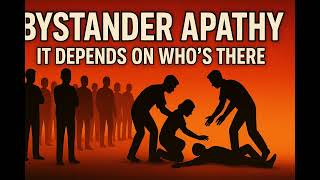
Bystander Apathy Revisited: Who Helps When It Counts
·
· 4m31s
Bystander Apathy Revisited: Who Helps When It Counts We’ve all heard “the more bystanders, the less helping”—but decades of research paint a more complex picture. In this video, you’ll discover four key factors that determine whether someone steps up or stands by: Victim–Helper Similarity: How shared identity sparks empathy and action Emergency Ambiguity: Why clear crises cut through diffusion of responsibility Group Cohesion: How friends, teams, and shared purpose galvanize aid Virtual vs. Real-World Contexts: The gap between online concern and offline help By unpacking these moderators, we’ll see how to design better bystander training, strengthen community bonds, and translate digital engagement into real-world support. If you found this insightful, like, subscribe, and share your own experiences or questions in the comments below! 0:00 Introduction: Beyond “More Bystanders, Less Helping” 0:25 Overview of Four Key Moderators 0:31 Victim–Helper Similarity in Intervention 1:31 Emergency Ambiguity & Pluralistic Ignorance 2:16 Group Cohesion: Strangers vs. Friends & Teams 3:02 Virtual vs. Real-World Bystanding 3:47 Conclusion & Practical Strategies
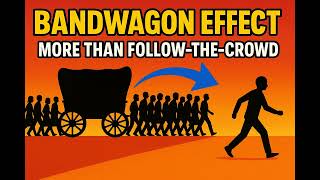
The Bandwagon Effect: More Than Just Following the Crowd
·
· 3m54s
The Bandwagon Effect: More Than Just Following the Crowd The bandwagon effect is often reduced to “everyone’s doing it,” but the true dynamics of mass adoption are far more nuanced. In this video, we’ll unpack three key dimensions: Pluralistic Ignorance – How silent majorities and misperceived norms fuel false consensus Public vs. Private Conformity – Why surface-level compliance can mask private doubts (and how true attitude shifts occur) Critical Mass & the Snob Effect – How reaching popularity can trigger a reversal as early adopters seek fresh distinction Understanding these subtleties helps us reveal real majority opinions, design better social interventions, and anticipate when trends might fracture into new waves of exclusivity. If you found this insightful, like, subscribe, and let us know your experiences with bandwagoning in the comments! 0:00 Introduction: Beyond “Follow the Crowd” 0:36 One: Pluralistic Ignorance & Misperceived Norms 1:16 Two: Public vs. Private Conformity 2:12 Three: Critical Mass & the Snob (Distinction) Effect 3:08 Conclusion: Applying the Insights

A Message from Host and Reporter Susan Burton on Season 2 of The Retrievals #podcast #serial
·
· 1m9s
Season 1 of “The Retrievals” named a problem: Women’s pain is often ignored. Season 2 asks: What are the solutions? Hosted by Susan Burton, the new season is out now. Listen: lnk.to/retrievals2

New Details on Camp Mystic, and Trump’s Retribution Campaign | The Headlines
·
· 9m45s
Today’s top news stories, all in about 10 minutes. Listen every weekday morning, with insight and analysis from New York Times reporters all over the world. For more on this episode: https://www.nytimes.com/2025/07/10/podcasts/the-headlines/camp-mystic-trump-retribution.html What we're covering: Camp Mystic Cabins Stood in an ‘Extremely Hazardous’ Floodway (https://www.nytimes.com/interactive/2025/07/09/us/camp-mystic-texas-cabins.html) , by Mike Baker, Malika Khurana, Harry Stevens and Marco Hernandez Administration Takes Steps to Target 2 Officials Who Investigated Trump (https://www.nytimes.com/2025/07/09/us/politics/ratcliffe-brennan-cia.html) , by Glenn Thrush and Julian E. Barnes Comey Tracked by Secret Service After Post Critical of Trump (https://www.nytimes.com/2025/07/09/us/politics/james-comey-secret-service.html) , by Michael S. Schmidt and Eileen Sullivan Trump Pledges 50% Tariffs Against Brazil, Citing ‘Witch Hunt’ Against Bolsonaro (https://www.nytimes.com/2025/07/09/world/americas/brazil-trump-bolsonaro-lula-coup-tariff.html) , by Jack Nicas Measles Cases Hit Highest Total Since U.S. Eliminated the Disease (https://www.nytimes.com/2025/07/09/well/us-measles-record-outbreaks.html) , by Teddy Rosenbluth and Jonathan Corum This Is the Moment for Mexican Indian Food to Flourish (https://www.nytimes.com/2025/05/02/dining/mexican-indian-food-fusion.html) , by Tejal Rao Tune in every weekday morning. To get our full audio journalism and storytelling experience, download (https://apps.apple.com/us/app/nyt-audio/id1549293936) the New York Times Audio app — available to Times news subscribers on iOS — and sign up (https://www.nytimes.com/newsletters/audio) for our weekly newsletter. Tell us what you think at: theheadlines@nytimes.com.



Oxford Union Past Presidents and Officers: Victoria Schofield
 ·
· 8m8s
·
· 8m8s
Oxford Union Past Presidents & Officers film series is an informal oral history of the Union going back to the 1950s. Thank you to the Homestead Foundation, the Oxford Literary and Debating Union Trust, and Ben Whalley for making this film possible. SUBSCRIBE for more speakers ► http://is.gd/OxfordUnion SUPPORT the Oxford Union ► https://oxford-union.org/supportus LICENSE Footage ► licensing@oxford-union.org Oxford Union on Facebook: https://www.facebook.com/theoxfordunion Oxford Union on Twitter: @OxfordUnion Website: http://www.oxford-union.org/ ABOUT THE OXFORD UNION SOCIETY: The Oxford Union is the world's most prestigious debating society, with an unparalleled reputation for bringing international guests and speakers to Oxford. Since 1823, the Union has been promoting debate and discussion not just in Oxford University, but across the globe. The Oxford Union is deeply grateful and encouraged by the messages of support in response to our determination to uphold free speech. During our 200 year history, many have tried to shut us down. As the effects of self-imposed censorship on university campuses, social media and the arts show no signs of dissipating, the importance of upholding free speech remains as critical today as it did when we were founded in 1823. Your support is critical in enabling The Oxford Union to continue its mission without interruption and without interference. You can support the Oxford Union here: https://oxford-union.org/supportus

The Retrievals S02 - Trailer
·
· 4m25s
C-sections are the most frequently performed major surgeries in the world. So why do so many patients feel severe pain during them? Season 2 of the award-winning podcast “The Retrievals” is an investigation into this underreported problem — and the new effort to solve it. Listen wherever you get your podcasts.

The stroboscopic effect and rolling shutter
 ·
· 2m42s
·
· 2m42s
Visit kiwico.com and use the code STEVEMOULD to get 50% off your first monthly KiwiCo crate


Bourdieu’s “Symbolic Capital”: The Hidden Power of Prestige
·
· 4m17s
Bourdieu’s “Symbolic Capital”: The Hidden Power of Prestige What makes a university degree, a blue checkmark, or an Oscar more than just a title? In 1979, Pierre Bourdieu introduced the concept of symbolic capital—the “invisible currency” of prestige, honor, and recognition that shapes power in every social field. In this video, we’ll cover: The origins of symbolic capital in Bourdieu’s Distinction Three core features: collective recognition, conversion/transmutation, and field specificity The role of misrecognition in perpetuating privilege Modern examples: Ivy League degrees, professional certifications, social-media verification, and major awards Why decoding symbolic capital matters for gatekeeping, strategic investment, and equity Practical steps for career development, brand management, and inclusive credentialing Whether you’re building your personal brand or crafting policy to broaden access, understanding symbolic capital is essential. Watch on to learn how prestige really works—and how to wield it wisely. 0:00 Hook & Overview 0:03 What Is Symbolic Capital? 0:26 Origins in Distinction (1979) 1:00 Core Feature 1 – Collective Recognition 1:07 Core Feature 2 – Conversion & Transmutation 1:36 Core Feature 3 – Field Specificity 1:51 Misrecognition & Its Effects 2:08 Modern Manifestations: • Academic Credentials • Professional Certifications • Social Media Verification • Awards & Honors 2:49 Why It’s Practical: • Decoding Gatekeeping • Strategic Investment • Navigating Fields 3:19 Implications & Actions: • Career Development • Brand Management • Equity Considerations 3:46 Conclusion & Takeaways

Georg Simmel’s “The Stranger”: Belonging and Otherness in Every Group
·
· 5m27s
Georg Simmel’s “The Stranger”: Belonging and Otherness in Every Group Why do we feel both drawn to and wary of newcomers? At the turn of the 20th century, Georg Simmel revealed that the Stranger—a permanent group member defined by proximity rather than tradition—embodies a unique tension of inclusion and exclusion. In this video, we’ll explore: Simmel’s original portrait of the Stranger: neither nomad nor native The dual qualities of proximity (trust, cooperation) vs. remoteness (detachment, suspicion) Modern examples: immigrants, remote workers, minorities, consultants The ambivalence groups feel—hospitality vs. wariness, utilization vs. undermining Practical steps to cultivate genuine integration, leverage outsider insight, and mitigate suspicion Whether you’re onboarding new team members or simply curious about social dynamics, Simmel’s Stranger offers timeless tools for building inclusive, adaptable communities. Hit play to learn how to welcome innovation without losing cohesion. 0:00 Intro & The Paradox of the Stranger 0:21 Origins: Neither Nomad nor Native 0:35 Defining Proximity: Everyday Participation & Trust 1:18 Defining Remoteness: Cultural Distance & Suspicion 2:13 Modern Manifestations: • Immigrants & Diaspora Communities • Remote Coworkers & Digital Nomads • Minorities Within Majorities • Consultants & Outsourced Experts 3:14 Ambivalence in Group Dynamics: • Warmth vs. Wariness • Inclusion vs. Isolation • Utilization vs. Undermining 4:06 Implications for Today: 1. Cultivate Genuine Integration 2. Leverage Outsider Insight 3. Mitigate Suspicion with Transparency 5:06 Conclusion: Embracing the Stranger to Strengthen Community
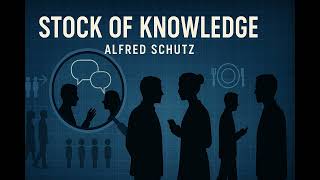
Alfred Schutz’s “Stock of Knowledge”: The Invisible Rules of Everyday Life
·
· 4m29s
Alfred Schutz’s “Stock of Knowledge”: The Invisible Rules of Everyday Life Why does everyone “just know” how to queue, make small talk, or navigate a new social setting? Early 20th-century sociologist Alfred Schutz revealed that we draw on a hidden stock of knowledge—a pre-reflective repository of unspoken rules and assumptions—to make social interaction seamless. In this video, you’ll learn: What Schutz meant by the stock of knowledge Its three core components: typifications, contextual expectations, and tacit know-how How this invisible store underpins—and sometimes disrupts—our daily rituals Real-world examples: queueing, elevator etiquette, and email conventions Practical takeaways for education, onboarding, and inclusive design Whether you’re designing user experiences, onboarding newcomers, or simply curious about why social life “just works,” understanding Schutz’s insight will change the way you see every interaction. Hit play to make the unseen seen! 0:00 Intro & Why “Stock of Knowledge” Matters 0:06 Defining the Stock of Knowledge 0:45 Three Components: • Typifications (Templates for Social Situations) • Contextual Expectations (Roles, Time & Place) • Tacit Know-How (Practical Skills & Manners) 1:34 The Fragility of the Social Fabric 2:14 Everyday Examples: • Queueing Without Signs • Elevator Etiquette • Email Conventions 2:59 Implications for Theory & Practice: • Social Order as Ongoing Achievement • Teaching Implicit Norms to Newcomers • Designing Inclusive Spaces & Platforms 3:48 Conclusion & Key Takeaways

Moreno’s Sociometry & Psychodrama: Mapping and Mending Group Dynamics
·
· 4m28s
Moreno’s Sociometry & Psychodrama: Mapping and Mending Group Dynamics How do you uncover hidden team tensions and transform them through embodied experience? Early 20th-century psychiatrist Jacob Moreno pioneered sociometry (mapping who likes whom) and psychodrama (acting out real‐life scenes) to reveal and reshape group relationships. In this video, we’ll explore: The origins of sociometry (1919) & psychodrama (1921) in post-WWI Vienna Three core principles of sociometry: choice and attraction, sociogram construction, and mixed‐method analysis Four psychodrama mechanisms: stage roles, enactment, catharsis, role reversal, mirroring, and surplus reality Modern applications in organizational development, education, community work, and leadership training Why these methods diagnose hidden friction, boost empathy, and embed learning more deeply than surveys alone Whether you lead teams, teach students, or facilitate communities, Moreno’s tools offer a hands-on blueprint for diagnosing conflict and fostering genuine connection. Hit play to see how mapping and enactment can transform any group dynamic. 0:00 Intro & Why Group Dynamics Matter 0:02 Origins: Post-WWI Vienna & Moreno’s Dual Methods 0:12 Sociometry Principle 1 – Choice & Attraction 0:15 Sociometry Principle 2 – Building a Sociogram 0:21 Sociometry Principle 3 – Quantitative & Qualitative Analysis 0:50 Psychodrama Step 1 – Stage, Director & Roles 1:00 Psychodrama Step 2 – Enactment of Real or Imagined Scenes 1:08 Psychodrama Mechanisms: • Catharsis (Emotional Release) • Role Reversal (Empathy through Perspective‐Taking) • Mirroring (Self-Awareness by Observation) • Surplus Reality (Exploring “What-If” Scenarios) 2:29 Modern Applications: • Teams & Organizational Development • Education & Cooperative Learning • Community & Social Work • Leadership Training & Executive Coaching 3:17 Why It Works: • Diagnosing Hidden Friction • Boosting Empathy • Restructuring Social Networks • Embedding Insights through Experience 3:55 Conclusion: Charting Connections & Enacting Change

Milgram’s “Lost” Variations: How Tiny Tweaks Shattered Obedience
·
· 3m38s
Milgram’s “Lost” Variations: How Tiny Tweaks Shattered Obedience We all know Stanley Milgram’s shocking obedience study—but did you know he ran lesser-known “lost” variations that made compliance rates plummet? By changing minor contextual details, Milgram revealed that obedience isn’t an immutable trait, but a fragile outcome of social dynamics. In this video, we dive into: The classic Yale baseline (65% compliance) How group dissent slashed obedience to 10% Why remote commands (telephone) cut it to 22.5% The power of attire: lab coat vs. civilian clothes The empathy boost when teacher–learner proximity dropped it to 40% What the gender variation taught us about stress vs. obedience Key lessons on authority, social support, and moral courage If you’ve ever wondered what really makes people say “yes” to authority—and how to design environments that empower conscience—this video is for you. Hit play and discover how tiny shifts can crumble compliance. 0:00 Intro & Overview of “Lost” Variations 0:39 Baseline Study Recap: 65% Compliance at Yale 0:55 Variation 1 – Group Dissent → Obedience at ~10% 1:11 Variation 2 – Remote Authority (Telephone) → ~22.5% 1:26 Variation 3 – Attire & Status (Civilian vs. Lab Coat) 1:41 Variation 4 – Teacher–Learner Proximity → ~40% 1:55 Variation 5 – Gender of the “Teacher” & Stress Levels 2:13 Common Thread: Contextual Cues & Social Support 2:29 Why It Matters: Plasticity of Moral Behavior 2:46 Real-World Lessons for Leadership & Culture 3:11 Conclusion: Designing for Conscience, Not Compliance
Merton’s “Unintended Consequences”: How Good Intentions Backfire
·
· 5m36s
Merton’s “Unintended Consequences”: How Good Intentions Backfire What happens when well-meaning policies create problems no one saw coming? In 1936, sociologist Robert K. Merton coined the term “unintended consequences” to reveal how every social intervention—laws, programs, or regulations—sends ripples through complex networks of human behavior and institutions. From Prohibition’s crime wave to algorithm-driven echo chambers, unintended side-effects can be beneficial, harmful, or even perverse. In this video, you’ll learn: The three types of unintended consequences: positive side-effects, negative drawbacks, and perverse results Why complex social systems and the limits of rational planning make surprises inevitable A case study of social-media algorithms: from engagement goals to echo chambers, misinformation, and mental-health impacts Lessons from COVID-19 measures: school closures, supply-chain disruptions, and risk compensation under mask mandates Practical strategies to anticipate and mitigate unintended consequences through scenario planning, pilot programs, stakeholder engagement, and responsive feedback loops Whether you design public policy, build tech platforms, or simply care about responsible change, Merton’s insights will help you expect—and manage—the unexpected. 0:00 Intro & Definition: What Are Unintended Consequences? 0:42 Three Types Explained: • 0:45 Positive Side-Effects (e.g., WWII radar → air traffic control) • 1:07 Negative Drawbacks (e.g., Prohibition → organized crime) • 1:27 Perverse Results (e.g., welfare disincentivizing work) 1:35 Why They Matter: • 1:37 Complexity of Social Systems • 1:49 Limits of Rational Planning • 2:00 Ethical Policy Design & Risk of Harm 2:15 Case Study—Tech Rollout & Algorithms: • 2:19 Engagement Goals → Echo Chambers & Polarization • 2:41 Misinformation Spread • 2:58 Mental-Health Impacts of Endless Scrolling 3:08 Case Study—COVID-19 Measures: • 3:10 School Closures → Learning Loss & Inequality • 3:28 Lockdowns → Global Supply-Chain Shortages • 3:42 Mask Mandates & Risk Compensation 4:07 Mitigation Strategies: • 4:11 Scenario Planning & Systems Mapping • 4:23 Pilot Programs & Iterative Design • 4:33 Stakeholder Engagement • 4:40 Built-In Feedback Mechanisms & Ethical Impact Assessment 5:00 Conclusion: Turning Pitfalls into Learning Opportunities

G.H. Mead’s “Generalized Other”: How Society Becomes Your Inner Voice
·
· 3m56s
G.H. Mead’s “Generalized Other”: How Society Becomes Your Inner Voice We’re not born with an internal judge—we build it through our interactions. Social psychologist G.H. Mead showed that the “self” emerges as we internalize the generalized other: the composite voice of family, peers, institutions, and culture that asks, “What would they think?” This inner chorus shapes our choices, fuels social anxiety and conformity, and ultimately constructs shared norms. In this video, we’ll cover: How children move from role-play to embodying the generalized other The two halves of the self: the spontaneous “I” and the socialized “me” Mechanisms of anticipation, internalization, and role-taking Why social anxiety and groupthink arise How collective norms form and evolve Practical tips to reduce toxic self-judgment, foster healthy conformity, and drive positive social change Whether you want to understand your own inner critic or become a more effective leader, mastering the generalized other gives you the tools to balance authenticity and belonging. 0:00 Intro & Hook 0:04 What Is the Generalized Other? 0:37 Particular vs. Generalized Role-Taking 1:05 The “I” vs. the “Me”: Self-Emergence 1:12 Anticipation of Judgment & Norm Internalization 1:38 Explaining Social Anxiety & Conformity 2:04 Groupthink, Echo Chambers & Collective Norms 2:46 Practical Implications: • Reducing Toxic Anxiety • Fostering Healthy Conformity • Driving Social Change 3:24 Conclusion & Key Takeaways

Arthur Koestler’s “Bisociation”: The Spark That Ignites Creativity
·
· 3m24s
Arthur Koestler’s “Bisociation”: The Spark That Ignites Creativity What makes a scientific breakthrough, a Cubist painting, or a killer joke possible? In his 1964 classic The Act of Creation, Arthur Koestler coined bisociation—the collision of two unrelated frames of reference—to explain how genuine creativity emerges. From Kekulé’s benzene dream to stand-up punchlines, bisociation reveals the alchemy behind every “Aha!” moment. In this video, you’ll discover: The difference between association and bisociation Landmark examples in science, art, and humor A practical roadmap to train your mind for bisociative thinking How cross-domain exploration, forced connections, analogical journaling, and collaborative mash-ups can spark your next insight Whether you’re an artist, scientist, entrepreneur, or simply creativity-curious, learning to hold two worlds in tension might be your fastest route to originality. Hit play and get ready to mash up your way to that next big idea! 0:00 Intro & What Is Bisociation? 0:05 Context: The Act of Creation (1964) 0:11 Association vs. Bisociation Defined 0:23 Eureka Moments: Holding Two Frames in Tension 1:13 How Bisociation Fuels Creativity Across Disciplines • 1:18 Scientific Discovery: Kekulé’s Benzene Ring • 1:31 Artistic Innovation: Cubist Mash-Ups • 1:43 Humor & Wit: The Surprise of a Classic Joke 1:55 A Practical Roadmap for Bisociative Thinking • 2:02 Cross-Domain Exploration • 2:11 Forced Connections Exercise • 2:22 Analogical Journaling • 2:31 Collaborative Mash-Ups 2:44 Conclusion: Embracing Friction for Originality
William James’s Radical Empiricism: The Stream of Consciousness Unbound
·
· 4m35s
William James’s Radical Empiricism: The Stream of Consciousness Unbound Forget treating thoughts like Lego bricks. In his groundbreaking critique of British empiricism, William James revealed that consciousness is a living stream, not a pile of isolated sensations. Drawing on his experimental psychology, James argued for continuity over atomism and insisted that the relations joining our experiences are just as real as the moments themselves. From the “specious present” to modern mindfulness and dynamical‐systems models, Radical Empiricism reshapes how we think about mind, memory, and reality. In this video, you’ll discover: Why traditional empiricists got it wrong—and how James set the record straight The two key departures: flow over fragments & relations as primary data The core tenets of the stream of consciousness: metaphor, memory, and the specious present How Radical Empiricism anticipated phenomenology, mindfulness, and Bayesian brain theories Practical takeaways for therapy, meditation, and living with greater presence Dive in to see why James’s vision of mind as a river still flows through today’s philosophy and psychology. 0:00 Intro & Thesis: Why Consciousness Can’t Be “Chopped into Bits” 0:02 Traditional Empiricism’s Atomism: Locke, Berkeley, Hume 0:16 James’s Two Key Departures: Continuity over Atomism & Relations Given as Data 1:00 Core Tenet – The Stream Metaphor (“Consciousness … flows”) 1:03 Primary vs. Secondary Memory: Present Moment and Contextual Background 1:27 The “Specious Present”: Experiencing Succession Directly 1:41 Radical Empiricism Proper: All Direct Experience Counts 2:00 Resonances with Mindfulness & Phenomenology 2:44 Dynamical Systems in Cognitive Science: Trajectories Not Snapshots 3:05 Challenging Categorical Thinking: Thoughts as Passing Events 3:37 Implications for Theory & Practice: ACT, MBCT, and Holistic Mind Theories 4:07 Conclusion – Living with Open Curiosity for the Stream of Experience

F.A. Hayek’s “The Sensory Order”: How Your Brain Builds Its Own Reality
·
· 5m23s
F.A. Hayek’s “The Sensory Order”: How Your Brain Builds Its Own Reality What if every mind constructs its own version of the world? In his 1952 cybernetic classic The Sensory Order, Nobel laureate Friedrich A. Hayek argued that the brain doesn’t process sense data through a universal algorithm but learns a personal, probabilistic map—a “sensory order”—shaping how we categorize and interpret impressions. Decades before “Bayesian brain” theories, Hayek showed that perception is inference, not mere reflex. In this video, we’ll explore: The puzzle of mental classification and the limits of reflex models Hayek’s probabilistic-map model of neurons and connections Why the brain’s sensory units encode likelihoods, not certainties How Hayek anticipated modern predictive-coding and machine-learning frameworks Epistemological lessons on subjective realities, miscommunication, and humility Resonances in economics (markets as shared signals), AI, and cultural diversity Join us to discover how Hayek’s sensory order shatters the illusion of universal perception and why understanding it fosters empathy—and more robust coordination—in a data-deluged world. 0:00 Intro & Hook: “Each Mind’s Own Truth” 0:04 The Problem of Mental Classification 0:43 Beyond Reflex Models: Why Biology Needs Learning 1:31 Hayek’s Probabilistic-Map Model Explained • Sensory Units & Connections • Hierarchical Category Formation 2:06 Perception as Inference: Likelihoods vs. Certainties 2:29 Prefiguring the Bayesian Brain & Predictive Coding 3:11 Implications for Truth & Epistemology • Subjective Realities • Miscommunication & Introspection Limits 4:01 Social & Technological Resonances • Markets as Shared Signals • Recommender Systems & Neural Nets • Cultural Diversity & Plural Sensory Orders 4:44 Conclusion: Embracing Epistemological Humility

Merleau-Ponty’s “Flesh of the World”: Embodied Reality Beyond Mind–Body Dualism
·
· 4m34s
Merleau-Ponty’s “Flesh of the World”: Embodied Reality Beyond Mind–Body Dualism What if perception isn’t just our minds processing data but an active, bodily engagement with an elemental “flesh” that connects us to everything we experience? In 1961, Maurice Merleau-Ponty shattered Cartesian dualism with his phenomenological concept of la chair (“the flesh”), revealing perception as a chiasmic weave of body and world. In this video, we’ll explore: How Merleau-Ponty moves from Descartes’s mind–body split to the idea of mutual “flesh” The reversibility of touch and the reciprocity of hand and water Why tools, music performance, and even VR become extensions of our bodily “flesh” The “body schema,” intersubjectivity, and the dissolution of the “I–It” barrier Mind-bending implications for objectivity, agency, and ethics Join us to discover why Merleau-Ponty’s “flesh of the world” invites us to rethink perception, art, and our place in reality—and how this embodied lens can enrich everyday life. 0:00 Intro & Hook 0:04 Cartesian Dualism vs. Phenomenological Flesh 0:46 Flesh as Element of Mutual Belonging: Reversibility of Touch 1:30 Dissolving the “I–It” Barrier: • Embodied Schema & Body Schema • Intersubjectivity & Shared Bodily Resonance 2:08 Flesh in Action – Examples of Perception: • Tool Use: The Hammer as Extension • Musical Performance: Violinist & Sound as Fleshly Event • Virtual Reality: Extending Flesh into Digital Space 3:32 Why It’s Mind-Bending: 1. Undermining Pure Objectivity 2. Rethinking Agency & Embedded Freedom 3. Ethical Resonance & Ecological Empathy 4:05 Conclusion: Living with the Flesh of the World

Kurt Lewin’s Field Theory & Life Space: The Blueprint for Behavior Change
·
· 3m14s
Kurt Lewin’s Field Theory & Life Space: The Blueprint for Behavior Change Why do notifications nudge you to click, and why do city parks make you more likely to exercise? Kurt Lewin’s Field Theory shows that behavior (B) emerges from the dynamic interplay of Person (P) and Environment (E)—B = f(P, E). His Life Space concept maps out all the forces—regions, valences, and barriers—that shape how we move toward our goals and away from threats. In this video, we’ll cover: The four core principles of Field Theory How “Life Space” captures cognitive regions, attractions (valences), and barriers Real-world applications: habit-change apps, urban design, hybrid work, and “nudge” public policies Why holistic interventions beat willpower alone Practical steps for product designers, organizational leaders, and individuals Whether you’re building a fitness tracker, planning a city, or trying to form a new habit, Lewin’s lens will help you align inner motives with outer forces—and unlock real, sustainable change. 0:00 Intro & Hook 0:02 Principle 1 – Behavior as Interaction: B = f(P, E) 0:12 Principle 2 – Defining Life Space: • Regions (cognitive & physical) • Valences (attractions & repulsions) • Barriers (obstacles to movement) 0:38 Principle 3 – Dynamic & Contextual Nature of Life Space 0:48 Principle 4 – Goal-Directed Tension: Movement toward positive valences 1:04 Modern Manifestations: • Habit-Change Apps (push notifications & social sharing) • Urban Design (walkability & community gardens) • Remote/Hybrid Work (virtual “watercoolers” & ergonomic support) • Behavioral Economics & “Nudge” Policies 1:44 Why It Works: 1. Holistic Interventions vs. Willpower 2. Predictive Power of Life-Space Mapping 3. Scalability from Apps to Cities 2:13 Implications & Practices: • Product Design – Conduct “field scans” to identify pain points • Organizational Change – Use sociograms & environmental audits • Personal Development – Map your own life space & tweak environments 3:06 Conclusion: Aligning P and E for Real Behavior Change
Émile Durkheim’s “Collective Effervescence”: The Power of Shared Emotion
·
· 4m35s
Émile Durkheim’s “Collective Effervescence”: The Power of Shared Emotion Why do we feel more alive singing in a stadium, dancing at a festival, or marching side-by-side in protest? In 1912’s The Elementary Forms of Religious Life, Émile Durkheim coined “collective effervescence” to describe the electrifying surge of solidarity and emotion that emerges when individuals synchronize their bodies, minds, and hearts. From Aboriginal rituals to modern concerts—and even online attempts that fall short—this phenomenon reveals the invisible glue of social life. In this video, we’ll explore: The origins of collective effervescence in Durkheim’s studies of ritual Four core dynamics: rhythmic synchrony, emotional contagion, self-transcendence, and symbolic reinforcement Secular examples: music festivals, sporting events, protests, and religious ceremonies Why virtual gatherings can’t quite capture the real thing The societal and personal benefits of in-person collective highs Whether you’re a social scientist, event organizer, or simply curious about the chemistry of crowds, understanding collective effervescence will change how you experience every group moment. Hit play and discover why shared emotion is the heartbeat of community. 0:00 Intro & Hook 0:02 What Is Collective Effervescence? 0:15 Origins: Durkheim’s Study of Ritual and Religion 1:10 Core Dynamic 1: Rhythmic Synchrony 1:28 Core Dynamic 2: Emotional Contagion 1:36 Core Dynamic 3: Transcendence of the Self 1:50 Core Dynamic 4: Symbolic Reinforcement 2:03 Modern Manifestations: • Music Festivals & Concerts • Sporting Events • Political Protests & Marches • Religious Ceremonies 2:41 Why Digital Substitutes Fall Flat 3:21 Benefits for Society & Individuals: • Social Cohesion • Emotional Well-Being • Mobilization & Change 3:57 Conclusion: Preserving the Spark of In-Person Solidarity
Mary Douglas’s Grid–Group Typology: Why We See the World So Differently
·
· 4m34s
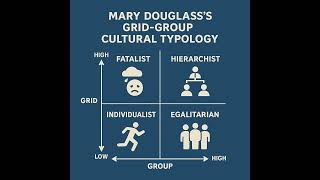
Mary Douglas’s Grid–Group Typology: Why We See the World So Differently Why do people look at the same facts—climate data, economic reports, public-health advice—and come to opposite conclusions? Anthropologist Mary Douglas answered this puzzle with her Grid–Group Cultural Typology: a two-axis framework plotting Group (solidarity vs. autonomy) against Grid (strict roles vs. flexible norms). This model reveals four idealized worldviews—Hierarchist, Individualist, Egalitarian, and Fatalist—and shows how each shapes our view of authority, freedom, equality, and risk. In this video, you’ll learn: What “Group” and “Grid” really mean in Douglas’s framework The defining traits, values, and real-world examples of each quadrant How these cultural biases illuminate political divides and policy debates Practical tips for tailoring communication, resolving conflict, and building inclusive teams Whether you’re crafting policy, managing a team, or simply curious about why people disagree, Douglas’s typology offers a clear map of the social terrain. Watch on to decode hidden worldviews and bridge cultural divides. 0:00 Intro & Why This Matters 0:02 Grid vs. Group: The Two Dimensions Explained 0:15 High Group / High Grid = Hierarchist 0:17 • Traits: Order, duty, deference to authority 0:24 • Example: Career civil servants 0:46 Low Group / Low Grid = Individualist 0:48 • Traits: Autonomy, competition, entrepreneurship 0:54 • Example: Tech startups (“move fast…”) 1:11 High Group / Low Grid = Egalitarian 1:13 • Traits: Equality, consensus, social justice 1:18 • Example: Environmental collectives 1:33 Low Group / High Grid = Fatalist 1:35 • Traits: Resignation, cynicism, powerlessness 1:40 • Example: Rank-and-file workers 1:52 Decoding Political Divides with Grid–Group 2:05 Policy & Communication Applications 2:25 Conflict Resolution & Team Culture 2:45 Conclusion: Mapping Worldviews to Bridge Divides
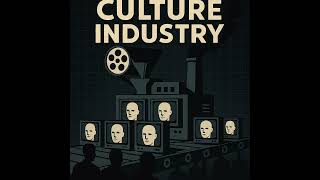
Adorno & Horkheimer’s “Culture Industry”: How Mass Media Manufactures Our Passivity
·
· 4m33s
Adorno & Horkheimer’s “Culture Industry”: How Mass Media Manufactures Our Passivity In their 1944 essay in Dialectic of Enlightenment, Frankfurt School theorists Theodor Adorno and Max Horkheimer argued that under late capitalism, culture itself becomes an industry—standardized, formulaic, and designed to pacify rather than provoke critical thought. From Hollywood blockbusters to algorithm-driven playlists, the same dynamics they identified are more powerful than ever. In this video, we’ll explore: The historical origins of the Culture Industry critique Four core tenets: standardization, pseudo-individualization, passive consumption, and ideological conformity How streaming platforms, social-media memes, and branded entertainment reinforce the same patterns Why the “illusion of choice” and infinite-scroll attention economy dull our critical capacities Practical strategies: supporting independent media, cultivating media literacy, and deliberate counterprogramming Whether you want to reclaim your attention or build more meaningful cultural spaces, understanding the Culture Industry is your first step. Watch on to learn how to resist passivity and revive genuine creativity. 0:00 Intro & Hook 0:03 What Is the Culture Industry? 0:10 The Frankfurt School Critique 0:39 Origins in Dialectic of Enlightenment (1944) 1:16 Core Tenet 1 – Standardization 1:30 Core Tenet 2 – Pseudo-Individualization 1:47 Core Tenet 3 – Passive Consumption 2:01 Core Tenet 4 – Ideological Conformity 2:11 Modern Manifestations: Streaming Platforms 2:34 Social Media & Branded Entertainment 2:48 Why It’s Timely: Algorithmic Illusion of Choice 3:00 Inattention as Commodity 3:11 Resurgence of Passive Audiences 3:29 Implications: Erosion of Critical Capacity 3:39 Need for Alternative Spaces & Media Literacy 3:54 Conclusion & Call to Action
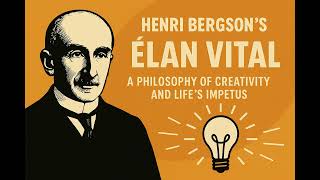
Henri Bergson’s “Élan Vital”: How Life’s Creative Force Drives Evolution
·
· 4m3s
Henri Bergson’s “Élan Vital”: How Life’s Creative Force Drives Evolution What if life isn’t just a mechanical process of survival but a creative journey propelled by an inner “vital impetus”? In 1907, Henri Bergson challenged Darwinian reductionism with his concept of élan vital—a dynamic life force that fuels novelty from the growth of plants to human imagination. In this video, we’ll explore: The roots of élan vital in Bergson’s Creative Evolution How vitalism departs from mechanistic biology The role of creativity as the clearest human expression of life’s impulse Modern echoes in systems biology, biosemiotics, and innovation research Practical lessons for embracing novelty, spontaneity, and indeterminacy in everyday life Join us to see why Bergson’s life force remains as inspiring today as it was over a century ago—and learn how to align your own life with its creative thrust. 0:00 Intro & Hook 0:08 Why Bergson Said Life Needs More than Natural Selection 0:39 The Roots of Élan Vital in Creative Evolution (1907) 1:17 Beyond Mechanism: Vitalism vs. Reductionism 1:54 Élan Vital in Human Creativity: Art, Science & Eureka Moments 2:29 Modern Perspectives: Systems Biology, Emergence & Biosemiotics 3:06 Practical Implications: • Embrace Novelty & Stretch Your Capacities • Cultivate Spontaneity & Unplanned Innovation • Honor Indeterminacy & the Unpredictable 3:38 Conclusion: Living with Life’s Creative Impulse

Gregory Bateson’s “Double Bind”: How Mixed Messages Trap Us
·
· 3m36s
Gregory Bateson’s “Double Bind”: How Mixed Messages Trap Us What happens when every answer you give is wrong? In his groundbreaking work on family therapy and schizophrenia research, anthropologist Gregory Bateson uncovered the “double bind”—a communication trap of conflicting messages that no response can satisfy. Today, double binds don’t just haunt families; they undermine leadership, distort social media, and even wreak havoc in our closest relationships. In this video, we’ll explore: The origins of the double bind in Bateson’s research The three core features that define it Real-world examples—from parenting dilemmas to corporate culture The psychological and organizational fallout of mixed signals Practical strategies for dissolving double binds and restoring clear communication Whether you’re a leader, parent, or simply someone who wants healthier interactions, understanding the double bind is essential. Watch on to learn how to spot—and escape—the no-win situations it creates. 0:00 Intro & Hook 0:03 What Is the Double Bind? 0:18 Origins in Family Therapy & Schizophrenia Research 1:04 Anatomy of a Double Bind: Three Key Features 1:50 Everyday Examples: Parenting, Leadership, Social Media, Relationships 2:26 Why It Matters: Psychological Impact & Organizational Traps 2:56 Resolving Double Binds: Meta-Communication & Consistent Messaging 3:18 Conclusion: Striving for Clarity in Communication

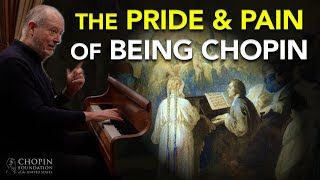
Garrick Ohlsson Breaks Down Chopin's "Military" Polonaises (Op. 44, Op. 40)
 ·
· 25m37s
·
· 25m37s
Listen to Season 2 Episode 4: ~ Apple: https://podcasts.apple.com/us/podcast/polonaises/id1765998900?i=1000715890202 ~ Spotify: https://open.spotify.com/episode/3TDX7VSY02HpvX57i4jUKM?si=YRIM3lCeTz62CN9JP-AYVw The Chopin Podcast: https://chopinpodcast.com Chopin Foundation: https://chopin.org 0:10 The F-sharp minor Polonaise begins with a snarl 4:30 A memory of a military march 6:19 A dream in the form of a mazurka 10:19 Waking up from the dream 11:56 A heartbreaking coda 15:19 When Chopin survived German-occupied Poland 16:57 The "Military" Polonaise, Op. 40 No. 1 20:20 Another tragic Polonaise, Op. 40 No. 2 Created and hosted by Ben Laude. Special thanks to Ethan Chilton and Abby Tilton for their assistance in the production of this video. This podcast is produced in partnership with the Chopin Foundation of the United States, which presents the National Chopin Competition every 5 years. For more, visit https://chopin.org The Chopin Foundation is a national non-profit organization founded by its President, Blanka A. Rosenstiel in 1977, and inspired by the first US Chopin Competition she presented in Miami in 1975. Support the Chopin Foundation: https://chopin.org/donate Access uncut interviews with Garrick Ohlsson and other guests: https://patreon.com/BenLaude https://www.facebook.com/chopinpodcast https://www.instagram.com/benlawdy

Rick Reacts To His Favorite Instagram Musicians
 ·
· 9m8s
·
· 9m8s
In this episode I react to some of my favorite instagram musicians. Anika Nilles: https://www.youtube.com/watch?v=_AqEARVsUgM Cecil Alexander: https://www.youtube.com/@UCFAoUeDELQWWltTT5-KYItA Jack Pearson: https://www.instagram.com/jackpearsonguitar/ Michael Manring: https://www.instagram.com/michael_manring/ Anil Tuncer: https://www.instagram.com/aniltuncer Emma Harner: https://www.instagram.com/emmaharner ErikrDvall & Nasbom: https://www.instagram.com/reel/DC9S8KAMEom/?igsh=ajJxamxjenlzZ2px My Beato Club supporters: Justin Scott Terence Mark Jason Murray Lucienne Kilpatrick Alexander Young Jason Wagner Todd Ladner Rob Kline Nicholas Long Tim Benson Leonardo Martins da Costa Rodrigues Eddie Perez David Solomon MICHAEL JOYCE Stephen Stubbs colin stead Jonathan Wentworth-Linton Patrick Payne MATTHEW KARIS Matthew Barouch Shaun Samuels Danny Kurywchak Gregory Reedy Sean Coleman Alexander Verbitskiy CL Turner Jason Pappafotis John Fulford Margaret Carno Robert C David M Combs Eric Flatt Reto Spoerli Herr Moritz Adam Monte St. Johns Jon Beezley Peter DeVault Eric Nabstedt Eric Beggs Rich Germano Brian Bloom Peter Pillitteri Piush Dahal Toby Guidry

What Really Started The English Civil War?
 ·
· 56m43s
·
· 56m43s
The English Civil War, a period of intense religious and political upheaval, was significantly driven by the perceived incompetence and stubbornness of King Charles I. His autocratic belief in the divine right of kings, coupled with his naive and arrogant decision-making, alienated both his Parliament and the various religious factions across England, Scotland, and Ireland. Controversial religious reforms were tremendously unpopular, culminating in the king's disastrous attempt to arrest MPs and the eventual declaration of war. The conflict engulfed all three kingdoms, pitting "Roundheads" against "Cavaliers" in a struggle for control over the church and state. Welcome to Chronicle; your home for all things medieval history! With documentaries covering everything from the collapse of the Roman Empire to the beginnings of the Renaissance, from Hastings to Charlemagne, we'll be exploring everything the Middle Ages have to offer. Subscribe now so you don't miss out! Do you love uncovering the past, exploring historic sites, and venturing to distant lands? Join History Hit today and stream hundreds of exclusive documentaries, with new releases every week. Plus, enjoy ad-free access to our podcast network for even more history every week. Head over to https://bit.ly/45CPh5u to embark on your journey through history! This channel is part of the Little Dot Studios Network. To get in touch please email owned-enquiries@littledotstudios.com.