
Five Minutes with Ben: Magnus Carlsen vs Zaven Andriasian, World U14 2003
 ·
· 9m22s
·
· 9m22s
Five Minutes with Ben: Magnus Carlsen vs Zaven Andriasian, World U14 2003 Recorded on June 19, 2025 in Roswell, GA If you're interested in sponsoring a lecture of your choice, email Karen at karen@atlchessclub.com Check out Ben's Chessable courses here! https://www.chessable.com/author/BenFinegold/ Signup or gift a chess.com Premium membership to get access to their lessons, remove ads, improve your chess, AND help Ben at the same time!! Upgrade your chess.com membership or join! - http://go.chess.com/finegold. Watch live at https://www.twitch.tv/itsBenAndKaren Donations are appreciated at: https://streamlabs.com/itsBenandKaren/tip Follow me on Twitter: https://twitter.com/ben_finegold #benfinegold #chess #5minswithben

“UTTER Lack of Humanity!” Charlize Theron & Lily Allen’s ‘Toxic’ Feminism | With Jedediah Bila
 ·
· 55m2s
·
· 55m2s
Subscribe to stay up-to-date on all Uncensored content. Follow Piers Morgan Uncensored on: X: https://x.com/PiersUncensored Instagram: https://www.instagram.com/piersmorganuncensored/ Facebook: https://www.facebook.com/piersmorganuncensored TikTok: https://www.tiktok.com/@piersmorganuncensored Follow Piers Morgan on: X: https://x.com/piersmorgan Instagram: https://www.instagram.com/piersmorgan #piersmorgan #piersmorganinterview #piersmorgandebate


REBUILDING A STUART SCORE ENGINE - PART #2
 ·
· 6m47s
·
· 6m47s
Rebuilding A Stuart Score Engine - Part #2. Mounting the Soleplate to the Box Bed. Fitting the Connecting Rods to the Crankshaft. Bolting the Main Bearings in place and making sure that everything rotates smoothly after fitting the Crossheads and Piston Rods. https://www.patreon.com/keithappleton IF YOU ENJOY WATCHING THESE DETAILED TUTORIAL VIDEOS THAT I PRODUCE TO HELP BEGINNERS TO THE HOBBY, THEN PLEASE BECOME A PATRON OF MY YOUTUBE CHANNEL VIA "PATREON" AND ALLOW ME THE TIME TO MAKE EVEN MORE OF THESE SPECIALIST AND HIGHLY DETAILED TUTORIAL VIDEOS. AS A PATREON SUPPORTER YOU ARE ABLE TO ACCESS MANY OF MY VIDEOS THAT ARE NOT FOR PUBLIC VIEW ON YOUTUBE. PLEASE VISIT MY WEBSITE FOR THE VERY EASY TO USE COMPREHENSIVE PLAYLIST INDEX OF ALL OF MY YOUTUBE VIDEOS: www.mainsteam.co.uk OR CLICK HERE FOR PATREON: https://www.patreon.com/keithappleton Please become a member of my Youtube Channel to get access to extra videos: https://www.youtube.com/channel/UCgeQiJg-PIH5MZQn0aRd1mg/join

Can You Do This D Harmonic Minor Fretboard Challenge?
 ·
· 0m57s
·
· 0m57s
Can you pay all the thirds in D harmonic minor?

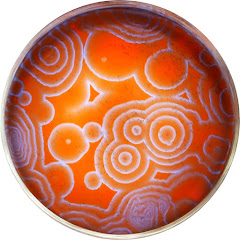
Mixing sodium and potassium is crazy
 ·
· 2m58s
·
· 2m58s
For a while now, I've been wanting to make an explosive liquid metal, and all I need is some sodium and some potassium. And after mixing them together, I eventually had a perfect liquid metal ball. Finally, I pulled some of it out with a syringe, because there's just one thing I have to try. #shorts

Progress Feels Slow at First—But It Speeds Up! #shorts #classicalguitarshed #classicalguitar
 ·
· 0m34s
·
· 0m34s
Early progress feels slow, but as you build skills, things accelerate. Trust the process and keep going! #ClassicalGuitar #PracticeTips #MusicMindset #GuitarJourney #staymotivated

The AMAZING Music Of The Amazing Digital Circus
 ·
· 18m51s
·
· 18m51s
On today's episode of "Everyone apparently knows about this but me." Discover the 9 piano pieces that made the biggest impact on my playing (Free sheet music download!) https://resources.betterpiano.com/3Ic84Nf Follow me! Instagram: https://bit.ly/2WoR7W1 Twitter: https://bit.ly/2I02YAt Facebook: https://bit.ly/2K4rHq8 TikTok: https://bit.ly/2X7pnlN

Crowdsourcing Wisdom: From Jung’s Collective Unconscious to Reddit, Wikipedia & DAOs
 ·
· 1h12m
·
· 1h12m
Crowdsourcing Wisdom: From Jung’s Collective Unconscious to Reddit, Wikipedia & DAOs Can large groups of individuals truly generate “wisdom”? In this deep-dive essay, we trace the idea of a collective mind from Carl Jung’s poetic notion of a shared unconscious, through early crowd theorists like Gustave Le Bon and Aristotle’s “potluck” metaphor, to modern experiments in collective intelligence: Galton’s ox-weighing trial, Surowiecki’s Wisdom of Crowds, prediction markets, Reddit’s hive mind, Wikipedia’s volunteer editors, and decentralized autonomous organizations (DAOs). Along the way we explore when crowds shine—and when they spiral into mob mentality—and ask whether “collective consciousness” is more than a metaphor. 🌐 Join us for a journey through psychology, sociology, philosophy, and technology to discover how—and under what conditions—we can really crowdsource wisdom. 0:00 Introduction: Can We Crowdsource Wisdom? 0:39 Jung’s Collective Unconscious: Archetypes & Shared Psychic Patterns 9:33 Gustave Le Bon & the Dark Side of Mob Mentality 12:06 Aristotle’s “Potluck Dinner”: Positive View of Group Judgment 14:13 Francis Galton’s Ox-Weighing Experiment & Birth of “Wisdom of Crowds” 15:34 Surowiecki’s Three Conditions: Diversity, Independence, Aggregation 17:06 Prediction Markets: Real-Time Collective Forecasting 18:26 Good Judgment Project & Superforecasting Teams 19:54 Crowdsourced Science & Open-Source: Netflix Prize, Foldit, Linux 22:10 Neuroscience of Group Synchrony & Brain-to-Brain “Brainet” 23:10 Reddit’s Hive Mind: Breakthroughs, Charity Drives & Internet Mob Fails 32:02 Wikipedia’s Collective Brain: Volunteer Editors as “Immune System” 40:06 DAOs: Decentralized Autonomous Organizations & Collective Governance 48:19 Collective Crystal Balls: Further Reflection on Prediction Markets 56:26 Collective Consciousness Debate: Metaphor vs. Emerging Reality 59:33 The Global Brain & Philosophical Perspectives 1:01:30 Conclusion: Designing Wise Crowds & The Path to Collective Wisdom 1:12:35 End Credits

How Strong Is The STRONGEST Magnet?
 ·
· 1m0s
·
· 1m0s
The world’s strongest magnet… how strong is it? For reference a fridge magnet is about 0.001 “Tesla," which is how we measure a magnet’s strength... We use these insanely powerful magnets to do experiments. And if you want to know what they’ve found, subscribe! #shorts #magnet #science #tech

“KNUCKLEHEAD!!” DJ Vlad vs Tony Buzbee On Diddy | Elisabeth Oveson: ‘I Can't Remember If We Had Sex’
·
· 39m58s
Diddy could still face up to 20 years in a federal prison - but his sentence is likely to be much shorter than that, with the defense asking for less than two years. Federal prosecutors are facing criticism that they overreached with charges of sex trafficking and racketeering in a RICO case that never looked strong enough. There’s competing claims of victim-shaming - and that the Diddy trial is a definitive end for the MeToo era. So, what went wrong - and what happens next? Piers Morgan speaks to Elisabeth Ovesen, formerly known as Karrine Steffans and the author of ‘Confessions of a Video Vixen', who claims she was gifted to Diddy in 2001. Uncensored is then joined by hip hop commentator DJ Vlad and lawyer Tony Buzbee, who is representing alleged Diddy victims in civil suits. Piers Morgan Uncensored is proudly independent and supported by: Pique: Get 20% off your order plus a FREE frother & glass beaker with this exclusive link: https://piquelife.com/PIERS 00:00 Introduction and monologue 01:45 Elizabeth Ovesen interview begins 10:04 AD: Pique teas 11:21 Ovesen on whether she had a sexual relationship with Diddy 19:39 Esther Krakue reacts to Ovesen interview 21:55 DJ Vlad: “Cassie is guilty!” 24:33 Piers asks Tony Buzbee what will happen to Diddy 30:27 “Cassie was clearly groomed!” Esther Krakue responds to DJ Vlad 33:30 DJ Vlad on Diddy and Cassie’s “violent and drug-fueled” relationship 36:00 Buzbee slams DJ Vlad over case legalities: “You are flat out wrong” Subscribe to stay up-to-date on all Uncensored content. Follow Piers Morgan Uncensored on: X: https://x.com/PiersUncensored Instagram: https://www.instagram.com/piersmorganuncensored/ Facebook: https://www.facebook.com/piersmorganuncensored TikTok: https://www.tiktok.com/@piersmorganuncensored Follow Piers Morgan on: X: https://x.com/piersmorgan Instagram: https://www.instagram.com/piersmorgan #diddy #crime #piersmorgan #interview #debate

Five Minutes with Ben: Sam Shankland vs Alexei Shirov, Titled Tuesday 2024
·
· 6m58s
Five Minutes with Ben: Sam Shankland vs Alexei Shirov, Titled Tuesday 2024 Recorded on June 16, 2025 in Roswell, GA If you're interested in sponsoring a lecture of your choice, email Karen at karen@atlchessclub.com Check out Ben's Chessable courses here! https://www.chessable.com/author/BenFinegold/ Signup or gift a chess.com Premium membership to get access to their lessons, remove ads, improve your chess, AND help Ben at the same time!! Upgrade your chess.com membership or join! - http://go.chess.com/finegold. Watch live at https://www.twitch.tv/itsBenAndKaren Donations are appreciated at: https://streamlabs.com/itsBenandKaren/tip Follow me on Twitter: https://twitter.com/ben_finegold #benfinegold #chess #5minswithben

What is killing universities? | Catherine Liu, Eric Kaufmann, Yaron Brook | IAI
 ·
· 11m38s
·
· 11m38s
Something is rotten in the academy. Catherine Liu, Eric Kaufmann and Yaron Brook debate what's gone wrong with university education. Is it too marketised, or not marketised enough? When people say it's too left wing, what do they really mean? With a free trial, you can watch the full debate at https://iai.tv/video/crisis-in-the-academy?utm_source=YouTube&utm_medium=description Universities, long celebrated as sanctuaries of free thought and intellectual rigour, have for centuries been regarded as the best way to educate and conduct research. But increasingly, this assumption is being questioned. A recent study found that two-thirds of academics feel their freedom to teach and study is being curtailed. In 2022 alone, over 1,000 instances of content warnings or text removals were documented across UK universities. While some academics now criticise PhD programmes as a way to extract "fees and cheap labour" from students, reports suggest that most academic papers are read by an average of just ten people. More than half of respondents now say that going to university is not worth it. And in the US, graduate student debt averages over $71,000, while similar information is often freely available online. Should we call time on the age of the university and find new, innovative ways to educate people? Should we leave research and innovation to the business sector and free-market forces? Or are universities still vital to our education and culture and can a radical overhaul restore them to their original purpose? #university #liberal #left Yaron Brook is a political scientist, and chairman of the Ayn Rand Institute. He’s a bestselling author and the host of The Yaron Brook Show. Catherine Liu is a Professor of Film and Media Studies at the University of California, Irvine. She’s the author of Virtue Hoarders: The Case against the Professional Managerial Class Eric Kaufmann is Professor of Politics at the University of Buckingham. He’s the author of Taboo and Whiteshift: Immigration, Populism and the Future of White Majorities. Jay Shapiro hosts. 00:00 Introduction 00:17 Yaron Brook: Students are customers 02:15 Catherine Liu: The difference between Left and Liberal 05:57 Eric Kaufman explains "woke" 08:25 Yaron Brook: "Maybe I'm a Leftist" The Institute of Art and Ideas features videos and articles from cutting edge thinkers discussing the ideas that are shaping the world, from metaphysics to string theory, technology to democracy, aesthetics to genetics. Subscribe today! https://iai.tv/subscribe?utm_source=YouTube&utm_medium=description&utm_campaign=crisis-in-the-academy For debates and talks: https://iai.tv For articles: https://iai.tv/articles For courses: https://iai.tv/iai-academy/courses
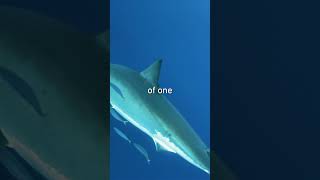
Haaaaave you met Bruce? - Bruce, the Great White Shark
 ·
· 0m31s
·
· 0m31s
Most people believe that the Great White Shark is a mindless eating machine. In today's wildlife documentary, a crew of scientists forms a relationship with a 2,000 pound Great White Shark named Bruce. They see through his eyes, swim with him, touch him and, in the end, they attempt a shocking experiment. -- Welcome to the official Get.factual youtube channel! 🌍 We are a documentary streaming channel covering history, science, technology, and nature. Explore worlds distant, forgotten, and unknown; from the depths of ocean trenches to the far reaches of the cosmos. New uploads of full-length documentaries and docu-series every week! Subscribe here: https://bit.ly/GetfactualSUB

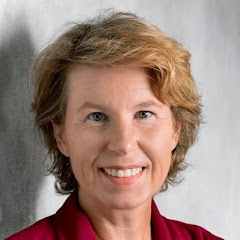
Strange New Observations Reveal Major Clue About Dark Matter
 ·
· 6m53s
·
· 6m53s
As a viewer of my channel, you will get a special 20% off discount at the Economist! Head over to https://www.economist.com/Sabine to get started. According to a recently published data analysis of dwarf galaxies, the miniature star systems are more generally more clustered together than current theories of dark matter predict they should be. And this isn’t the only odd recent finding that contradicts the current dark matter theories. It looks like we are seeing a massive shift in our understanding of dark matter. I have a summary for you. Paper: https://www.nature.com/articles/s41586-025-08965-5 This video comes with a quiz which you can take here: https://quizwithit.com/start_thequiz/1751785320392x201530039009280000 🤓 Check out my new quiz app ➜ http://quizwithit.com/ 📚 Buy my book ➜ https://amzn.to/3HSAWJW 💌 Support me on Donorbox ➜ https://donorbox.org/swtg 📝 Transcripts and written news on Substack ➜ https://sciencewtg.substack.com/ 👉 Transcript with links to references on Patreon ➜ https://www.patreon.com/Sabine 📩 Free weekly science newsletter ➜ https://sabinehossenfelder.com/newsletter/ 👂 Audio only podcast ➜ https://open.spotify.com/show/0MkNfXlKnMPEUMEeKQYmYC 🔗 Join this channel to get access to perks ➜ https://www.youtube.com/channel/UC1yNl2E66ZzKApQdRuTQ4tw/join #science #sciencenews #space #physics

We ain’t gotta reach only God is above us #shorts #truth #freedom
 ·
· 0m34s
·
· 0m34s
#trendingmusic #viralmusic #humanrights

Pachelbel’s Canon like you’ve never heard it – Cha Di 2025 Guitar 💥
 ·
· 0m52s
·
· 0m52s
🎸This guitar is available on www.siccasguitars.com! Support our channel and become a SiccasGuitars Member with exclusive classical guitar nerd perks: https://www.youtube.com/channel/UCR39sLAZ5wS_vrMo4tRylHw/join ‾‾‾‾‾‾‾‾‾‾‾‾‾‾‾‾‾‾‾‾‾‾‾‾‾‾‾‾‾‾‾‾‾‾‾‾‾‾‾‾‾‾‾‾‾‾‾‾‾‾‾‾‾‾‾‾‾‾‾‾‾‾‾‾ Follows us on: ► Instagram: https://www.instagram.com/siccasguitars/ ► TikTok: https://www.tiktok.com/@siccasguitars ► Facebook: https://www.facebook.com/siccasguitars/ ► Twitter: https://twitter.com/siccasguitars WEBSITES: ► https://www.siccasmedia.com/ ► https://www.siccasguitars.com/ ► https://playsomethingcool.com/ NEWSLETTER: ► http://bit.ly/SiccasGuitars CONTACT US: ► info@siccasguitars.com ► 76137 Karlsruhe, Roonstr. 31, Germany ‾‾‾‾‾‾‾‾‾‾‾‾‾‾‾‾‾‾‾‾‾‾‾‾‾‾‾‾‾‾‾‾‾‾‾‾‾‾‾‾‾‾‾‾‾‾‾‾‾‾‾‾‾‾‾‾‾‾‾‾‾‾‾‾ ►►ANA VIDOVIC https://www.youtube.com/playlist?list=PLWOAHYyavpQhzY5wkpHE0_AGu72x7JjdN ►►J S BACH https://www.youtube.com/playlist?list=PLWOAHYyavpQiRD8C05bGImSEXp5KLpMSk ►► ALBUMS & CONCERTS https://www.youtube.com/playlist?list=PLWOAHYyavpQj1YvhqLIO5EGz9ikpYTc2m ‾‾‾‾‾‾‾‾‾‾‾‾‾‾‾‾‾‾‾‾‾‾‾‾‾‾‾‾‾‾‾‾‾‾‾‾‾‾‾‾‾‾‾‾‾‾‾‾‾‾‾‾‾‾‾‾‾‾‾‾‾‾‾‾ Classical guitars are our passion! We are specialized in the highest quality concert guitars as well as historic guitars from around the world. Our passion for these unique instruments and the joy to give guitarists, passionate players, and collectors the possibility to purchase their own appropriate instrument is the motivation that drives us. Another focus is to work closely with established and young, largely unknown luthiers. Together we want to develop new ideas and share experiences with our customers. We also recorded pieces for many great composers such as Johann Sebastian Bach, Astor Piazzolla and Isaac Albeniz (Asturias). You will also find almost all the classical music composers that wrote for the classical guitar. Make sure to discover Agustin Barrios Mangoré, Manuel Maria Ponce, Heitor Villa-Lobos and many more if you don't know their compositions already You can find our showroom in 76137 Karlsruhe, Roonstr. 31, Germany ‾‾‾‾‾‾‾‾‾‾‾‾‾‾‾‾‾‾‾‾‾‾‾‾‾‾‾‾‾‾‾‾‾‾‾‾‾‾‾‾‾‾‾‾‾‾‾‾‾‾‾‾‾‾‾‾‾‾‾‾‾‾‾‾ #SiccasGuitars # # ‾‾‾‾‾‾‾‾‾‾‾‾‾‾‾‾‾‾‾‾‾‾‾‾‾‾‾‾‾‾‾‾‾‾‾‾‾‾‾‾‾‾‾‾‾‾‾‾‾‾‾‾‾‾‾‾‾‾‾‾‾‾‾‾ Lighted by Nyta: https://www.nyta.eu/en/
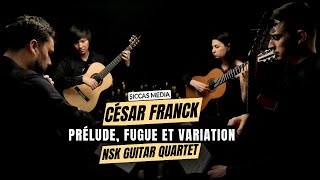
NSK Guitar Quartet play Prélude, Fugue et Variation, Op.18 by César Franck | Siccas Media
·
· 9m14s
NSK Guitar Quartet "Новосибирский гитарный квартет" play Prélude, Fugue et Variation, Op.18 by César Franck as part of our Siccas Media program (https://www.siccasmedia.com/). Find your dream classical guitar on https://www.siccasguitars.com 😊 Transcription by Alexey Sartakov YouTube: https://www.youtube.com/@UCyL2w_LEGz6iQTXopgeoldg Website: https://nskgq.tilda.ws/ Novosibirsk guitar quartet: Alexey Sartakov Ilya Yazikov Julia Salembaeva Ilya Khabeev Support our channel and become a SiccasGuitars Member with exclusive classical guitar nerd perks: https://www.youtube.com/channel/UCR39sLAZ5wS_vrMo4tRylHw/join ‾‾‾‾‾‾‾‾‾‾‾‾‾‾‾‾‾‾‾‾‾‾‾‾‾‾‾‾‾‾‾‾‾‾‾‾‾‾‾‾‾‾‾‾‾‾‾‾‾‾‾‾‾‾‾‾‾‾‾‾‾‾‾‾ Follows us on: ► Instagram: https://www.instagram.com/siccasguitars/ ► TikTok: https://www.tiktok.com/@siccasguitars ► Facebook: https://www.facebook.com/siccasguitars/ ► Twitter: https://twitter.com/siccasguitars WEBSITES: ► https://www.siccasmedia.com/ ► https://www.siccasguitars.com/ ► https://playsomethingcool.com/ NEWSLETTER: ► http://bit.ly/SiccasGuitars CONTACT US: ► info@siccasguitars.com ► 76137 Karlsruhe, Roonstr. 31, Germany ‾‾‾‾‾‾‾‾‾‾‾‾‾‾‾‾‾‾‾‾‾‾‾‾‾‾‾‾‾‾‾‾‾‾‾‾‾‾‾‾‾‾‾‾‾‾‾‾‾‾‾‾‾‾‾‾‾‾‾‾‾‾‾‾ ►►ANA VIDOVIC https://www.youtube.com/playlist?list=PLWOAHYyavpQhzY5wkpHE0_AGu72x7JjdN ►►J S BACH https://www.youtube.com/playlist?list=PLWOAHYyavpQiRD8C05bGImSEXp5KLpMSk ►► ALBUMS & CONCERTS https://www.youtube.com/playlist?list=PLWOAHYyavpQj1YvhqLIO5EGz9ikpYTc2m ‾‾‾‾‾‾‾‾‾‾‾‾‾‾‾‾‾‾‾‾‾‾‾‾‾‾‾‾‾‾‾‾‾‾‾‾‾‾‾‾‾‾‾‾‾‾‾‾‾‾‾‾‾‾‾‾‾‾‾‾‾‾‾‾ Classical guitars are our passion! We are specialized in the highest quality concert guitars as well as historic guitars from around the world. Our passion for these unique instruments and the joy to give guitarists, passionate players, and collectors the possibility to purchase their own appropriate instrument is the motivation that drives us. Another focus is to work closely with established and young, largely unknown luthiers. Together we want to develop new ideas and share experiences with our customers. We also recorded pieces for many great composers such as Johann Sebastian Bach, Astor Piazzolla and Isaac Albeniz (Asturias). You will also find almost all the classical music composers that wrote for the classical guitar. Make sure to discover Agustin Barrios Mangoré, Manuel Maria Ponce, Heitor Villa-Lobos and many more if you don't know their compositions already You can find our showroom in 76137 Karlsruhe, Roonstr. 31, Germany ‾‾‾‾‾‾‾‾‾‾‾‾‾‾‾‾‾‾‾‾‾‾‾‾‾‾‾‾‾‾‾‾‾‾‾‾‾‾‾‾‾‾‾‾‾‾‾‾‾‾‾‾‾‾‾‾‾‾‾‾‾‾‾‾ #SiccasGuitars #chambermusic #classicalguitar ‾‾‾‾‾‾‾‾‾‾‾‾‾‾‾‾‾‾‾‾‾‾‾‾‾‾‾‾‾‾‾‾‾‾‾‾‾‾‾‾‾‾‾‾‾‾‾‾‾‾‾‾‾‾‾‾‾‾‾‾‾‾‾‾ Lighted by Nyta: https://www.nyta.eu/en/

A Love Letter to Camp Mystic
 ·
· 25m10s
·
· 25m10s
On Monday evening, the death toll from the flooding in Central Texas rose past 100. A single place accounted for 27 of those deaths: Camp Mystic, a century-old Christian summer camp for girls. Erin Paisan, who attended Camp Mystic, explains what the place meant to generations of girls. Guest: Erin Paisan, who attended Camp Mystic Background reading: • Camp Mystic has been operated by generations of the same family (https://www.nytimes.com/2025/07/04/us/camp-mystic-texas.html) since the 1930s. • See how close the cabins were to the river (https://www.nytimes.com/interactive/2025/07/05/us/camp-mystic-texas-flooding.html) at the camp. • The mother of two rescued campers (https://www.nytimes.com/2025/07/04/us/the-mother-of-two-rescued-campers-relays-their-story.html) relayed their story. For more information on today’s episode, visit nytimes.com/thedaily (http://nytimes.com/thedaily?smid=pc-thedaily) . Transcripts of each episode will be made available by the next workday. Photo: Callaghan O’Hare for The New York Times Subscribe today at nytimes.com/podcasts (http://nytimes.com/podcasts) or on Apple Podcasts and Spotify. You can also subscribe via your favorite podcast app here https://www.nytimes.com/activate-access/audio?source=podcatcher. For more podcasts and narrated articles, download The New York Times app at nytimes.com/app.

Phenomenology & Virtual Reality: Merleau-Ponty’s Embodied Presence Explained
·
· 39m44s
Phenomenology & Virtual Reality: Merleau-Ponty’s Embodied Presence Explained Why does your body tremble when you walk a virtual plank, even though you know you’re safe on your couch? In this 40-minute video essay, we explore Maurice Merleau-Ponty’s theory of embodied perception and how it illuminates the sense of presence in modern VR. You’ll learn: Merleau-Ponty’s phenomenology: “The body is our general medium for having a world.” Everyday body-schema examples (feather-tipped hat, driving a car) The difference between immersion and presence in VR The three pillars of embodiment: self-location, agency & body-ownership How affordances (“I can…”) underlie presence Cutting-edge VR illusions: rubber-hand, virtual-child, avatar-bias studies Philosophical limits: sensory gaps, motion-sickness & the fragility of presence What VR teaches us about perception, self-modeling & the nature of reality Narrated in a conversational yet scholarly tone, this essay blends classical philosophy, cognitive science, and VR research. Hit Subscribe for more deep dives into mind, tech & human experience! 00:00 – Introduction: Strapped into a Virtual Plank 01:00 – Merleau-Ponty’s Key Claim: “The Body Is Our Medium” 03:00 – Everyday Body-Schema: Feathers & Cars 05:00 – From Sensorimotor “I Can” to World-Opening Perception 07:00 – VR’s Goal: Presence vs. Immersion 09:00 – Three Components of Embodiment in VR 11:00 – Sensorimotor Contingencies & “Absorbed” Interfaces 13:00 – Affordances in VR: The Ball & the Bow 15:00 – Virtual-Body Ownership Illusions (Rubber-Hand to Avatar Swap) 18:00 – Case Study: Empathy via Embodying a Different Body 21:00 – Out-of-Body & Extra-Limb VR Illusions 23:00 – Limits of Presence: Motion, Treadmills & Sensory Gaps 25:30 – The Fragility of Presence: Breaks in Presence & Motion Sickness 27:00 – The Virtual/Real Paradox: Ontology of VR 29:00 – Long-Term Effects: Depersonalization & Derealization Risks 31:00 – Philosophical Critiques: Ihde, Gallagher & the Multi-Stability of Tech 33:00 – What VR Confirms About Embodied Perception 35:00 – VR as Phenomenological Experiment & Practice Field 37:00 – Final Reflections: Reality Remixed & Our Embodied Self 39:00 – Conclusion: Presence, Perception & the Promise of VR
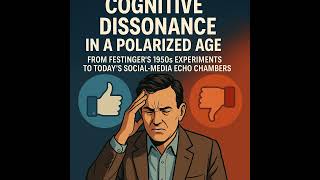
Cognitive Dissonance in a Polarized Age: From Festinger’s Cult to Social-Media Echo Chambers
·
· 1h1m
Cognitive Dissonance in a Polarized Age: From Festinger’s Cult to Social-Media Echo Chambers Why do we double-down on beliefs even when reality proves us wrong? In this hour-long video essay, we trace Leon Festinger’s classic 1950s experiments—from the infamous “When Prophecy Fails” doomsday cult study to the $1 vs. $20 lying experiment—and connect them to today’s hyper-polarized online echo chambers. Along the way, we’ll unpack: Self-justification and why we protect our self-image Confirmation bias, belief perseverance & the backfire effect How social media algorithms create digital “filter bubbles” The role of identity-protective cognition in tribal politics Concrete case studies: climate-change denial, vaccine skepticism, QAnon Strategies for intellectual humility and healthier dialogue Narrated in an academic yet conversational tone, this video weaves psychological insights (Tavris & Aronson, Dan Kahan, Jonathan Haidt) with real-world examples you’ve lived through. If you’ve ever wondered why “facts” alone can’t win an argument, dive in—and learn how to spot and soften your own dissonance. 🔔 Subscribe for deeper dives into how your mind shapes your world. 👍 Like and share to help spread self-awareness in a fragmented era. 00:00 – Introduction: The Clash of Beliefs & Reality 02:00 – Festinger’s “When Prophecy Fails”: The Doomsday Cult Study 04:00 – $1 vs. $20 Experiment: Turning Boring Tasks “Fun” 07:00 – How We Reduce Dissonance: Change, Justify, Ignore 09:30 – Self-Justification: Tavris & Aronson on Saving Our Egos 12:00 – Confirmation Bias: The Mind’s “Attorney” 15:00 – Belief Perseverance & the Backfire Effect 18:30 – Echo Chambers & Filter Bubbles in Social Media 22:00 – Tribal Politics: Identity-Protective Cognition 26:00 – Case Study #1: Climate Change Denial 29:00 – Case Study #2: Vaccine Skepticism & COVID-19 32:30 – Case Study #3: Conspiracy Movements (QAnon) 36:00 – Personal Identity Conflicts & Dissonance 38:30 – Cultivating Intellectual Humility: Pause & Reflect 42:00 – Practical Tips: Seeking Disconfirming Evidence 45:00 – Building Empathy in Debate: Steel-manning & Naysayers 48:30 – Designing “Serendipity” vs. Echo Chambers 51:00 – The Promise & Limits of “Wisdom of Crowds” 54:00 – From Individual to Collective Growth 57:00 – Conclusion: Learning from Our Dissonance 1:00:00 – Final Thoughts & Call to Action

Adjusting Beat Error on an Old Rolex Is a Pain
 ·
· 0m59s
·
· 0m59s
Adjusting beat error on modern movements is easy, on older movements, it's a huge pain. One way you can do it is to adjust the collet with the balance on a balance tack. It's even harder than the normal way but it is faster. I think I'll stick to the normal way after this. #watches #watchmaking #watchrepair
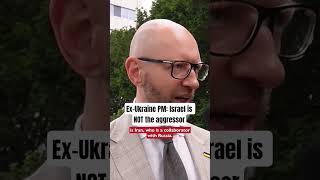
Ex-Ukraine PM whitewashes Israel’s genocide at NATO summit
 ·
· 0m59s
·
· 0m59s
This footage was sent directly to us by Dutch journalist Het Echte Verhaal who confronted key figures at the NATO summit in The Hague, pointing our their ghoulish hypocrisy. We REJECT the normalisation of a war economy and the rise of a European military-industrial complex. #Palestine #NATO #Israel #EU #democracy #humanrights #gaza #diem25 #mera25 #politics #Ukraine

Mary Robinson: "50% of leaders should be women"
 ·
· 1h9m
·
· 1h9m
Ireland's first female President and former UN High Commissioner for Human Rights on introducing family planning to Ireland, how the UN has lost its raison d'etre and why dancing is the solution to everything SUBSCRIBE for more speakers ► http://is.gd/OxfordUnion SUPPORT the Oxford Union ► https://oxford-union.org/supportus LICENSE Footage ► licensing@oxford-union.org Oxford Union on Facebook: https://www.facebook.com/theoxfordunion Oxford Union on Twitter: @OxfordUnion Website: http://www.oxford-union.org/ ABOUT THE OXFORD UNION SOCIETY: The Oxford Union is the world's most prestigious debating society, with an unparalleled reputation for bringing international guests and speakers to Oxford. Since 1823, the Union has been promoting debate and discussion not just in Oxford University, but across the globe. The Oxford Union is deeply grateful and encouraged by the messages of support in response to our determination to uphold free speech. During our 200 year history, many have tried to shut us down. As the effects of self-imposed censorship on university campuses, social media and the arts show no signs of dissipating, the importance of upholding free speech remains as critical today as it did when we were founded in 1823. Your support is critical in enabling The Oxford Union to continue its mission without interruption and without interference. You can support the Oxford Union here: https://oxford-union.org/supportus

Korean bbq for babe
 ·
· 0m59s
·
· 0m59s
Korean BBQ: Ssamjang Makes: 200ml Prep time: 5 mins Ingredients ⅓ cup (60ml) Doenjang 2 tbsp Gochujang 2 spring o nions, finely sliced 1 clove garlic, finely grated 1 tbsp corn or rice syrup 1 tbsp sesame oil 3 tsp sesame seeds, toasted Method Combine Doenjang, Gochujang, onions, garlic, corn syrup and sesame in a medium bowl. Mix well until smooth, then fold in sesame seeds. Serve this dipping sauce as part of your Korean BBQ feast with beef slices, pork belly slices, perilla leaves, cheese corn, sweet and sour cucumbers and any other side dishes you prefer. Corn Cheese: Serves: 2 Prep time: 5 mins Cook time: 25 mins Ingredients 2 ears corn, husks and silk removed 20g butter 3 spring onions, finely sliced, green and white separated ⅓ cup kewpie mayonnaise 1 tbsp caster sugar ½ tsp garlic powder Salt and pepper ¾ cup grated mozzarella cheese Method Preheat oven to 205°C fan forced (400°F). Slice the corn kernels off with a sharp knife. Melt butter in an oven proof heavy based frying pan over medium heat. Cook the corn and white part of onions for 5 minutes, until starting to brown. Remove from the heat and stir in the green part of onions, kewpie, sugar, garlic powder and half the cheese. Season with salt and pepper. Spread mixture out to an even layer and sprinkle remaining cheese over top. Transfer to the oven and bake for 15 minutes, then switch the oven to grill and cook a further 2-3 minutes until the cheese starts to char a little. #cooking #bbq #beef
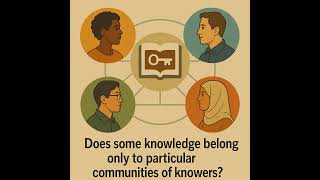
14 - Does some knowlege belong only to particular communities of knowers?
·
· 3m47s
🎓 TOK Exhibition Prompt 14: Does Some Knowledge Belong Only to Particular Communities of Knowers? Is all knowledge for everyone—or are some forms of knowing meant to stay within a group? In this video, we explore Prompt 14 from the TOK Exhibition and dive into the boundaries of knowledge—those created by culture, training, secrecy, and identity. From sacred traditions to expert disciplines, we examine when knowledge is shared, and when it's protected. 🔍 What You’ll Learn: A rephrased version of the prompt: Are there forms of knowledge accessible only to certain groups or experts? The three key reasons knowledge may stay community-bound: Cultural Specificity – Meanings shaped by tradition, context, and lived experience Specialized Training – Expertise built through years of practice Secrecy or Protection – Knowledge guarded for ethical, legal, or spiritual reasons Examples that illustrate how insider knowledge works—and what happens when it crosses boundaries 📚 Examples Explored: 🪶 Indigenous artifacts (e.g., Navajo rugs, Māori carvings) – rich with symbolic meaning only understood by community members 🔬 Scientific journals and patents – filled with technical language for expert audiences ✝️ Religious texts and rituals – sacred knowledge passed through initiation or tradition 🧑🍳 Family recipe books – culinary wisdom preserved through generations, often unwritten 🔐 Proprietary software code – guarded intellectual property versus open-source sharing 🛠️ Artisan crafts – skills that resist documentation, taught through mentorship 🗺️ Sacred land maps – geographic knowledge tied to spiritual identity 🧠 TOK Concepts Unpacked: Culture – How meaning is built and shared within communities Power – Who controls access to knowledge, and why it matters Perspective – How insiders and outsiders may interpret the same knowledge differently 💡 TOK Insight: Not all knowledge is universal. Some ways of knowing are deeply rooted in community, identity, and context—and attempting to “translate” them without care risks distortion or erasure. TOK asks us: When should we seek access—and when should we step back and respect the boundaries? 🔔 Subscribe for full coverage of all TOK Exhibition prompts 📌 Comment below: Is there a kind of knowledge you think should remain within a specific community? #TOK #TheoryOfKnowledge #TOKExhibition #TOKPrompt14 #CulturalKnowledge #IBDiploma #IndigenousKnowledge #ExpertiseAndAccess #CriticalThinking #TOK2025

9 - Are some types of knowledge less open to interpretation than others? TOK Exhibition
·
· 3m35s
🎓 TOK Exhibition Prompt 9: Are Some Types of Knowledge Less Open to Interpretation Than Others? Why does a math equation feel definitive while a poem feels endlessly open? In this video, we explore Prompt 9 from the TOK Exhibition by investigating the spectrum between objective knowledge and interpretive knowledge—and why some types of knowledge invite more debate than others. 🔍 What You’ll Learn: A rephrasing of the prompt to clarify your thinking: Is some knowledge more straightforward and less up for debate than others? How different Areas of Knowledge fall on a spectrum from precise to interpretive Examples of knowledge that seem clear-cut (math proofs, scientific models) versus those open to multiple readings (literature, art, religion) How cultural context, disciplinary standards, and human experience affect interpretation 📚 Examples Discussed: 📐 Pythagoras’ Theorem (Mathematics) 🧬 DNA models and scientific instruments 🎨 Paintings and sculptures 📖 Poetry and religious texts 🗺️ Maps and GIS data ⚖️ Legal codes and courtroom interpretation 🧠 TOK Concepts Explored: Objectivity – Some disciplines aim to minimize interpretation through logic and rules Interpretation – Other domains thrive on ambiguity and personal meaning Perspective – How background, training, and culture influence what we see as “clear” or “ambiguous” 💡 TOK Insight: Even in fields that seem objective, interpretation can sneak in through model selection, language, or context. And in the arts and humanities, interpretation isn’t a flaw—it’s the point. TOK invites us to ask: What makes something less open to interpretation, and should we always see that as a virtue? 🔔 Subscribe for a full series covering all TOK Exhibition prompts 📌 Comment below: Which object do you think lies furthest from interpretation? #TOK #TheoryOfKnowledge #TOKExhibition #TOKPrompt9 #Interpretation #Objectivity #IBDiploma #KnowledgeSpectrum #TOK2025
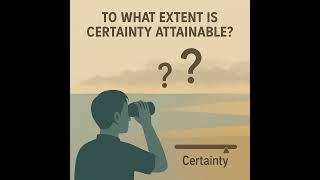
8 - To what extent is certainty attainable? TOK Exhibition
·
· 3m35s
🎓 TOK Exhibition Prompt 8: To What Extent Is Certainty Attainable? How sure can we ever really be? In this video, we explore Prompt 8 from the TOK Exhibition by asking: is certainty a destination, or just a direction? From courtroom verdicts to quantum physics, we’ll unpack how certainty is claimed, questioned, and constructed across different Areas of Knowledge. 🔍 What You’ll Learn: A clear rephrasing of the prompt to guide your thinking What certainty looks like in mathematics, science, history, and everyday life Real-world examples (like optical illusions and legal trials) that show how certainty can be both solid and slippery How to evaluate the threshold between belief and knowledge using TOK concepts 📚 Examples Explored: ⚖️ Courtroom standard of “beyond a reasonable doubt” 🔭 Telescopes and microscopes—our tools of precision (and their limits) 📜 Historical maps and scientific hoaxes 🧬 Heisenberg’s Uncertainty Principle 🖼️ Famous forgeries and illusions that challenge what we trust 🧠 TOK Concepts Unpacked: Certainty – How much proof is enough? When do we feel certain versus being certain? Truth – Is truth fixed, or does it shift as our methods and interpretations evolve? Confidence – Where do we draw the line between knowledge and belief? 💡 TOK Insight: Some domains, like logic and math, give us airtight certainty—within fixed rules. But in the real world, most knowledge lives in the gray zone of confidence, not certainty. That’s why scientists talk about probability, historians revise narratives, and doctors give diagnoses with margins of error. TOK challenges us to live thoughtfully in that uncertainty. 🔔 Subscribe for videos exploring every TOK Exhibition prompt 📌 Comment below: What’s one object that challenges your sense of certainty? #TOK #TheoryOfKnowledge #TOKExhibition #TOKPrompt8 #Certainty #IBDiploma #Epistemology #CriticalThinking #TOK2025 #KnowledgeAndTruth

6 - How does the way we organize or classify knowledge affect what we know? TOK Exhibition
·
· 3m59s
🎓 TOK Exhibition Prompt 6: How Does the Way We Organize or Classify Knowledge Affect What We Know? What do a library catalog, a world map, and your social media feed have in common? They're all systems for organizing knowledge—and they all shape how we understand the world. In this video, we explore TOK Exhibition Prompt 6 by unpacking how the structures we use to classify information can elevate certain truths while obscuring others. From scientific taxonomies to algorithmic filters, we’ll see how classification isn't neutral—it reflects perspectives, cultural values, and power dynamics. 🔍 What You’ll Learn: How to rephrase the prompt to guide your thinking Why classification systems are never objective—they shape and limit what we know Real-world examples that reveal hidden biases in how we sort knowledge How organizing information influences discovery, authority, and inclusion 🧠 TOK Concepts Explored: Perspective – Who’s doing the sorting, and what worldview does it reflect? Power – Who benefits from official categories? Who gets left out? Culture – How do values and traditions shape what feels like a “natural” way to group ideas? 📚 Examples Discussed: Dewey Decimal vs. Library of Congress catalogs Periodic table vs. alternative chemical classifications Mercator vs. Peters map projections Social media algorithms and echo chambers Genre labels, museum layouts, and more 💡 TOK Insight: Every classification system is a lens—and lenses have blind spots. By questioning how we sort and label knowledge, we become more aware of what’s included, what’s excluded, and why it matters. 🔔 Subscribe for videos covering every TOK Exhibition prompt 📌 Comment below: What’s one classification system you think needs to be challenged? #TOK #IBDiploma #TheoryOfKnowledge #TOKExhibition #TOKPrompt6 #KnowledgeAndClassification #CriticalThinking #DigitalLiteracy #KnowledgeAndPower #TOK2025

4 - On what grounds might we doubt a claim? TOK Exhibition
·
· 4m7s
🎓 TOK Exhibition Prompt 4: On What Grounds Might We Doubt a Claim? Doubt isn’t a flaw—it’s a feature of critical thinking. In this deep dive into TOK Exhibition Prompt 4, we explore how and why we question claims, and what makes us say, “Hold on… is that really true?” 🔍 What You’ll Learn: How to rephrase the prompt for clarity and direction The three core triggers of doubt: weak evidence, biased perspective, flawed justification Real-world “red-flag” objects (misleading graphs, retracted studies, snake-oil ads) that illustrate when and why doubt is warranted How to turn skepticism into insight using TOK concepts Practical tips for evaluating claims more rigorously 🧠 TOK Concepts Explored: Evidence – Is the data valid, complete, or manipulated? Perspective – Whose voice is missing or exaggerated? Justification – Does the logic hold up under scrutiny? 💡 Examples Discussed: Graphs with distorted axes Eyewitness testimony Fake before-and-after images Conspiracy pamphlets Retracted scientific papers 📚 TOK Insight: Doubt is a safeguard—not cynicism, but caution. It helps us test the strength of claims, avoid manipulation, and become more discerning knowers. But TOK also challenges us to reflect: are we doubting for the right reasons, or simply out of habit or bias? 🔔 Subscribe for a full series breaking down every TOK Exhibition prompt 📌 Drop a comment: What object best represents doubt for you? #TOK #TheoryOfKnowledge #TOKExhibition #TOKPrompt4 #IBDiploma #CriticalThinking #Skepticism #KnowledgeAndDoubt #IBTOK2025
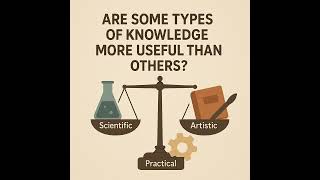
2 - Are some types of knowledge more useful than others? TOK Exhibition Project
·
· 6m29s
🎓 TOK Exhibition Prompt 2: Are Some Types of Knowledge More Useful Than Others? Is a stethoscope more important than a poetry book? Is financial knowledge more valuable than farming traditions? In this video, we explore TOK Prompt 2 by unpacking what "usefulness" really means—and how different types of knowledge serve different human needs. 🔍 What You’ll Learn: How to rephrase the prompt to spark your thinking Why context and values shape our judgments of usefulness Four rich example objects (from stethoscopes to poetry anthologies) with TOK insights How to connect knowledge types to Areas of Knowledge like the natural sciences, the arts, economics, and history Why we must ask: Useful for what? And to whom? How theoretical knowledge can become surprisingly practical 💡 This is more than just a TOK lesson—it’s a reflection on what kind of knowledge we treasure and why. Ideal for DP students preparing their TOK Exhibition or anyone curious about the deep questions behind knowledge. 📚 TOK Concepts Explored: Utility Values Perspective Context Ethics 🧠 TOK Insight: What we call "useful" reveals what we care about. In TOK, we’re not just ranking knowledge—we’re uncovering the assumptions behind our judgments. 🔔 Subscribe for breakdowns of ALL TOK exhibition prompts! 📌 Comment below: What’s the most "useful" knowledge in your life?
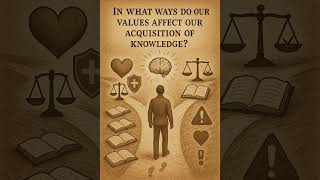
34 - In what ways do our values affect our aquisition of knowledge? TOK Exhibition
·
· 3m32s
🎓 TOK Exhibition Prompt 34: In What Ways Do Our Values Affect Our Acquisition of Knowledge? Why do we learn some things and not others? In this video, we explore Prompt 34 from the TOK Exhibition and investigate how our personal, cultural, and societal values shape what we seek, prioritize, and accept as knowledge. From media to science, religion to education, our values act as invisible filters that influence every step of the knowledge journey. 🔍 What You’ll Learn: How to rephrase the prompt: How do what we think is important influence what we learn? How values affect research, funding, ethics, and education Real-world objects and examples that reveal value-driven choices in knowledge acquisition The tension between values as guides and values as biases How TOK concepts like perspective, bias, and justification come into play 📚 Examples Discussed: 🗞️ News homepages and editorial bias 🧬 CRISPR tools and biotech ethics 🗺️ Historical maps and national perspectives 📚 Environmental science and sustainability 📖 Religious texts and spiritual knowledge 📜 Human rights charters and political priorities 🍲 Cultural cookbooks and dietary traditions 🧠 TOK Concepts Explored: Values – The priorities that guide what we explore or ignore Perspective – How cultural lenses shape knowledge pathways Bias – The influence of unspoken assumptions in what we accept as "worth knowing" 💡 TOK Insight: Knowledge isn’t just built on facts—it’s built on what we care about. What we choose to fund, research, teach, and remember is never neutral. Our values are embedded in every stage of knowledge acquisition. But by becoming aware of these influences, we can question them, broaden our perspectives, and aim for more balanced inquiry. 🔔 Subscribe for in-depth guides to every TOK Exhibition prompt 📌 Comment below: What’s one object that shows how your values shape what you choose to learn? #TOK #TheoryOfKnowledge #TOKExhibition #TOKPrompt34 #KnowledgeAndValues #IBDiploma #CulturalBias #KnowledgeAcquisition #TOK2025 #CriticalThinking Ask ChatGPT

33 - How is current knowledge shaped by it's historical development? TOK Exhibition
·
· 3m55s
🎓 TOK Exhibition Prompt 33: How Is Current Knowledge Shaped by Its Historical Development? Every idea we hold today stands on the shoulders of those that came before it. In this video, we explore Prompt 33 from the TOK Exhibition and trace how knowledge evolves—sometimes through steady refinement, sometimes through radical breakthroughs. From ancient tools to modern tech, and from early theories to contemporary frameworks, we’ll unpack how the past continues to shape what and how we know today. 🔍 What You’ll Learn: A clear rephrasing of the prompt: How does what we learned in the past affect what we know now? The difference between incremental improvements and paradigm shifts in knowledge development How culture, technology, and worldview influence the direction of inquiry Object pairings that highlight key moments in the historical evolution of knowledge 📚 Examples Explored: 🗺️ Historical maps vs. satellite-based GIS maps 🧭 Astrolabe vs. GPS device 📜 Egyptian medical papyrus vs. modern medical textbooks 📘 Darwin’s Origin of Species vs. modern evolutionary biology 📖 Gutenberg press vs. e-readers 🛫 Wright Brothers’ plane vs. commercial airliners ⚖️ Magna Carta vs. human rights charters 🎨 Renaissance art vs. modern conceptual art 🧠 TOK Concepts Unpacked: History – Knowledge is always rooted in what came before Development – Knowledge grows through refinement and rupture Influence – Each generation shapes the next through the tools, values, and questions it leaves behind 💡 TOK Insight: Some knowledge evolves gradually, like layers of paint on a canvas. Other times, a single idea rewrites the whole frame. TOK invites us to consider how today’s knowledge is built—not in isolation, but as a dialogue with history. Understanding that lineage helps us appreciate both the stability and the fluidity of what we claim to know. 🔔 Subscribe for deep dives into every TOK Exhibition prompt 📌 Comment below: Which past idea or invention do you think most shaped what you know today? #TOK #TheoryOfKnowledge #TOKExhibition #TOKPrompt33 #HistoricalKnowledge #IBDiploma #ParadigmShifts #KnowledgeDevelopment #TOK2025 #CriticalThinking

32 - What amakes a good explanation? TOK Exhibition
·
· 3m53s
🎓 TOK Exhibition Prompt 32: What Makes a Good Explanation? What turns information into understanding? In this video, we dive into Prompt 32 from the TOK Exhibition by exploring what makes an explanation good—not just accurate, but clear, relevant, and meaningful. Whether it’s a math formula, a political cartoon, or a recipe with pictures, a good explanation lights up the “aha!” moment. Let’s unpack what makes that happen. 🔍 What You’ll Learn: A rephrasing of the prompt: What makes some explanations better or clearer than others? The 5 key qualities of a strong explanation: Clarity – Simple, direct language Structure – Logical flow and progression Evidence & Examples – Anchoring abstract ideas Relevance – Audience-aware communication Engagement – Keeping the learner curious and connected Real-world objects that demonstrate these qualities in action 📚 Examples Explored: 🪐 A 3D model of the solar system 📉 Climate change infographics 📜 Historical maps and diaries 📐 Pythagoras’ Theorem as a visual proof 🍳 Illustrated recipes and science kits 🏥 Medical brochures and device manuals 🧩 Brain-teasers with explained solutions 🖼️ Political cartoons that unpack complex issues 🧠 TOK Concepts Explored: Explanation – As a central vehicle for sharing knowledge Clarity vs. Complexity – How much is too much? Audience Perspective – Why good explanations depend on who’s listening Knowledge Communication – How different Areas of Knowledge define “good” explanation differently 💡 TOK Insight: Not all explanations are created equal. A good explanation bridges the gap between expert and learner, transforming data into insight. TOK challenges us to think about the conditions that make explanations powerful—and how different contexts require different explanatory tools. 🔔 Subscribe for insightful breakdowns of all TOK Exhibition prompts 📌 Comment below: What’s the best explanation you’ve ever heard—and why did it stick with you? #TOK #TheoryOfKnowledge #TOKExhibition #TOKPrompt32 #KnowledgeAndExplanation #IBDiploma #CriticalThinking #EffectiveCommunication #TOK2025

31 - How can we judge when evidence is adequate? TOK Exhibition
·
· 4m20s
🎓 TOK Exhibition Prompt 31: How Can We Judge When Evidence Is Adequate? How do we know when we’ve seen enough to believe something? In this video, we unpack Prompt 31 from the TOK Exhibition and explore what makes evidence “adequate” in different contexts—science, law, history, and everyday life. It’s not just about how much evidence we have, but how it’s gathered, tested, and interpreted. 🔍 What You’ll Learn: A rephrasing of the prompt: How do we know when we’ve seen enough proof to back up what we believe? The key criteria for judging adequacy: Quantity vs. Quality – A few strong cases vs. large sample sizes Methodological Rigor – Was the process trustworthy? Relevance & Scope – Does the evidence actually support the claim? Corroboration – Do multiple sources align? Transparency – Are limitations acknowledged? Real-world examples showing how these standards are applied (or misused) 📚 Examples Explored: 🧪 Peer-reviewed science papers and clinical trials ⚖️ Courtroom verdicts and legal standards of proof 📰 Fake news vs. credible sources 📈 Statistical graphs and data visualization 🧠 Eyewitness testimony and its limits 📷 Manipulated images and source verification 🗺️ Historical artifacts and inference from limited evidence 🔍 Patent applications and the burden of technical proof 🧠 TOK Concepts Unpacked: Evidence – What counts as legitimate support for a claim Justification – How different areas set standards for believing something Objectivity – Strategies that help us trust conclusions despite bias 💡 TOK Insight: Adequacy is never just about the amount of evidence. It’s about how we gather it, where it comes from, and why it convinces us. In high-stakes situations, the demand for rigor increases—but sometimes, we have to act on less-than-perfect knowledge. TOK helps us reflect on where that line should be. 🔔 Subscribe for deep dives into all TOK Exhibition prompts 📌 Comment below: What’s the best—or worst—evidence you’ve seen used to support a claim? #TOK #TheoryOfKnowledge #TOKExhibition #TOKPrompt31 #EvidenceAndJustification #IBDiploma #CriticalThinking #KnowledgeAndProof #TOK2025

30 - What role does imagination play in the producing knowledge about the world? TOK Exhibition
·
· 3m48s
🎓 TOK Exhibition Prompt 30: What Role Does Imagination Play in Producing Knowledge About the World? Imagination isn’t just for artists and dreamers—it’s a powerful tool in science, mathematics, and social understanding. In this video, we explore Prompt 30 from the TOK Exhibition and ask: how does imagining the impossible help us better understand what is possible? From fantasy worlds to mathematical models, we’ll discover how creativity fuels discovery. 🔍 What You’ll Learn: A rephrasing of the prompt: How does dreaming up new ideas help us understand the world better? The key roles imagination plays in producing knowledge: Hypothesis Generation – Forming new ideas to test and explore Model-Building – Visualizing the invisible (like DNA or galaxies) Empathy & Insight – Understanding perspectives through stories and simulations Real-world examples that show how imaginative thinking shapes both artistic and scientific progress 📚 Examples Explored: 📘 Novels and science fiction that inspire real-world innovation 🧬 DNA double-helix models born from creative thinking 🕹️ Video game concept art and virtual reality demos 🌍 Imaginary maps (e.g., Middle-earth) and their symbolic reflection of real cultures 🏗️ Architectural blueprints and prototypes that turn vision into reality 🎶 Musical scores and custom instruments that invent new ways of experiencing sound 🧠 TOK Concepts Explored: Imagination – As a way of producing knowledge, not just expressing it Creativity – The link between invention, exploration, and insight Innovation – How bold ideas transform into practical tools and theories 💡 TOK Insight: Imagination isn’t just the starting point for knowledge—it’s the bridge between what we know and what we could know. Whether shaping scientific theories, building fictional worlds, or inventing new tools, imagination fuels progress. But TOK also reminds us: we must balance imaginative vision with critical evaluation. 🔔 Subscribe for in-depth breakdowns of every TOK Exhibition prompt 📌 Comment below: What’s the most imaginative idea you’ve seen become real knowledge? #TOK #TheoryOfKnowledge #TOKExhibition #TOKPrompt30 #Imagination #CreativityAndKnowledge #IBDiploma #KnowledgeAndInnovation #TOK2025

28 - To what extent is objectivity possible in the production or aquisition of knowledge? TOK
·
· 3m53s
🎓 TOK Exhibition Prompt 28: To What Extent Is Objectivity Possible in the Production or Acquisition of Knowledge? Can we ever truly know something without our own views getting in the way? In this video, we explore Prompt 28 from the TOK Exhibition, diving into the complex relationship between objectivity, bias, and perspective. From science labs to history books, we’ll see how the pursuit of neutrality often collides with the realities of human judgment. 🔍 What You’ll Learn: A rephrased version of the prompt: Can we ever learn or discover something without our views getting in the way? The three main challenges to objectivity: Tool & Method Design – Every method has built-in assumptions Selection & Framing – What we choose to collect or emphasize shapes the message Interpretation – Cultural, disciplinary, and personal perspectives influence meaning Real-world examples that show how objectivity is pursued—and where it breaks down 📚 Examples Explored: 🔬 Microscopes and telescopes – how instruments still depend on interpretation 🗞️ Newspaper front pages – editorial framing and implicit bias 📘 History textbooks from different countries – conflicting narratives of the same event ⚖️ Legal documents and constitutions – “neutral” laws interpreted through cultural lenses 📊 Statistical software – how user input and design choices affect “objective” data 🌍 Maps with shifting borders – cartography shaped by politics 🧪 Double-blind studies – the gold standard in science, but not bias-proof 🧠 TOK Concepts Unpacked: Objectivity – The ideal of removing personal bias in knowledge production Bias – Unavoidable but manageable influences from tools, choices, and viewpoints Perspective – Every knower has a lens, and acknowledging it can build better trust 💡 TOK Insight: Objectivity isn’t all-or-nothing—it’s a goal we strive toward, not a perfect state we reach. Even our most rigorous methods are shaped by human decisions. TOK encourages us to explore how we can recognize, reduce, and ethically work with bias—rather than pretending it doesn’t exist. 🔔 Subscribe for breakdowns of every TOK Exhibition prompt 📌 Comment below: Do you think true objectivity is possible—or is it just an illusion? #TOK #TheoryOfKnowledge #TOKExhibition #TOKPrompt28 #Objectivity #KnowledgeAndBias #IBDiploma #CriticalThinking #TOK2025 #PerspectiveInKnowledge

27 Does all knowledge impose ethical obligations on those who know it? - TOK Exhibition
·
· 4m9s
🎓 TOK Exhibition Prompt 27: Does All Knowledge Impose Ethical Obligations on Those Who Know It? Does knowing something mean we also owe something? In this video, we explore Prompt 27 from the TOK Exhibition and examine the idea that knowledge isn't just about power—it's about responsibility. Whether it’s a medical diagnosis, a scientific breakthrough, or classified information, we ask: what ethical duties come with knowing? 🔍 What You’ll Learn: A rephrasing of the prompt: Does having knowledge automatically come with duties about how we use or share it? Three key dimensions of ethical obligation: Preventing Harm vs. Doing Good – Do we have a duty to act or to stay silent? Confidentiality & Consent – When must knowledge be protected rather than shared? Power & Privilege – How does having knowledge create moral responsibility toward others? Real-world examples of knowledge that carries ethical weight 📚 Examples Explored: 🩺 Medical textbook & Hippocratic Oath plaque – the duty to heal and do no harm ☢️ Nuclear weapon blueprints – the burden of dangerous knowledge 🌍 Climate science materials – obligation to future generations 🔐 Confidential document safes – ethical management of private information 💊 Drug patents – balancing innovation with access and equity 🧑🔬 Research ethics codes – how scientists protect human subjects 📱 Social media guidelines – responsibility to curb misinformation and abuse 🧠 TOK Concepts Explored: Ethics – The principles that guide what we should do with what we know Responsibility – Knowledge as a trigger for action or restraint Power – Privileged knowledge often increases moral accountability 💡 TOK Insight: Knowledge is rarely neutral. The more we know, the more we may be called upon to act—whether to protect, inform, intervene, or stay silent. TOK invites us to ask: when does knowing become owing? And who decides the rules that guide our responsibilities? 🔔 Subscribe for a complete guide to every TOK Exhibition prompt 📌 Comment below: Can you think of a time when knowing something changed what you felt you had to do? #TOK #TheoryOfKnowledge #TOKExhibition #TOKPrompt27 #KnowledgeAndEthics #IBDiploma #MoralResponsibility #KnowledgeIsPower #TOK2025

26 - Does our knowledge depend on our interactions with other knowers? TOK Exhibition
·
· 3m32s
🎓 TOK Exhibition Prompt 26: Does Our Knowledge Depend on Our Interactions with Other Knowers? Can we really understand the world on our own—or do we need each other to build knowledge? In this video, we explore Prompt 26 from the TOK Exhibition and examine how collaboration, conversation, and community shape what and how we know. From cultural traditions to scientific discoveries, we reveal how knowledge thrives through interaction. 🔍 What You’ll Learn: A rephrased version of the prompt: Do we learn more through sharing, debating, and building on others’ ideas? The three key ways interaction fuels knowledge: Collective Construction – Combining minds to solve complex problems Perspective Blending – Gaining insights through diverse viewpoints Transmission & Refinement – Knowledge passed down, revised, and enriched through communication Examples that showcase the power of collaboration across different contexts 📚 Examples Explored: 🌍 Globe or map – the outcome of centuries of shared exploration and data 🎨 Collaborative mural – multiple creators shaping a unified vision 📜 Cultural artifacts and family recipes – evolving through generations 📰 Newspaper front page – created by journalists, editors, and readers 🎼 Symphony score and performance – composer, conductor, musicians, and audience co-creating meaning 🧩 Puzzles and board games – refined through shared strategies and global play 📖 Braille editions – adapting literature through collaborative accessibility 🧠 TOK Concepts Explored: Community – Knowledge lives in groups, not just individuals Perspective – Engaging others challenges and expands our thinking Collaboration – Co-creation turns isolated insights into shared understanding 💡 TOK Insight: Knowledge isn’t built in silence. Even the most brilliant ideas often emerge from discussion, debate, and shared effort. But TOK also asks us to be critical: how do we avoid echo chambers, and ensure all voices are heard in our pursuit of truth? 🔔 Subscribe for insightful videos covering all TOK Exhibition prompts 📌 Comment below: What’s one thing you learned better because someone else helped you see it differently? #TOK #TheoryOfKnowledge #TOKExhibition #TOKPrompt26 #KnowledgeAndCommunity #IBDiploma #Collaboration #Perspective #TOK2025
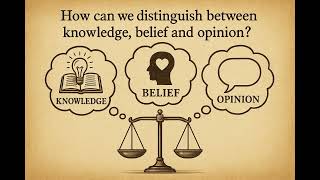
25 - How can we distguish between knowledge, belief and opinion? TOK Exhibition
·
· 3m32s
🎓 TOK Exhibition Prompt 25: How Can We Distinguish Between Knowledge, Belief, and Opinion? How do we tell what’s truly known, what’s deeply believed, and what’s just personal preference? In this video, we explore Prompt 25 from the TOK Exhibition and examine the subtle (and sometimes slippery) differences between knowledge, belief, and opinion. Understanding these distinctions helps us navigate the world of facts, faith, and feelings with more clarity. 🔍 What You’ll Learn: A rephrased version of the prompt: How do we tell the difference between what is proven, what is held with conviction, and what is merely personal preference? Clear definitions: Knowledge – Justified, evidence-based claims Belief – Convictions held with or without full evidence Opinion – Subjective judgments based on taste, values, or perspective Real-world examples that represent each category—and show how they sometimes blur 📚 Examples Explored: 📄 Scientific journal article – peer-reviewed knowledge based on data 📖 Religious/philosophical text – deep beliefs rooted in values and tradition 📰 Editorial columns and blog posts – expressions of personal opinion 📊 Opinion polls – collective belief or preference, not always aligned with evidence 🖼️ Art galleries – contrasting creator belief with viewer interpretation 🧃 “Library of Misinformation” – how once-accepted "facts" can later be debunked 🧠 TOK Concepts Unpacked: Truth – What aligns with reality across contexts Justification – The strength of reasoning behind a claim Subjectivity – How personal background shapes belief and opinion 💡 TOK Insight: Distinguishing between knowledge, belief, and opinion helps us engage with information more responsibly. TOK encourages us to question: What evidence supports this? Is this meant to persuade, express, or explain? And when does a belief become knowledge—or vice versa? 🔔 Subscribe for clear breakdowns of every TOK Exhibition prompt 📌 Comment below: Can you think of an example where belief, opinion, and knowledge got confused? #TOK #TheoryOfKnowledge #TOKExhibition #TOKPrompt25 #BeliefOpinionKnowledge #IBDiploma #CriticalThinking #Justification #TruthAndPerspective #TOK2025
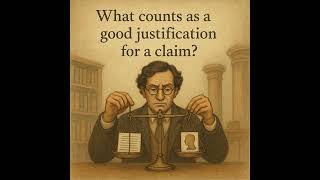
19 - What counts as a good justification for a claim? TOK Exhibition
·
· 3m45s
🎓 TOK Exhibition Prompt 19: What Counts as a Good Justification for a Claim? What makes one argument persuasive and another fall flat? In this video, we explore Prompt 19 from the TOK Exhibition and break down what turns a claim into convincing knowledge. From scientific studies to legal rulings, we’ll look at how strong justifications are built—and how different contexts demand different kinds of proof. 🔍 What You’ll Learn: A student-friendly rephrasing of the prompt: What makes proof or support for an idea genuinely strong? The 5 key qualities of a good justification: Relevance – Does the evidence directly support the claim? Credibility – Is the source reliable and recognized? Logical Coherence – Does the reasoning follow clearly and validly? Depth & Breadth – Is the support both detailed and well-rounded? Transparency – Are counterarguments addressed honestly? Concrete examples that meet these standards across different Areas of Knowledge 📚 Examples Explored: 📄 Scientific journal article – peer-reviewed and reproducible knowledge ⚖️ Court ruling – a mix of expert testimony, cross-examination, and legal logic 📊 Statistical graph – clear, visual data that supports trends or conclusions 📜 Historical primary source – firsthand context for interpreting past events 🧮 Mathematical proof – the gold standard of logical rigor 🖼️ Art critique – interpretive justification grounded in reason and context 🌍 GIS map – spatial data used for environmental and social claims 🧠 TOK Concepts Unpacked: Justification – What transforms information into trustworthy knowledge Evidence – The types of proof valued by different disciplines Objectivity – How we strive to support claims without bias or distortion 💡 TOK Insight: A good justification isn’t just about having any evidence—it’s about having the right kind of support, clearly linked to the claim, and transparently presented. TOK challenges us to ask: What counts as enough? And does the standard of justification change depending on where and how the knowledge is used? 🔔 Subscribe for videos covering all TOK Exhibition prompts 📌 Comment below: What’s the best piece of evidence you’ve ever seen—one that made you change your mind? #TOK #TheoryOfKnowledge #TOKExhibition #TOKPrompt19 #Justification #IBDiploma #Evidence #CriticalThinking #TOK2025
18
·
· 2m59s

17 - Why do we seek knowledge? TOK Exhibition
·
· 3m21s
🎓 TOK Exhibition Prompt 17: Why Do We Seek Knowledge? What makes us ask questions, chase answers, and dig deeper into the unknown? In this video, we explore Prompt 17 from the TOK Exhibition and investigate the powerful motivations that fuel our pursuit of knowledge—curiosity, control, creativity, and the drive to improve our world and ourselves. 🔍 What You’ll Learn: A rephrased version of the prompt: What drives us to look for new information—what’s the spark behind our knowledge quests? The 3 key motivators behind our desire to know: Curiosity – Our innate desire to understand Power & Control – Knowledge as a tool for influence or survival Improvement – Striving for progress, solutions, and growth Examples that bring these motivations to life across history, science, the arts, and everyday experience 📚 Examples Explored: 🔭 Telescope or microscope – extending our vision outwards and inwards 🗺️ Globe or world map – mapping the unknown in our quest for discovery 📜 Philosopher’s scroll – our search for wisdom, truth, and meaning 📱 Smartphone – instant access to information = knowledge as power 🎨 Art supplies and 🎵 musical instruments – creativity as a way of knowing 🧬 DNA model – curiosity about life, with promises of medical progress 🛞 Historic inventions – solving problems to make life better 🧠 TOK Concepts Unpacked: Curiosity – The origin of questions in every Area of Knowledge Power – How knowledge grants influence—but raises ethical issues Improvement – How our drive to make things better fuels discovery 💡 TOK Insight: Whether we’re exploring galaxies or decoding emotions through art, seeking knowledge is part of what makes us human. But TOK also asks us to reflect: Why are we learning this? Who benefits from it? And how do our personal or cultural values shape the knowledge we pursue? 🔔 Subscribe for full coverage of every TOK Exhibition prompt 📌 Comment below: What’s the main reason you seek knowledge—curiosity, improvement, or something else? #TOK #TheoryOfKnowledge #TOKExhibition #TOKPrompt17 #Curiosity #KnowledgeIsPower #IBDiploma #CriticalThinking #WhyWeLearn #TOK2025

16 - Should some knowledge not be sought on ethical grounds? - TOK Exhibition
·
· 3m16s
🎓 TOK Exhibition Prompt 16: Should Some Knowledge Not Be Sought on Ethical Grounds? Are there questions we simply shouldn’t ask? In this video, we explore Prompt 16 from the TOK Exhibition and examine the moral boundaries of knowledge. While curiosity drives innovation, some areas of inquiry carry risks that force us to ask: is the pursuit of certain knowledge worth the potential harm? 🔍 What You’ll Learn: A rephrased version of the prompt: Are there areas of inquiry we ought to avoid because the potential harms or moral costs outweigh any benefits? The 3 major ethical concerns in knowledge production: Potential Harm – Threats to life, health, or the environment Consent & Rights – Violations of individual or group autonomy Long-Term Impact – Unpredictable or irreversible consequences Real-world examples that reveal the ethical dilemmas behind certain types of research and discovery 📚 Examples Explored: ☢️ Nuclear weapons – power vs. destruction 🧬 CRISPR gene editing – life-saving potential vs. designer babies and ethical gray zones 🤖 AI and autonomous weapons – speed and efficiency vs. loss of human accountability 📉 Tuskegee Syphilis Study – a painful reminder of research without consent 🌱 GMO and biodiversity debates – food security vs. ecological risks 🛰️ Data privacy and surveillance – convenience vs. control and exploitation 🧪 Indigenous medicine – cultural knowledge vs. exploitation without compensation 🧠 TOK Concepts Explored: Ethics – Where and why we draw lines in the pursuit of knowledge Responsibility – The duty to anticipate and reduce harm Limits – When curiosity must be weighed against consequence 💡 TOK Insight: Not all knowledge is neutral—and not all questions are harmless. TOK challenges us to think about how and why we pursue knowledge, and who decides when enough is enough. The most difficult questions often begin with “Should we…?” 🔔 Subscribe for thought-provoking explorations of every TOK Exhibition prompt 📌 Comment below: Is there a kind of knowledge you think shouldn’t be pursued? Why? #TOK #TheoryOfKnowledge #TOKExhibition #TOKPrompt16 #KnowledgeAndEthics #IBDiploma #CuriosityVsResponsibility #CriticalThinking #KnowledgeLimits #TOK2025

15 - What contraints are there in the pursuit of knowledge? TOK Exhibition
·
· 3m26s
🎓 TOK Exhibition Prompt 15: What Constraints Are There on the Pursuit of Knowledge? What stops us from knowing more? In this video, we explore Prompt 15 from the TOK Exhibition and dig into the ethical, practical, and political roadblocks that limit our quest for knowledge. From outdated tools to moral dilemmas, not all questions can—or should—be answered freely. 🔍 What You’ll Learn: A rephrased version of the prompt: What roadblocks—moral, practical, or social—stand in the way of our quest to learn more? The 3 major categories of constraint: Ethical Boundaries – What we shouldn’t pursue Practical Limits – What we can’t pursue (yet) Cultural & Political Walls – What we’re not allowed to pursue Concrete examples that bring each kind of constraint to life 📚 Examples Explored: 🗺️ “Terra incognita” maps – the limits of exploration and funding 🧬 CRISPR patent disputes – legal and ethical delays in scientific progress 🔬 Broken or outdated instruments – practical barriers to discovery 🧱 Berlin Wall fragments – how closed regimes isolate knowledge 📖 Contested religious texts – interpretive conflicts that paralyze debate 🌐 Photos of the digital divide – socio-economic inequality in access to knowledge 📓 Exile diaries and underground writing – thinkers silenced by censorship 🗣️ Endangered-language dictionaries – knowledge lost when cultures are erased ⚛️ Particle accelerator blueprints – when only the privileged few can ask the deepest scientific questions 🧠 TOK Concepts Unpacked: Ethics – When knowledge must pause to protect life, rights, or dignity Responsibility – How knowledge holders weigh consequences before acting Limitations – Why acknowledging barriers is part of honest inquiry 💡 TOK Insight: The pursuit of knowledge isn’t just about asking bold questions—it’s about recognizing the boundaries that come with power, access, and responsibility. Sometimes constraints protect us. Other times, they hold us back. TOK invites us to ask: Who sets those limits? And should they always be obeyed? 🔔 Subscribe for breakdowns of every TOK Exhibition prompt 📌 Comment below: What do you think is the biggest constraint on knowledge today—ethics, money, or politics? #TOK #TheoryOfKnowledge #TOKExhibition #TOKPrompt15 #LimitsOfKnowledge #KnowledgeAndEthics #IBDiploma #CriticalThinking #KnowledgeBarriers #TOK2025
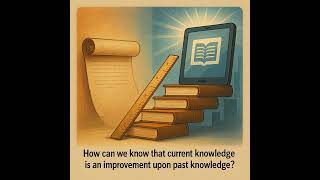
13 - How can we know that current knowledge is an improvement upon past knowledge?
·
· 3m45s
🎓 TOK Exhibition Prompt 13: How Can We Know That Current Knowledge Is an Improvement Upon Past Knowledge? What makes us believe that what we know now is better than what we used to know? In this video, we explore Prompt 13 from the TOK Exhibition and dive into what counts as progress in knowledge. From medicine to maps, and ethics to engineering, we ask: how do we measure improvement—and is it always as straightforward as it seems? 🔍 What You’ll Learn: A rephrased version of the prompt: What makes us confident that today’s knowledge is better than yesterday’s? Three key criteria to judge improvement: Efficacy – Does it solve problems better? Accuracy – Is it closer to truth or reality? Ethical Standards – Has it become more humane or just? Paired examples that show how knowledge has changed—and whether that change counts as progress 📚 Examples Explored: 🩸 Bloodletting tools vs. modern syringes – from harm to healing 🗺️ Early sailor maps vs. satellite GPS – better navigation, but privacy concerns 🖥️ First-gen computers vs. smartphones – more power, more connectivity, new challenges 📖 Textbooks from different eras – from exclusion to more inclusive perspectives 🌍 Environmental restoration photos – how ecological knowledge can help reverse damage 🔭 Early telescopes vs. Hubble images – clearer cosmic understanding 🛫 Wright brothers’ plane vs. modern jets – faster travel, but higher emissions 🧠 TOK Concepts Unpacked: Progress – What does it mean to say knowledge is “better”? Evidence – How do we compare past and present? Justification – Who decides what counts as meaningful improvement? 💡 TOK Insight: Progress in knowledge isn’t always linear—and it’s never neutral. What we call “better” depends on the evidence we value and the ethics we apply. TOK encourages us to ask: Are we really moving forward—or just trading old problems for new ones? 🔔 Subscribe for deep dives into all TOK Exhibition prompts 📌 Comment below: What’s one example where you think modern knowledge isn’t an improvement on the past? #TOK #TheoryOfKnowledge #TOKExhibition #TOKPrompt13 #KnowledgeProgress #IBDiploma #CriticalThinking #ThenAndNow #JustificationAndEvidence #TOK2025

11 - Can new knowledge change established values of beliefs? - TOK Exhibition
·
· 3m29s
🎓 TOK Exhibition Prompt 11: Can New Knowledge Change Established Values or Beliefs? Can a new idea really change what people believe deep down? In this video, we explore Prompt 11 from the TOK Exhibition and look at how groundbreaking knowledge can challenge, disrupt, or even completely overturn long-held values and beliefs. From science and technology to human rights and ethics, we ask: What happens when new knowledge shakes the foundations? 🔍 What You’ll Learn: A rephrased version of the prompt: How can fresh insights shake up what we’ve always taken for granted? The key drivers of belief shifts: Disruptive Discoveries – Knowledge that challenges entire worldviews Social Uptake – How communities adopt or resist new understanding Emotional & Ethical Barriers – Why some values hold firm, even in the face of evidence Real-world examples of how new knowledge rewrites our ethical, cultural, or personal maps 📚 Examples Explored: 🗺️ Pre- and post-Columbian maps – expanding global awareness, rewriting cultural supremacy 🧬 Darwin’s On the Origin of Species – evolution vs. creationism 💊 The contraceptive pill – science reshaping gender roles and reproductive ethics ⚖️ Women’s suffrage signs – redefining political power and civic identity 🌍 Renewable energy tech – shifting values toward sustainability and planetary responsibility 📲 Smartphones vs. typewriters – changing norms around communication, work, and privacy 🧪 CRISPR & biotech – raising new questions about human identity and ethics 📢 Hashtags like #MeToo – amplifying marginalized voices, challenging entrenched power structures 🧠 TOK Concepts Explored: Values and Beliefs – How new knowledge can challenge what individuals and societies hold dear Change – The process by which knowledge transforms attitudes, systems, and identities Resistance and Acceptance – Why belief systems evolve—or don’t—even in the face of evidence 💡 TOK Insight: Knowledge doesn’t just add to what we know—it can upend what we believe. But change doesn’t come easily. TOK helps us understand how personal identity, emotion, ethics, and power all play a role in how (or whether) new knowledge truly transforms old values. 🔔 Subscribe for deep dives into all TOK Exhibition prompts 📌 Comment below: What’s one piece of new knowledge that changed your beliefs? #TOK #TheoryOfKnowledge #TOKExhibition #TOKPrompt11 #BeliefChange #IBDiploma #KnowledgeAndValues #CriticalThinking #SocialChange #TOK2025 Ask ChatGPT
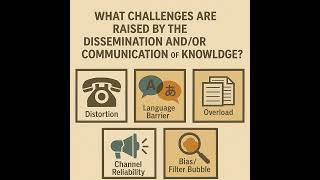
10 - What challenges are raised by the dissemination and/or communication of knowledge? -TOK
·
· 4m0s
🎓 TOK Exhibition Prompt 11: Can New Knowledge Change Established Values or Beliefs? Can a new idea really change what people believe deep down? In this video, we explore Prompt 11 from the TOK Exhibition and examine how groundbreaking knowledge can challenge, disrupt, or even overturn long-held values and beliefs. From scientific revolutions to social movements, we ask: What happens when new knowledge shakes the foundations? 🔍 What You’ll Learn A rephrased version of the prompt: 👉 How can fresh insights shake up what we’ve always taken for granted? Key drivers of belief shifts: Disruptive Discoveries – Knowledge that challenges entire worldviews Social Uptake – How communities adopt or resist new understanding Emotional & Ethical Barriers – Why some values hold firm, even in the face of evidence 📚 Examples Explored 🗺️ Pre- and post-Columbian maps – Expanding global awareness, rewriting cultural supremacy 🧬 Darwin’s On the Origin of Species – Evolution vs. creationism 💊 The contraceptive pill – Science reshaping gender roles and reproductive ethics ⚖️ Women’s suffrage signs – Redefining political power and civic identity 🌍 Renewable energy tech – Shifting values toward sustainability 📲 Smartphones vs. typewriters – Changing norms around communication and privacy 🧪 CRISPR & biotech – Raising new questions about human identity and ethics 📢 #MeToo and other digital movements – Amplifying marginalized voices and challenging power structures 🧠 TOK Concepts Explored Values and Beliefs – How new knowledge confronts personal and societal convictions Change – How knowledge transforms ethics, identities, and systems Resistance and Acceptance – Why belief systems evolve—or resist evolution—even in the face of compelling evidence 💡 TOK Insight Knowledge doesn’t just add to what we know—it can upend what we believe. But change rarely comes easily. TOK helps us examine how emotion, culture, ethics, and power shape the way new knowledge either reshapes—or is blocked from reshaping—our values. 🔔 Subscribe for deep dives into every TOK Exhibition prompt 📌 Comment below: What’s one piece of new knowledge that changed your beliefs? #TOK #TheoryOfKnowledge #TOKExhibition #TOKPrompt11 #BeliefChange #IBDiploma #KnowledgeAndValues #CriticalThinking #SocialChange #TOK2025

Why does matter curve spacetime?
 ·
· 1m2s
·
· 1m2s

Two-Omni-Wheel Bike behaves weirdly
 ·
· 24m55s
·
· 24m55s
Ad: Use code: PCBWay-JamesBruton10 to get $10 off orders of over $30 at PCBWay. Go to: https://www.pcbway.com/?from=JamesBruton This is the fifth omni-directional bike that I've built. This bike uses the active belt-driven omni-bike from the one-wheel balancing robot I built in April 2025 as the front wheel, and the big omni wheel from the experimental Speeder-Bike I built in 2023. I used joysticks to control this bike, it actively balances using an inertial measurement unit and a PID controller. This bike can move in any direction including going directly sideways, and I even tried to ride this omni-bike backwards! CAD & Code for this project: https://github.com/XRobots/TwoOmniWheelBike You can support me on Patreon, join my Discord, or buy my Merchandise: *************************** Discord: https://discord.com/invite/fc6MedG7eW Patreon: https://www.patreon.com/xrobots *************************** Other socials: *************************** Instagram: https://www.instagram.com/xrobotsuk Twitter: https://twitter.com/xrobotsuk Facebook: https://www.facebook.com/xrobotsuk/ *************************** Affiliate links - I will get some money of you use them to sign up or buy something: *************************** 10% off at https://www.3dfuel.com/XROBOTS - use code XROBOTS at the cart screen. Music for your YouTube videos: http://share.epidemicsound.com/xrobots *************************** CAD and Code for my projects: https://github.com/XRobots Huge thanks to my Patrons, without whom my standard of living would drastically decline. Like, inside out-Farm Foods bag decline. Plus a very special shoutout to Lulzbot, Inc who keep me in LulzBot 3D printers and support me via Patreon. HARDWARE/SOFTWARE Below you can also find a lot of the typical tools, equipment and supplies used in my projects: Filament from: https://polymaker.com/ Lulzbot 3D Printers: http://bit.ly/2Sj6nil Bearings from: https://simplybearings.co.uk/ Lincoln Electric Welder: https://bit.ly/2Rqhqos CNC Router: https://bit.ly/2QdsNjt Ryobi Tools: http://bit.ly/2RhArcD 3D Printer Filament: http://bit.ly/2PdcdUu Soldering Iron: http://bit.ly/2DrNWDR Vectric CNC Software: http://bit.ly/2zxpZqv CAD content is sponsored by Autodesk Fusion 360