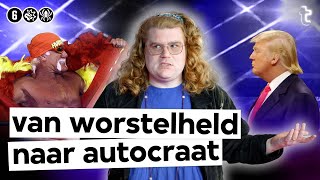
Zo houdt showworstelen de politiek in de houdgreep
 ·
· 21m49s
·
· 21m49s
Van worstelpersonage naar president van het Witte Huis: Trump heeft zijn opkomst volgens journalist en schrijver Josephine Riesman te danken aan zijn ervaring met showworstelen. In deze VPRO Tegenlicht-aflevering neemt Riesman de innige band tussen Trump en de professionele worstelindustrie onder de loep. Van jongs af aan is Trump fan van professioneel worstelen: een entertainmentsport waarbij alles draait om het meeslepen van het publiek door middel van spektakel en bedrog. Precies deze tactiek is voor Trump de basis van zijn politieke aanpak geworden. Riesman: ‘Professioneel worstelen is de taal en mindset die het beste de opkomst van Amerikaans fascisme kan verklaren. Trump begrijpt dat de overtuiging waarmee je iets zegt, belangrijker is dan de mate waarin het waar is.’ Riesman schreef eerder het succesvolle boek Ringmaster: Vince McMahon and the Unmaking of America. In deze autobiografie over Vince McMahon gaat ze na hoe hij, samen met zijn vrouw Linda McMahon, het invloedrijke worstelimperium WWE (World Wrestling Entertainment) heeft opgebouwd. Inmiddels is Linda McMahon minister van Onderwijs en werkt ze mee aan Trumps plan om het ministerie compleet af te schaffen. Volgens Riesman vraagt de Trump-politiek om een verandering van tactiek van journalisten en de progressieve politiek. ‘Je kunt fascisme niet factchecken.’ Riesman schrijft nu vanaf een afstand over de VS. Als transvrouw is ze Amerika ontvlucht. Regie & research: Maren Mercx Eindredactie: Marije Meerman & Julia Veldman Producer: Casper Boon & Regina Rijpema Productie assistentie: Robert de Vries Beeldredactie: Paula Witkamp Camera: Pim Hawinkels Geluid: Mark Witte Montage: Paul Delput Kleurcorrectie: Gerhard van der Beek Audiomix: Mark Meeuwis Archief WWE The White House Meer verhalen? Volg ons hier: Website: https://tegenlicht.vpro.nl/ Instagram: https://www.instagram.com/vpro.tegenlicht TikTok: https://www.tiktok.com/@vprotegenlicht Bluesky: https://bsky.app/profile/vprotegenlicht.bsky.social FaceBook: https://www.facebook.com/vprotegenlicht Meet-Ups: https://www.vpro.nl/evenementen Kijkwijzer: 6 jaar en ouder, angst, geweld.

The Arts TOK Ethics
 ·
· 16m8s
·
· 16m8s
How Ethics Shape Art — And Art Shapes Ethics The Arts - TOK - Ethics Visual organizer to accompany video https://drive.google.com/file/d/1dkjkTGJAcyk7LjKd10zMGDwujfacKVir/view?usp=drive_link In this Deep Dive, we explore the rich—and sometimes surprising—intersection of ethics and art. From moral vs. aesthetic judgments, to how art can train our empathy, to where we draw the line on censorship, and whether we can (or should) separate an artist’s character from their work, we unpack: Moral vs. Aesthetic Judgments: Why “beautiful” and “wrong” feel universal, yet rest on very different foundations Art’s Ethical Impact: How films like Parasite, albums like Kendrick Lamar’s To Pimp a Butterfly, and games like That Dragon, Cancer shape our values Censorship & Limits: When societies (and platforms) draw red lines—Mill’s harm principle vs. authoritarian norms vs. YouTube policies Art as Moral Provocation: From Marina Abramović’s Rhythm Zero to Banksy’s Ukraine Alive and AR interventions, art can shock and challenge deeply held beliefs Taste vs. Truth: Why neither brute relativism nor rigid realism captures how our moral and aesthetic standards evolve Artist vs. Artwork: The “death of the author” debate, moral reception theory, and modern controversies—from Joe Rogan boycotts to the restitution of the Benin Bronzes 💬 Join the conversation: Which ethical dimension of art surprised you most? Have you ever felt a moral “sting” watching or playing something creative? 👍 If you enjoyed this video, please Like, Share, and Subscribe for weekly Deep Dives into art, culture, science, and more. 0:00 Introduction: Ethics & Art Deep Dive 0:35 Moral vs. Aesthetic Judgments 2:13 Case Study: Banksy’s “Love Is In the Bin” 2:50 How Art Shapes Personal Values 3:32 Neuroscience of Moral Imagination 4:12 Key Examples: Parasite • To Pimp a Butterfly • That Dragon, Cancer 4:55 Literature’s Role in Ethical Development 5:40 Ethical Boundaries & Censorship 7:00 Testing the Limits: Hirst, AI Deepfakes & Warhol v. Goldsmith 7:48 Government vs. Platform Censorship 9:00 Art as Moral Challenger: Abramović, Banksy & AR Interventions 10:10 Taste vs. Truth: Constructed Standards 11:02 Separating Artist from Artwork: Moral Reception Theory 12:00 Modern Debates: Rogan Boycott & Benin Bronzes Restitution 12:50 Conclusion: Ethics and Art Interconnected 13:15 Final Thought & Viewer Prompt

The Arts - Perspectives
·
· 16m47s
How Knowledge & Value Evolve in Art: Deep Dive into Arts Perspectives The Arts - TOK - Perspectives Visual organizer to accompany video: https://drive.google.com/file/d/1bSKHaYP5FKL1lxQ8NYi1zAy3mBnT-EkK/view?usp=drive_link Today we unpack Perspectives in Arts from a TOK perspective to explore how knowledge and value work in the arts, and why they’re always shifting. We tackle eight big questions: Obsolete Knowledge? Do old artistic techniques ever truly die out? Unintended Meanings: Can a work mean more than its creator intended? Context Matters: How does setting shape our understanding? Art as Catalyst: Can art actually change perspectives or behavior? Absolute Standards: Are there universal criteria for “good” art? Value Gatekeepers: Who decides what art is worth today? Your Judgment vs. Experts: How to balance gut reaction with informed analysis. Knowing the Past: Why art history is essential to grasp today’s work. Along the way, we cite examples from vinyl’s resurgence and hand-drawn animation, to Banksy’s self-shredding print, Fortnite concerts, Blue Planet II’s plastic-reduction impact, and more. 👍 If you found this helpful, please • Like & Share to spread the knowledge • Comment below: Which question resonated most with you? 0:00 Introduction & Overview 0:48 Q1: Obsolete Knowledge in Art 3:11 Q2: Art’s Unintended Meanings 5:14 Q3: Context’s Role in Interpretation 6:59 Q4: Art as a Catalyst for Change 8:48 Q5: Absolute Standards of Good Art? 10:44 Q6: Who Decides Art’s Value Today? 12:09 Q7: Personal vs. Expert Judgment 13:50 Q8: The Importance of Art History 14:59 Conclusion & Final Thought
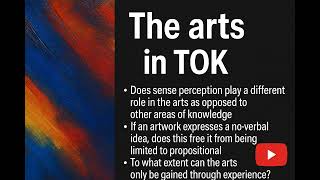
How We Know in the Arts: Unpacking Methods & Tools
·
· 17m51s
How We Know in the Arts: Unpacking Methods & Tools The Arts - TOK - Methods and tools Welcome to our Deep Dive series, where we turn complex source material into bite-sized, actionable insights. In today’s episode, we explore how knowledge is created, communicated, and validated in the arts—and how it differs from science or mathematics. Here we break artistic knowing into five key dimensions: Conventions – the living grammar of art, from Brunelleschi’s perspective to Cubism and generative AI Perception – how art sculpts our senses (think Op Art, ASMR, immersive digital installations) Nonverbal Communication – dense symbol systems that evoke meaning beyond words (dance, abstract painting, experimental film) Embodied Experience – knowledge you can’t read in a book but must feel or do (immersive theatre, VR docs, traditional craft) Justification & Value – pluralistic validation via critics, markets, institutions, peer‐review, even blockchain Along the way, we’ll look at examples like comics’ infinite canvas, AI-generated imagery, Pina Bausch’s Café Müller, Maria Martinez’s Pueblo pottery, and the Travis Scott Fortnite concert. By the end, you’ll see the arts as “laboratories of felt thought,” constantly experimenting with new ways of knowing. 🔔 Enjoyed this Deep Dive? • Like & Share to help others discover it • Leave a comment: Which dimension of artistic knowledge surprised you most? 0:00 Introduction to the Deep Dive 0:35 Five Key Dimensions of Artistic Knowledge 1:30 Artistic Conventions as “Living Grammar” 2:47 Technology’s Impact on Conventions (Digital Comics & AI Art) 4:43 Perception & Sensory Experience in Art 7:01 Nonverbal Communication & Dense Symbol Systems 8:13 Embodied & Experiential Knowledge 12:07 Medium & Epistemic Contract 13:10 Justification & Value in the Arts 16:33 Conclusion: Dynamism & Fluidity 17:24 Final Thought: “Laboratories of Felt Thought”

Inside Artistic Knowledge: How Artists Think, Innovate & Evolve
·
· 11m59s
Inside Artistic Knowledge: How Artists Think, Innovate & Evolve Visual organizer to accompany video: https://drive.google.com/file/d/1vJvq5ScI4GkGkusqcCdgfI-HAAfxANY8/view?usp=drive_link Join us for a deep dive into artistic knowledge—what it is, how it differs from scientific and mathematical knowing, and how it’s rapidly evolving in our tech-driven world. We’ll explore: Divergence across mediums: From a tabla maestro in Mumbai to a sound designer in LA, and from Japanese mangaka to Ghanaian sculptor El Anatsui. Interdisciplinary breakthroughs: Live-coding music and visuals in real time. Tradition vs. innovation: Basquiat’s Renaissance references, Jay Dilla’s hip-hop sampling, and Virgil Abloh’s “3% rule.” Technology as game-changer: AI choreography with Wayne McGregor, TeamLab’s immersive digital museums, and the NFT phenomenon. Three lenses on art: Art as a system, as expression, and as vehicle for conveying information. Embodied expertise: The unspoken “gut feel” of masters like Paco de Lucía, VR artists fine-tuning perception, and chefs sensing the perfect sauce consistency. Looking ahead: What might artistic knowledge become next? 💬 Tell us in the comments: How has technology changed the way you experience or create art? 👍 If you enjoyed this, please like, share, and subscribe for more Deep Dives every week! 0:00 Introduction: Defining Artistic Knowledge 0:57 Setting the Stage: Key Goals & Accessibility 1:05 Divergence Across Art Forms: Music & Visual Arts 2:47 Interdisciplinary Fusion: Live-Coding Music & Visuals 3:22 Tradition vs. Innovation: Basquiat & Hip-Hop Sampling 4:44 Remix Culture: Virgil Abloh’s 3% Rule 5:09 Technology’s Impact: AI, VR & NFTs 6:43 Three Dimensions of Art: System, Expression & Vehicle 8:13 Embodied & Experiential Knowing 10:48 Conclusion & Future of Artistic Knowledge

Mexico City's Map, Explained
 ·
· 18m4s
·
· 18m4s
The first 500 people to use my link in the description will receive a one month free trial of Skillshare! Get started today! https://skl.sh/danielsteiner04251 My Patreon: https://patreon.com/DanielSteiner Follow me on IG: https://www.instagram.com/danielsimssteiner Have a video suggestion? Let me know: https://forms.gle/BeiwQNRf8eAhQ912A Thank you Barbara and Thomas! Order Barbara's book: https://amzn.to/4j263jc Thomas' A portrait of Tenochtitlan: https://tenochtitlan.thomaskole.nl/ 00:00 Intro 01:32 The center of Mexico 03:44 Tenochtitlan's Logic 07:44 Outsiders Arrive 09:38 Ad break 10:39 Transforming the City 13:22 Outside factors 15:41 The Consequences

Sub Saturday - Ben Plays Twitch Subs - !challenge - 5-10-2025
 ·
· 2h3m
·
· 2h3m
Turn your videos into live streams with https://restream.io Sub Saturday


The Biggest Wealth Transfer In History is Happening Right Now!
 ·
· 21m58s
·
· 21m58s
Go to https://surfshark.com/boyle and use code BOYLE at checkout to get 4 extra months of Surfshark VPN! Let's talk about The Great Wealth Transfer, what this means for the economy, and why millennials are expected to become the Wealthiest Generation in history. Patrick's Books: Statistics For The Trading Floor: https://amzn.to/3eerLA0 Derivatives For The Trading Floor: https://amzn.to/3cjsyPF Corporate Finance: https://amzn.to/3fn3rvC Ways To Support The Channel Patreon: https://www.patreon.com/PatrickBoyleOnFinance Buy Me a Coffee: https://www.buymeacoffee.com/patrickboyle Visit our website: https://www.onfinance.org Follow Patrick on Twitter Here: https://bsky.app/profile/pboyle.bsky.social Business Inquiries ➡️ sponsors@onfinance.org Patrick Boyle On Finance Podcast: Spotify: https://open.spotify.com/show/7uhrWlDvxzy9hLoW0EYf0b Apple: https://podcasts.apple.com/us/podcast/patrick-boyle-on-finance/id1547740313 Google Podcasts: https://tinyurl.com/62862nve Join this channel to support making this content: https://www.youtube.com/channel/UCASM0cgfkJxQ1ICmRilfHLw/join Books Mentioned: The Missing Billionaires - Haghani & White https://amzn.to/4di55hq

Is This The Most Important Machine From The Medieval Era?
 ·
· 1h0m
·
· 1h0m
Grab your copy of The Book: The Ultimate Guide to Rebuilding Civilization today — and don't forget to use code CHRONICLE10 for 10% off: https://bit.ly/448gOfQ Discover more from Hungry Minds: https://www.youtube.com/@HungryMindsArt #thebook #hungrymindsbooks #howtorebuildcivilization #hungryminds Stephen Fry takes a look at the story of Johannes Gutenberg, inventor of the world's first printing press in the 15th century. How and why was the machine created? And just how big was its impact on society? Welcome to Chronicle; your home for all things medieval history! With documentaries covering everything from the collapse of the Roman Empire to the beginnings of the Renaissance, from Hastings to Charlemagne, we'll be exploring everything the Middle Ages have to offer. Subscribe now so you don't miss out! Do you love uncovering the past, exploring historic sites, and venturing to distant lands? Join History Hit today and stream hundreds of exclusive documentaries, with new releases every week. Plus, enjoy ad-free access to our podcast network for even more history every week. Head over to https://bit.ly/45CPh5u to embark on your journey through history! This channel is part of the Little Dot Studios Network. To get in touch please email owned-enquiries@littledotstudios.com.

Ontwaakt, politiek verweesden der aarde. Ontwaakt! (Column)
 ·
· 10m6s
·
· 10m6s
Recht voor Allen, Jouw bron voor nieuws en commentaar over recht, politiek en idealen. Deze video gaat over het gevoel van politiek verweesd zijn in deze verwarrende politieke tijden waar links en rechts elkaar standpunten overnemen. De redactie bestaat uit: Marco van Duijn, advocaat bij Utopie advocaten in Den Haag. Marco heeft een brede interesse en studeerde naast rechtswetenschappen cultuurwetenschappen. Recht voor Allen heeft ook een (ander) “Dierenrecht” kanaal, gemaakt door een andere redactie. https://www.youtube.com/@RechtvoorAllen-Dierenrecht Recht voor Allen is altijd op zoek naar nieuwe teamleden voor zowel de redactie als de techniek. Schroom niet om daarvoor contact met ons op te nemen. Disclaimer: Recht voor Allen hanteert geen ‘fractiediscipline’. Geuite meningen zijn altijd persoonlijke meningen. Wij berichten vanuit een ondogmatisch, vrijzinnig en antikapitalistisch perspectief. http://www.rechtvoorallen.nl

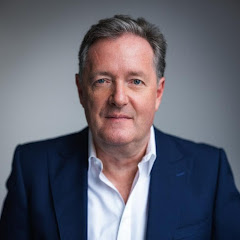
Ernest Owens Changes Piers Morgan's Mind Over Met Gala!
 ·
· 0m52s
·
· 0m52s
#piersmorgan #metgala #fashion #debate #funny Subscribe to stay up-to-date on all Uncensored content. Follow Piers Morgan Uncensored on: X: https://x.com/PiersUncensored Instagram: https://www.instagram.com/piersmorganuncensored/ Facebook: https://www.facebook.com/piersmorganuncensored TikTok: https://www.tiktok.com/@piersmorganuncensored Follow Piers Morgan on: X: https://x.com/piersmorgan Instagram: https://www.instagram.com/piersmorgan

HOW TO MAKE A STUART TRIPLE RUN - PART #14
 ·
· 8m13s
·
· 8m13s
How To Make A Stuart Triple Run - Part #14. Carefully drilling the mounting holes for the first piece of Cladding using my Proxxon Micromot Rechargeable Drill on the stand. This is a delicate operation and must not be forced. Any excess pressure will deform the thin Cladding steel and these holes need to be drilled in exactly the right place. https://www.patreon.com/keithappleton IF YOU ENJOY WATCHING THESE DETAILED TUTORIAL VIDEOS THAT I PRODUCE TO HELP BEGINNERS TO THE HOBBY, THEN PLEASE BECOME A PATRON OF MY YOUTUBE CHANNEL VIA "PATREON" AND ALLOW ME THE TIME TO MAKE EVEN MORE OF THESE SPECIALIST AND HIGHLY DETAILED TUTORIAL VIDEOS. AS A PATREON SUPPORTER YOU ARE ABLE TO ACCESS MANY OF MY VIDEOS THAT ARE NOT FOR PUBLIC VIEW ON YOUTUBE. PLEASE VISIT MY WEBSITE FOR THE VERY EASY TO USE COMPREHENSIVE PLAYLIST INDEX OF ALL OF MY YOUTUBE VIDEOS: www.mainsteam.co.uk OR CLICK HERE FOR PATREON: https://www.patreon.com/keithappleton Please become a member of my Youtube Channel to get access to extra videos: https://www.youtube.com/channel/UCgeQiJg-PIH5MZQn0aRd1mg/join

How To Use CHROMATIC Notes In Your SOLOS
 ·
· 0m54s
·
· 0m54s
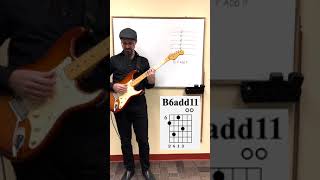
How do you use the chromatic scale in you solos? Here's how!

First Video of a Colossal Squid. It's a Baby.
 ·
· 0m44s
·
· 0m44s
This is the first time we’ve ever caught this deep sea creature on camera... and it’s a BABY. It’s so cute! It’s a colossal squid. The baby is only about a third of a meter long but when it’s full grown it’ll be 7 meters. In the footage, you can see its organs inside its transparent body. But the red color on its arms tell us that it can likely switch between being transparent and opaque… This first glimpse of the colossal squid in its natural habitat was captured by scientists onboard the Schmidt Ocean Institute research vessel Falkor using a remotely operated deep sea vehicle - tech that’s gotten a lot better in recent years. We hope it will teach us about how amazing creatures like this really behave in the wild. For more optimistic science and tech, subscribe for Huge If True. #shorts #tech #stem #ocean #deepocean #deepsea #animation #science

Teleology: Rethinking How We Do Physics
 ·
· 10m43s
·
· 10m43s
Check out Brilliant to learn more about differential equations or quantum physics! First 30 days are free and 20% off the annual premium subscription when you use our link ➜ https://brilliant.org/sabine. Teleology is the idea that the present is the way it is because it's shaped by a future purpose. In this video, I have a look at some theories in physics that reflect this idea and see if they make sense. 🤓 Check out my new quiz app ➜ http://quizwithit.com/ 💌 Support me on Donorbox ➜ https://donorbox.org/swtg 📝 Transcripts and written news on Substack ➜ https://sciencewtg.substack.com/ 👉 Transcript with links to references on Patreon ➜ https://www.patreon.com/Sabine 📩 Free weekly science newsletter ➜ https://sabinehossenfelder.com/newsletter/ 👂 Audio only podcast ➜ https://open.spotify.com/show/0MkNfXlKnMPEUMEeKQYmYC 🔗 Join this channel to get access to perks ➜ https://www.youtube.com/channel/UC1yNl2E66ZzKApQdRuTQ4tw/join 🖼️ On instagram ➜ https://www.instagram.com/sciencewtg/ #science #physics

The Wildest Cold War Plan, Rejected by John F. Kennedy #kennedy #coldwar
 ·
· 0m47s
·
· 0m47s
Welcome to the official Get.factual youtube channel! 🌍 We are a documentary streaming channel covering history, science, technology, and nature. Explore worlds distant, forgotten, and unknown; from the depths of ocean trenches to the far reaches of the cosmos. New uploads of full-length documentaries and docu-series every week! Subscribe here: https://bit.ly/GetfactualSUB

Oranjes gebruiken schilderij voor belastingvoordeel, maar waar is het nu?
 ·
· 1m34s
·
· 1m34s
In 2004 erfden de Oranjes een groot vermogen van Prinses Juliana. Een deel van de erfbelasting — miljoenen euro’s — werd voldaan met kunstvoorwerpen, waaronder een schilderij van Willem van de Velde de Oude, geschat op 2,5 miljoen euro. Volgens de regels mocht dit alleen als het publiek toegang zou krijgen tot het kunstwerk. Maar wat blijkt? Het schilderij verdween in een afgesloten ruimte van het Paleis op de Dam — buiten het zicht van iedere Nederlander. Hoe kon dit gebeuren? 🔍 Ontdek het hele verhaal over belasting, kunst, en verborgen macht in deze video: https://www.youtube.com/watch?v=bs8Mp1AEMX0&t=15s 📌 Abonneer voor meer onthullende verhalen over politiek, koningshuis en machtsstructuren in Nederland: http://bit.ly/ZEMBLA_BNNVARA Luister onze onderzoeksverhalen in onze podcast: Spotify podcast: https://spoti.fi/2UBbCQ6 Apple podcast: https://apple.co/3wVX4ZA Volg ons ook hier: Instagram: https://www.instagram.com/zembla_bnnvara Facebook: https://www.facebook.com/zembla.tv/ Twitter: https://twitter.com/ZEMBLA Bluesky: https://bsky.app/profile/zembla-bnnvara.bsky.social LinkedIn: https://www.linkedin.com/company/zembla-bnnvara TikTok: https://www.tiktok.com/@zembla_bnnvara
Do You Need Nails to Play Classical Guitar? #shorts #classicalguitarshed #classicalguitar #guitar
 ·
· 0m38s
·
· 0m38s
Nails add variety to your tone, but you don’t need them to play classical guitar! Flesh-only playing can sound warm and consistent too. #ClassicalGuitar #GuitarTips #NoNailsNeeded #MusicSkills #GuitarTone

George Santos Makes Plea To Trump For Pardon
·
· 0m49s
#trump #pardons #donaldtrump #piersmorgan #georgesantos Subscribe to stay up-to-date on all Uncensored content. Follow Piers Morgan Uncensored on: X: https://x.com/PiersUncensored Instagram: https://www.instagram.com/piersmorganuncensored/ Facebook: https://www.facebook.com/piersmorganuncensored TikTok: https://www.tiktok.com/@piersmorganuncensored Follow Piers Morgan on: X: https://x.com/piersmorgan Instagram: https://www.instagram.com/piersmorgan

Salt - It's a chef's secret weapon
 ·
· 16m14s
·
· 16m14s
Salt isn't just salt - it's a chef's secret weapon with endless variations and applications. From everyday cooking salt to mineral-rich sea salt to delicate flaky finishing salts, each type transforms your food in unique ways, making everything taste more intensely like itself. Learn exactly why professional chefs use multiple types of salt and master the techniques they rely on - from vegetable preservation to dry brining that will revolutionize your protein cookery. These aren't fancy chef tricks - they're fundamental principles that will ELEVATE every dish you make! MY PRODUCTS: https://bit.ly/AndyCooksEssentials MY COOKBOOK: https://bit.ly/3WVoXAN TIMESTAMPS: 00:36 - Salt Types 04:06 - Salt Baked Chicken 06:01 - Dry Brined Steak 09:34 - Sauerkraut 10:37 - Gravlax FOLLOW ME: Instagram: https://www.instagram.com/andyhearnden TikTok: https://www.tiktok.com/@andy_cooks Facebook: https://www.facebook.com/andy.h.cooks Website with all my recipes: https://www.andy-cooks.com/ Director, Chef and Host: Andy Producer: James Threadwell Videographer: Nick Hargans Editor: Caleb Dawkins Kitchen Manager: Sarah Allchurch #chef #salt #chicken #steak #gravlax
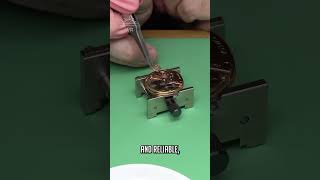
Swiss Lever Escapements Use Pallet Forks Like This
 ·
· 0m55s
·
· 0m55s
Swiss level escapements use a component called a pallet fork that has two jewels on the end that interact with the escape wheel of the watch. When you're re-installing it into the movement, you can see if it's aligned properly by nudging it back and forth a little bit to see if it snaps from side to side. #watches #watchrepair

🇮🇹 Deep roots, bold voice. Paolo Coriani 2025 meets Bella Ciao — would you try this beauty?
 ·
· 0m41s
·
· 0m41s
🎸This guitar is available in our Siccas Guitars shop! Support our channel and become a SiccasGuitars Member with exclusive classical guitar nerd perks: https://www.youtube.com/channel/UCR39sLAZ5wS_vrMo4tRylHw/join ‾‾‾‾‾‾‾‾‾‾‾‾‾‾‾‾‾‾‾‾‾‾‾‾‾‾‾‾‾‾‾‾‾‾‾‾‾‾‾‾‾‾‾‾‾‾‾‾‾‾‾‾‾‾‾‾‾‾‾‾‾‾‾‾ Follows us on: ► Instagram: https://www.instagram.com/siccasguitars/ ► TikTok: https://www.tiktok.com/@siccasguitars ► Facebook: https://www.facebook.com/siccasguitars/ ► Twitter: https://twitter.com/siccasguitars WEBSITES: ► https://www.siccasmedia.com/ ► https://www.siccasguitars.com/ ► https://playsomethingcool.com/ NEWSLETTER: ► http://bit.ly/SiccasGuitars CONTACT US: ► info@siccasguitars.com ► 76137 Karlsruhe, Roonstr. 31, Germany ‾‾‾‾‾‾‾‾‾‾‾‾‾‾‾‾‾‾‾‾‾‾‾‾‾‾‾‾‾‾‾‾‾‾‾‾‾‾‾‾‾‾‾‾‾‾‾‾‾‾‾‾‾‾‾‾‾‾‾‾‾‾‾‾ ►►ANA VIDOVIC https://www.youtube.com/playlist?list=PLWOAHYyavpQhzY5wkpHE0_AGu72x7JjdN ►►J S BACH https://www.youtube.com/playlist?list=PLWOAHYyavpQiRD8C05bGImSEXp5KLpMSk ►► ALBUMS & CONCERTS https://www.youtube.com/playlist?list=PLWOAHYyavpQj1YvhqLIO5EGz9ikpYTc2m ‾‾‾‾‾‾‾‾‾‾‾‾‾‾‾‾‾‾‾‾‾‾‾‾‾‾‾‾‾‾‾‾‾‾‾‾‾‾‾‾‾‾‾‾‾‾‾‾‾‾‾‾‾‾‾‾‾‾‾‾‾‾‾‾ Classical guitars are our passion! We are specialized in the highest quality concert guitars as well as historic guitars from around the world. Our passion for these unique instruments and the joy to give guitarists, passionate players, and collectors the possibility to purchase their own appropriate instrument is the motivation that drives us. Another focus is to work closely with established and young, largely unknown luthiers. Together we want to develop new ideas and share experiences with our customers. We also recorded pieces for many great composers such as Johann Sebastian Bach, Astor Piazzolla and Isaac Albeniz (Asturias). You will also find almost all the classical music composers that wrote for the classical guitar. Make sure to discover Agustin Barrios Mangoré, Manuel Maria Ponce, Heitor Villa-Lobos and many more if you don't know their compositions already You can find our showroom in 76137 Karlsruhe, Roonstr. 31, Germany ‾‾‾‾‾‾‾‾‾‾‾‾‾‾‾‾‾‾‾‾‾‾‾‾‾‾‾‾‾‾‾‾‾‾‾‾‾‾‾‾‾‾‾‾‾‾‾‾‾‾‾‾‾‾‾‾‾‾‾‾‾‾‾‾ #SiccasGuitars # # ‾‾‾‾‾‾‾‾‾‾‾‾‾‾‾‾‾‾‾‾‾‾‾‾‾‾‾‾‾‾‾‾‾‾‾‾‾‾‾‾‾‾‾‾‾‾‾‾‾‾‾‾‾‾‾‾‾‾‾‾‾‾‾‾ Lighted by Nyta: https://www.nyta.eu/en/

Does quantum theory violate the speed of light? | Claudia de Rham, João Magueijo, and Tim Maudlin
 ·
· 13m54s
·
· 13m54s
Claudia de Rham, João Magueijo, and Tim Maudlin debate whether the speed of light is an absolute limit. Do we have evidence of phenomena that breaks the universal speed limit? With a free trial, you can watch the full debate NOW at https://iai.tv/video/faster-than-light?utm_source=YouTube&utm_medium=description Ever since Einstein's special theory of relativity in 1905, it has been a central pillar of science that the speed of light is an absolute fixed limit. But critics argue this is a mistaken assumption that prevents physics from making progress. They maintain the period of cosmic inflation that, in the standard picture of cosmology, followed the Big Bang has to take place at many orders of magnitude faster than the speed of light. Moreover, researchers argue that Einstein's general theory of relativity never prohibited faster-than-light travel in the first place. Should we abandon the sacrosanct idea nothing can exceed the speed of light as a flawed assumption that derails physics? Should we be less attached to Einstein and more open to new and alternative theories? Or are these dangerous proposals that threaten to undermine the remarkable successes of science over the last century? #physics #quantum #quantummechanics João Magueijo is a Portugese cosmologist and Professor of theoretical physics at Imperial College, and a pioneer of varying speed of light theory. Claudia de Rham is a prize winning theoretical cosmologist, known for her theory of massive gravity which is seen as an explanation for the acceleration of the universe and an alternative to dark energy. Tim Maudlin is a leading professor of the philosophy of science at New York University who proposes that we should determine our metaphysics from physics. Hosted by post-realist philosopher Hilary Lawson. The Institute of Art and Ideas features videos and articles from cutting edge thinkers discussing the ideas that are shaping the world, from metaphysics to string theory, technology to democracy, aesthetics to genetics. Subscribe today! https://iai.tv/subscribe?utm_source=YouTube&utm_medium=description&utm_campaign=https://iai.tv/video/faster-than-light 00:00 Introduction 00:20 Is the speed of light an absolute fixed limit? 01:07 João Magueijo on why we shouldn't assume the speed of light is constant 02:15 Claudia de Rham on Einstein's theory of special relativity 05:19 Tim Maudlin on Bell's Theorem, quantum mechanics, and the speed of light 08:14 Is Einstein's theory no longer sacrosanct? 08:51 Are observations more important than theories? 11:00 The variability of light from different cosmological events For debates and talks: https://iai.tv For articles: https://iai.tv/articles For courses: https://iai.tv/iai-academy/courses

Language ⇆ Knowledge: 6 Big Questions on Loss, Power & Possibility
·
· 16m16s
Language ⇆ Knowledge: 6 Big Questions on Loss, Power & Possibility TOK - Knowledge and language Perspectives Visual organizer to accompany video:https://drive.google.com/file/d/1KYUJNbugnz0q99u5Y2PFeKQrknnqy8Aq/view?usp=drive_link Language is more than a means of communication—it’s the scaffold that lets human knowledge grow, mutate, and sometimes disappear. Using case-studies from Polynesian star-chants to AI hiring bias, this episode tackles six urgent questions: Why complex know-how needs symbols (from ASL toddlers to 40k GitHub coders). What vanishes if we all speak one tongue—and why diversity is cognitive power. Language death = knowledge death? Medicine, ecology and ritual at risk. How bias bleeds into words & algorithms (gender-neutral bans, dialect penalties). Productive ambiguity—when vagueness sparks legal and scientific innovation. Can knowledge ever escape power? Innate grammar meets algorithmic prejudice. You’ll leave with a sharper ear for the politics of every sentence—and a challenge to protect the linguistic ecosystems that sustain collective intelligence. 👍 Like & Subscribe for more source-packed Deep Dives. 💬 Comment: Which threatened language or dialect do you wish more people knew about—and why? #TOK #Language #Knowledge #LinguisticDiversity #AIbias #DeepDive 0:00 Intro & why this matters 0:18 The 6 big questions we’ll tackle Is language essential for complex knowledge? 1:26 From Polynesian star-chants to aviation phraseology 2:33 ASL TikTok parenting & 40k-dev code projects If we all spoke one global language, what’s lost? 4:36 Himba greens, Yélî Dnye trees & Inuktitut snow 6:01 UNESCO-listed sake terms—chemistry in words When a language dies, does its knowledge die too? 7:01 Medicinal plants, Ayapaneco ritual speech & Yurok fire practice How do values hitch a ride in our words? 9:13 Gender-neutral bans, AI dialect bias & algorithmic sentencing Is ambiguity always bad? 11:21 U.S. Commerce Clause, NFIB v Sebelius & the EU AI Act Can we build knowledge free of power dynamics? 13:00 Universal grammar vs. social hierarchies & machine learning data Wrap-Up 14:50 Four take-aways for a healthier knowledge ecosystem 15:55 Final reflection & viewer challenge

The Ethics of Language: How Words Command, Persuade & Empower
·
· 15m6s
The Ethics of Language: How Words Command, Persuade & Empower TOK - Knowledge and language Ethics Visual organizer to accompany video: https://drive.google.com/file/d/1dQw1H5FK-xwEh8FtNA6CYyBSwy0_b8JL/view?usp=drive_link Words do more than inform—they issue orders, stir emotions and shift real-world power. In this Deep Dive we unpack the moral muscle hiding inside everyday language: Deontic verbs & duty – why shall, must and ensure turn talk into obligation. Manipulation red-flags – from “clean coal” spin to deep-fake CEO heists. Feeling + fact – how moral claims blend emotion with assertions (Greta, #MeToo, court rulings). Fuzzy but useful – why big, blurry ideals like sustainability or fairness still drive action. Scoring “good” – the promise and pitfalls of metrics (HDI, ESG, carbon prices). Interpreters on the front line – ethical minefields in courtrooms, hospitals and AI translation. Power & language wars – who gets to coin, ban or re-brand the words that shape policy and rights. By the end you’ll have a sharper radar for the moral weight in the words around you—and in the ones you choose yourself. 👍 Like, subscribe & hit the bell to keep your critical-language lens polished. 💬 Question for the comments: Which phrase in your field feels ethically loaded (or suspect) once you look closer? #TOK #Ethics #Language #Power #Communication #DeepDive 0:00 Welcome & roadmap – why ethics lives inside language 0:46 Normative grammar – deontic verbs and moral obligation 1:45 Spotting manipulation – fear ads, “clean coal,” deep fakes 3:33 Hybrid expressivism – emotion + moral claims, from Thunberg to tech walk-outs 5:52 Productive fuzziness – sustainability, AI “fairness” & the value of vague ideals 7:51 Can we measure ‘good’? – HDI, effective altruism & carbon pricing 9:41 Ethics of interpretation – Nuremberg to AI handheld translators 11:52 Power & contested language – bans, algorithms & activist re-branding 13:29 Seven key takeaways – duty, manipulation, emotion, fuzziness, metrics, interpreters, power 14:46 Final reflection & outro – stay alert to who frames the moral narrative
Hidden Scripts: 6 Surprising Ways Language Re-Programs Reality
·
· 19m14s
Hidden Scripts: 6 Surprising Ways Language Re-Programs Reality Visual organizer to accompany video: https://drive.google.com/file/d/14UpC0bkzS1i2pp57ts1EyccB56rJPcjo/view?usp=drive_link TOK - Knowledge and language - Ethics Words aren’t just the medium of thought—they’re the software that runs it. In this episode we unpack six powerful (and sometimes perilous) ways language shapes our science, tech, politics and everyday life: Metaphors that steer policy – from “flatten the curve” to “global boiling.” Rule-breaking slang & pronouns that rewrite the dictionary in real time. Values baked into maps, headlines and AIs—why no representation is neutral. Classification earthquakes that move money and minds (Pluto, DSM-5, the EU AI Act). Emotional triggers—slogans, hashtags and ad copy that bypass logic. Names & labels that launch movements… or mislead markets. By the end you’ll have a sharper radar for the linguistic lenses framing your world—and a toolkit for reframing them. 👉 Enjoyed the dive? Hit Subscribe and tap the 🔔 so you never miss an episode. 💬 Discussion prompt: Which everyday phrase in your field might be warping how people think? Drop your examples below! #TOK #Language #CognitiveScience #Metaphor #Communication #DeepDive 0:00 Welcome & why language is never “just talk” 0:30 Six lenses you’ll learn in this episode 1:01 Mission: make the hidden power of words visible METAPHORS – The Invisible Steering Wheel 1:16 “Flatten the Curve,” “Data Is the New Oil” & other frames 3:42 When metaphors mislead: vaccine “wall” & “global boiling” BREAKING THE RULES – Linguistic Rebel Tech 5:01 Slang eruptions (“goblin mode”), inclusive pronouns & emoji code 6:45 Hashtag hijacks and poetry that bends the grammar VALUES IN REPRESENTATION – No Neutral Maps 7:32 Mercator vs Peters, “climate crisis,” euphemisms & AI bias CLASSIFICATION – Power of the Label Maker 10:21 From Pluto’s demotion to the EU AI Act’s risk tiers 12:14 How new categories unlock (or block) funding and attention EMOTION ENGINE – Words That Move Us 12:59 Fear ads, “Take Back Control,” Nike’s “Just Do It” & more NAMES & LABELS – Shortcuts with Sharp Edges 15:25 “Long COVID,” “hoverboard,” “CRISPR babies,” CHIPS “moonshot” WRAP-UP 17:58 Language as reality-builder—and why mindfulness matters 18:45 Your turn: spot & rethink the phrases shaping your world

Beyond Words: How Language Builds — and Limits — Human Knowledge
·
· 19m58s
Beyond Words: How Language Builds — and Limits — Human Knowledge Knowledge and language Scope Visual orgnaizer to accompany video: https://drive.google.com/file/d/1RI4aG68xoggqQUoDcVlPnsNLKDjo7vJ_/view?usp=drive_link Language is the glue that binds ancient clay tablets to today’s cloud servers, but it’s also the boundary that thought keeps trying to cross. In this episode of The Deep Dive we explore the double-edge of language: Tacit skills a sushi master can’t write down, but performs flawlessly. Babies, crows and AIs that reason without a single word. Why fluency looks more like bike-riding than fact-memorising. How Polynesian star-navigators, open-source coders and COVID genome hunters all rely on shared linguistic “memory”. The ways different tongues—from Pirahã to Mandarin—quietly steer what their speakers notice and value. …and what happens when private experience hits the hard ceiling of translation. Stick around to the end for take-away questions on how we might widen the channels of human (and machine) communication beyond spoken or written words. 👍 Like, subscribe, and click the bell if you enjoy curiosity-fuelled journeys into science, philosophy and culture. 💬 Tell us in the comments: Where have you felt language come up short—and what filled the gap? #TOK #Language #Knowledge #CognitiveScience #Philosophy #DeepDive ⏱️ Timestamps / Chapters 0:00 Intro – Why language is humanity’s super-power 1:16 Our mission: map the power and limits of words 1:36 Can every kind of knowledge be written down? 2:54 Tacit knowing: sushi, latte art & “the feel” of rocket telemetry 4:01 Thinking without language – infants, animals, language-free AIs 6:08 Fluency as “knowing how” – bilingual brains & procedural memory 8:05 Bridging centuries – oral epics to instant open-access journals 10:07 Does your language shape your mind? Relativity in action 13:02 Beyond words – dance, chemistry and the arts of the ineffable 16:04 Sharing pain & qualia: the compression problem 17:34 Scaling intelligence – ISS, Linux & pandemic genome sharing 18:56 Conclusion – Language as collective memory, gaps included

Duo Canopée play Canopee by Christophe Basset on a 2024 Vincent Engelbrecht Guitar & Violoncello
·
· 4m18s
🎸This guitar is available in our Siccas Guitars shop: https://www.siccasguitars.com/shop/guitar/vincent-engelbrecht-2024-no-136/ Duo Canopée play Canopee by Christophe Basset on a 2024 Vincent Engelbrecht Guitar & Violoncello. Find your dream classical guitar on https://www.siccasguitars.com and check out https://www.ohguitar.com to sell your guitar 😊 Support our channel and become a SiccasGuitars Member with exclusive classical guitar nerd perks: https://www.youtube.com/channel/UCR39sLAZ5wS_vrMo4tRylHw/join ‾‾‾‾‾‾‾‾‾‾‾‾‾‾‾‾‾‾‾‾‾‾‾‾‾‾‾‾‾‾‾‾‾‾‾‾‾‾‾‾‾‾‾‾‾‾‾‾‾‾‾‾‾‾‾‾‾‾‾‾‾‾‾‾ Follows us on: ► Instagram: https://www.instagram.com/siccasguitars/ ► TikTok: https://www.tiktok.com/@siccasguitars ► Facebook: https://www.facebook.com/siccasguitars/ ► Twitter: https://twitter.com/siccasguitars WEBSITES: ► https://www.ohguitar.com/ ► https://www.siccasmedia.com/ ► https://www.siccasguitars.com/ ► https://playsomethingcool.com/ NEWSLETTER: ► http://bit.ly/SiccasGuitars CONTACT US: ► info@siccasguitars.com ► 76137 Karlsruhe, Roonstr. 31, Germany ‾‾‾‾‾‾‾‾‾‾‾‾‾‾‾‾‾‾‾‾‾‾‾‾‾‾‾‾‾‾‾‾‾‾‾‾‾‾‾‾‾‾‾‾‾‾‾‾‾‾‾‾‾‾‾‾‾‾‾‾‾‾‾‾ ►►ANA VIDOVIC https://www.youtube.com/playlist?list=PLWOAHYyavpQhzY5wkpHE0_AGu72x7JjdN ►►J S BACH https://www.youtube.com/playlist?list=PLWOAHYyavpQiRD8C05bGImSEXp5KLpMSk ►► ALBUMS & CONCERTS https://www.youtube.com/playlist?list=PLWOAHYyavpQj1YvhqLIO5EGz9ikpYTc2m ‾‾‾‾‾‾‾‾‾‾‾‾‾‾‾‾‾‾‾‾‾‾‾‾‾‾‾‾‾‾‾‾‾‾‾‾‾‾‾‾‾‾‾‾‾‾‾‾‾‾‾‾‾‾‾‾‾‾‾‾‾‾‾‾ Classical guitars are our passion! We are specialized in the highest quality concert guitars as well as historic guitars from around the world. Our passion for these unique instruments and the joy to give guitarists, passionate players, and collectors the possibility to purchase their own appropriate instrument is the motivation that drives us. Another focus is to work closely with established and young, largely unknown luthiers. Together we want to develop new ideas and share experiences with our customers. We also recorded pieces for many great composers such as Johann Sebastian Bach, Astor Piazzolla and Isaac Albeniz (Asturias). You will also find almost all the classical music composers that wrote for the classical guitar. Make sure to discover Agustin Barrios Mangoré, Manuel Maria Ponce, Heitor Villa-Lobos and many more if you don't know their compositions already You can find our showroom in 76137 Karlsruhe, Roonstr. 31, Germany ‾‾‾‾‾‾‾‾‾‾‾‾‾‾‾‾‾‾‾‾‾‾‾‾‾‾‾‾‾‾‾‾‾‾‾‾‾‾‾‾‾‾‾‾‾‾‾‾‾‾‾‾‾‾‾‾‾‾‾‾‾‾‾‾ #SiccasGuitars #duo #musicians ‾‾‾‾‾‾‾‾‾‾‾‾‾‾‾‾‾‾‾‾‾‾‾‾‾‾‾‾‾‾‾‾‾‾‾‾‾‾‾‾‾‾‾‾‾‾‾‾‾‾‾‾‾‾‾‾‾‾‾‾‾‾‾‾ Lighted by Nyta: https://www.nyta.eu/en/
TGIF - !join - 5-9-2025
·
· 1h26m
Turn your videos into live streams with https://restream.io Friday Night with Ben

China’s Most Viral Businessman Exposes TRUTH About Trade War
 ·
· 18m10s
·
· 18m10s
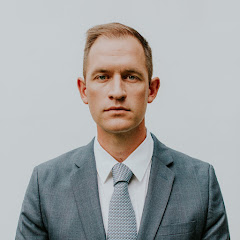
I sat down with Tony from LC Sign – the man who's taken social media by storm. With millions of followers across platforms and viral videos that reach every corner of the world, Tony is more than just an internet star — he's amazing business man. In this exclusive interview, we explore how he built his massive audience and how the trade war is affecting his business in 2025. 00:00 - Intro to Tony LC Sign 00:40 - Trump vs Tony 01:34 - Tony Thoughts on USA 02:32 - Tony Thoughts on Speed's Visit to China 03:30 - US China Relationship 04:35 - Why is China a Better Manufacturer? 05:35 - How LC Signs Gets Better 07:07 - Do Americans Want to Do Business with China? 08:35 - Behind the Scenes at LC Sign Booth 09:20 - The LC Sign Experience 11:35 - Tony's Journey to Partner 13:11 - How Tony Became an Internet King 15:32 - The Truth About Chinese People 16:35 - Why Tony Is Positive About the Future 17:20 - Why China is Still the Future ✅ Join our new Locals Community here: https://cyrusjanssen.locals.com/ ✅ Join this channel to get access to perks: https://www.youtube.com/channel/UCxEQsjgRRfGWiJJu_PDygxw/join 🚀 Limited Time: Get up to 20 Free stocks with moomoo! Open a free account and claim your free stocks after you make your initial deposits. Click here to learn more ➡ https://j.moomoo.com/00uhgr -------------------------- If you'd like to support the channel / 如果你想支持我的频道: 🅿️ Patreon: https://www.patreon.com/cyrusjanssen ☕ Buy me a Coffee: https://www.buymeacoffee.com/cyrusjanssen 🧧 WeChat / 微信: https://prnt.sc/u3inr6 ➡️ PayPal: https://www.paypal.com/cgi-bin/webscr?cmd=_s-xclick&hosted_button_id=8VB8979JHJ97W ₿ Bitcoin: 32go3tLiu88jibJhWgK3RstmXsW2FFELJ8 -------------------------- ✅ Subscribe to my newsletter: http://cyrusjanssen.substack.com ✅ YouTube: https://www.youtube.com/cyrusjanssen?sub_confirmation=1 ✅ Facebook: https://www.facebook.com/cyrustalkschina ✅ Twitter: https://twitter.com/thecyrusjanssen ✅ 西瓜视频:https://www.ixigua.com/home/4468069057169668 ✅ B站视频:https://space.bilibili.com/1052709457 ✅ 抖音:@温哥华老外 -------------------------- 📸 Products I use to Produce my Vlogs: Camera: https://amzn.to/2M9pWqx Tripod: https://amzn.to/2OUz2dh Microphone: https://amzn.to/2u1oJNs Lighting: https://amzn.to/2UWkSw8 Drone: https://amzn.to/3jw1WxF #china #lcsign #tonylcsign

Singer’s 1970s Multimedia Brief-Case
 ·
· 25m27s
·
· 25m27s
An interesting looking device, but things didn't quite work out with this one. MERCHANDISE - There's a new mug design now available . Techmoan Merchandise is available from https://nerdkeyz.etsy.com/ SUBSCRIBE http://www.youtube.com/user/Techmoan?sub_confirmation=1 SUPPORT This channel can be supported through Patreon https://www.patreon.com/techmoan *******Patrons usually have early access to videos******* OUTRO MUSIC Over Time - Vibe Tracks https://youtu.be/VSSswVZSgJw AFFILIATED LINKS/ADVERTISING NOTICE All links are Affiliated where possible. When you click on links to various merchants posted here and make a purchase, this can result in me earning a commission. Affiliate programs and affiliations include, but are not limited to, the eBay Partner Network & Amazon. I am a participant in the Amazon Services LLC Associates Program, an affiliate advertising program designed to provide a means for sites to earn advertising fees by advertising and linking to AMAZON Sites (including, but not limited to Amazon US/UK/DE/ES/FR/NL/IT/CAN

![Thumbnail for Beyond Boomer Bends: Make Guitar Bends Sound Modern [With Tom Hess]](https://i.ytimg.com/vi/caEPShXxcQs/mqdefault.jpg)
Beyond Boomer Bends: Make Guitar Bends Sound Modern [With Tom Hess]
·
· 1h8m
Can guitar bends sound modern? Are we doomed to play always the same old "boomer bends" (as they kids call them today) or there are some new ideas and sounds that we can get out of bends? Join me and master guitar teacher Tom Hess for a live chat - and get some new ideas to make your bends sound different and more original. Get our free stuff: - Get my FREE eBook “18 Tips To Make Your Pentatonic Solos Sound Professional”: https://www.musictheoryforguitar.com/pentatonic-guitar.html

Can We Really Know the Past?
·
· 17m55s
Can We Really Know the Past? Richard III, LiDAR Cities & #EveryNameCounts | The Scope of Historical Knowledge History TOK Scope Visual organizer to accompany video: https://drive.google.com/file/d/1fC1w17E_KaCZpdfHLkg_PtEJEWm7PHPJ/view?usp=drive_link How do we know what happened long ago—and how sure can we ever be? Drawing on the scope.pdf framework, this Deep Dive tours three headline cases (Richard III under a car park, LiDAR’s hidden Maya mega-cities, and the #EveryNameCounts Holocaust archive) to reveal how evidence, technology and human testimony fuse into “knowledge of the past.” In this episode • Why exhumed DNA, jungle lasers and 29 M digitised records reshape history • Three ways historical knowing differs from science: irreproducibility, narrative & fragmentary data • Why all disciplines look backward—yet history is the only one that makes the past its main subject • Contested memory, moral stakes and epistemic humility: what gives history its special weight • Are 1619 vs 1776, Truth Commissions & counterfactuals “about facts” or something deeper? • Ranking certainty: JFK (high), Spartacus (probable), Panama Papers (forensically proved) TOK Connections • Scope & limits of historical knowledge • Evidence vs interpretation • Ethics of remembering Liked the episode? 👍 Like 🔔 Subscribe 💬 Share your take in the comments! 0:00 Intro — Why “knowing the past” is harder than it looks 0:47 Case 1: Richard III under a Leicester car park (DNA + carbon dating) 1:51 Case 2: LiDAR in Guatemala — 60 k hidden Maya structures 2:42 Case 3: #EveryNameCounts — 29 M Holocaust records digitised 3:39 Core insight: historical knowledge is mediated and expandable 4:21 Unique events & irreproducibility: why history ≠ lab science 5:00 Narrative as method — storytelling the 2008 crash 5:42 Fragmentary data & educated guesswork (medieval populations) 6:32 Other fields use the past, but history focuses on it 7:18 Why history matters: contested memory, moral stakes, reflexivity 8:50 Thought experiment: “Is all knowledge historical?” 9:57 Truth, justice & counterfactuals — 1619 vs 1776, TRCs, “What if…?” 11:55 Past vs present/future certainty — 1918 flu vs weather forecast 13:45 What counts as fact? JFK, Spartacus & the Panama Papers 15:56 Take-aways: vulnerable yet powerful—time travel by methodical imagination 16:50 Reflection prompt & closing

Who Owns the Past? Perspective, Bias & Empathy in History
·
· 20m1s
Who Owns the Past? Perspective, Bias & Empathy in History History TOK Perspectives Visual organizer to accompany video: https://drive.google.com/file/d/1bMPMULVTLfQMHTLU9oLz2c2VyMNFvd18/view?usp=drive_link History isn’t a fixed list of names and dates—it’s a living debate shaped by perspective. In this Theory of Knowledge–friendly deep dive we ask how evidence, empathy, bias and cultural context twist (or clarify) our view of the past—from the breakup of the Titanic to the untold story of Tulsa, from Marxist “history-from-below” to satellite re-mapping the Silk Roads. What you’ll learn • Why conflicting survivor accounts need physical proof (Titanic) • How new documents flipped the Tulsa massacre narrative • Objectivity vs declared standpoint: Thompson, Stone & Mary Beard • The role of empathy in Holocaust diaries & COVID-19 oral histories • How rival views sparked new evidence on WWI and the Silk Roads • Managing bias: History Workshop, Wikipedia bots & textbook audits • Cultural framing—from Cold-War archives to Kenya’s new curriculum • Cognitive traps (hindsight bias) and “red-teaming” the past TOK links • Knowledge & Perspective • Evidence & Interpretation • Ethics of Representation 0:00 Intro — Why perspective matters in history 0:42 Proof problems: Titanic break-up & Tulsa massacre 3:57 Can historians be objective? Thompson, Stone & SPQR 6:52 Empathy in practice: Holocaust diaries & COVID oral history 8:56 More eyes, better history: WWI “Sleepwalkers” & Silk-Road satellites 10:58 Bias management: History Workshop & Wikipedia’s balance bots 13:06 Culture & curriculum: Cold-War archives, Kenya’s Mao Mao mandate 15:43 Spotting perspectives via language (textbooks & Twitter hashtags) 16:56 Cognitive traps: hindsight bias, red-teaming & the 2008 crisis 18:44 Big takeaways — plural perspectives = richer truth 19:35 Reflection challenge & closing thoughts

Why We Trust Science | Observation, Experiments & Paradigm Shifts
·
· 23m11s
Why We Trust Science | Observation, Experiments & Paradigm Shifts Natural Science TOK Scope Visual organizer to accompany video: https://drive.google.com/file/d/1AR2Qaw5iMUZtO4sP0n4IMJ-bI_WPiAjj/view?usp=drive_link “Science says…” carries real weight—but why does the natural-science toolbox earn such trust? In this episode, we unpack the engines of reliability (systematic observation, controlled experiments, falsifiability, open data) and the hidden levers that can bend research (funding, politics, culture). What you’ll learn • How Kepler’s star charts and LIGO’s laser interferometers share the same spirit • Why CRISPR base-editing shows the power—and ethics—of precision experiments • The markers that separate science from pseudoscience (transparency, replication) • Cumulative testing, quantification & independent scrutiny—pillars of trust • Classic paradigm shifts (Copernicus → Quantum → Gene editing) and how anomalies trigger them • Today’s reform wave: preregistration, registered reports, open data • How money and politics steer the research agenda—for better or worse • Big-picture puzzles: prediction vs explanation, the hard problem of consciousness 👍 Enjoyed the dive? Hit Like, Subscribe, and ring the 🔔 so you never miss an episode. 0:00 Intro – Why “science says” matters 0:44 Road-map: goals & big questions 1:41 What is natural science? vs pseudoscience 3:08 Power of observation: Kepler ➜ LIGO 5:20 Controlled experiments: Millikan ➜ CRISPR base editing 7:10 From data to theory: Newton & plate tectonics 9:15 Falsifiability & transparency—science’s safeguards 11:00 Why we trust results: cumulative tests, numbers, replication 13:45 Paradigm shifts: Copernican, Quantum, Gene-editing 16:45 Replication crisis & the reforms fixing it 18:35 Funding, power, politics—who shapes the questions? 20:15 Limits & frontiers: consciousness, prediction vs explanation 22:00 Take-aways: trust intelligently, question responsibly 22:50 Closing challenge & next episode tease

Beyond ‘Observe‑Hypothesize‑Experiment’: The Real‑World Toolkit of Modern Science
·
· 18m18s
Beyond ‘Observe‑Hypothesize‑Experiment’: The Real‑World Toolkit of Modern Science Natural Sciences TOK Methods and tools Visual organizer to accompany video: https://drive.google.com/file/d/1FwyXoH-xo-Bma9H46mR4p812QQjl9LYT/view?usp=drive_link The tidy flowchart from your high‑school textbook—Observe → Hypothesize → Experiment → Conclude—is only half the story. In this episode we dismantle the myth of a single scientific method and tour the sprawling toolkit researchers actually use today: billion‑euro colliders, citizen‑science bird counts, pocket‑sized DNA sequencers, AI hypothesis engines, and more. Key stops on the journey CERN’s data tsunami & how budget priorities steer physics Field ecologists, eBird’s billion sightings, and the problem of spatial bias Vaccine “warp speed”: adaptive trials and the trust trade‑off Creativity as the spark—Kekulé’s benzene dream to AlphaFold’s protein visions Four kinds of scientific explanations (mechanistic → functional) The four superpowers of mathematics—and its dark side (2007 crash) Abduction | Deduction | Induction in the age of AI co‑researchers Open‑science case studies: LK‑99’s rapid falsification & AlphaFold’s crowd‑debugging Ethics checkpoints: $2 M CRISPR cures, dual‑use AI chemistry, stalled geo‑engineering tests Three take‑home questions: Which method fits which question—and at what cost? How do new tools shift power over what counts as “important” science? When discovery succeeds, who gains and who gets left behind? Like the dive? Please 👍 Like, 🔔 Subscribe, and share! 0:00 Intro — Busting the linear “scientific method” myth 0:26 Science as a toolkit: choosing methods, not following a recipe 1:08 Is there one method anymore? CERN & 4 PB/month data deluge 1:51 When price tags steer physics + contrast with decades‑long field ecology 2:39 Citizen science at scale: eBird’s billion sightings & spatial bias 3:08 Pandemic “warp‑speed” vaccine trials — speed vs trust 3:45 What really defines science: transparency & self‑correction 4:02 Creativity counts: Kekulé’s benzene dream & today’s AI intuition 4:39 From thought experiments to therapies: Einstein → LIGO, CRISPR sketch → Casgevy 5:58 Four flavors of explanation: mechanistic, statistical, unificatory, functional 6:32 Mechanistic muscles & statistical quake warnings 7:01 Unifying plate tectonics & functional CRISPR immunity 7:30 Do different fields prefer different explanations? 8:18 The 4 powers of mathematics: compression, generality, counterfactuals, computability 9:55 When elegant math misleads: lessons from the 2007 crash 10:32 The reasoning cycle: abduction → deduction → induction (& AI’s role) 11:15 Today’s toolkit: gigascale detectors, AI antibiotic hunters, pocket sequencers 13:06 Citizen science & data audits: why sociology matters in biology 13:33 Open science in action: LK‑99’s rapid collapse 14:12 AlphaFold’s open database & crowd‑sourced refinement 15:00 Ethical crossroads: $2 M CRISPR cures & dual‑use AI chemistry 15:35 Geo‑engineering pause — when communities say “not yet” 16:32 Big takeaway: balancing bold conjecture with rigorous skepticism 17:32 Three questions to keep your scientific BS detector sharp 18:10 Thanks for diving deep — see you next time!

Science in Motion | Paradigm Shifts, LK-99, AlphaFold & CRISPR — A 2023-25
·
· 14m32s
Science in Motion | Paradigm Shifts, LK-99, AlphaFold & CRISPR — A 2023-25 Natural Sciences - TOK - Perspectives Visual organizer to accompany video: https://drive.google.com/file/d/1L6Ev4KAknScMQ4kEzlpqEQyx4tg-FwJh/view?usp=drive_link Welcome to The Deep Dive, where we slow down and zoom in on the ideas reshaping our world. Today’s episode unpacks “Perspectives 2023-2025”, a sweeping report on how natural science evolves — from headline-grabbing claims (LK-99 “room-temperature” superconductivity) to quiet revolutions (AI-predicted protein structures). What you’ll learn How scientists separate discovery from pseudoscience The gold standards of replication & reproducibility (LIGO/Virgo/KAGRA) CRISPR’s first FDA-approved therapy and the ethics that follow Modern paradigm shifts in geology, biology and medicine Why funding, culture and geopolitics steer the research agenda The three questions every curious mind should ask about new “facts” 👍 Enjoyed the episode? Hit Like, Subscribe, and ring the 🔔 so you never miss a dive. 0:00 Welcome — why Perspectives 2023-25 matters 0:56 Facts in context: theory, culture & economics 1:46 What makes science science? (the demarcation problem) 2:07 Case Study: LK-99 superconductor claim 2:58 Replication gold standard — LIGO/Virgo/KAGRA 2024 3:46 Lab-to-clinic payoff — CRISPR Casgevy approval 4:32 Science in public: ultra-fast peer review 5:11 Paradigm shifts 101 5:34 Geology 2.0 — plume-driven microplates 6:18 Biology’s structure revolution — AlphaFold update 7:02 Medicine & ethics — CRISPR’s 11-year sprint 7:48 Society steers science: funding, open data, geopolitics 8:46 New tools, new evidence — AI earthquake warnings 9:25 Productive failure — lessons after LK-99 9:56 Social context in trials — sickle-cell panels 10:27 Individuals matter — Karikó & mRNA Nobel 10:57 Words shape worlds — “Hycean” exoplanets 11:21 Blending knowledges — Māori river science 11:51 Competition & openness — AlphaFold vs RosettaFold 12:22 Ethical crossroads — solar geoengineering pause 12:55 AI lab assistants — chemistry audit pitfalls 13:26 Citizen science at scale — eBird’s billionth bird 13:56 Big picture & three critical questions

How Historians Really Know | From Viking DNA to LiDAR & Big-Data Detectives
·
· 17m56s
How Historians Really Know | From Viking DNA to LiDAR & Big-Data Detectives TOK History - Methods & Tools Visual organizer to accompany video: https://drive.google.com/file/d/1ZBd7XqxVxwfK7-qUnXOUwKsWYhNP_mhv/view?usp=drive_link Forget dusty libraries and memorized dates—modern historians are part detective, part data-scientist, part storyteller. 🌍🕵️♀️ In this deep dive we crack open the historian’s toolbox: Primary-source forensics that exposed the Panama Papers Ancient-DNA surprises rewriting Viking gender roles Big-data cliometrics mapping how 19th-century railroads drove wages Text-mining 20 million newspapers to trace anti-Chinese prejudice LiDAR scans revealing 10,000 hidden Amazon earthworks …plus CT-scanned mummies, crowdsourced archives, decolonizing collections, TikTok citations, and the looming challenges of AI bias & digital rot. Whether you’re a student, researcher, or just history-curious, you’ll learn how evidence is found, tested, and woven into compelling, evidence-based stories. 👉 Subscribe for more behind-the-scenes history. 🔔 Hit the bell so you don’t miss the next episode. 💬 Have a question or favorite method? Drop it in the comments! Chapters & links below ⬇️ #TOK #Methodsandtools #History #Historians #ResearchMethods #DigitalHumanities #Archaeology #BigData #LiDAR #DNA #PublicHistory 0:00 Beyond the headlines: why “how we know” matters 0:40 Cornerstone 1 – Primary-source criticism (Panama Papers) 1:20 Artifacts + ancient DNA flip Viking gender assumptions 2:06 Big-data & cliometrics: railroads, wages, and IPUMS 2:49 Digital humanities: mining 20 M newspapers for hate-speech spikes 3:50 Remote sensing & LiDAR: 10 k lost Amazon earthworks 4:38 Irreproducible pasts & probabilistic narratives 5:29 Microhistory in action: The Cheese and the Worms 6:01 Counterfactuals: modeling the Irish Famine’s “what-ifs” 6:36 Vetting sources: provenance fails (Hitler Diaries) 7:17 Contemporaneity wins: Samuel Pepys and the Great Fire 7:49 Corroboration: pre-WWI telegram cross-checks 8:18 Bias analysis: plantation ledgers vs WPA slave interviews 9:00 Eyewitness memory & flashbulb pitfalls (1914 Christmas Truce) 10:17 Tech-powered archaeology: CT scans, GPR & Palmyra satellites 11:15 Archive fragility: Brazil National Museum fire & counter-archives 12:26 Collaboration & crowdsourcing: #EveryNameCounts success story 13:17 Method revolutions: Annales, linguistic, digital turns 14:38 Decolonizing archives & TikTok citations (public history) 15:42 Looking ahead: AI, quantum computing & the next shattered shard Enjoy the dive!

Judging the Past Fairly | Ethics, Presentism & the Power—and Perils—of Historical Evidence
·
· 15m15s
Judging the Past Fairly | Ethics, Presentism & the Power—and Perils—of Historical Evidence TOK History - Ethics Visual organizer to accompany video: https://drive.google.com/file/d/1j8e9Tpu2cl9NrdeV1q9P9O1o68hzdb5H/view?usp=drive_link How do you condemn slavery, debate Confederate statues, or quote Anne Frank without flattening the past into today’s moral hot-takes? 🤔⚖️ In this episode we unpack the ethics of doing history, tackling questions every researcher—and informed citizen—should ask: Presentism vs. context – why “understand before you condemn” matters Monument wars: Bristol’s Colston, Rhodes Must Fall & post-2020 reckonings Lynn Hunt’s 2-step test for ethical judgment Label power: hero, terrorist, genocide—when words rewrite reality Fighting distortion: Holocaust-denial on trial (Irving v Penguin) & textbook battles in Japan Privacy of the dead: Anne Frank’s diary, FDR’s medical files, Stasi surveillance records New evidence that rewrites textbooks—Richard III under a car park & Vikings in 1021 CE Counter-archives, open access, and the historian’s duty to stay transparent Whether you’re a student, teacher, or history buff, you’ll leave with a toolkit for thinking critically about the past and the flood of information in your feed today. 👉 Subscribe for more behind-the-scenes history. 🔔 Turn on notifications so you never miss an episode. 💬 What ethical dilemma in history fascinates (or frustrates) you most? Tell us below! #History #Ethics #Presentism #PublicMemory #Archives #HolocaustDenial #GenocideStudies #Vikings #RichardIII 0:00 Why ethics matters in historical inquiry 0:57 The problem of presentism—judging the past by today 1:49 Monument flashpoints: Colston, Rhodes & 2020 statue wars 2:51 Moral condemnation ✕ deep research: Canada’s residential-school apology 3:37 Lynn Hunt’s 2-step test for fair historical judgment 4:32 Loaded language: how words like atrocity & terrorist frame the past 5:06 Re-evaluating Cecil Rhodes: empire builder or racist exploiter? 5:49 Genocide debates: 1915 Armenians & contested labels 6:31 Terrorist vs. freedom fighter: Nelson Mandela’s shifting status 7:27 Weaponizing history: Irving v Penguin & exposing Holocaust denial 8:18 Textbook wars: Nanjing, comfort women & competing narratives in Japan 9:22 Privacy of the dead: diaries, medical files & ethical release 9:41 Anne Frank’s diary—abridged, unabridged, and ethical dilemmas 10:11 FDR’s polio records & family consent 10:33 Stasi archives: Germany’s traffic-light access system 11:24 Balancing public interest vs. potential harm 11:44 Welcoming new evidence: an ethical must 12:05 Richard III’s skeleton—myth vs. 3-D forensic reality 12:46 Vikings dated to 1021 CE: radiocarbon “wiggle matching” 13:34 Keeping a counter-archive—tracking dissenting sources 14:00 Ethical history as a continuous balancing act 14:49 Final challenge: applying these lessons to today’s newsfeed
3 + 3 equals... 5?
·
· 0m38s
How do two thirds make a fifth? If you want this to make sense, watch this video here: https://www.musictheoryforguitar.com/Right-Chord-Notation-And-Other-Horrors.html

🧩 #Chopin’s most AVANT-GARDE music: the #Mazurkas.
 ·
· 1m43s
·
· 1m43s
In this first of two episodes on Chopin's Mazurkas, Garrick Ohlsson deciphers select Mazurkas from across Chopin’s compositional periods. Learn more: https://www.chopinpodcast.com/s2-episode-2-mazurkas-part-1 https://patreon.com/BenLaude https://instagram.com/benlawdy/ https://benlaude.com/

Science × Morals: How Every Breakthrough Comes With a Dilemma
·
· 14m23s
Science × Morals: How Every Breakthrough Comes With a Dilemma Natural Science TOK Ethics Today we unravel one of the biggest questions in modern research: How tightly are the natural sciences and ethics intertwined? From lightning-fast COVID-19 vaccine trials to CRISPR gene therapy, AI biothreat worries, and even bringing Mars rocks home, we show why “just the facts” simply isn’t an option anymore. In this episode you’ll learn 👇 Why the old value-free myth of science is crumbling. Real-world cases where moral trade-offs shaped the research agenda (climate models, dual-use virology, CRISPR babies, EU AI Act…). A simple 3-question framework to spot ethical tension in any emerging technology. How oversight now stretches from lab benches to the United Nations—and why that matters for you. 🗣️ Join the discussion: drop your thoughts or ethical dilemmas-in-waiting in the comments. If you like deep, forward-thinking conversations, subscribe and hit the 🔔 so you don’t miss our next dive! 00:00 Welcome & why science can’t ignore ethics 00:53 Myth-busting: the “value-free” ideal versus reality 01:18 Values in choosing research questions (climate-impact models) 01:59 Methods under the microscope: speed vs certainty in COVID-19 trials 02:33 Distribution ethics: vaccine equity gaps 03:07 Dual-use dilemmas in virology (gain-of-function, H5N1) 03:55 AI joins the party: language models & biothreat risk 04:24 Planetary protection: Mars Sample Return safety debate 05:00 Knowledge vs danger—who decides the line? 05:30 CRISPR gene therapy: $2 M cures & justice in access 05:59 Geo-engineering: science says “can,” ethics asks “should” 06:22 Lab animals: data on stress and setting welfare limits 06:45 Science vs social norms: the CRISPR-baby uproar 07:21 Synthetic embryo models & the 14-day rule reboot 07:48 AI surveillance and the EU AI Act 08:14 Two kinds of truth: natural laws vs human rights 08:57 Oversight web: IRBs, journals, national laws, global bodies 10:47 Case capsules—LK-99 frenzy, COVAX gap, AI biothreats 12:10 Why ethical literacy is core scientific literacy 12:56 3 guiding questions for spotting future friction 13:37 Your exercise: pick a frontier & map the ethics 14:16 Wrap-up & what’s coming next

Rick Beato Studio Tour 2025!
 ·
· 26m39s
·
· 26m39s
In this episode I give you a short history and current tour of my studio and the people that work here. The Complete Beato Method! (All 6 Courses) Get my complete teaching system ⇢ https://rickbeato.com/ Includes ALL SIX digital courses: 1. Beato Ear Training Method ($99 Value) 2. Beato Book Interactive ($99 Value) 3. Quick Lessons Pro ($79 Value) 4. Arpeggio Masterclass ($150 Value) 5. Music Theory for Songwriters ($149 Value) 6. Beginner Guitar Course ($159 Value) Grab the complete collection for just $109 through Friday! (Over $735 total value). Limited-time offer. My Beato Club supporters: Justin Scott Terence Mark Jason Murray Lucienne Kilpatrick Alexander Young Jason Wagner Todd Ladner Rob Kline Nicholas Long Tim Benson Leonardo Martins da Costa Rodrigues Eddie Perez David Solomon MICHAEL JOYCE Stephen Stubbs colin stead Jonathan Wentworth-Linton Patrick Payne MATTHEW KARIS Matthew Barouch Shaun Samuels Danny Kurywchak Gregory Reedy Sean Coleman Alexander Verbitskiy CL Turner Jason Pappafotis John Fulford Margaret Carno Robert C David M Combs Eric Flatt Reto Spoerli Herr Moritz Adam Monte St. Johns Jon Beezley Peter DeVault Eric Nabstedt Eric Beggs Rich Germano Brian Bloom Peter Pillitteri Piush Dahal Toby Guidry


Space Womb: The Otherworldly Art Of Jongwang Lee
 ·
· 38m19s
·
· 38m19s
Space Womb is a feature-length documentary about Korean painter Jongwang Lee and his gallery titled 'Space Womb'. This educational documentary reveals the inner workings of the artist's life, his beginning, the painter's process, and the deeper meaning behind the Space Womb gallery. Subscribe and click the bell icon to get more arts content every week: youtube.com/c/PerspectiveArts Perspective is YouTube's home for the arts. Come here to get your fill of great music, theatre, art and much, much more! Discover the past on History Hit with ad-free exclusive podcasts and documentaries released weekly presented by world renowned historians Dan Snow, Suzannah Lipscomb, Matt Lewis and more. Sign up to History Hit to start watching now https://bit.ly/45CPh5u It's like Netflix for history... Sign up to History Hit to start watching now https://bit.ly/45CPh5u Any queries, please contact us at: perspective@littledotstudios.com #Painting #Art #History

The Coffeezilla VS Logan Paul Situation Gets Worse...
 ·
· 10m39s
·
· 10m39s
The CoffeeZilla vs Logan Paul situation just got even worse... Logan completely exposed himself in these text messages and updates... Is it over for Logan Paul, will this be a victory for CoffeeZilla? Comment below whose side you're on! Sponsorship Inquiries: sponsors@theinternetanarchist.com
![Thumbnail for The Misconception that Almost Stopped AI [How Models Learn Part 1]](https://i.ytimg.com/vi/NrO20Jb-hy0/mqdefault.jpg)
The Misconception that Almost Stopped AI [How Models Learn Part 1]
 ·
· 22m57s
·
· 22m57s
Take your personal data back with Incogni! Use code WELCHLABS and get 60% off an annual plan: http://incogni.com/welchlabs Loss Landscape Posters! 21:23 https://www.welchlabs.com/resources/loss-landscape-poster-17x19 https://www.welchlabs.com/resources/loss-landscape-poster-digital-download Poster and Book Bundle https://www.welchlabs.com/resources/loss-landscape-bundle-w-imaginary-numbers-book Special Matte Black Edition Poster https://www.welchlabs.com/resources/loss-landscape-poster-17x22-matte-black-special-edition Welch Labs Book https://www.welchlabs.com/resources/imaginary-numbers-book Sections 0:00 - Intro 1:18 - How Incogni gets me more focus time 3:01 - What are we measuring again? 6:18 - How to make our loss go down? 7:32 - Tuning one parameter 9:11 - Tuning two parameters together 11:01 - Gradient descent 13:18 - Visualizing high dimensional surfaces 15:10 - Loss Landscapes 16:55 - Wormholes! 17:55 - Wikitext 18:55 - But where do the wormholes come from? 20:00 - Why local minima are not a problem 21:23 - Posters Special Thanks to Patrons https://www.patreon.com/welchlabs Juan Benet, Ross Hanson, Yan Babitski, AJ Englehardt, Alvin Khaled, Eduardo Barraza, Hitoshi Yamauchi, Jaewon Jung, Mrgoodlight, Shinichi Hayashi, Sid Sarasvati, Dominic Beaumont, Shannon Prater, Ubiquity Ventures, Matias Forti, Brian Henry, Tim Palade, Petar Vecutin, Nicolas baumann, Jason Singh, Robert Riley, vornska, Barry Silverman, Jake Ehrlich, Mitch Jacobs References Li et al: Visualizing the Loss Landscape of Neural Nets. https://arxiv.org/abs/1712.09913 Talking Nets: An Oral History of Neural Networks. (2000). United Kingdom: MIT Press. Hinton quote is on p376. Goodfellow, I., Bengio, Y., Courville, A. (2016). Deep Learning. United Kingdom: MIT Press. Prince, S. J. (2023). Understanding Deep Learning. United Kingdom: MIT Press. Manim Animations: https://github.com/stephencwelch/manim_videos Premium Beat IDs MWROXNAY0SPXCMBS CFAQJOTYQHT7JYIT