
When Power Learns to Whisper | Andreas Madimenos, Fischer, Howell, Hanika | WGM#223
 SiccasGuitars
·
· 25m54s
SiccasGuitars
·
· 25m54s
Welcome to The Weekly Guitar Meeting, your go-to video series for staying updated on the latest, finest, and most thrilling classical guitars hitting the international market. At Siccas Guitars, we've been curating the finest classical guitars for over a decade from our Germany-based shop, and we unveil new masterpieces for sale every week. Join us as professional guitarists and Siccas Guitars team member, Jouyan Tarzaban, shares exciting insights, delves into the background of these instruments, and most importantly, let you experience their sound firsthand. 😊 Enjoy the show! Become a Siccas Guitars Member for only 0,99€/month: https://www.youtube.com/channel/UCR39sLAZ5wS_vrMo4tRylHw/join All our guitars are stringed with Knobloch Erithacus EDC 34.0 carbon strings https://www.knoblochstrings.com/product-page/edc-erithacus-medium-high-34-0 00:00 Paul Fischer - 2005 No. 1105 Wolkenahorn 🎸Guitar: https://www.siccasguitars.com/products/paul-fischer-2005-no-1105-wolkenahorn 06:26 Andreas Madimenos - 2026 No. 83 🎸Guitar: https://www.siccasguitars.com/products/andreas-madimenos-2026-no-83 11:49 Siccas Luthiers - Creation Doubletop Cedar 64 cm 🎸Guitar: https://www.siccasguitars.com/products/siccas-luthiers-creation-doubletop-cedar-64-cm 14:54 Richard Howell - 2002 No. 368 🎸Guitar: https://www.siccasguitars.com/products/richard-howell-2002-no-368 20:41 Armin Hanika - Natural Double-Top Custom Chechen 🎸Guitar: https://www.siccasguitars.com/products/armin-hanika-natural-double-top-custom-chechen Support our channel and become a SiccasGuitars Member with exclusive classical guitar nerd perks: https://www.youtube.com/channel/UCR39sLAZ5wS_vrMo4tRylHw/join ‾‾‾‾‾‾‾‾‾‾‾‾‾‾‾‾‾‾‾‾‾‾‾‾‾‾‾‾‾‾‾‾‾‾‾‾‾‾‾‾‾‾‾‾‾‾‾‾‾‾‾‾‾‾‾‾‾‾‾‾‾‾‾‾ Follows us on: ► Instagram: https://www.instagram.com/siccasguitars/ ► TikTok: https://www.tiktok.com/@siccasguitars ► Facebook: https://www.facebook.com/siccasguitars/ ► Twitter: https://twitter.com/siccasguitars WEBSITES: ► https://www.siccasguitars.com/ ► https://www.siccasmedia.com/ ► https://playsomethingcool.com/ NEWSLETTER: ► https://mailchi.mp/siccasguitars/siccas-guitars-newsletter CONTACT US: ► info@siccasguitars.com ► 76137 Karlsruhe, Roonstr. 31, Germany ‾‾‾‾‾‾‾‾‾‾‾‾‾‾‾‾‾‾‾‾‾‾‾‾‾‾‾‾‾‾‾‾‾‾‾‾‾‾‾‾‾‾‾‾‾‾‾‾‾‾‾‾‾‾‾‾‾‾‾‾‾‾‾‾ ►►ANA VIDOVIC https://www.youtube.com/playlist?list=PLWOAHYyavpQhzY5wkpHE0_AGu72x7JjdN ►►J S BACH https://www.youtube.com/playlist?list=PLWOAHYyavpQiRD8C05bGImSEXp5KLpMSk ►► ALBUMS & CONCERTS https://www.youtube.com/playlist?list=PLWOAHYyavpQj1YvhqLIO5EGz9ikpYTc2m ‾‾‾‾‾‾‾‾‾‾‾‾‾‾‾‾‾‾‾‾‾‾‾‾‾‾‾‾‾‾‾‾‾‾‾‾‾‾‾‾‾‾‾‾‾‾‾‾‾‾‾‾‾‾‾‾‾‾‾‾‾‾‾‾ Classical guitars are our passion! We are specialized in the highest quality concert guitars as well as historic guitars from around the world. Our passion for these unique instruments and the joy to give guitarists, passionate players, and collectors the possibility to purchase their own appropriate instrument is the motivation that drives us. Another focus is to work closely with established and young, largely unknown luthiers. Together we want to develop new ideas and share experiences with our customers. We also recorded pieces for many great composers such as Johann Sebastian Bach, Astor Piazzolla and Isaac Albeniz (Asturias). You will also find almost all the classical music composers that wrote for the classical guitar. Make sure to discover Agustin Barrios Mangoré, Manuel Maria Ponce, Heitor Villa-Lobos and many more if you don't know their compositions already You can find our showroom in 76137 Karlsruhe, Roonstr. 31, Germany ‾‾‾‾‾‾‾‾‾‾‾‾‾‾‾‾‾‾‾‾‾‾‾‾‾‾‾‾‾‾‾‾‾‾‾‾‾‾‾‾‾‾‾‾‾‾‾‾‾‾‾‾‾‾‾‾‾‾‾‾‾‾‾‾ #SiccasGuitars #guitarreview ‾‾‾‾‾‾‾‾‾‾‾‾‾‾‾‾‾‾‾‾‾‾‾‾‾‾‾‾‾‾‾‾‾‾‾‾‾‾‾‾‾‾‾‾‾‾‾‾‾‾‾‾‾‾‾‾‾‾‾‾‾‾‾‾ Lighted by Nyta: https://www.nyta.eu/en/

Resurrecting 14K Gold Universal Genève Heirloom
 Wristwatch Revival
·
· 1m0s
Wristwatch Revival
·
· 1m0s
Restoring a vintage 14k gold Universal Genève found taped together in a drawer. #watches #watchmaking #watchrepair

Diane Morgan on perfecting a robot voice - BBC
 BBC
·
· 0m45s
BBC
·
· 0m45s
Not an easy voice to master! Diane Morgan discusses creating her robotic voice for Ann Droid. #AnnDroid #DianeMorgan #Comedy Front Row | Listen on @BBCSounds Subscribe and 🔔 to the BBC 👉 https://bit.ly/BBCYouTubeSub Watch the BBC first on iPlayer 👉 https://bbc.in/iPlayer-Home

The 5 Pillars of Beautiful Classical Guitar Playing
 Classical Guitar Shed
·
· 20m17s
Classical Guitar Shed
·
· 20m17s
https://go.classicalguitarshed.com/cgs-five-pillars Download the PDF that lists all five pillars in detail, with specifics under each, so you can self-assess where you stand. In this video I walk through the five areas that classical guitar study is built on: chords, scales, left hand technique, right hand technique, and literacy. I show how every piece you play is really just chords and scales, and why these five areas need to move forward together rather than one racing ahead while another falls behind. Have fun! https://go.classicalguitarshed.com/cgs-start Click this link to learn more about our full course for classical guitar, The Woodshed Program. It's organized, structured, and strategic from the beginning, so you make the most of your time and avoid injury and frustration. Build your basics, fill the gaps, and rise to more advanced levels of playing.



Zorgen algoritmes voor discriminatie?
 Nieuwsuur
·
· 2m16s
Nieuwsuur
·
· 2m16s
Bij visum- en asielprocedures gebruikt de overheid algoritmes, onder meer om te helpen bepalen of een migrant extra gecontroleerd moet worden. Rechters willen meer inzicht in die algoritmes. "Ze willen een mogelijke nieuwe toeslagenaffaire voorkomen", zegt onderzoeker Jarik ten Cate. #algoritmes #overheid #asiel #visum #discriminatie #Nieuwsuur

Dierenasiel DOA overspoeld met babykonijntjes
 AT5
·
· 1m11s
AT5
·
· 1m11s
Beschuit met muisjes bij DOA want het dierenasiel is in korte tijd drie nestjes babykonijntjes rijker geworden. Enkele van de pas geredde dieren bleken zwanger te zijn en nu zit het asiel bomvol met konijnen. Er wordt dringend gezocht naar nieuwe baasjes. Let wel: konijnen worden alleen als koppel geplaatst. Wie thuis al een of meer konijnen heeft, kan ook één konijn adopteren. ❌ ❌ ❌ AT5 - Echt Amsterdams Nieuws Abonneer hier op ons youtubekanaal: https://www.youtube.com/AT5 Tips of opmerkingen? Whatsapp: 06 511 909 38 Telefoon: 020 555 1155 Volg AT5: www.at5.nl Instagram: instagram.com/at5.nl Facebook: facebook.com/at5nl Twitter: twitter.com/at5

Professor Robert Pape: Iran War is a Trap and America Has No Way Out!
 Cyrus Janssen
·
· 41m28s
Cyrus Janssen
·
· 41m28s
Professor Robert Pape joins me to break down why the Iran War may have trapped the United States in a conflict it cannot easily win or escape. We discuss his “Escalation Trap” theory, how Iran seized control of the Strait of Hormuz, why reopening the Strait could prove extraordinarily difficult, and why the 2026 Iran War is fundamentally different from previous US wars in the Middle East. Professor Pape explains how Iran’s drones, geography, and regional relationships have changed the military equation, why events may now be spiraling beyond Washington’s control, and how China has learned from decades of American warfare in the region. With the US midterm elections approaching and pressure mounting on the Trump administration, we also examine what victory could realistically look like for the United States—and what could happen if America ultimately fails to achieve its objectives in Iran. 🔴 Follow Professor Pape on X: https://x.com/ProfessorPape 🔴 Follow Professor Pape on Substack: https://substack.com/@professorrobertpape 🔴 Follow Professor Pape on Substack: https://escalationtrap.substack.com/ 00:00 - Intro to Professor Robert Pape 00:45 - What is the Escalation Trap in Iran? 02:13 - How the US Government Fell Into the Trap 03:44 - How Iran Took the Strait of Hormuz 04:35 - How the Iran War Failure Was Predictable 06:34 - How the Escalation Trap Applies to Everything 09:20 - Can the US Still Control Events in the Middle East? 10:15 - Why the Iran War is the Inverse of Iraq War 11:45 - How America Won the Gulf War 12:55 - How China Learned from the Middle East Wars 14:45 - Why the 2026 Iran War is Different 16:12 - Why Trump Has No Way Out of Iran 17:30 - Why Things Are Spiraling Out of Control 19:00 - Why the United States Will Become Worse 21:20 - Why China is Not Scared of the US 22:45 - How Trump TACOs is Weakness 24:50 - What is Success for the US Government? 26:41 - Why the Midterm Elections is the Deadline 27:58 - Why Iran's Drone Are Superior and Unbeatable 29:44 - Why Iran's Mountains Change Everything 32:35 - Why the US Can Not Open the Strait of Hormuz 33:40 - Why Countries Want to Work with Iran 35:10 - Why the US Can't Afford to Lose This War 36:40 - What Should We Be Looking for in the Future? 38:05 - Will the US Troops Leave the Middle East? 39:12 - Where to Follow Professor Robert Pape? ✅ Join our new Locals Community here: https://cyrusjanssen.locals.com/ ✅ Join this channel to get access to perks: https://www.youtube.com/channel/UCxEQsjgRRfGWiJJu_PDygxw/join -------------------------- If you'd like to support the channel / 如果你想支持我的频道: 🅿️ Patreon: https://www.patreon.com/cyrusjanssen ☕ Buy me a Coffee: https://www.buymeacoffee.com/cyrusjanssen 🧧 WeChat / 微信: https://prnt.sc/u3inr6 ➡️ PayPal: https://www.paypal.com/cgi-bin/webscr?cmd=_s-xclick&hosted_button_id=8VB8979JHJ97W ₿ Bitcoin: 32go3tLiu88jibJhWgK3RstmXsW2FFELJ8 -------------------------- ✅ Subscribe to my newsletter: http://cyrusjanssen.substack.com ✅ YouTube: https://www.youtube.com/cyrusjanssen?sub_confirmation=1 ✅ Facebook: https://www.facebook.com/cyrustalkschina ✅ Twitter: https://twitter.com/thecyrusjanssen ✅ 西瓜视频:https://www.ixigua.com/home/4468069057169668 ✅ B站视频:https://space.bilibili.com/1052709457 ✅ 抖音:@温哥华老外 -------------------------- 📸 Products I use to Produce my Vlogs: Camera: https://amzn.to/2M9pWqx Tripod: https://amzn.to/2OUz2dh Microphone: https://amzn.to/2u1oJNs Lighting: https://amzn.to/2UWkSw8 Drone: https://amzn.to/3jw1WxF #iran #iranisraelwar #iranwar

Jongen (7) uit Merchtem overleden na mogelijke kindermishandeling
 VRT NWS
·
· 3m24s
VRT NWS
·
· 3m24s
De jongen van 7 die dood werd aangetroffen in Merchtem vertoonde verwondingen die mogelijk het gevolg zijn van kindermishandeling. Dat meldt het parket Halle-Vilvoorde. 3 mensen, de oom en de moeder van het kind, en een vriendin van de moeder, werden opgepakt: de man op verdenking van moord, de 2 vrouwen voor schuldig verzuim. Meer van onze video's zien? Abonneer je hier: https://www.youtube.com/vrtnws Jullie hebben allemaal het recht om jullie mening te geven, maar heb respect voor elkaar. Reacties waarin je scheldt of iemand persoonlijk aanvalt, worden verwijderd.

Trump Targets Birthright Citizenship Again, and Activists Describe Abuse in Israeli Custody
 New York Times Podcasts
·
· 17m46s
New York Times Podcasts
·
· 17m46s
Plus, the Friday news quiz. Here’s what we’re covering: Trump Signs Executive Orders Targeting Birthright Citizenship (https://www.nytimes.com/2026/08/06/us/politics/trump-birthright-citizenship-tourism.html) , by Maggie Haberman and Ann E. Marimow C.I.A. Sets Up Secret Cuba Task Force as Trump Pressures Havana (https://www.nytimes.com/2026/08/05/us/politics/cia-cuba-task-force.html) , by Adam Entous Trump Administration to Deregulate Head Start (https://www.nytimes.com/2026/08/06/us/politics/rfk-jr-head-start-antipoverty-program.html) , by Coral Davenport Seized on Their Way to Gaza, Activists Tell of Abuse in Israeli Custody (https://www.nytimes.com/2026/08/07/world/middleeast/gaza-flotilla-israel-abuse.html) , by Catherine Porter, Elisabetta Povoledo and Nimet Kirac Meta Ordered to Pay $567 Million in New Mexico Child Safety Case (https://www.nytimes.com/2026/08/06/technology/meta-new-mexico-child-safety.html) , by Eli Tan Can Rock Climbing, Weight Lifting and Free Lattes Keep People Sober? (https://www.nytimes.com/2026/07/25/well/sober-clubs.html) , by Simar Bajaj Tune in every weekday morning, and tell us what you think at: theheadlines@nytimes.com (mailto:theheadlines@nytimes.com) . Tune in every weekday morning, and tell us what you think at: theheadlines@nytimes.com (mailto:theheadlines@nytimes.com) . Subscribe today at nytimes.com/podcasts (http://nytimes.com/podcasts) or on Apple Podcasts, Spotify and Amazon Music. You can also subscribe via your favorite podcast app here https://www.nytimes.com/activate-access/audio?source=podcatcher. For more podcasts and narrated articles, download The New York Times app at nytimes.com/app.

Dodelijke schietpartij op middelbare school in Thailand
 NOS
·
· 0m50s
NOS
·
· 0m50s
De jongen van 14 zou voor hij naar de school ging zijn opa en oma in hun huis hebben doodgeschoten.

Ever wondered who plays the EastEnders 'doof doofs'? - BBC
BBC
·
· 0m11s
You ain’t a drummer!... YES I AM! #BBCFundedByAllOfUs #ThisIsOurBBC #EastEnders #KatSlater Romesh Ranganathan is asking the big question, ‘What has the BBC ever done for me?’ He begins by asking a star-studded Queen Vic pub, complete with Coldplay’s Chris Martin on piano. Romesh travels through Albert Square, Casualty, BBC News, Radio 1Xtra, Graham Norton’s studio, Wimbledon, ending up on stage in Strictly Come Dancing. Along the way he meets Claudia Winkleman and some Traitors, Alan Carr, Daleks, Ruth Jones as Gavin & Stacey’s Nessa, Hey Duggee and Anton Du Beke. There is a BBC for each of us, funded by all of us. This is our BBC. Subscribe and 🔔 to the BBC 👉 https://bit.ly/BBCYouTubeSub Watch the BBC first on iPlayer 👉 https://bbc.in/iPlayer-Home

Man murdered in home after offering killer place to stay - BBC
BBC
·
· 14m37s
West Mercia Police race against the clock to find the killer who murdered a man in his flat in Hereford. If you’ve been affected by the issues in this clip, please go to www.bbc.co.uk/actionline for more information and support. #Murder247 #CrimeDocumentary #TrueCrime #Crime #Police In the pursuit of justice, every second counts. From the 999 call to conviction, via critical forensics and identifying suspects, follow the cases as they unfold - in real time. Subscribe and 🔔 to the BBC 👉 https://bit.ly/BBCYouTubeSub Watch the BBC first on iPlayer 👉 https://bbc.in/iPlayer-Home

 Cooking tips with Andy 
 Andy Cooks
·
· 0m26s
Andy Cooks
·
· 0m26s

Mocap Actress Unlocks Ninja Mode?! Codename: Nameless Fish
 曦曦鱼SAKANA OFFICIAL
·
· 3m11s
曦曦鱼SAKANA OFFICIAL
·
· 3m11s
This time, I tried something with turn-based games! I wonder what kind of gameplay you guys like? Ahhh, what kind of style should I try next time? Thanks for watching! Please don't forget to subscribe my channel! http://www.youtube.com/@SAKANA-m4z/featured?sub_confirmation=1 ------------------------------------------------------------------ 💖 Hi, I'm Xi Xi Yu Sakana — a professional motion capture actress from Chengdu Big Eyes Technology Co., Ltd. If you enjoy my videos, don’t forget to subscribe and turn on the bell 🔔 for updates! Your support means a lot to me 💫 You can also find me here: Bilibili: https://space.bilibili.com/3546375581075852 Tiktok: https://www.tiktok.com/@xixi.yu.c Instagram: https://www.instagram.com/xixiyu_sakana/ X/ Twitter: https://x.com/xixiyusakana #motioncapture #mocap #videogame #movie #martialarts #acting

Van dealer tot gebruiker: op bezoek in het crystal meth-hart van Europa
NOS
·
· 4m55s
Nergens in Europa wordt zoveel crystal meth gebruikt als in Tsjechië. Correspondent Charlotte Waaijers in gesprek met dealers, gebruikers en hulpverleners. #nosnieuws OVER NOS: We zijn de grootste nieuwsorganisatie van Nederland en verantwoordelijk voor een brede, betrouwbare en onafhankelijke nieuwsvoorziening. VOLG ONS: https://www.nos.nl | https://www.instagram.com/nos/ | https://bsky.app/profile/nieuws.nos.nl | https://www.facebook.com/nos Download de app voor iOS: http://apple.co/1JObNaK Download de app voor Android: http://bit.ly/2d4GJN7
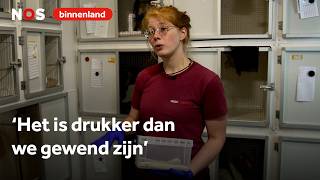
Dierenambulances rijden af en aan naar deze vogelopvang: 'Het gaat non-stop door'
NOS
·
· 1m49s
Dierenambulances hebben het extreem druk, zelfs voor de tijd van het jaar. Dat heeft onder andere te maken met de hitte. De vogelopvang probeert alle dieren zo goed mogelijk op te vangen. #nosnieuws OVER NOS: We zijn de grootste nieuwsorganisatie van Nederland en verantwoordelijk voor een brede, betrouwbare en onafhankelijke nieuwsvoorziening. VOLG ONS: https://www.nos.nl | https://www.instagram.com/nos/ | https://bsky.app/profile/nieuws.nos.nl | https://www.facebook.com/nos Download de app voor iOS: http://apple.co/1JObNaK Download de app voor Android: http://bit.ly/2d4GJN7

THB that the Monarchy Died with the Queen - Full Debate
 OxfordUnion
·
· 1h28m
OxfordUnion
·
· 1h28m
SUBSCRIBE for more speakers ► http://is.gd/OxfordUnion SUPPORT the Oxford Union ► https://oxford-union.org/supportus LICENSE Footage ► licensing@oxford-union.org Oxford Union on Facebook: https://www.facebook.com/theoxfordunion Oxford Union on Twitter: @OxfordUnion Website: http://www.oxford-union.org/ ABOUT THE OXFORD UNION SOCIETY: The Oxford Union is the world's most prestigious debating society, with an unparalleled reputation for bringing international guests and speakers to Oxford. Since 1823, the Union has been promoting debate and discussion not just in Oxford University, but across the globe. The Oxford Union is deeply grateful and encouraged by the messages of support in response to our determination to uphold free speech. During our 200 year history, many have tried to shut us down. As the effects of self-imposed censorship on university campuses, social media and the arts show no signs of dissipating, the importance of upholding free speech remains as critical today as it did when we were founded in 1823. Your support is critical in enabling The Oxford Union to continue its mission without interruption and without interference. You can support the Oxford Union here: https://oxford-union.org/supportus Video production by Fresh Cut Video - an Oxford-based video production company creating corporate, branded, and commercial videos across the UK. Visit https://www.freshcutvideo.co.uk for more details.

The Gadget That Fixed My 8-Hour Screen Time Habit
New York Times Podcasts
·
· 15m52s
If you've ever looked at your phone's screen-time report and wondered where the day went, you're not alone. Many people want to stop mindlessly scrolling, but find it challenging to stop. Some Wirecutter staffers have found a solution: The Brick, a physical device that locks you out of the apps you choose. This episode, Wirecutter senior staff writer Elissa Sanci shares why the Brick worked for her when other approaches didn't. She explains how putting physical distance between herself and her distracting apps helped break the doom-scrolling cycle, how using scheduled "bricking" can protect your workday and mornings, and how families and roommates can share the same device. This episode covers: • Why the Brick works so well. Elissa found that built-in screen-time limits and apps like Opal were too easy to bypass, while the Brick forced her to physically get up and retrieve the device before she could resume scrolling. • How scheduled bricking protects your time. You can set profiles that automatically block distracting apps during certain hours, including blocking social media before your alarm even goes off so you're not tempted to start the day scrolling. • How the Brick's limited emergency unbricks work. You get just five emergency ways to unlock your phone when you're away from the device, and Elissa says the scarcity makes her reluctant to waste them. • Who The Brick is actually useful for. You don't have to be a social-media addict: you can block whatever is distracting you, including work apps outside office hours, and the same device can be shared among multiple people or used by parents and teens. Products we recommend: • A device that blocks your most distracting apps: Brick (https://www.nytimes.com/wirecutter/out/link/74621/242297/57/260685) Additional reading: • I Bricked My Phone for 2 Weeks. My Brain Feels Much Better. (https://www.nytimes.com/wirecutter/reviews/brick-phone-lock-review/?utm_source=the_wirecutter_show&utm_medium=podcast&utm_campaign=episode_number_114) • I Revived an Old BlackBerry to Cut Down on Screen Time. Things Went Awry. (https://www.nytimes.com/wirecutter/reviews/blackberry-to-curb-smartphone-screen-time/?utm_source=the_wirecutter_show&utm_medium=podcast&utm_campaign=episode_number_114) We independently review everything we recommend. When you buy through our links, we may earn a commission. Learn more› (https://www.nytimes.com/wirecutter/about/) The Wirecutter Show is executive produced by Rosie Guerin and produced by Abigail Keel. Engineering support from Maddy Masiello and Nick Pitman. Episodes are mixed by Catherine Anderson, Efim Shapiro, Rowan Niemisto, Sophia Lanman, and Sonia Herrero. Original music by Dan Powell, Marion Lozano, Elisheba Ittoop, Catherine Anderson, Rowan Niemisto and Diane Wong. Wirecutter’s deputy publisher and general manager is Cliff Levy. Ben Frumin is Wirecutter’s editor-in-chief. Hosted by Rosie Guerin, Caira Blackwell and Christine Cyr Clisset. #TheBrick, #ScreenTime, #DigitalDetox, #PhoneAddiction, #Wirecutter, #TheWirecutterShow, #ProductivityTips, #TechHabits, #Doomscrolling, #AppBlocker, #podcast Instagram: /wirecutter (https://www.instagram.com/wirecutter/) Threads: /@wirecutter (https://www.threads.com/@wirecutter) Twitter: /wirecutter (https://x.com/wirecutter) Facebook: /thewirecutter (https://www.facebook.com/thewirecutter/) TikTok: /wirecutter (https://www.tiktok.com/@wirecutter)

19-jarige Yaro overleden
VRT NWS
·
· 0m24s
Meer van onze video's zien? Abonneer je hier: https://www.youtube.com/vrtnws Jullie hebben allemaal het recht om jullie mening te geven, maar heb respect voor elkaar. Reacties waarin je scheldt of iemand persoonlijk aanvalt, worden verwijderd.

Een jaar geleden werd 17-jarige Rivaldo doodgeschoten
AT5
·
· 1m29s
Een jaar geleden werd de 17-jarige Rivaldo in Holendrecht doodgeschoten, nadat hij opkwam voor een vriend wiens ketting was gestolen. Zijn dood laat nog steeds grote wonden achter in Zuidoost. #AT5 #Amsterdam #Nieuws #Rivaldo ❌ ❌ ❌ AT5 - Echt Amsterdams Nieuws Abonneer hier op ons youtubekanaal: https://www.youtube.com/AT5 Tips of opmerkingen? Whatsapp: 06 511 909 38 Telefoon: 020 555 1155 Volg AT5: www.at5.nl Instagram: instagram.com/at5.nl Facebook: facebook.com/at5nl Twitter: twitter.com/at5

260806 Admen Inside \ \ Thanissaro Bhikkhu \ \ Dhamma Talk
 Dhamma Talks by Thanissaro Bhikkhu
·
· 10m21s
Dhamma Talks by Thanissaro Bhikkhu
·
· 10m21s
Evening Dhamma talk by Thanissaro Bhikkhu (in English). Copyright 2026, Ṭhanissaro Bhikkhu. This work is licensed under the Creative Commons Attribution-NonCommercial 4.0 Unported License. To view a copy of this license, visit http://creativecommons.org/licenses/by-nc/4.0/. Any sale, including by non-profit entities for non-profit purposes, shall be considered 'commercial' under this license.
How European settlement of the Pacific Northwest led to deadlier fire seasons
 Democracy Now!
·
· 1m31s
Democracy Now!
·
· 1m31s
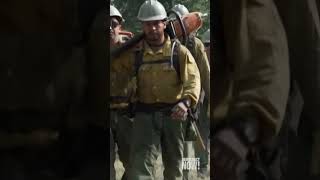
Paul Hessburg, a former senior research ecologist at the U.S. Forest Service and professor of fire and landscape ecology at the University of Washington, explains how cultural practices in the Pacific Northwest transformed after European settlement — from the controlled fires practiced by Indigenous peoples to facilitate new growth and manage natural resources, to the over-development that has made wildfire seasons longer, more frequent and increasingly destructive.

Trouwen voor 1 dag
AT5
·
· 1m31s
Van jarenlang getrouwd tot een eerste date: op het Museumplein zeiden honderden mensen ‘ja’ tegen de liefde. 💍🌈 ❌ ❌ ❌ AT5 - Echt Amsterdams Nieuws Abonneer hier op ons youtubekanaal: https://www.youtube.com/AT5 Tips of opmerkingen? Whatsapp: 06 511 909 38 Telefoon: 020 555 1155 Volg AT5: www.at5.nl Instagram: instagram.com/at5.nl Facebook: facebook.com/at5nl Twitter: twitter.com/at5

Jubileum voor Klaassen en debuut voor Brandt
AT5
·
· 1m9s
Ajax heeft vanavond in de Johan Cruijff Arena nagelaten het tweeluik met het Ierse Shelbourne direct in het slot te gooien. De thuisploeg kreeg een karrevracht aan kansen, maar daarvan werden er maar drie benut. Door een goal van de bezoekers in de tweede helft, werd het uiteindelijk 3-1. Volgende week wacht in Dublin de terugwedstrijd. ❌ ❌ ❌ AT5 - Echt Amsterdams Nieuws Abonneer hier op ons youtubekanaal: https://www.youtube.com/AT5 Tips of opmerkingen? Whatsapp: 06 511 909 38 Telefoon: 020 555 1155 Volg AT5: www.at5.nl Instagram: instagram.com/at5.nl Facebook: facebook.com/at5nl Twitter: twitter.com/at5

Ceuta verwijt Spanje waarschuwingen te hebben genegeerd
Nieuwsuur
·
· 1m37s
Was Spanje gewaarschuwd voor de plotselinge komst van tienduizenden Marokkanen naar Ceuta, vorige week? De Spaanse regering zegt van niet, maar het bestuur van Ceuta heeft een andere lezing en verwijt Spanje dat het waarschuwingen negeerde. #Ceuta #Spanje #Marokko #Nieuwsuur

"You GUNNED Down Innocent People!" Piers Morgan Calls Out Hamas Spokesman
 Piers Morgan Uncensored
·
· 0m33s
Piers Morgan Uncensored
·
· 0m33s
Subscribe to stay up-to-date on all Uncensored content. Follow Piers Morgan Uncensored on: X: https://x.com/PiersUncensored Instagram: https://www.instagram.com/piersmorganuncensored/ Facebook: https://www.facebook.com/piersmorganuncensored TikTok: https://www.tiktok.com/@piersmorganuncensored Follow Piers Morgan on: X: https://x.com/piersmorgan Instagram: https://www.instagram.com/piersmorgan #piersmorgan #piersmorganinterview #piersmorgandebate

Can You Guess All 3 Janet Jackson Grooves? 👀🥁 #drumeo #jrodsullivan #janetjackson
 Drumeo
·
· 1m9s
Drumeo
·
· 1m9s
J-Rod Sullivan puts your ears to the test. Can you name all three songs before the reveal?

Grootste en dodelijkste uitbraak van ebola in Congo
VRT NWS
·
· 1m30s
De ebola-uitbraak in Congo blijft maar escaleren: er zijn intussen 4.000 besmettingen, daarmee is het de grootste uitbraak ooit in het land. En helaas ook de dodelijkste: bijna de helft van de besmette patiënten is al overleden aan de ziekte. #HetJournaal Meer van onze video's zien? Abonneer je hier: https://www.youtube.com/vrtnws Jullie hebben allemaal het recht om jullie mening te geven, maar heb respect voor elkaar. Reacties waarin je scheldt of iemand persoonlijk aanvalt, worden verwijderd.

Billy Joel on “Angry Young Man” #piano #song #shorts
 Rick Beato
·
· 0m38s
Rick Beato
·
· 0m38s

REBUILDING A STUART MAJOR BEAM ENGINE - PART #14
 Keith Appleton
·
· 9m2s
Keith Appleton
·
· 9m2s
Rebuilding A Stuart Major Beam Engine - Part #14. Fitting the Engine to the Brick Plinth and after drilling some pilot holes I attach the Plinth to the Baseboard using Brass Screws. Making some long studs to hold the Bedplate to the Plinth. Tapping some 2BA holes in the top of the Plinth and strengthening the thread in the wood using CA Glue. Fitting and Piping the Water Pump. https://www.patreon.com/keithappleton IF YOU ENJOY WATCHING THESE DETAILED TUTORIAL VIDEOS THAT I PRODUCE TO HELP BEGINNERS TO THE HOBBY, THEN PLEASE BECOME A PATRON OF MY YOUTUBE CHANNEL VIA "PATREON" AND ALLOW ME THE TIME TO MAKE EVEN MORE OF THESE SPECIALIST AND HIGHLY DETAILED TUTORIAL VIDEOS. AS A PATREON SUPPORTER YOU ARE ABLE TO ACCESS MANY OF MY VIDEOS THAT ARE NOT FOR PUBLIC VIEW ON YOUTUBE. PLEASE VISIT MY WEBSITE FOR THE VERY EASY TO USE COMPREHENSIVE PLAYLIST INDEX OF ALL OF MY YOUTUBE VIDEOS: www.mainsteam.co.uk OR CLICK HERE FOR PATREON: https://www.patreon.com/keithappleton PLEASE BECOME A MEMBER OF MY YOUTUBE CHANNEL TO GET ACCESS TO EXTRA VIDEOS: https://www.youtube.com/channel/UCgeQiJg-PIH5MZQn0aRd1mg/join

Israeli MOLE At UN Children's Agency Exposed
 Breaking Points
·
· 11m20s
Breaking Points
·
· 11m20s
Ryan and Saagar discuss reports of an Israel mole at the United Nations. LIMITED TIME FREE TRIAL AT BreakingPoints.com Murtaza Hussain: https://x.com/MazMHussain Sign up for a PREMIUM Breaking Points subscriptions for full early access to uncut shows and LIVE AMAs with the hosts every week: https://breakingpoints.supercast.com/ Merch Store: https://shop.breakingpoints.com/ To listen to Breaking Points as a podcast, check them out on Apple and Spotify Apple: https://podcasts.apple.com/us/podcast/breaking-points-with-krystal-and-saagar/id1570045623 Spotify: https://open.spotify.com/show/033kFeszOZEgO3Wy6ziXKR Instagram: https://www.instagram.com/breakingpoints.yt Facebook: https://www.facebook.com/people/Breaking-Points/61575893472315/ #news #politics #youtube

"SHEEP" 1930s EASTMAN KODAK EDUCATIONAL FILM SHEEP INDUSTRY, SHEARING, WOOL PRODUCTION GG41035
 PeriscopeFilm
·
· 11m21s
PeriscopeFilm
·
· 11m21s
Help us preserve, scan and post more rare and endangered films on Patreon: https://www.patreon.com/PeriscopeFilm Join this channel to get access to perks: https://www.youtube.com/channel/UCddem5RlB3bQe99wyY49g0g/join Website: www.PeriscopeFilm.com Made in the late 1920s or early 1930s as part of Kodak's educational film library, this silent Eastman Classroom Film showcases the sheep and wool industry. At 0:00 it begins with images of sheep on a farm or ranch, and then shows a map of the Northwest region of the United States, the "Sheep Range". At 0:39 the Spring season is shown, with sheep grazing and raising their young. At 1:14 a title card "Orphan lambs are given special care" and a scene of lambs being fed by bottle. At 1:37, hoofs are trimmed. At 1:56 the Summer season is shown. "Sheep are sheared before driving to upland pastures." At 2:23, sheep herding and shearing process is shown. At 2:58 title card, "On large ranches air driven clippers are also used." At 3:52, sheep are marked with dye and then counted at 4:36. At 5:42 title card, "Rest during the heat of the day." A herder is shown with his loyal sheepdog, relaxing. At 6:08 title card, "Sheep are moved when harmful plants are found." Sheep are herded by cowboys on horseback, and using dogs. At 7:01, sheep are moved in late fall down from the mountains to winter quarters. At 7:47 sheep are prepared for sale to the meat industry / for market. At 8:12 they are loaded onto railroad cars and moved by train. At 8:36, is a fragment of another Eastman Classroom Film about corn and corn harvesting. At 8:36, a farmer uses a tractor to plow a field. 9:16 title card, "Corn grown in the same field year after year." At 9:33, "Cutting for ensilage". This is the process of preserving green fodder by storing it in a silo, or the preserved fodder itself. Motion picture films don't last forever; many have already been lost or destroyed. For almost two decades, we've worked to collect, scan and preserve the world as it was captured on 35mm, 16mm and 8mm movies -- including home movies, industrial films, and other non-fiction. If you have endangered films you'd like to have scanned, or wish to donate celluloid to Periscope Film so that we can share them with the world, we'd love to hear from you. Contact us via the weblink below. This film is part of the Periscope Film LLC archive, one of the largest historic military, transportation, and aviation stock footage collections in the USA. Entirely film backed, this material is available for licensing in 24p HD, 2k and 4k. For more information visit http://www.PeriscopeFilm.com

Saagar And Ryan REACT: Tucker's THIRD PARTY Manifesto
Breaking Points
·
· 18m55s
Ryan and Saagar react to Tucker's third party manifesto. LIMITED TIME FREE TRIAL AT BreakingPoints.com Sign up for a PREMIUM Breaking Points subscriptions for full early access to uncut shows and LIVE AMAs with the hosts every week: https://breakingpoints.supercast.com/ Merch Store: https://shop.breakingpoints.com/ To listen to Breaking Points as a podcast, check them out on Apple and Spotify Apple: https://podcasts.apple.com/us/podcast/breaking-points-with-krystal-and-saagar/id1570045623 Spotify: https://open.spotify.com/show/033kFeszOZEgO3Wy6ziXKR Instagram: https://www.instagram.com/breakingpoints.yt Facebook: https://www.facebook.com/people/Breaking-Points/61575893472315/ #news #politics #youtube

Don’t ask the question if you don’t want the answer… - BBC
BBC
·
· 0m34s
Bickering undead housemates, living the vampire life in suburban Staten Island. There's blood, death and arguing over chores. With Matt Berry, Kayvan Novak and Natasia Demetriou. #WhatWeDoInTheShadows #Throwback Subscribe and 🔔 to the BBC 👉 https://bit.ly/BBCYouTubeSub Watch the BBC first on iPlayer 👉 https://bbc.in/iPlayer-Home

At least 40 killed in mass protests in Pakistan-administered Kashmir
Democracy Now!
·
· 1m48s
In Pakistan-administered Kashmir, a coalition of local politicians, activists and small-business leaders called the Joint Awami Action Committee (JAAC) has been leading mass protests over the soaring cost of living and the limits placed on the disputed territory's political autonomy. In response, the Pakistani government banned the group under counterterrorism laws and ordered a communications blackout. Security forces have been accused of indiscriminately firing on nonviolent demonstrators, killing at least 40 people.

'Het water is gezakt, onze woonboot ligt nu op het droge'
NOS
·
· 1m15s
Door de droogte van de afgelopen tijd liggen veel woonboten al weken scheef op de bodem. En voorlopig is het einde nog niet in zicht.

180bpm shred
 Adam Neely
·
· 0m23s
Adam Neely
·
· 0m23s
Shredding a 180bpm unison with Button Masher on his latest collab with Sungazer, “Tallinn Massage Chair 🪑 “
Modern Moves, Part 2 | America's Written Constitution with Akhil Reed Amar
 YaleCourses
·
· 28m55s
YaleCourses
·
· 28m55s
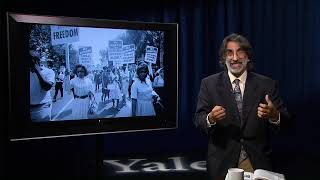
Soviet propaganda in Africa and Asia pointed to a segregated American capital whose residents could not vote for president. Akhil Reed Amar shows how that argument helped produce the amendments of the 1960s. This lecture closes the written Constitution with the modern amendments and reads them through the course's three themes. The Twenty-Third Amendment brought the District of Columbia into the Electoral College at a moment when both parties were competing for Black voters, a competition that also helps explain Alaska and Hawaii statehood and the immigration reform of the same decade. The Twenty-Fourth ended poll taxes in federal elections, and the Court soon extended the principle to state elections. The Twenty-Fifth answered a Cold War problem made vivid by the Kennedy assassination, that a disabled president leaves no one clearly in charge when minutes matter, and in doing so wrote the presidential tag team into the text. The Twenty-Sixth extended the oldest argument in the course, that those asked to fight should be allowed to vote on the war. Amar ends on what he calls the Twenty-Eighth Amendment, the blank space after the Twenty-Seventh, and on the 1963 March on Washington. Chapters: 00:00 The amendments of the 1960s 02:23 Why the District of Columbia mattered 05:08 The Cold War audience 07:13 Alaska, Hawaii, and projecting power 10:22 The Twenty-Fourth Amendment and poll taxes 14:37 The Twenty-Fifth Amendment after Dallas 17:51 Constitutionalizing the presidential tag team 19:59 The Twenty-Sixth Amendment and Vietnam 23:49 The Twenty-Eighth Amendment 25:23 The March on Washington Learning objectives: After watching, you'll be able to: - Explain how party competition for Black voters shaped the Twenty-Third Amendment - Describe the Cold War argument for domestic civil and voting rights reform - Identify the gaps in presidential succession that the Twenty-Fifth Amendment closed - Trace the link between military service and suffrage across five amendments - Formulate your own proposal for what a Twenty-Eighth Amendment should do 📺 Watch the full playlist on YouTube: https://www.youtube.com/playlist?list=PLCq6-l8oFuvk 🎓 Enroll on Coursera for assessments and a certificate: https://www.coursera.org/learn/written-constitution 🌐 Explore more learning opportunities on Yale Online: https://online.yale.edu/courses/americas-written-constitution

Why Did Prohibition Pass and Then Collapse So Fast? | America's Written Constitution
YaleCourses
·
· 25m31s
Between the Twelfth and Twenty-Second Amendments, about 15 percent of vice presidents won their party's nomination. Since term limits, more than half have. Akhil Reed Amar explains the connection. This lecture covers the amendments that fall between the Progressive Era and the 1960s. Amar first returns to Prohibition, which its supporters saw as of a piece with other reforms, backed by the temperance movement and opposed by a liquor lobby that feared women's suffrage for exactly that reason. He explains its rapid repeal through a process argument: the Eighteenth Amendment came out of malapportioned legislatures that overweighted dry rural counties, while the Twenty-First is the only amendment Congress sent to specially elected state conventions, which were far closer to one person, one vote. The second half traces the two-term tradition from Washington's decision to step down through its unresolved ambiguities, since Grant, Cleveland, and Theodore Roosevelt all tested whether it barred a third term or a third consecutive one, until Franklin Roosevelt's four elections produced the Twenty-Second Amendment. Amar closes on its unintended consequence: a president barred from a third term runs by proxy, through the vice president he chose. Chapters: 00:00 Where the tour has reached 02:14 Prohibition as a Progressive reform 05:53 Why the Eighteenth Amendment fell so quickly 07:55 Malapportionment, and the conventions that undid it 11:31 The Twenty-Second Amendment stands alone 13:07 Washington's precedent, and its ambiguities 16:14 Grant, Cleveland, and the Roosevelts 18:17 The case for and against term limits 20:22 Second-term presidents as lame ducks 22:26 How term limits empowered the vice presidency Learning objectives: After watching, you'll be able to: - Explain why Prohibition was understood as a Progressive reform - Compare the ratification processes behind the Eighteenth and Twenty-First Amendments - Trace the two-term tradition from Washington through Franklin Roosevelt - Identify the ambiguities the unwritten two-term custom never resolved - Analyze how presidential term limits reshaped the vice presidency 📺 Watch the full playlist on YouTube: https://www.youtube.com/playlist?list=PLCq6-l8oFuvk 🎓 Enroll on Coursera for assessments and a certificate: https://www.coursera.org/learn/written-constitution 🌐 Explore more learning opportunities on Yale Online: https://online.yale.edu/courses/americas-written-constitution

Conversation with Lucas Swineford | America's Written Constitution
YaleCourses
·
· 20m34s
Nobody who opposed independence in 1776 held national office again. Opponents of the Constitution in 1788 became presidents, vice presidents, and justices. Akhil Reed Amar explains the difference. Lucas Swineford, executive director of Yale's Office of Online Education and Digital Dissemination, opens this discussion segment with a question about reach: how long did it take for the rest of the world to register what had happened in America. Amar answers that the effect took centuries but the ambition was there from the start, quoting the Declaration's appeal to a candid world, Benjamin West's report of George III's reaction to Washington's plan to disband his army, the opening of Federalist 1, and James Wilson's July 4, 1788 address. He tracks the slow arc through the French Revolution, the failed reforms of 1848, and Lincoln's "last best hope of earth." The second half turns to political forgiveness, using Federalist 2 and its Shakespearean "band of brethren" to argue that shared service in the Revolution made constitutional disagreement survivable, and that the Bill of Rights functioned as a face-saving offer that brought Rhode Island, North Carolina, and men like James Monroe back in. Chapters: 00:00 How the third segment works 01:45 How fast did the news actually travel 03:17 What George III said about Washington 04:54 Federalist 1, and the world's verdict on democracy 07:29 The French Revolution, and the reforms that failed 08:30 Lincoln: the last best hope of earth 10:02 How James Monroe came back 12:36 Federalist 2 and the band of brethren 16:42 Bringing Rhode Island and North Carolina in 19:21 Lessons for today Learning objectives: After watching, you'll be able to: - Describe how quickly and by what means the American example reached the wider world - Explain why loyalists were permanently excluded but Anti-Federalists were not - Interpret Federalist 1 and 2 as appeals to a watching international audience - Analyze the Bill of Rights as an instrument of political reconciliation - Assess what the ratification settlement suggests about how majorities should treat minorities 📺 Watch the full playlist on YouTube: https://www.youtube.com/playlist?list=PLCq6-l8oFuvk 🎓 Enroll on Coursera for assessments and a certificate: https://www.coursera.org/learn/written-constitution 🌐 Explore more learning opportunities on Yale Online: https://online.yale.edu/courses/americas-written-constitution

Congressional Powers, Part 2 | America's Written Constitution with Akhil Reed Amar
YaleCourses
·
· 23m55s
Article I lets Congress fund an army only two years at a time. The Navy carries no such limit. Akhil Reed Amar explains the geostrategic logic behind the asymmetry. This lecture works through the enumerated powers of Article I, Section 8 and reads them as a coherent design rather than a list. Amar argues for a broad sense of "commerce" that covers foreign affairs, navigation, immigration, and interstate relations, since no other clause plausibly supplies those powers. He treats the Necessary and Proper Clause on two axes: as federalism, where the pointed omission of the word "expressly" grants implied powers while the word "proper" bars pretextual ones, and as separation of powers, where it makes Congress first among equals, setting the number of courts, cabinet offices, and Supreme Court seats. The lecture covers McCulloch v. Maryland and John Marshall's national security case for the Bank of the United States, the militia as a check on federal usurpation and its abuse by the Confederacy, and the pointed silences at the end of Article I, where nothing forbids the states from holding people in slavery. Chapters: 00:00 Why the taxing power comes first 02:16 Borrowing, and how broadly to read "commerce" 07:58 Post offices, copyright, and lower courts 09:03 Declaring war, not merely making it 10:09 Armies, navies, and the two-year rule 12:44 The Necessary and Proper Clause 16:52 McCulloch v. Maryland and the national bank 19:27 Militias as a counterweight, and their abuse 21:32 What neither Congress nor the states may do Learning objectives: After watching, you'll be able to: - List the principal enumerated powers of Article I, Section 8 - Explain why a narrow reading of "commerce" leaves foreign affairs unaccounted for - Distinguish the federalism and separation of powers work done by "necessary and proper" - Analyze Marshall's reasoning in McCulloch v. Maryland as a national security argument - Identify the omissions in Article I that allowed slavery to entrench and expand 📺 Watch the full playlist on YouTube: https://www.youtube.com/playlist?list=PLCq6-l8oFuvk 🎓 Enroll on Coursera for assessments and a certificate: https://www.coursera.org/learn/written-constitution 🌐 Explore more learning opportunities on Yale Online: https://online.yale.edu/courses/americas-written-constitution
The Law of the Land, Part 1 | America's Written Constitution with Akhil Reed Amar
YaleCourses
·
· 20m29s
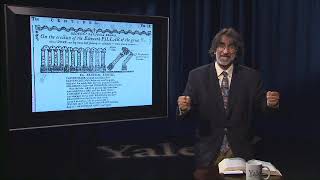
Article V says no state can lose its equal vote in the Senate without consenting. Akhil Reed Amar argues that clause blocks less than it appears to, and explains the reasoning. This lecture covers the amendment article, which Amar treats as the most fundamental part of the document because it governs how everything else can change. He lays out the four pathways, two for proposing and two for ratifying, and notes that the president plays no role and that the convention route has never been used. Measured against the alternatives the founders knew, it holds up: the Articles of Confederation required all thirteen states and were effectively unamendable, several state constitutions let ordinary legislatures rewrite them or allowed amendment only on fixed dates, and the British constitution was unwritten. Amar also revisits his own younger view that the bar is too high, noting that a high bar screened out far more bad proposals than good ones. The lecture closes on Article V's two provisos, the now-moot protection of the slave trade until 1808 and the guarantee of equal Senate representation, which was added late and, he argues, was not thought through. Chapters: 00:00 Where the tour has reached 03:15 Articles V, VI, and VII: constitutional supremacy 03:49 The four amendment pathways 06:23 Why the amendment rules matter most 07:56 The flaw that doomed the Articles of Confederation 09:31 How state constitutions handled amendment 12:05 Is the bar set too high 14:41 The two provisos in Article V 17:49 A workaround, and why small states stay protected Learning objectives: After watching, you'll be able to: - List the four amendment pathways Article V provides - Compare Article V with the amendment rules of the Articles of Confederation and the states - Assess whether the amendment threshold is too demanding - Explain the two provisos limiting Article V and their present status - Analyze whether the Senate apportionment proviso actually blocks reform of the Senate 📺 Watch the full playlist on YouTube: https://www.youtube.com/playlist?list=PLCq6-l8oFuvk 🎓 Enroll on Coursera for assessments and a certificate: https://www.coursera.org/learn/written-constitution 🌐 Explore more learning opportunities on Yale Online: https://online.yale.edu/courses/americas-written-constitution
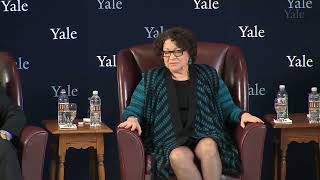
Three Justices Return to Yale Law School | America's Written Constitution
YaleCourses
·
· 1h51m
Justices Clarence Thomas, Samuel Alito, and Sonia Sotomayor return to the law school they each graduated from in the 1970s, receive its Award of Merit, and talk for ninety minutes about how they actually work. Dean Robert Post opens with an account of each justice's path, and professor Kate Stith leads the conversation. It moves from what drew them to law with no lawyers in their families, through the traits they credit and the ones they regret, to the details outsiders rarely hear. The Court communicates about cases almost entirely on paper rather than by email. There are still spittoons at the bench. Justices sit at lunch in the chair of the justice whose seat they inherited. Sotomayor describes the district court as her formative experience and the perspective she brings because of it, Alito describes the isolation of a regional circuit and the opposite experience of running a U.S. Attorney's office, and Thomas names the EEOC as the job that taught him to stay calm under sustained criticism. All three argue that the Court lacks something in its composition, whether geographic range, criminal defense experience, or practice outside large firms. The session closes with each describing one of the others, and with the advice they gave students that morning. Chapters: 00:00 The Yale Law School Award of Merit 05:02 Introducing Justice Thomas 09:40 Introducing Justice Alito 12:44 Introducing Justice Sotomayor 20:34 What drew each of them to law 28:54 The traits that helped, and hindered 35:14 Baseball, coffee, and a motor coach 46:25 What they are reading 52:45 Law school, in hindsight 1:01:05 The jobs that prepared them 1:13:04 What surprised them at the Court 1:23:33 Why the cases are harder than they look 1:27:14 What the Court's composition is missing 1:36:08 What each says about the others 1:41:22 Advice to students Learning objectives: After watching, you'll be able to: - Describe how the justices communicate and deliberate internally - Compare district court, circuit court, and prosecutorial experience as preparation for the Court - Explain why a case reaching the Supreme Court is rarely an easy one - Identify the forms of diversity the justices themselves say the Court lacks - Summarize the advice each gives about building a career in law 📺 Watch the full playlist on YouTube: https://www.youtube.com/playlist?list=PLCq6-l8oFuvk 🎓 Enroll on Coursera for assessments and a certificate: https://www.coursera.org/learn/written-constitution 🌐 Explore more learning opportunities on Yale Online: https://online.yale.edu/courses/americas-written-constitution

Course Conclusion | America's Written Constitution with Akhil Reed Amar
YaleCourses
·
· 27m37s
Akhil Reed Amar closes the course by separating four distinct things Americans mean by "the Constitution," then leaves students with a challenge about what the next one should look like. The lecture reviews the whole arc: a text organized around popular sovereignty and the three branches, then federalism and supremacy, then amendments appended in chronological order so each generation's work stays visible. Amar distinguishes the terse text itself from unwritten principles of higher law, from the institutional arrangements that actually constitute the government including the two-party duopoly, and from the tools and techniques of interpretation that the document never specifies. He points to further reading, starting with the Federalist Papers, and then poses the challenge. The Constitution was democratic world government for a new world, built on the assumption that oceans kept the old world's threats away, which is why America went 150 years without a large peacetime standing army. Climate change, pandemics, nuclear proliferation, and terrorism cross those moats, and Amar argues the Martians may in fact be coming. He asks the young to draft what he calls Publius II, and closes on public education and thanks to the production crew. Chapters: 00:00 A thank you 02:17 What the course covered 05:24 Four elements of America's Constitution 08:32 The tools and techniques of interpretation 10:36 What to read next 13:12 World government for a new world 15:17 What has changed since 1787 18:01 "Unless the Martians came" 20:08 A call for Publius II 21:42 The image, and thanks to the crew Learning objectives: After watching, you'll be able to: - Distinguish four senses in which Americans use the word "constitution" - Summarize the organization and the intergenerational structure of the written text - Identify starting points for further reading on constitutional history - Explain the geographic assumptions behind the founders' national security design - Evaluate the case for extending constitutional democracy to global problems 📺 Watch the full playlist on YouTube: https://www.youtube.com/playlist?list=PLCq6-l8oFuvk 🎓 Enroll on Coursera for assessments and a certificate: https://www.coursera.org/learn/written-constitution 🌐 Explore more learning opportunities on Yale Online: https://online.yale.edu/courses/americas-written-constitution

Congressional Powers, Part 1 | America's Written Constitution with Akhil Reed Amar
YaleCourses
·
· 22m21s
The Revolution's slogan was no taxation without representation, not no taxation. Akhil Reed Amar shows how that distinction gave the new Congress a power Parliament had been denied. This lecture moves from the shape of Congress to its powers, opening with an image of Henry Clay addressing an antebellum Senate under a full public gallery. Amar uses it to make two points: Congress is the branch that works in the open, and it is a place built for speech. He reads the Speech and Debate Clause of Article I as a free speech guarantee more absolute than the First Amendment, since no libel suit reaches a senator's words on the floor. He then turns to Article I, Section 8, the longest section of the longest article, and frames it through the question that broke the British Empire: which matters belong to the center, and which to the parts. Parliament claimed all of them and lost the colonies; the Confederation Congress claimed too few and went broke. Section 8 is the attempt to get the balance right, beginning with the power to lay and collect taxes. Chapters: 00:00 Where we are in the text 03:51 Recap: the structure of Congress 07:27 Henry Clay and the public gallery 10:00 Absolute speech and debate 13:05 Broad powers, but enumerated 13:36 The question that broke the British Empire 16:11 The Confederation's opposite failure 18:15 The power to tax, and why it comes first Learning objectives: After watching, you'll be able to: - Explain why Congress is the branch most open to public observation - Distinguish the Speech and Debate Clause from First Amendment free speech - Summarize the imperial dispute over what Parliament could and could not regulate - Compare the taxing power of Article I with the requisition system it replaced - Justify why a taxing power required a directly elected House 📺 Watch the full playlist on YouTube: https://www.youtube.com/playlist?list=PLCq6-l8oFuvk 🎓 Enroll on Coursera for assessments and a certificate: https://www.coursera.org/learn/written-constitution 🌐 Explore more learning opportunities on Yale Online: https://online.yale.edu/courses/americas-written-constitution

Making Amends, Part 2 | America's Written Constitution with Akhil Reed Amar
YaleCourses
·
· 27m50s
The Supreme Court did not strike down a single act of Congress on First Amendment grounds until 1965. Akhil Reed Amar explains what the Bill of Rights was doing for its first 174 years. This lecture reads the first ten amendments through two themes, localism and populism, and traces them to their source. The Bill of Rights answered Anti-Federalist worries about a distant central government, which is why it opens "Congress shall make no law" and closes with the Tenth Amendment, and why James Madison's proposal to bind the states as well was killed in the Senate. That gap was not filled until the Fourteenth Amendment. Amar shows juries as the connecting thread, appearing in the Fourth through Eighth Amendments as local bodies checking national judges, much as militias check a national army. He explains why Federalists accepted limits on their own creation, as national reconciliation, as a face-saving path for North Carolina and Rhode Island, as a campaign promise Madison had to keep, and as a way to keep control of the amendment agenda. The lecture closes on the Twelfth Amendment, which made party tickets possible while leaving the three-fifths advantage in the Electoral College untouched. Chapters: 00:00 Where the phrase "Bill of Rights" comes from 03:15 The amendment Madison lost 05:50 Why "the people" keeps recurring 07:22 Running through the first ten 11:31 The Fourth Amendment as a jury right 14:06 Why Federalists accepted limits on themselves 17:10 How little the amendments meant on the ground 18:40 The Eleventh Amendment and judicial power 20:14 The Twelfth Amendment and a pro-slavery presidency Learning objectives: After watching, you'll be able to: - Explain why the original Bill of Rights restrained only the federal government - Identify the Anti-Federalist concerns the first ten amendments answered - Describe the role juries play across the Fourth through Eighth Amendments - Summarize the political reasons Federalists supported a Bill of Rights - Analyze what the Twelfth Amendment fixed and what it deliberately left in place 📺 Watch the full playlist on YouTube: https://www.youtube.com/playlist?list=PLCq6-l8oFuvk 🎓 Enroll on Coursera for assessments and a certificate: https://www.coursera.org/learn/written-constitution 🌐 Explore more learning opportunities on Yale Online: https://online.yale.edu/courses/americas-written-constitution

Why Does America Have an Electoral College? | America's Written Constitution
YaleCourses
·
· 24m54s
The usual answers for the Electoral College are that the framers distrusted democracy, or that they were balancing large states against small. Akhil Reed Amar argues the data fit a third explanation: slavery. This lecture reads Article II's eligibility rules as democratic rather than restrictive. There is no property qualification for the presidency and no religious test anywhere in federal office, at a time when most state constitutions had both. Amar shows how pro-immigrant the document otherwise was, with seven foreign-born framers, a third of the early Supreme Court, and four of the first six Treasury secretaries, and argues that the natural-born citizen clause was aimed at foreign aristocrats buying an election, not at immigrants. The age-35 rule gets the same treatment: an anti-dynastic guard against another William Pitt the Younger, prime minister at 24 on his father's name. He then turns to the Electoral College, showing that large states win it almost every time and that the Three-Fifths Clause was built into it, which is why Virginia outvoted a more populous Pennsylvania. The lecture closes by reading the 1796 Washington family portrait, where the general's uniform, the globe, the enslaved Billy Lee, and the absent heir each carry part of Article II. Chapters: 00:00 A presidency stronger than any governorship 02:19 No property qualification, no religious test 03:53 The natural-born citizen rule 05:24 How pro-immigrant the document was 06:56 What the clause was actually guarding against 07:57 Why 35, and who William Pitt the Younger was 10:32 Washington, Jefferson, and the missing heir 15:16 The Electoral College and the Three-Fifths Clause 19:22 Reading the Washington family portrait Learning objectives: After watching, you'll be able to: - Identify the qualifications Article II imposes and the ones it pointedly omits - Explain the natural-born citizen clause as an anti-aristocratic rather than anti-immigrant rule - Justify the age-35 requirement on egalitarian grounds - Assess the claim that the Electoral College was a pro-slavery accommodation - Interpret the 1796 Washington family portrait as a summary of the founding presidency 📺 Watch the full playlist on YouTube: https://www.youtube.com/playlist?list=PLCq6-l8oFuvk 🎓 Enroll on Coursera for assessments and a certificate: https://www.coursera.org/learn/written-constitution 🌐 Explore more learning opportunities on Yale Online: https://online.yale.edu/courses/americas-written-constitution

States and Territories, Part 1 | America's Written Constitution with Akhil Reed Amar
YaleCourses
·
· 24m21s
The Articles of Confederation let a state turn paupers and vagabonds away at its border. The Constitution dropped that language, and Akhil Reed Amar explains what the change made possible. This lecture opens Article IV and the horizontal side of federalism: not the states against the central government, but the states with each other. Amar begins with Benjamin Franklin's 1754 "Join or Die," generally reckoned the first American political cartoon, and with the structural fact behind it. The colonies were spokes running to a common crown with almost no rim connecting them, much as Kenya, India, and Canada shared a monarch in 1930 without sharing much else. Franklin's Albany Plan failed, but its provisions resurfaced in the Articles of Confederation and then in Article IV. The lecture works through interstate privileges and immunities, which bar a state from treating visiting Americans as aliens, and turns to the question the text left unanswered: who counts as a citizen. Amar argues Article IV contains no race test, that South Carolina asked for the word "white" and was voted down, and that free Black men had voted on the Constitution itself in Massachusetts and New York, before Roger Taney held otherwise in Dred Scott. Chapters: 00:00 Where the tour has reached 04:48 Vertical and horizontal federalism 09:27 Franklin's "Join or Die" 12:00 Colonies tied to the crown, not to each other 14:36 The Albany Plan of 1754 17:09 Privileges and immunities across state lines 19:11 The paupers and vagabonds exception, dropped 20:12 Who counts as a citizen 22:15 Taney's answer in Dred Scott Learning objectives: After watching, you'll be able to: - Distinguish vertical federalism from horizontal federalism - Describe the legal relationship among the colonies before independence - Explain what interstate privileges and immunities require of a host state - Identify what Article IV changed from the Articles of Confederation and why it matters - Evaluate the textual and historical case against Taney's citizenship holding 📺 Watch the full playlist on YouTube: https://www.youtube.com/playlist?list=PLCq6-l8oFuvk 🎓 Enroll on Coursera for assessments and a certificate: https://www.coursera.org/learn/written-constitution 🌐 Explore more learning opportunities on Yale Online: https://online.yale.edu/courses/americas-written-constitution

Welcome to the Course | America's Written Constitution with Akhil Reed Amar
YaleCourses
·
· 3m16s
Akhil Reed Amar opens the second edition of Yale's online constitutional law course and explains the one change students asked for: the original single course is now two. Amar taught the first version in partnership with Yale and Coursera as one long sequence covering both of his books, America's Constitution: A Biography and America's Unwritten Constitution. The lectures are unchanged here, but the sequence is now split into a standalone course on the written Constitution and a separate one on the unwritten Constitution, each with its own certificate. He also flags a wrinkle worth knowing before you start: because the lectures were recorded as one course, you will occasionally hear him refer to the first half and the second half. Chapters: 00:00 A relaunch of the course 00:43 What stayed the same 01:13 One long course becomes two 02:16 What the next lecture covers Learning objectives: After watching, you'll be able to: - Describe how the written and unwritten Constitution courses relate to each other - Identify which topics belong to this course and which belong to the sequel - Interpret references to "the first half" and "the second half" in later lectures 📺 Watch the full playlist on YouTube: https://www.youtube.com/playlist?list=PLCq6-l8oFuvk 🎓 Enroll on Coursera for assessments and a certificate: https://www.coursera.org/learn/written-constitution 🌐 Explore more learning opportunities on Yale Online: https://online.yale.edu/courses/americas-written-constitution