
1996: De zomer van Dutroux - Deel 3 van 4
 VRT NWS
·
· 26m25s
VRT NWS
·
· 26m25s
Wat begon met de arrestatie van Dutroux, mondde uit in een nationale crisis. Waarom werd de populairste onderzoeksrechter van het land van de zaak gehaald? En hoe leidde dat tot de grootste betoging uit de Belgische geschiedenis? #onderonscrimi Meer van onze video's zien? Abonneer je hier: https://www.youtube.com/vrtnws Jullie hebben allemaal het recht om jullie mening te geven, maar heb respect voor elkaar. Reacties waarin je scheldt of iemand persoonlijk aanvalt, worden verwijderd.

1996: De zomer van Dutroux - Deel 2 van 4
VRT NWS
·
· 46m3s
Twee meisjes worden levend teruggevonden. Een mirakel? Helaas blijkt het pas het begin van een nog veel gruwelijker verhaal. In deze aflevering ontdek je hoe de zaak-Dutroux ons land op zijn grondvesten deed daveren, welke onthutsende details aan het licht kwamen en hoe pijnlijke fouten van politie en justitie mogelijk mensenlevens hebben gekost. #onderonscrimi Meer van onze video's zien? Abonneer je hier: https://www.youtube.com/vrtnws Jullie hebben allemaal het recht om jullie mening te geven, maar heb respect voor elkaar. Reacties waarin je scheldt of iemand persoonlijk aanvalt, worden verwijderd.

1996: De zomer van Dutroux - Deel 1 van 4
VRT NWS
·
· 41m27s
In deze aflevering blikken we, 30 jaar na de zaak-Dutroux, terug op de verdwijningen van Julie, Mélissa, An, Eefje, Sabine en Laetitia. Hoe konden zes meisjes verdwijnen zonder dat iemand het verband zag? Waarom voelden de ouders zich in de steek gelaten? En hoe leidde een witte bestelwagen uiteindelijk naar de arrestatie van Marc Dutroux? We gaan terug naar de zomers van 1995 en 1996, toen België langzaam besefte dat er iets verschrikkelijks aan de hand was. #onderonscrimi Meer van onze video's zien? Abonneer je hier: https://www.youtube.com/vrtnws Jullie hebben allemaal het recht om jullie mening te geven, maar heb respect voor elkaar. Reacties waarin je scheldt of iemand persoonlijk aanvalt, worden verwijderd.

The Dominant 7th Inversion Sounds WILD Alone But STUNNING in Context
 MusicTheoryForGuitar
·
· 0m27s
MusicTheoryForGuitar
·
· 0m27s
G dominant 7th with its F note in the bass creates a 3rd inversion chord that sounds dissonant alone—but in context, it's absolutely magnificent. Full video: https://bit.ly/3P3MwFw #Dominant7th #ChordTheory #MusicTheory

Who Crapped on Johnny Depp's Bed?
 Bobby Fingers
·
· 35m10s
Bobby Fingers
·
· 35m10s
BECOME A PATRON https://www.patreon.com/bobbyfingers BUY THE WINE https://toilet.wine/ COMMISSION A BOOK https://www.bobbyfingers.ie/books ** THE DIORAMA HAS BEEN FOUND ** LISTEN TO MY EROTIC NOVELLA https://linktr.ee/bobbyfingers BUY ME A COFFEE https://ko-fi.com/bobbyfingers Produced by Rob Sutton & Bobby Fingers Additional material by Elle Coughlan Toilet Wine mastermind: Sandy Burns Thanks to Chester Osborn, Philip Jeffries, Christian Burvill-Holmes at https://www.darenberg.com.au/ AMBERS ARTICLE https://www.washingtonpost.com/opinions/ive-seen-how-institutions-protect-men-accused-of-abuse-heres-what-we-can-do/2018/12/18/71fd876a-02ed-11e9-b5df-5d3874f1ac36_story.html https://www.reddit.com/r/deppVheardtrial/comments/vhrxk5/this_is_a_full_text_of_amber_heards_oped_other/ Film Production(Australia): Moonlight Entertainment https://www.moonlightinmotion.com/ Producers: Sandy Burns, Lindsay Robertson Camera Operator: Stephen de Villiers Camera Assistants: Riley Hinton, Alice Yang MUSIC by Cillian King https://www.instagram.com/cillianking BUY THE SCORE https://cilliankingmusic.bandcamp.com/album/chansons-de-toilettes *** 🎉CHECK OUT SHIRANI'S ART 🇮🇪***. https://www.instagram.com/shiranibolle_/?hl=en CAMERA WORK by Shane Serrano https://www.crude.ie/ Rob Sutton https://www.instagram.com/rob.sutton/ Billy Craigon https://www.instagram.com/billycraigantoon/ PAINTINGs by Elyce Phillips https://www.instagram.com/elyce.phillips/ Goblin Girl https://www.youtube.com/@GoblinGirlStudio Shanklin the Painterhttps://www.instagram.com/shanklin_the_painter/ Lydia Rae Blackhttps://www.instagram.com/lydirae/ Sarah Morgan Samantha M SOCIAL MEDIA CONSULTANCY Dave Morrisey SPECIAL THANKS to The lads at Visual Skies https://visualskies.com/ Amber Harte, https://www.instagram.com/amber_harte16/ Jonny Tepp, https://www.fife.gov.uk/about-your-council/politicians-and-committees/your-local-councillors/councillor/tay-bridgehead/cllr.-jonny-tepp Hozier, https://www.instagram.com/hozier/?hl=en My actor friend Bryan (Quinn), https://sovrancarey.com/actors/bryan-quinn Sean Saluja, Nicholas Floreani, Adam El Hagar, https://www.instagram.com/itsadamelhagar/?hl=en Citrus Fresh, https://www.instagram.com/citrus_fresh_/ 40Hurtz, https://www.instagram.com/40hurtz.jpeg/ Laura Hurtado Miras, Queen of Dogshite, https://www.instagram.com/queen_of_dogshite/ Mar Dias https://www.thestudio.ie/ Dominic Yard, https://www.thisisyard.com/about Eddie Drew, https://www.facebook.com/copsewoodaviary/ Carlos and the gang in The Hunt Museum, https://www.huntmuseum.com/ Hope Trudel , https://www.instagram.com/onlyhopeadventures/?hl=en Saffron Cullane, https://saffroncullane.com/ John at District Pest Control, https://www.districtpestcontrol.ie/pest-control-limerick Danny Lanham, https://www.instagram.com/drylanestudios/?hl=en Simon Golland, https://www.instagram.com/thedukeofbreakfast/?hl=en Incavintage, https://www.instagram.com/incavintage/ BIG THANKS to Adam Moylan, Aachchi, Willie Ryan, Paul in CopyThat, Paul Ryan and Film in Limerick, The local artists, critics and dignitaries, Sam Proctor, Beccó Prosecco, Donuts and Romulus, Billy Fingers, Gerdi, Pinkie, Cyclists Kevin, Mark, Chris.Conor O’Brien, Eva Ryley, Rocky in The Commercial, Biscuit, Davey Hatchet, Vitali and his hounds, Shane wixted LET ME KNOW IF I FORGOT ANYONE

The Drumming That Defined Pearl Jam #drumeo #davekrusen #pearljam
 Drumeo
·
· 0m58s
Drumeo
·
· 0m58s
Dave Krusen is the original drummer of Pearl Jam and the driving force behind one of rock's most iconic drum performances: "Even Flow." In this episode, he breaks down the grooves, fills, and approach that helped define the band's early sound on Ten. He also shares how the song came together, the drummers who influenced his playing, and how he used dynamics to bring "Even Flow" to life. The *NEW* Musora App (Free 7-Day Trial) ► https://www.drumeo.com/trial-yt?vid=sbzN0mQw7kE Check out the microphones used in your favorite Drumeo videos (Earthworks x Musora) ► https://earthworksaudio.com/musora
Drinking and Driving, is this an accurate example?
 PeriscopeFilm
·
· 0m56s
PeriscopeFilm
·
· 0m56s

I ask DOMi what is hard for her to play? #piano #pianomusic #shorts
 Rick Beato
·
· 0m28s
Rick Beato
·
· 0m28s

Pearl Jam's Original Drummer Plays "Even Flow" #drumeo #davekrusen #pearljam
Drumeo
·
· 0m58s
Dave Krusen is the original drummer of Pearl Jam and the driving force behind one of rock's most iconic drum performances: "Even Flow." In this episode, he breaks down the grooves, fills, and approach that helped define the band's early sound on Ten. He also shares how the song came together, the drummers who influenced his playing, and how he used dynamics to bring "Even Flow" to life. The *NEW* Musora App (Free 7-Day Trial) ► https://www.drumeo.com/trial-yt?vid=sbzN0mQw7kE Check out the microphones used in your favorite Drumeo videos (Earthworks x Musora) ► https://earthworksaudio.com/musora

Mehdi Hasan SLAMS Elon Musk As An "Anti-Muslim BIGOT!"
 Piers Morgan Uncensored
·
· 0m56s
Piers Morgan Uncensored
·
· 0m56s
Subscribe to stay up-to-date on all Uncensored content. Follow Piers Morgan Uncensored on: X: https://x.com/PiersUncensored Instagram: https://www.instagram.com/piersmorganuncensored/ Facebook: https://www.facebook.com/piersmorganuncensored TikTok: https://www.tiktok.com/@piersmorganuncensored Follow Piers Morgan on: X: https://x.com/piersmorgan Instagram: https://www.instagram.com/piersmorgan #piersmorgan #piersmorganinterview #piersmorgandebate

Pearl Jam's Original Drummer Plays the Classic #drumeo #davekrusen #pearljam
Drumeo
·
· 1m0s
Dave Krusen is the original drummer of Pearl Jam and the driving force behind one of rock's most iconic drum performances: "Even Flow." In this episode, he breaks down the grooves, fills, and approach that helped define the band's early sound on Ten. He also shares how the song came together, the drummers who influenced his playing, and how he used dynamics to bring "Even Flow" to life. The *NEW* Musora App (Free 7-Day Trial) ► https://www.drumeo.com/trial-yt?vid=sbzN0mQw7kE Check out the microphones used in your favorite Drumeo videos (Earthworks x Musora) ► https://earthworksaudio.com/musora

WWII MARTIN B-26 MARAUDER BOMBING GROUP "ROUGH CUT" FOOTAGE (SILENT) RL10255
PeriscopeFilm
·
· 14m35s
Join us on Patreon. Visit https://www.patreon.com/PeriscopeFilm This silent reel of WWII footage appears to be a "rough cut" of a film made for the U.S. Army Air Forces. The film came from the collection of filmmaker Richard Lyford, and given the innovative editing style shown, it was likely directed and/or edited by him. (Lyford served with the First Motion Picture unit during WWII and later worked for Walt Disney. In 1950, he co-directed and edited The Titan: Story of Michelangelo, which won an Academy Award for documentary feature.) The footage focuses on an unidentified air group -- almost certainly the 344th Bomb group -- operating B-26 Martin Marauder bombers. Most of the film was likely shot in Tampa, Florida during training, but montage'd to look like it was shot in combat conditions. The film first shows a practice bombing campaign and then clashes against German fighters. The B-26 was built at two locations: Baltimore, Maryland, and Omaha, Nebraska and was first used in the Pacific Theater, Mediterranean Theater and in Western Europe. By the end of World War II, it had flown more than 110,000 sorties, dropped 150,000 tons (136,078 tons) of bombs and had been used in combat by British, Free French and South African forces in addition to US units. In 1945, when B-26 production was halted, 5,266 had been built. The B-26 started the war with a terrible reputation due to the loss of dozens of crewmembers in training accidents, yet it finished the war with the lowest combat loss ratio of any of the American bombers due to its high speed and maneuverability. It's not clear precisely what unit is shown in the film, although several aircraft have VII on their nose, suggesting they might be part of the "VII Bombardment Group" or similar organization. Footage includes: :21 Aircraft landing gear in close up, hits runway as aircraft lands :35 airfield control and spotting tower at unknown airfield :52 B-26's on the ground being serviced, including one with tail 117670 1:08 B-26s on the tarmac with engine covers removed for servicing 1:12 Radial engine being serviced on a B-26, or possibly this is a new engine that has just been installed. 1:29 Mess hall at the air base, with crews being served with their mess kits 1:59 B-26 air to air, seen from above flying at low altitude over trees 2:07 B-26 pilot at the controls in flight 2:16 bomb bay doors opened, as seen from exterior aircraft - interesting shot that probably was taken on a ground stand? 2:20 shot looking into bomb bay from interior aircraft, bombardier looks into the eyepiece of the Norden bomb sight 2:38 Bombs away (note this footage was flipped by the editor) 2:51 Target practice ring as seen from above 3:07 Marauders flying in formation 3:11 Martin 250CE full-power turret, located forward to the waist gun and just aft of the rear bomb bay. 3:17 stock footage of German Bf-109 fighters on intercept 3:22 tail gunner shown at the ready, ready to fire a "burst" 3:25 waist gunner at the ready 3:40 simulated combat sequence with crews firing at enemy planes 4:03 German fighter plane is hit and on fire, close shot 4:14 Bombardier seen looking through the Norden bomb sight at target 4:18 Bombardier hits bomb release button and bombs away 4:32 Ground crew studies aspects of the aircraft's electrical (?) system 4:38 Ground crew loading bombs into aircraft 4:59 Gasoline truck fuels aircraft 5:36 Fresh .50 caliber rounds are loaded onto the airplane (Note: armament on the early planes consisted of two .30 caliber and two .50 caliber machine guns, later increased from six to twelve .50 caliber machine guns; this was done in the forward section so that the B-26 could perform strafing missions.) 5:43 nice shot of the rear gunner position showing twin machine gun 6:18 wheels up as the re-loaded plane is airborne 6:29 another bombing mission with good air to air shots 7:00 Dusk at the air base with the airport signal light visible 7:25 Presentation at the base using an overhead projector, showing officers and men getting briefed for the next mission 8:39 additional shots of mission prep 9:27 ground crew hand crank an engine to move oil into the cylinders 9:50 chock removed by ground crew after engine run-up 10:53 head-on shot ob B-26 about to take off down runway 11:06 tail #117703 visible on an aircraft on the runway 11:39 various take-offs as the air group forms up 11:59 shadow of an aircraft paints the ground as a plane flies at high speed and low altitude 12:23 additional shots of the full-power turret 12:35 shots of the pilot and bombardier in position This film is part of the Periscope Film LLC archive, one of the largest historic military, transportation, and aviation stock footage collections in the USA. Entirely film backed, this material is available for licensing in 24p HD, 2k and 4k. For more information visit http://www.PeriscopeFilm.com

They just keep getting away 😩 - BBC
 BBC
·
· 0m17s
BBC
·
· 0m17s
The real-life sagas of four African animal families, all vying for dominance in a remote and fertile river valley in Zambia. #Kingdom #DavidAttenborough #Leopard #Dating #Throwback Subscribe and 🔔 to the BBC 👉 https://bit.ly/BBCYouTubeSub Watch the BBC first on iPlayer 👉 https://bbc.in/iPlayer-Home
How "Even Flow" Was Actually Written #drumeo #davekrusen #pearljam
Drumeo
·
· 1m0s
Dave Krusen is the original drummer of Pearl Jam and the driving force behind one of rock's most iconic drum performances: "Even Flow." In this episode, he breaks down the grooves, fills, and approach that helped define the band's early sound on Ten. He also shares how the song came together, the drummers who influenced his playing, and how he used dynamics to bring "Even Flow" to life. The *NEW* Musora App (Free 7-Day Trial) ► https://www.drumeo.com/trial-yt?vid=sbzN0mQw7kE Check out the microphones used in your favorite Drumeo videos (Earthworks x Musora) ► https://earthworksaudio.com/musora

112 leden uit één familie begraven in Gaza
 NOS
·
· 1m27s
NOS
·
· 1m27s
Na de uitvaartceremonie zijn de 112 directe en aangetrouwde familieleden in een stoet overgebracht naar een begraafplaats. #gaza #israël #begrafenis #nosnieuws

Europese ministers uiten sterke solidariteit met Spanje in verband met de migratiecrisis rond Ceuta
VRT NWS
·
· 5m10s
De Europese ministers hebben vandaag hun sterke solidariteit uitgedrukt met Spanje in verband met de migratiecrisis rond Ceuta. De Spaanse stad op het Afrikaanse continent is vorige week overrompeld door tienduizenden migranten uit Marokko. Voor ons land heeft minister van Asiel en Migratie Anneleen Van Bossuyt aan het overleg deelgenomen. Concrete maatregelen om gelijkaardige scenario's in de toekomst te voorkomen zijn nog niet afgesproken, zegt ze. Maar het is wél de bedoeling dat er op de Europese top in oktober voorstellen op tafel komen. Voor de ministers is het duidelijk dat de bescherming van de buitengrenzen een gedeelde verantwoordelijkheid is. Meer van onze video's zien? Abonneer je hier: https://www.youtube.com/vrtnws Jullie hebben allemaal het recht om jullie mening te geven, maar heb respect voor elkaar. Reacties waarin je scheldt of iemand persoonlijk aanvalt, worden verwijderd.

"I'm NOT A Liar!" Victor Marx On Cat & Murder Claims + Socialist Democrats Defund PRISONS
Piers Morgan Uncensored
·
· 1h22m
The stakes could hardly be higher as the US heads towards the midterm elections, with President Trump's political future and legislative agenda hanging in the balance. The outcome will determine whether Republicans can maintain control of Congress and shape the race to succeed Trump, while growing tensions within the MAGA movement raise fresh questions about the future of his coalition. Much of the political conversation has focused on the so-called "MAGA civil war" over Iran, but another battle is unfolding on the left. More than 35 Democratic Socialists of America-backed candidates have defeated moderate Democrats in primary races, signalling the growing influence of the party's progressive wing. Led by figures including Bernie Sanders, Alexandria Ocasio-Cortez and Zohran Mamdani, the movement is reshaping the Democratic Party - but not without fierce opposition from within. Meanwhile, Democrats are grappling with the rising influence of the party's progressive wing, as figures including Mamdani and Hasan Piker divide opinion. Republicans are also facing scrutiny over controversial Colorado gubernatorial candidate Victor Marx following his primary victory. With both parties backing increasingly polarising candidates, the question remains whether American politics is moving further away from the centre and what that could mean for the country's future. Piers Morgan is joined by Republican candidate for governor of Colorado, Victor Marx, Democratic Socialist candidate in South Florida, Oliver Larkin, former national press secretary to Bernie Sanders, Briahna Joy Gray, former Democratic presidential candidate Marianne Williamson, and former Republican congressman and presidential candidate, Joe Walsh to discuss. 00:00 Introduction 01:45 Is Victor Marx an exorcist? 08:16 Why did Victor Marx’s website remove non-profit stats? 14:53 Was Victor Marx forced to behead a cat at the age of three? 19:02 Was Victor Marx forced to kill a man at the age of seven? 29:00 Victor Marx on who he believes killed Charlie Kirk 40:40 Piers Morgan on the upcoming midterm elections 43:11 Debate begins on the new wave of Democratic candidates 46:38 The panel clashes over migration policies 01:04:37 Abolishing the Pentagon and defunding the police Subscribe to stay up-to-date on all Uncensored content. Follow Piers Morgan Uncensored on: X: https://x.com/PiersUncensored Instagram: https://www.instagram.com/piersmorganuncensored/ Facebook: https://www.facebook.com/piersmorganuncensored TikTok: https://www.tiktok.com/@piersmorganuncensored Follow Piers Morgan on: X: https://x.com/piersmorgan Instagram: https://www.instagram.com/piersmorgan #politics #piersmorgan #democrats #republicans

China To ARM Iran: New Global Order IS HERE
 Breaking Points
·
· 16m53s
Breaking Points
·
· 16m53s
Krystal and Saagar discuss China sending Iran shoulder fired weapons amid the rise of the multipolar world. Daniel Bessner: https://imperialistrealism.substack.com/?utm_campaign=profile_chips American Prestige: https://americanprestigepod.com/ Sign up for a PREMIUM Breaking Points subscriptions for full early access to uncut shows and LIVE AMAs with the hosts every week: https://breakingpoints.supercast.com/ Merch Store: https://shop.breakingpoints.com/ To listen to Breaking Points as a podcast, check them out on Apple and Spotify Apple: https://podcasts.apple.com/us/podcast/breaking-points-with-krystal-and-saagar/id1570045623 Spotify: https://open.spotify.com/show/033kFeszOZEgO3Wy6ziXKR Instagram: https://www.instagram.com/breakingpoints.yt Facebook: https://www.facebook.com/people/Breaking-Points/61575893472315/ #news #politics #youtube

Scherpere Europese regels: schippers verplicht op examen
 AT5
·
· 2m41s
AT5
·
· 2m41s
Schippers van open rondvaartboten hebben nu alleen een klein vaarbewijs nodig om te varen op de gracht, maar dat gaat veranderen. Door nieuwe Europese regels moeten ze nu allemaal een praktijkexamen afleggen. Ook diegenen die al ervaring hebben op het water. Het is voor Jan van Soest een spannende dag. De 24-jarige schipper vaart al regelmatig door de stad met een open rondvaartboot. Hij doet het als bijbaan, maar geniet er volop van. Eerder deed hij het al in Groningen, maar Amsterdam is andere koek lacht hij. "Ze komen hier echt van alle kanten." Rondvaart Amsterdam, schipper rondvaartboot, praktijkexamen schipper, CBR praktijkexamen, klein vaarbewijs, vaarbewijs Amsterdam, open rondvaartboot, grachten Amsterdam, varen op de grachten, Europese regels, binnenvaart, certificaat schipper, rondvaartbranche, passagiersvaart, veiligheid op het water, Amsterdam nieuws, beroepsvaart, rondvaartboot, schipper Amsterdam, praktijktoets CBR, vaarveiligheid Amsterdam, CBR examen, bootbestuurder Ondanks dat hij dus al de nodige ervaring heeft, moet hij examen doen vandaag. Vanwege een Europees maatregelenpakket moeten schippers van verschillende rondvaartboten beschikken over een nieuw certificaat. Momenteel is een klein vaarbewijs voldoende om daarop te mogen varen, die haal je met een theoriecursus. Nu is er dus een praktijkexamen verplicht en voor Van Soest betekent dat vandaag de boot in met een examinator van het CBR. De 24-jarige schipper oogt ontspannen. "Nou, ik verwacht dat het goed moet komen", geeft hij aan. "Je weet het nooit met een examen, maar ik ben niet heel zenuwachtig." In een drie kwartier durende vaartocht met verschillende manoeuvres en een technische doorloop in de boot moet hij laten zien dat hij alles onder controle heeft. Volgens het CBR is er wel wat gemor binnen de rondvaartbranche, want ervaren schippers moeten dus opnieuw examen doen. "Een schipper die al jaren vaart moet eigenlijk aantonen dat hij vaartijd heeft gemaakt op een open rondvaartboot", legt Katja van den Beld, deskundige beroepsexamens Binnenvaart bij het CBR, uit. "Dat is dertig vaardagen. Als hij dat kan aantonen krijgt hij van ons een vrijstelling voor praktijktoets 1 en 2. Vervolgens kunnen ze gelijk instromen in praktijktoets drie." Dat is waar Jan van Soest zich vandaag voor moest opmaken. Onervaren schippers moeten dus twee praktijktoetsen meer doen, maar vanwege zijn ervaring is dat niet nodig. In 2016 kwam er vanuit de rondvaartbranche kritiek op de open boten die door onervaren kapiteins bestuurd werden. Niet snel daarna veranderde er iets in de regels en moesten schippers van grote rondvaartboten vanaf 2018 al standaard een praktijkexamen afleggen. Het aantal ongelukken op het water is volgens het CBR te overzien, maar bijna-ongelukken en onervarenheid is lastig te meten en dus vinden ze de aanscherping een belangrijke stap in een veiliger vaarwater in de stad. Voorheen was het dus onvoldoende, oordeelt Van den Beld. "Dat zien we wel. Nu worden ze zich er veel meer van bewust, van oké, welke veiligheidsmiddelen heb ik aan boord en hoe manoeuvreer ik goed het schip, als er een man overboord is." Schippers hebben nog wel even de tijd om dit verplichte certificaat te halen. Dat moet voor juni 2028 gedaan zijn. Voor Van Soest is het eind goed, al goed, want bij terugkomst is er prettig nieuws. Hij is geslaagd voor zijn praktijkexamen en beschikt binnenkort over het benodigde certificaat. ❌ ❌ ❌ AT5 - Echt Amsterdams Nieuws Abonneer hier op ons youtubekanaal: https://www.youtube.com/AT5 Tips of opmerkingen? Whatsapp: 06 511 909 38 Telefoon: 020 555 1155 Volg AT5: www.at5.nl Instagram: instagram.com/at5.nl Facebook: facebook.com/at5nl Twitter: twitter.com/at5

Steeds meer ganzen afgeschoten op Texel
 Nieuwsuur
·
· 1m57s
Nieuwsuur
·
· 1m57s
Op Texel worden bij wijze van proef twee keer zoveel ganzen afgeschoten om schade aan landbouwgrond en natuurgebieden te verminderen. De faunabeheereenheid is enthousiast. De Vogelbescherming niet. Meer over hun meningsverschil lees je op nieuwsuur.nl #ganzen #texel #noordholland #wildedieren #Nieuwsuur

Can't argue with that! 🍻 - BBC
BBC
·
· 0m9s
Eric and Beth dream of domestic bliss. Their exhausting but entertaining neighbours have other plans. Comedy set in suburban Glasgow. #TwoDoorsDown #Throwback Subscribe and 🔔 to the BBC 👉 https://bit.ly/BBCYouTubeSub Watch the BBC first on iPlayer 👉 https://bbc.in/iPlayer-Home
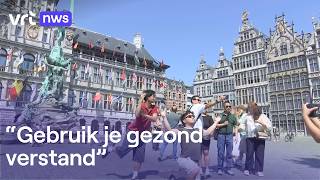
Jongeman beklimt standbeeld van Brabo in Antwerpen en raakt levensgevaarlijk gewond na val
VRT NWS
·
· 1m13s
In Antwerpen is afgelopen weekend een man levensgevaarlijk gewond geraakt toen hij het bekende standbeeld van Brabo wilde beklimmen op de Antwerpse Grote Markt. Het gaat om een man van 22 uit de regio Antwerpen, geen toerist dus. Of de man nog altijd in levensgevaar is, is niet duidelijk. Meer van onze video's zien? Abonneer je hier: https://www.youtube.com/vrtnws Jullie hebben allemaal het recht om jullie mening te geven, maar heb respect voor elkaar. Reacties waarin je scheldt of iemand persoonlijk aanvalt, worden verwijderd.

The Six Wives of Henry VIII: How Six Marriages Broke a Church
 Ryan M Reeves
·
· 41m35s
Ryan M Reeves
·
· 41m35s
Divorced, beheaded, died; divorced, beheaded, survived. The real story behind Henry VIII and why he married six different women. Along the way, Henry removes England from the Catholic faith and plunges it into the Tudor century of religious upheaval. Timeline: 0:00 Intro 3:03 Catherine of Aragon 14:30 Anne Boleyn 20:26 Jane Seymour 25:22 Anne of Cleves 31:22 Catherine Howard 35:59 Catherine Parr 40:28 Conclusion My books (affiliate links): "How We Got Our Bible" (Zondervan, 2018): https://amzn.to/2MtmSYY "Story of Creeds and Confessions" (Baker Academic, 2019): https://amzn.to/3OVDyGQ Support the channel on Patreon: https://patreon.com/user?u=23593673 Opening Music Sample: Andy McKee, 'For My Father' (listen to anything by McKee, guys) IMAGE CREDITS The following images are used under Creative Commons licences. All other images in this video are in the public domain. "Queen Anne Boleyn" (Wellcome V0048326) — Wellcome Collection — CC BY 4.0 "Anne of Cleves tomb, Westminster Abbey" — amanderson2 — CC BY 2.0 "Prayers or Meditations (1550)" — via Wikimedia Commons — CC BY-SA 4.0 "Sudeley Castle & Gardens" — cagibson77 — CC BY 2.0 "Bishop's staff and executioner's sword" — Thomas Quine — CC BY 2.0 "Henry VIII's expensive armour" — Claire Houck — CC BY-SA 2.0 "Hever Castle and Gardens, Castle Gatehouse" — HARTLEPOOLMARINA2014 — CC BY-SA 4.0 "Rack, Daliborka, Prague Castle" — Janmad — CC BY 3.0 "Chapel Royal of St. Peter ad Vincula, Tower of London" — David — CC BY 2.0 "London, Tower of London, White Tower — 2016 — 4679" — Dietmar Rabich — CC BY-SA 4.0 "Tower Green execution site" — Matt Brown — CC BY 4.0 Licence terms: CC BY 2.0 — https://creativecommons.org/licenses/by/2.0/ CC BY 3.0 — https://creativecommons.org/licenses/by/3.0/ CC BY 4.0 — https://creativecommons.org/licenses/by/4.0/ CC BY-SA 2.0 — https://creativecommons.org/licenses/by-sa/2.0/ CC BY-SA 4.0 — https://creativecommons.org/licenses/by-sa/4.0/
DO NOT Go Into The Cave Beneath This Waterfall
 ActionAdventureTwins
·
· 8m23s
ActionAdventureTwins
·
· 8m23s
This was straight nightmare fuel... Part 2 will be available either later this week on this channel or our Second channel @ActionAdventureClips go check our our friends channel @jaekcaves for more underground content!

A DYNAMO FOR MY STUART NUMBER 4 - PART #1
 Keith Appleton
·
· 9m44s
Keith Appleton
·
· 9m44s
A Dynamo For My Stuart Number 4 - Part #1. The Overview. A few years ago I assembled this steam driven Dynamo Unit to recharge my mobile phone via a USB connector. It worked perfectly at the time but after a few years on the shelf, the dynamo will not work at all because it is really a shunt wound Electric Motor. Should I experiment with it? or machine some Stuart Generator castings that I have - maybe both? https://www.patreon.com/keithappleton IF YOU ENJOY WATCHING THESE DETAILED TUTORIAL VIDEOS THAT I PRODUCE TO HELP BEGINNERS TO THE HOBBY, THEN PLEASE BECOME A PATRON OF MY YOUTUBE CHANNEL VIA "PATREON" AND ALLOW ME THE TIME TO MAKE EVEN MORE OF THESE SPECIALIST AND HIGHLY DETAILED TUTORIAL VIDEOS. AS A PATREON SUPPORTER YOU ARE ABLE TO ACCESS MANY OF MY VIDEOS THAT ARE NOT FOR PUBLIC VIEW ON YOUTUBE. PLEASE VISIT MY WEBSITE FOR THE VERY EASY TO USE COMPREHENSIVE PLAYLIST INDEX OF ALL OF MY YOUTUBE VIDEOS: www.mainsteam.co.uk OR CLICK HERE FOR PATREON: https://www.patreon.com/keithappleton ALSO PLEASE BECOME A MEMBER OF MY YOUTUBE CHANNEL TO GET ACCESS TO EXTRA VIDEOS: https://www.youtube.com/channel/UCgeQiJg-PIH5MZQn0aRd1mg/join

"If Emmett Till Lived" exhibition imagines an alternate reality
 Democracy Now!
·
· 1m31s
Democracy Now!
·
· 1m31s
More than 70 years after the kidnapping, torture and lynching of 14-year-old Emmett Till in Mississippi, a major new photography exhibit and companion book ask how the world would be different "If Emmett Till Lived." "Art really is one of the critical modes of creating an appeal to the moral imagination," says historian Sarah Elizabeth Lewis, the curator and editor behind the project.

How Todd Rundgren Changed Rock Forever
Rick Beato
·
· 1h8m
In this interview, Todd Rundgren sits down with me to discuss his prolific career as a producer and artist. We talk about his early work with The Nazz, his transition into production, and getting his start as a true solo artist. My Beato Club supporters: Justin Scott Terence Mark Jason Murray Lucienne Kilpatrick Alexander Young Jason Wagner Todd Ladner Rob Kline Nicholas Long Tim Benson Leonardo Martins da Costa Rodrigues Eddie Perez David Solomon MICHAEL JOYCE Stephen Stubbs colin stead Jonathan Wentworth-Linton Patrick Payne MATTHEW KARIS Matthew Barouch Shaun Samuels Danny Kurywchak Gregory Reedy Sean Coleman Alexander Verbitskiy CL Turner Jason Pappafotis John Fulford Margaret Carno Robert C David M Combs Eric Flatt Reto Spoerli Herr Moritz Adam Monte St. Johns Jon Beezley Peter DeVault Eric Nabstedt Eric Beggs Rich Germano Brian Bloom Peter Pillitteri Piush Dahal Toby Guidry

Flock Camera CEO Says Critics 'TERRORISTS'
Breaking Points
·
· 18m5s
Krystal and Saagar discuss the Flock CEO calling critics terrorists. Sign up for a PREMIUM Breaking Points subscriptions for full early access to uncut shows and LIVE AMAs with the hosts every week: https://breakingpoints.supercast.com/ Merch Store: https://shop.breakingpoints.com/ To listen to Breaking Points as a podcast, check them out on Apple and Spotify Apple: https://podcasts.apple.com/us/podcast/breaking-points-with-krystal-and-saagar/id1570045623 Spotify: https://open.spotify.com/show/033kFeszOZEgO3Wy6ziXKR Instagram: https://www.instagram.com/breakingpoints.yt Facebook: https://www.facebook.com/people/Breaking-Points/61575893472315/ #news #politics #youtube

Theophilus and the Virgin | The Age of Cathedrals with R. Howard Bloch
 YaleCourses
·
· 3m11s
YaleCourses
·
· 3m11s
Six centuries before Goethe's Faust, medieval Europe told the story of Theophilus, a cleric who signed away his soul to the devil in his own blood. On Notre-Dame's north portal, above scenes of Christ's infancy, Professor R. Howard Bloch traces the tale: passed over for bishop, Theophilus turns to a sorcerer and the devil to regain his office, then repents and is saved when the Virgin Mary retrieves the signed contract by force. It is one of the great archetypal stories of the age, and it casts Mary in her central medieval role as intercessor. Learning objectives: After watching, you'll be able to: - Summarize the miracle of Theophilus and his pact with the devil - Explain the Virgin Mary's role as intercessor in the tale - Connect the Theophilus story to the later legend of Faust - Describe how the north portal pairs the tale with Christ's infancy 📚 About the Course: An introduction to some of the most astonishing architectural monuments the world has ever known: the Gothic cathedrals of medieval France. Through the art, literature, intellectual life, economics, and new social arrangements that arose in the shadow of the cathedrals, you will explore the revival of cities in the twelfth and thirteenth centuries and come to a richer appreciation of the High Middle Ages, a world that is still recognizably our own. But what does that mean in practice? When you take this course, you will: Understand how the great cathedrals were built: Trace the engineering and architectural innovations, from Romanesque origins to Gothic stone and the delicate "house of glass," that made these structures possible. Learn to read cathedrals as art: Interpret the sculpture, stained glass, and relics of Saint-Denis, Notre-Dame de Paris, Chartres, and the Sainte-Chapelle, and see how their images served as the "Bible of the poor." Explore the world around the cathedrals: Discover the literature, learning, religion, and economic life of medieval cities, from Peter Abelard and the birth of the university to the everyday life lived in the cathedral's shadow. Course Takeaways: Appreciate the architecture and engineering of Gothic cathedrals Interpret medieval sculpture, stained glass, and religious art Understand the culture, religion, and society of the High Middle Ages 📺 Watch the full playlist on YouTube: https://www.youtube.com/playlist?list=PLJmpIR0QQnbQ 🎓 Enroll on Coursera for assessments and a certificate: https://www.coursera.org/learn/age-of-cathedrals 🌐 Explore more learning opportunities on Yale Online: https://online.yale.edu/courses/age-cathedrals

Saint Stephen's Portal | The Age of Cathedrals with R. Howard Bloch
YaleCourses
·
· 4m27s
Notre-Dame's south portal honors Saint Stephen, the first Christian martyr and a famous debater, and it faces the young University of Paris for a reason. Professor R. Howard Bloch reads the portal's record of the cathedral's original dedication to Stephen: the scenes of him disputing in the synagogue, his trial before the Sanhedrin, and his stoning, led by Saul of Tarsus, the future Saint Paul. Below, carved dado panels of Paris student life echo Stephen's own skill in argument, with a master pronouncing judgment on a debate like a legal sentence. Chapters: 00:00 Saint Stephen's portal 01:30 Stephen debating in the synagogue 02:15 Trial and stoning 03:26 Scenes of student life Learning objectives: After watching, you'll be able to: - Identify Saint Stephen and his role as the first Christian martyr - Describe how the portal depicts his debate, trial, and stoning - Explain the connection between the portal and the University of Paris - Interpret the dado scenes of medieval student life 📚 About the Course: An introduction to some of the most astonishing architectural monuments the world has ever known: the Gothic cathedrals of medieval France. Through the art, literature, intellectual life, economics, and new social arrangements that arose in the shadow of the cathedrals, you will explore the revival of cities in the twelfth and thirteenth centuries and come to a richer appreciation of the High Middle Ages, a world that is still recognizably our own. But what does that mean in practice? When you take this course, you will: Understand how the great cathedrals were built: Trace the engineering and architectural innovations, from Romanesque origins to Gothic stone and the delicate "house of glass," that made these structures possible. Learn to read cathedrals as art: Interpret the sculpture, stained glass, and relics of Saint-Denis, Notre-Dame de Paris, Chartres, and the Sainte-Chapelle, and see how their images served as the "Bible of the poor." Explore the world around the cathedrals: Discover the literature, learning, religion, and economic life of medieval cities, from Peter Abelard and the birth of the university to the everyday life lived in the cathedral's shadow. Course Takeaways: Appreciate the architecture and engineering of Gothic cathedrals Interpret medieval sculpture, stained glass, and religious art Understand the culture, religion, and society of the High Middle Ages 📺 Watch the full playlist on YouTube: https://www.youtube.com/playlist?list=PLJmpIR0QQnbQ 🎓 Enroll on Coursera for assessments and a certificate: https://www.coursera.org/learn/age-of-cathedrals 🌐 Explore more learning opportunities on Yale Online: https://online.yale.edu/courses/age-cathedrals

The Rose Windows of Notre-Dame | The Age of Cathedrals with R. Howard Bloch
YaleCourses
·
· 7m7s
Notre-Dame's three great rose windows hold an entire universe in glass: zodiac signs, prophets, saints, and Christ of the Apocalypse, much of it set too high for any eye on the ground to read. Professor R. Howard Bloch walks through the encyclopedic western rose, a mirror of nature, the northern rose glorifying the Virgin among Old Testament prophets, and the southern rose with Christ enthroned amid the tetramorph of the four evangelists. He ends on a genuine puzzle: why fill windows with detail no worshipper could see? Perhaps the light itself was a form of grace, or the images were meant for the eye of God. Chapters: 00:00 The great rose windows 00:26 The western rose 01:57 The northern rose 04:03 The southern rose 05:38 Images for the eye of God Learning objectives: After watching, you'll be able to: - Distinguish the subjects of the western, northern, and southern rose windows - Explain what the "encyclopedic" western rose represents - Identify key Old and New Testament figures in the glass - Weigh possible reasons for details invisible from the ground 📚 About the Course: An introduction to some of the most astonishing architectural monuments the world has ever known: the Gothic cathedrals of medieval France. Through the art, literature, intellectual life, economics, and new social arrangements that arose in the shadow of the cathedrals, you will explore the revival of cities in the twelfth and thirteenth centuries and come to a richer appreciation of the High Middle Ages, a world that is still recognizably our own. But what does that mean in practice? When you take this course, you will: Understand how the great cathedrals were built: Trace the engineering and architectural innovations, from Romanesque origins to Gothic stone and the delicate "house of glass," that made these structures possible. Learn to read cathedrals as art: Interpret the sculpture, stained glass, and relics of Saint-Denis, Notre-Dame de Paris, Chartres, and the Sainte-Chapelle, and see how their images served as the "Bible of the poor." Explore the world around the cathedrals: Discover the literature, learning, religion, and economic life of medieval cities, from Peter Abelard and the birth of the university to the everyday life lived in the cathedral's shadow. Course Takeaways: Appreciate the architecture and engineering of Gothic cathedrals Interpret medieval sculpture, stained glass, and religious art Understand the culture, religion, and society of the High Middle Ages 📺 Watch the full playlist on YouTube: https://www.youtube.com/playlist?list=PLJmpIR0QQnbQ 🎓 Enroll on Coursera for assessments and a certificate: https://www.coursera.org/learn/age-of-cathedrals 🌐 Explore more learning opportunities on Yale Online: https://online.yale.edu/courses/age-cathedrals

The Coronation Portal | The Age of Cathedrals with R. Howard Bloch
YaleCourses
·
· 7m7s
The scenes of Mary's death, assumption, and coronation are carved in loving detail across Notre-Dame's north portal, yet none of them appear in the Bible. Professor R. Howard Bloch reads the coronation portal: the Virgin and child on the trumeau, Saint Denis holding his severed head, the zodiac signs and labors of the months, and the story of Mary's dormition drawn from the apocryphal Golden Legend. He notes the scholastic habit of weighing competing sources to date the Virgin's life, and the holy tunic she leaves behind, which will resurface centuries later at Chartres. Chapters: 00:00 The portal of the Virgin 00:35 Zodiac and the labors of the months 01:34 The death and assumption of Mary 02:43 Dating the Virgin's life 03:09 The dormition narrative 06:18 Mary's tunic and coronation Learning objectives: After watching, you'll be able to: - Describe the figures and scenes of the coronation portal - Explain why the assumption and coronation come from apocryphal sources - Identify the zodiac signs and labors of the months on the portal - Recognize the scholastic method of weighing competing sources 📚 About the Course: An introduction to some of the most astonishing architectural monuments the world has ever known: the Gothic cathedrals of medieval France. Through the art, literature, intellectual life, economics, and new social arrangements that arose in the shadow of the cathedrals, you will explore the revival of cities in the twelfth and thirteenth centuries and come to a richer appreciation of the High Middle Ages, a world that is still recognizably our own. But what does that mean in practice? When you take this course, you will: Understand how the great cathedrals were built: Trace the engineering and architectural innovations, from Romanesque origins to Gothic stone and the delicate "house of glass," that made these structures possible. Learn to read cathedrals as art: Interpret the sculpture, stained glass, and relics of Saint-Denis, Notre-Dame de Paris, Chartres, and the Sainte-Chapelle, and see how their images served as the "Bible of the poor." Explore the world around the cathedrals: Discover the literature, learning, religion, and economic life of medieval cities, from Peter Abelard and the birth of the university to the everyday life lived in the cathedral's shadow. Course Takeaways: Appreciate the architecture and engineering of Gothic cathedrals Interpret medieval sculpture, stained glass, and religious art Understand the culture, religion, and society of the High Middle Ages 📺 Watch the full playlist on YouTube: https://www.youtube.com/playlist?list=PLJmpIR0QQnbQ 🎓 Enroll on Coursera for assessments and a certificate: https://www.coursera.org/learn/age-of-cathedrals 🌐 Explore more learning opportunities on Yale Online: https://online.yale.edu/courses/age-cathedrals
The Saint Anne Portal | The Age of Cathedrals with R. Howard Bloch
YaleCourses
·
· 11m29s
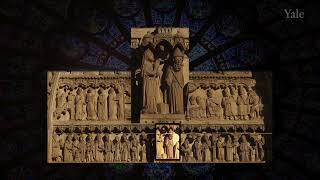
Long before the birth of Christ there was a childless couple, Anne and Joachim, whose story is carved across the oldest portal of Notre-Dame's west facade. Professor R. Howard Bloch reads the Saint Anne portal alongside the Golden Legend, from Saint Marcel on the trumeau to Joachim's rejection at the temple, the angel's promise at the Golden Gate, Mary's betrothal to the aged Joseph and his miraculously flowering rod, and finally the Nativity. Staged like a play in sculpture, the portal traces Christ's royal genealogy back through Solomon and David and was meant to be read scene by scene. Chapters: 00:00 The trumeau of Saint Marcel 00:34 Anne and Joachim, childless 02:33 Rejected at the temple 04:11 The angel's promise 06:51 Mary's betrothal 09:22 The birth of Christ Learning objectives: After watching, you'll be able to: - Identify Saint Marcel and the scenes on the Saint Anne portal - Summarize the story of Anne and Joachim from the Golden Legend - Explain how the portal traces Christ's royal genealogy - Interpret the frieze as narrative sculpture read alongside a text 📚 About the Course: An introduction to some of the most astonishing architectural monuments the world has ever known: the Gothic cathedrals of medieval France. Through the art, literature, intellectual life, economics, and new social arrangements that arose in the shadow of the cathedrals, you will explore the revival of cities in the twelfth and thirteenth centuries and come to a richer appreciation of the High Middle Ages, a world that is still recognizably our own. But what does that mean in practice? When you take this course, you will: Understand how the great cathedrals were built: Trace the engineering and architectural innovations, from Romanesque origins to Gothic stone and the delicate "house of glass," that made these structures possible. Learn to read cathedrals as art: Interpret the sculpture, stained glass, and relics of Saint-Denis, Notre-Dame de Paris, Chartres, and the Sainte-Chapelle, and see how their images served as the "Bible of the poor." Explore the world around the cathedrals: Discover the literature, learning, religion, and economic life of medieval cities, from Peter Abelard and the birth of the university to the everyday life lived in the cathedral's shadow. Course Takeaways: Appreciate the architecture and engineering of Gothic cathedrals Interpret medieval sculpture, stained glass, and religious art Understand the culture, religion, and society of the High Middle Ages 📺 Watch the full playlist on YouTube: https://www.youtube.com/playlist?list=PLJmpIR0QQnbQ 🎓 Enroll on Coursera for assessments and a certificate: https://www.coursera.org/learn/age-of-cathedrals 🌐 Explore more learning opportunities on Yale Online: https://online.yale.edu/courses/age-cathedrals

What's New at Notre-Dame | The Age of Cathedrals with R. Howard Bloch
YaleCourses
·
· 4m24s
Notre-Dame looks back to Saint-Denis and the churches of Normandy, but it also broke new ground in ways that every later cathedral would follow. Professor R. Howard Bloch names three innovations. For the first time, the building is tied to named architects and master builders, beginning with Bishop Maurice de Sully. The flying buttress, standing free of the wall and only seeming to hold it up, turns a question of weight and mass into one of force, thrust, and counter-thrust. And the sculptural programs of the west facade become a vast, layered field meant to be read, anchored by the biblical idea that Christ is the door. Chapters: 00:00 A Janus-faced building 01:11 Named architects and builders 02:15 The flying buttress 03:21 Sculpture across the facade Learning objectives: After watching, you'll be able to: - Explain why Notre-Dame is called a Janus-faced building - Identify the named architects associated with its construction - Describe how the flying buttress changed the logic of the wall - Summarize the sculptural zones of the west facade 📚 About the Course: An introduction to some of the most astonishing architectural monuments the world has ever known: the Gothic cathedrals of medieval France. Through the art, literature, intellectual life, economics, and new social arrangements that arose in the shadow of the cathedrals, you will explore the revival of cities in the twelfth and thirteenth centuries and come to a richer appreciation of the High Middle Ages, a world that is still recognizably our own. But what does that mean in practice? When you take this course, you will: Understand how the great cathedrals were built: Trace the engineering and architectural innovations, from Romanesque origins to Gothic stone and the delicate "house of glass," that made these structures possible. Learn to read cathedrals as art: Interpret the sculpture, stained glass, and relics of Saint-Denis, Notre-Dame de Paris, Chartres, and the Sainte-Chapelle, and see how their images served as the "Bible of the poor." Explore the world around the cathedrals: Discover the literature, learning, religion, and economic life of medieval cities, from Peter Abelard and the birth of the university to the everyday life lived in the cathedral's shadow. Course Takeaways: Appreciate the architecture and engineering of Gothic cathedrals Interpret medieval sculpture, stained glass, and religious art Understand the culture, religion, and society of the High Middle Ages 📺 Watch the full playlist on YouTube: https://www.youtube.com/playlist?list=PLJmpIR0QQnbQ 🎓 Enroll on Coursera for assessments and a certificate: https://www.coursera.org/learn/age-of-cathedrals 🌐 Explore more learning opportunities on Yale Online: https://online.yale.edu/courses/age-cathedrals
The Renovations of Notre-Dame | The Age of Cathedrals with R. Howard Bloch
YaleCourses
·
· 7m27s
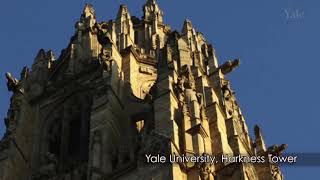
The Notre-Dame we see today is not the medieval building. It was altered, sacked, and reinvented for 700 years, most dramatically by a single 19th-century restorer. Professor R. Howard Bloch follows the changes, from the towers and Gallery of Kings to enlarged windows and single flying buttresses, and the gargoyles that first appeared in the 1230s. He covers Louis XIV's marble facing, the destruction of the Revolution (when the Gallery of Old Testament kings was mistaken for the kings of France and torn down), and the sweeping restoration by Eugene-Emmanuel Viollet-le-Duc, who signed his work by carving his own face into the statuary. Chapters: 00:00 Towers and the Gallery of Kings 00:33 Altered flying buttresses 02:07 Gargoyles appear 03:06 Later changes and destruction 03:56 The Revolution's damage 04:47 Viollet-le-Duc's restoration Learning objectives: After watching, you'll be able to: - Trace the major changes to Notre-Dame from the 13th century onward - Explain how the flying buttresses and windows were altered - Describe the damage done during the French Revolution - Assess Viollet-le-Duc's restoration and its liberties 📚 About the Course: An introduction to some of the most astonishing architectural monuments the world has ever known: the Gothic cathedrals of medieval France. Through the art, literature, intellectual life, economics, and new social arrangements that arose in the shadow of the cathedrals, you will explore the revival of cities in the twelfth and thirteenth centuries and come to a richer appreciation of the High Middle Ages, a world that is still recognizably our own. But what does that mean in practice? When you take this course, you will: Understand how the great cathedrals were built: Trace the engineering and architectural innovations, from Romanesque origins to Gothic stone and the delicate "house of glass," that made these structures possible. Learn to read cathedrals as art: Interpret the sculpture, stained glass, and relics of Saint-Denis, Notre-Dame de Paris, Chartres, and the Sainte-Chapelle, and see how their images served as the "Bible of the poor." Explore the world around the cathedrals: Discover the literature, learning, religion, and economic life of medieval cities, from Peter Abelard and the birth of the university to the everyday life lived in the cathedral's shadow. Course Takeaways: Appreciate the architecture and engineering of Gothic cathedrals Interpret medieval sculpture, stained glass, and religious art Understand the culture, religion, and society of the High Middle Ages 📺 Watch the full playlist on YouTube: https://www.youtube.com/playlist?list=PLJmpIR0QQnbQ 🎓 Enroll on Coursera for assessments and a certificate: https://www.coursera.org/learn/age-of-cathedrals 🌐 Explore more learning opportunities on Yale Online: https://online.yale.edu/courses/age-cathedrals

This Rocket Is About To Hit The Moon
 Cleo Abram
·
· 0m53s
Cleo Abram
·
· 0m53s
This SpaceX rocket is about to hit the moon at seven times the speed of sound. It launched over a year ago and was left drifting in space until gravity pulled it in towards the Moon. We’re keeping a close eye on what happens to learn how future impacts could affect astronauts that we send to the moon! To see what we learn, subscribe! #moon #spaceX #falcon9 #rocket #moon #explosion
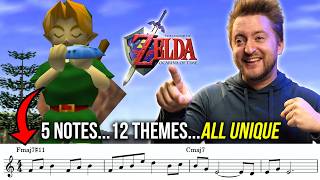
How Ocarina Of Time Builds An Entire WORLD With 5 Notes
 Charles Cornell
·
· 18m58s
Charles Cornell
·
· 18m58s
Koji Kondo's BRILLIANT use of 5 notes wound up making Ocarina of Time's themes unforgettable. And now you can make unforgettable music with the Better Piano System! https://shop.betterpiano.com/ 0:00 Intro 0:16 Saria's Song 9:03 Zelda's Lullaby 13:22 Song of Storms 14:45 Bolero of Fire 18:04 Outro Follow me! Instagram: https://bit.ly/2WoR7W1 Facebook: https://bit.ly/2K4rHq8 TikTok: https://bit.ly/2X7pnlN

The Saint Anne Portal | The Age of Cathedrals with R. Howard Bloch
YaleCourses
·
· 6m6s
Long before the birth of Christ there was a childless couple, Anne and Joachim, whose story is carved across the oldest portal of Notre-Dame's west facade. Professor R. Howard Bloch reads the Saint Anne portal alongside the Golden Legend, from Saint Marcel on the trumeau to Joachim's rejection at the temple, the angel's promise at the Golden Gate, Mary's betrothal to the aged Joseph and his miraculously flowering rod, and finally the Nativity. Staged like a play in sculpture, the portal traces Christ's royal genealogy back through Solomon and David and was meant to be read scene by scene. Chapters: 00:00 The trumeau of Saint Marcel 00:34 Anne and Joachim, childless 02:33 Rejected at the temple 04:11 The angel's promise 06:51 Mary's betrothal 09:22 The birth of Christ Learning objectives: After watching, you'll be able to: - Identify Saint Marcel and the scenes on the Saint Anne portal - Summarize the story of Anne and Joachim from the Golden Legend - Explain how the portal traces Christ's royal genealogy - Interpret the frieze as narrative sculpture read alongside a text 📚 About the Course: An introduction to some of the most astonishing architectural monuments the world has ever known: the Gothic cathedrals of medieval France. Through the art, literature, intellectual life, economics, and new social arrangements that arose in the shadow of the cathedrals, you will explore the revival of cities in the twelfth and thirteenth centuries and come to a richer appreciation of the High Middle Ages, a world that is still recognizably our own. But what does that mean in practice? When you take this course, you will: Understand how the great cathedrals were built: Trace the engineering and architectural innovations, from Romanesque origins to Gothic stone and the delicate "house of glass," that made these structures possible. Learn to read cathedrals as art: Interpret the sculpture, stained glass, and relics of Saint-Denis, Notre-Dame de Paris, Chartres, and the Sainte-Chapelle, and see how their images served as the "Bible of the poor." Explore the world around the cathedrals: Discover the literature, learning, religion, and economic life of medieval cities, from Peter Abelard and the birth of the university to the everyday life lived in the cathedral's shadow. Course Takeaways: Appreciate the architecture and engineering of Gothic cathedrals Interpret medieval sculpture, stained glass, and religious art Understand the culture, religion, and society of the High Middle Ages 📺 Watch the full playlist on YouTube: https://www.youtube.com/playlist?list=PLJmpIR0QQnbQ 🎓 Enroll on Coursera for assessments and a certificate: https://www.coursera.org/learn/age-of-cathedrals 🌐 Explore more learning opportunities on Yale Online: https://online.yale.edu/courses/age-cathedrals

The James Webb Telescope is making cosmologists question the Big Bang | Bjørn Ekeberg
 The Institute of Art and Ideas
·
· 17m22s
The Institute of Art and Ideas
·
· 17m22s
Bjørn Ekeberg examines new observations from the James Webb Space Telescope that challenge the standard cosmic story. Do you agree that cosmologists should be more humble about what they actually know? With a free trial, you can watch the full talk NOW at https://iai.tv/video/the-james-webb-telescopes-threat-to-the-big-bang?utm_source=YouTube&utm_medium=description We think that our theories of cosmology are getting better at explaining the origins of the universe. But what if they're inherently limited by how we interpret light itself? Join philosopher of science Bjørn Ekeberg as he examines new observations from the James Webb Space Telescope that challenge the standard cosmic story. Early galaxies appear too large, too structured, too soon: the data doesn't fit the theory, and the gap between theory and evidence is vast. Ekeberg explores how modern cosmology is built entirely on reading faint traces of ancient light, and how anomalies may reveal not just cracks in a theory, but limits in our way of seeing. #bigbang #jameswebb #cosmology Bjørn Ekeberg is a Norwegian philosopher of science, author, entrepreneur, and cultural creator whose work challenges orthodox thinking in cosmology, scientific knowledge, and human understanding. He holds a Ph.D. in philosophy of science from the University of Victoria (Canada) and has combined rigorous academic inquiry with creative and practical ventures. Ekeberg’s philosophical writing spans cosmology, metaphysics, and the limits of scientific knowledge, exemplified by his book Metaphysical Experiments: Physics and the Invention of the Universe, which critiques assumptions in modern physics and invites fresh perspectives on how we understand the universe. The Institute of Art and Ideas features videos and articles from cutting edge thinkers discussing the ideas that are shaping the world, from metaphysics to string theory, technology to democracy, aesthetics to genetics. Subscribe today! https://iai.tv/subscribe?utm_source=YouTube&utm_medium=description&utm_campaign=https://iai.tv/video/the-james-webb-telescopes-threat-to-the-big-bang 0:00 Intro 0:38 How the James Webb Telescope looks 'back in time' 4:20 Why cosmologists were so excited about the Webb 5:57 The Webb's findings which strain the Big Bang theory 8:00 Where has gravity been tested? 12:55 What does the telescope actually see? For debates and talks: https://iai.tv For articles: https://iai.tv/articles For courses: https://iai.tv/iai-academy/courses

Israeli Settler Brags: '1 Jewish Life Worth 10 Million Palestinians'
Breaking Points
·
· 16m20s
Krystal and Saagar discuss the BBC interviewing a self proclaimed racist Israeli settler. Sign up for a PREMIUM Breaking Points subscriptions for full early access to uncut shows and LIVE AMAs with the hosts every week: https://breakingpoints.supercast.com/ Merch Store: https://shop.breakingpoints.com/ To listen to Breaking Points as a podcast, check them out on Apple and Spotify Apple: https://podcasts.apple.com/us/podcast/breaking-points-with-krystal-and-saagar/id1570045623 Spotify: https://open.spotify.com/show/033kFeszOZEgO3Wy6ziXKR Instagram: https://www.instagram.com/breakingpoints.yt Facebook: https://www.facebook.com/people/Breaking-Points/61575893472315/ #news #politics #youtube
Building Notre-Dame: The First Campaigns | The Age of Cathedrals with R. Howard Bloch
YaleCourses
·
· 7m43s
By the time Notre-Dame went up, the Gothic was no longer experimental: it had hit its stride, at the center of a capital that was reinventing commerce, law, and learning. Professor R. Howard Bloch traces the building in stages from 1163, when the master mason (magister cementarius) laid out the eastern chevet with a compass and concentric circles. The choir was consecrated in 1182, and the transepts and nave were essentially complete by 1220. Bloch also reads the cathedral's place in medieval Paris, next to markets, law courts, and the young university on Mount Sainte-Genevieve, where faith, money, and justice met. Chapters: 00:00 Notre-Dame hits its stride 02:22 A center of commerce and law 03:32 The university nearby 03:51 Building in stages 05:09 Laying out the choir 06:55 Transepts and nave Learning objectives: After watching, you'll be able to: - Describe how Notre-Dame was built in successive campaigns - Explain the role of the master mason in laying out the choir - Summarize the cathedral's place in the commercial and legal life of Paris - Connect cathedral building to the rise of the University of Paris 📚 About the Course: An introduction to some of the most astonishing architectural monuments the world has ever known: the Gothic cathedrals of medieval France. Through the art, literature, intellectual life, economics, and new social arrangements that arose in the shadow of the cathedrals, you will explore the revival of cities in the twelfth and thirteenth centuries and come to a richer appreciation of the High Middle Ages, a world that is still recognizably our own. But what does that mean in practice? When you take this course, you will: Understand how the great cathedrals were built: Trace the engineering and architectural innovations, from Romanesque origins to Gothic stone and the delicate "house of glass," that made these structures possible. Learn to read cathedrals as art: Interpret the sculpture, stained glass, and relics of Saint-Denis, Notre-Dame de Paris, Chartres, and the Sainte-Chapelle, and see how their images served as the "Bible of the poor." Explore the world around the cathedrals: Discover the literature, learning, religion, and economic life of medieval cities, from Peter Abelard and the birth of the university to the everyday life lived in the cathedral's shadow. Course Takeaways: Appreciate the architecture and engineering of Gothic cathedrals Interpret medieval sculpture, stained glass, and religious art Understand the culture, religion, and society of the High Middle Ages 📺 Watch the full playlist on YouTube: https://www.youtube.com/playlist?list=PLJmpIR0QQnbQ 🎓 Enroll on Coursera for assessments and a certificate: https://www.coursera.org/learn/age-of-cathedrals 🌐 Explore more learning opportunities on Yale Online: https://online.yale.edu/courses/age-cathedrals

Architectural Innovations of the Gothic | The Age of Cathedrals with R. Howard Bloch
YaleCourses
·
· 12m51s
Gothic cathedrals were built without measuring their materials: every dimension came from proportion and geometry, not a ruler. That fact sits at the heart of how medieval masons made stone appear to soar. Professor R. Howard Bloch works through the technical breakthroughs, composite piers, ribbed vaults, and pointed arches that are 25 to 30 percent stronger than round ones, then the flying buttress that carries thrust to the ground, illustrated by Viollet-le-Duc. He connects modular bay construction to "scholasticism in stone," traces the Arabic mathematics of Euclid and al-Khwarizmi that reached France through Spain, and shows how a cathedral's ratios were believed to mirror the divine proportions God gave Noah, Moses, and Solomon. Chapters: 00:00 Recap and the central question 01:27 Composite piers and shafts 02:31 The ribbed vault 03:31 Pointed arches 04:03 The flying buttress 04:57 How the buttress channels force 06:57 Building in modular bays 08:34 Building by proportion, not measurement 09:44 Arabic science and geometry 11:02 Cathedrals as divine proportion Learning objectives: After watching, you'll be able to: - Explain how composite piers, ribs, and pointed arches strengthened Gothic buildings - Describe how the flying buttress transfers thrust to the ground - Analyze the link between modular bay construction and scholastic philosophy - Trace the influence of Arabic mathematics on Gothic building - Interpret the cathedral as an embodiment of divine proportion and number 📚 About the Course: An introduction to some of the most astonishing architectural monuments the world has ever known: the Gothic cathedrals of medieval France. Through the art, literature, intellectual life, economics, and new social arrangements that arose in the shadow of the cathedrals, you will explore the revival of cities in the twelfth and thirteenth centuries and come to a richer appreciation of the High Middle Ages, a world that is still recognizably our own. But what does that mean in practice? When you take this course, you will: Understand how the great cathedrals were built: Trace the engineering and architectural innovations, from Romanesque origins to Gothic stone and the delicate "house of glass," that made these structures possible. Learn to read cathedrals as art: Interpret the sculpture, stained glass, and relics of Saint-Denis, Notre-Dame de Paris, Chartres, and the Sainte-Chapelle, and see how their images served as the "Bible of the poor." Explore the world around the cathedrals: Discover the literature, learning, religion, and economic life of medieval cities, from Peter Abelard and the birth of the university to the everyday life lived in the cathedral's shadow. Course Takeaways: Appreciate the architecture and engineering of Gothic cathedrals Interpret medieval sculpture, stained glass, and religious art Understand the culture, religion, and society of the High Middle Ages 📺 Watch the full playlist on YouTube: https://www.youtube.com/playlist?list=PLJmpIR0QQnbQ 🎓 Enroll on Coursera for assessments and a certificate: https://www.coursera.org/learn/age-of-cathedrals 🌐 Explore more learning opportunities on Yale Online: https://online.yale.edu/courses/age-cathedrals

The Parts of a Gothic Cathedral | The Age of Cathedrals with R. Howard Bloch
YaleCourses
·
· 8m8s
From crypt to clerestory, a Gothic cathedral has a vocabulary all its own, and once you know it, the whole building starts to move. Professor R. Howard Bloch names the parts, crypt, apse, choir, nave, transept, side aisles, and ambulatory, and shows how they form the shape of a cross. He walks up the four levels of the wall at Laon, traces how Gothic sculpture detaches from the surface and blossoms into tracery, gargoyles, and even carved scenes of Paris student life, and explains the "optical relativism" that makes a Gothic interior feel dynamic and alive where Romanesque feels heavy and frontal. Chapters: 00:00 The parts of a cathedral 03:39 Four levels of the wall 04:06 Detached sculpture and tracery 05:47 Gargoyles and other carvings 06:29 The optical energy of Gothic Learning objectives: After watching, you'll be able to: - Identify the main parts of a Gothic cathedral and their functions - Distinguish the four levels of the Gothic wall elevation - Explain how Gothic sculpture differs from Romanesque relief carving - Compare the optical experience of Gothic and Romanesque churches 📚 About the Course: An introduction to some of the most astonishing architectural monuments the world has ever known: the Gothic cathedrals of medieval France. Through the art, literature, intellectual life, economics, and new social arrangements that arose in the shadow of the cathedrals, you will explore the revival of cities in the twelfth and thirteenth centuries and come to a richer appreciation of the High Middle Ages, a world that is still recognizably our own. But what does that mean in practice? When you take this course, you will: Understand how the great cathedrals were built: Trace the engineering and architectural innovations, from Romanesque origins to Gothic stone and the delicate "house of glass," that made these structures possible. Learn to read cathedrals as art: Interpret the sculpture, stained glass, and relics of Saint-Denis, Notre-Dame de Paris, Chartres, and the Sainte-Chapelle, and see how their images served as the "Bible of the poor." Explore the world around the cathedrals: Discover the literature, learning, religion, and economic life of medieval cities, from Peter Abelard and the birth of the university to the everyday life lived in the cathedral's shadow. Course Takeaways: Appreciate the architecture and engineering of Gothic cathedrals Interpret medieval sculpture, stained glass, and religious art Understand the culture, religion, and society of the High Middle Ages 📺 Watch the full playlist on YouTube: https://www.youtube.com/playlist?list=PLJmpIR0QQnbQ 🎓 Enroll on Coursera for assessments and a certificate: https://www.coursera.org/learn/age-of-cathedrals 🌐 Explore more learning opportunities on Yale Online: https://online.yale.edu/courses/age-cathedrals

The Origins of the Word Gothic | The Age of Cathedrals with R. Howard Bloch
YaleCourses
·
· 3m51s
The word Gothic began as an insult, a synonym for barbarism and bad taste, long before it named the greatest churches in Europe. Its history is stranger than the buildings it describes. Professor R. Howard Bloch presents Gothic as an urban, international style rooted in the Ile-de-France, in the art historian Henri Focillon's phrase, "the Romanesque of the Ile-de-France." He lays out the staggering build times, from 17 years at Glastonbury to 688 at Bristol, and traces the term through Rabelais, Goethe, and Raphael, including the old idea that pointed arches imitate the bent branches of living trees. Chapters: 00:00 An urban, international style 00:39 How long a cathedral took to build 02:05 The trouble with the word "Gothic" 03:00 Cathedrals as trees Learning objectives: After watching, you'll be able to: - Explain why Gothic is described as an urban and international style - Summarize how long Gothic cathedrals typically took to build - Trace the origins and shifting meanings of the word "Gothic" - Describe the metaphor linking Gothic arches to trees 📚 About the Course: An introduction to some of the most astonishing architectural monuments the world has ever known: the Gothic cathedrals of medieval France. Through the art, literature, intellectual life, economics, and new social arrangements that arose in the shadow of the cathedrals, you will explore the revival of cities in the twelfth and thirteenth centuries and come to a richer appreciation of the High Middle Ages, a world that is still recognizably our own. But what does that mean in practice? When you take this course, you will: Understand how the great cathedrals were built: Trace the engineering and architectural innovations, from Romanesque origins to Gothic stone and the delicate "house of glass," that made these structures possible. Learn to read cathedrals as art: Interpret the sculpture, stained glass, and relics of Saint-Denis, Notre-Dame de Paris, Chartres, and the Sainte-Chapelle, and see how their images served as the "Bible of the poor." Explore the world around the cathedrals: Discover the literature, learning, religion, and economic life of medieval cities, from Peter Abelard and the birth of the university to the everyday life lived in the cathedral's shadow. Course Takeaways: Appreciate the architecture and engineering of Gothic cathedrals Interpret medieval sculpture, stained glass, and religious art Understand the culture, religion, and society of the High Middle Ages 📺 Watch the full playlist on YouTube: https://www.youtube.com/playlist?list=PLJmpIR0QQnbQ 🎓 Enroll on Coursera for assessments and a certificate: https://www.coursera.org/learn/age-of-cathedrals 🌐 Explore more learning opportunities on Yale Online: https://online.yale.edu/courses/age-cathedrals

The Romanesque Church | The Age of Cathedrals with R. Howard Bloch
YaleCourses
·
· 6m44s
Before the soaring Gothic came the Romanesque: squat, fortress-like churches with massive walls, small windows, and no flying buttresses to hold them up. Understanding them is the key to seeing what the Gothic changed. Professor R. Howard Bloch explains how the style grew out of the defensive retreat that followed the collapse of the Carolingian Empire. The thick walls were not just for show; without external buttressing, they had to absorb the whole lateral thrust of the vaults from the inside. Bloch reads the barrel and groin vaults, the low-relief carving that mixed sacred and profane, and the monastic and pilgrimage settings, from Vezelay and Conques to Compostela, where these buildings took shape. Chapters: 00:00 Recap and today's plan 01:35 The fortress church 02:52 Thick walls and carved surfaces 03:44 The problem of lateral thrust 05:01 Vaults and the pilgrimage church Learning objectives: After watching, you'll be able to: - Describe the fortress-like features of Romanesque churches - Explain why thick walls were needed to resist lateral thrust - Distinguish barrel vaults from groin vaults - Connect Romanesque architecture to monasticism and pilgrimage routes 📚 About the Course: An introduction to some of the most astonishing architectural monuments the world has ever known: the Gothic cathedrals of medieval France. Through the art, literature, intellectual life, economics, and new social arrangements that arose in the shadow of the cathedrals, you will explore the revival of cities in the twelfth and thirteenth centuries and come to a richer appreciation of the High Middle Ages, a world that is still recognizably our own. But what does that mean in practice? When you take this course, you will: Understand how the great cathedrals were built: Trace the engineering and architectural innovations, from Romanesque origins to Gothic stone and the delicate "house of glass," that made these structures possible. Learn to read cathedrals as art: Interpret the sculpture, stained glass, and relics of Saint-Denis, Notre-Dame de Paris, Chartres, and the Sainte-Chapelle, and see how their images served as the "Bible of the poor." Explore the world around the cathedrals: Discover the literature, learning, religion, and economic life of medieval cities, from Peter Abelard and the birth of the university to the everyday life lived in the cathedral's shadow. Course Takeaways: Appreciate the architecture and engineering of Gothic cathedrals Interpret medieval sculpture, stained glass, and religious art Understand the culture, religion, and society of the High Middle Ages 📺 Watch the full playlist on YouTube: https://www.youtube.com/playlist?list=PLJmpIR0QQnbQ 🎓 Enroll on Coursera for assessments and a certificate: https://www.coursera.org/learn/age-of-cathedrals 🌐 Explore more learning opportunities on Yale Online: https://online.yale.edu/courses/age-cathedrals

The Anagogical and Moses Windows | The Age of Cathedrals with R. Howard Bloch
YaleCourses
·
· 5m33s
In Suger's windows, Saint Paul grinds grain at a mill and Moses lifts a veil, images built to turn the Old Testament into the New. Thanks to a rare survival, we still have Suger's own written descriptions of what each scene means. Professor R. Howard Bloch reads the anagogical window, where Paul's mystic mill is flanked by figures of Synagogue and Church, and the Moses cycle of the ark, the burning bush, the Red Sea, and the golden calf. The guiding idea is that as is painting, so is poetry: through allegory, the glass makes the invisible visible and lets the eye lead the mind toward final things. The cathedral, in short, works as a spiritual teaching tool. Chapters: 00:00 The anagogical window and Saint Paul 01:20 Synagogue and church at the mill 02:40 The Moses windows 05:06 The cathedral as teaching tool Learning objectives: After watching, you'll be able to: - Interpret the anagogical window's image of Saint Paul at the mill - Explain the typological link between the Old and New Testaments - Describe the Moses scenes depicted in the stained glass - Assess how the windows functioned as spiritual teaching tools 📚 About the Course: An introduction to some of the most astonishing architectural monuments the world has ever known: the Gothic cathedrals of medieval France. Through the art, literature, intellectual life, economics, and new social arrangements that arose in the shadow of the cathedrals, you will explore the revival of cities in the twelfth and thirteenth centuries and come to a richer appreciation of the High Middle Ages, a world that is still recognizably our own. But what does that mean in practice? When you take this course, you will: Understand how the great cathedrals were built: Trace the engineering and architectural innovations, from Romanesque origins to Gothic stone and the delicate "house of glass," that made these structures possible. Learn to read cathedrals as art: Interpret the sculpture, stained glass, and relics of Saint-Denis, Notre-Dame de Paris, Chartres, and the Sainte-Chapelle, and see how their images served as the "Bible of the poor." Explore the world around the cathedrals: Discover the literature, learning, religion, and economic life of medieval cities, from Peter Abelard and the birth of the university to the everyday life lived in the cathedral's shadow. Course Takeaways: Appreciate the architecture and engineering of Gothic cathedrals Interpret medieval sculpture, stained glass, and religious art Understand the culture, religion, and society of the High Middle Ages 📺 Watch the full playlist on YouTube: https://www.youtube.com/playlist?list=PLJmpIR0QQnbQ 🎓 Enroll on Coursera for assessments and a certificate: https://www.coursera.org/learn/age-of-cathedrals 🌐 Explore more learning opportunities on Yale Online: https://online.yale.edu/courses/age-cathedrals
The Uplifting Church | The Age of Cathedrals with R. Howard Bloch
YaleCourses
·
· 4m38s
How could a monk justify a church dripping with gold and gems when so much of medieval thought mistrusted the body and the senses? Abbot Suger argued that beautiful things, seen with the eyes, could lift the mind from the material world toward the divine. Professor R. Howard Bloch sets Suger's philosophy against the older Augustinian split between matter and spirit. For Suger the cathedral is a house of God and a threshold to heaven, a continuum rather than a break, and contemplating its gems could carry him, in his words, "in an anagogical manner" toward a higher world. That word opens onto the four levels of medieval scriptural interpretation: literal, typological, moral, and anagogical. Chapters: 00:00 Luxury and the mistrust of the material 01:01 A new philosophical order 01:48 Contemplating the gems 02:57 The four levels of meaning Learning objectives: After watching, you'll be able to: - Explain how Suger reconciled material splendor with religious devotion - Contrast his philosophy with the Augustinian view of the senses - Define the anagogical way of moving from material to spiritual - Distinguish the four levels of medieval biblical interpretation 📚 About the Course: An introduction to some of the most astonishing architectural monuments the world has ever known: the Gothic cathedrals of medieval France. Through the art, literature, intellectual life, economics, and new social arrangements that arose in the shadow of the cathedrals, you will explore the revival of cities in the twelfth and thirteenth centuries and come to a richer appreciation of the High Middle Ages, a world that is still recognizably our own. But what does that mean in practice? When you take this course, you will: Understand how the great cathedrals were built: Trace the engineering and architectural innovations, from Romanesque origins to Gothic stone and the delicate "house of glass," that made these structures possible. Learn to read cathedrals as art: Interpret the sculpture, stained glass, and relics of Saint-Denis, Notre-Dame de Paris, Chartres, and the Sainte-Chapelle, and see how their images served as the "Bible of the poor." Explore the world around the cathedrals: Discover the literature, learning, religion, and economic life of medieval cities, from Peter Abelard and the birth of the university to the everyday life lived in the cathedral's shadow. Course Takeaways: Appreciate the architecture and engineering of Gothic cathedrals Interpret medieval sculpture, stained glass, and religious art Understand the culture, religion, and society of the High Middle Ages 📺 Watch the full playlist on YouTube: https://www.youtube.com/playlist?list=PLJmpIR0QQnbQ 🎓 Enroll on Coursera for assessments and a certificate: https://www.coursera.org/learn/age-of-cathedrals 🌐 Explore more learning opportunities on Yale Online: https://online.yale.edu/courses/age-cathedrals

Saint-Denis, a Storehouse of Treasure | The Age of Cathedrals with R. Howard Bloch
YaleCourses
·
· 7m21s
Abbot Suger cataloged the gold, sapphires, and pearls of Saint-Denis like a miser counting his hoard, and haggled over gems with the cool eye of a dealer. His love of dazzling objects is one of the defining traits of the age. Professor R. Howard Bloch walks through the treasury in Suger's own words: a lost golden altarpiece set with 42 marks of gold, nobles tossing rings into the work, and monks who turned up to sell a decade's worth of gems at a bargain. The surviving objects, Dagobert's restored throne, Eleanor of Aquitaine's Jugum vase, a sardonyx chalice, and the eagle vase, show a deep Byzantine and Eastern influence, and are now scattered across the Louvre and Washington. Chapters: 00:00 A church of glittering objects 01:52 Suger and the art of the deal 03:47 Dagobert's throne 04:30 Precious vases and Eastern influence Learning objectives: After watching, you'll be able to: - Describe the treasures Suger assembled at Saint-Denis - Explain how commerce and money shaped his acquisition of gems - Identify the liturgical objects that survive from the abbey - Trace the Eastern and Byzantine influence on their design 📚 About the Course: An introduction to some of the most astonishing architectural monuments the world has ever known: the Gothic cathedrals of medieval France. Through the art, literature, intellectual life, economics, and new social arrangements that arose in the shadow of the cathedrals, you will explore the revival of cities in the twelfth and thirteenth centuries and come to a richer appreciation of the High Middle Ages, a world that is still recognizably our own. But what does that mean in practice? When you take this course, you will: Understand how the great cathedrals were built: Trace the engineering and architectural innovations, from Romanesque origins to Gothic stone and the delicate "house of glass," that made these structures possible. Learn to read cathedrals as art: Interpret the sculpture, stained glass, and relics of Saint-Denis, Notre-Dame de Paris, Chartres, and the Sainte-Chapelle, and see how their images served as the "Bible of the poor." Explore the world around the cathedrals: Discover the literature, learning, religion, and economic life of medieval cities, from Peter Abelard and the birth of the university to the everyday life lived in the cathedral's shadow. Course Takeaways: Appreciate the architecture and engineering of Gothic cathedrals Interpret medieval sculpture, stained glass, and religious art Understand the culture, religion, and society of the High Middle Ages 📺 Watch the full playlist on YouTube: https://www.youtube.com/playlist?list=PLJmpIR0QQnbQ 🎓 Enroll on Coursera for assessments and a certificate: https://www.coursera.org/learn/age-of-cathedrals 🌐 Explore more learning opportunities on Yale Online: https://online.yale.edu/courses/age-cathedrals
God Is Light: The Doctrine Behind the Gothic | The Age of Cathedrals with R. Howard Bloch
YaleCourses
·
· 7m38s
Romanesque churches were dark boxes with thick walls and small windows. The Gothic replaced those walls with sheets of colored glass, and the idea came largely from a single book: the Celestial Hierarchies of Pseudo-Dionysius. Professor R. Howard Bloch traces how a Greek manuscript, gifted to Charlemagne's grandson and later held at Saint-Denis, carried a doctrine that God is light and that nearness to God means nearness to light. Abbot Suger built to that principle, so the whole church would "shine with the wonderful and uninterrupted light of most luminous windows." An inscription over the door announces it, and in the Tree of Jesse window Suger placed an image of himself setting the glass in place. Chapters: 00:00 Dark Romanesque walls 02:01 Pseudo-Dionysius and the Celestial Hierarchies 04:02 God defined as light 05:13 The inscription over the door 06:15 A wall of stained glass Learning objectives: After watching, you'll be able to: - Contrast Romanesque and Gothic walls in their use of light - Explain the doctrine that God is light drawn from Pseudo-Dionysius - Trace how the Celestial Hierarchies reached Saint-Denis - Describe how stained glass replaced painted Romanesque walls 📚 About the Course: An introduction to some of the most astonishing architectural monuments the world has ever known: the Gothic cathedrals of medieval France. Through the art, literature, intellectual life, economics, and new social arrangements that arose in the shadow of the cathedrals, you will explore the revival of cities in the twelfth and thirteenth centuries and come to a richer appreciation of the High Middle Ages, a world that is still recognizably our own. But what does that mean in practice? When you take this course, you will: Understand how the great cathedrals were built: Trace the engineering and architectural innovations, from Romanesque origins to Gothic stone and the delicate "house of glass," that made these structures possible. Learn to read cathedrals as art: Interpret the sculpture, stained glass, and relics of Saint-Denis, Notre-Dame de Paris, Chartres, and the Sainte-Chapelle, and see how their images served as the "Bible of the poor." Explore the world around the cathedrals: Discover the literature, learning, religion, and economic life of medieval cities, from Peter Abelard and the birth of the university to the everyday life lived in the cathedral's shadow. Course Takeaways: Appreciate the architecture and engineering of Gothic cathedrals Interpret medieval sculpture, stained glass, and religious art Understand the culture, religion, and society of the High Middle Ages 📺 Watch the full playlist on YouTube: https://www.youtube.com/playlist?list=PLJmpIR0QQnbQ 🎓 Enroll on Coursera for assessments and a certificate: https://www.coursera.org/learn/age-of-cathedrals 🌐 Explore more learning opportunities on Yale Online: https://online.yale.edu/courses/age-cathedrals
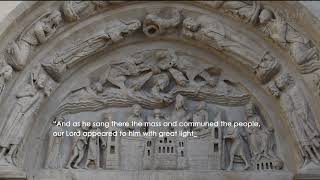
The North and South Portals of Saint-Denis | The Age of Cathedrals with R. Howard Bloch
YaleCourses
·
· 5m20s
The side portals of Saint-Denis tell the martyrdom of the saint who, legend says, picked up his own severed head and walked two miles still carrying it. It is one of the strangest and most famous miracles of the Middle Ages. Professor R. Howard Bloch draws the story from Jacobus de Voragine's Golden Legend: Denis imprisoned by a Roman provost, given communion by Christ himself, then beheaded at Montmartre, the "hill of martyrs." The sculpture narrates each scene for viewers who could not read. It also carries a wry footnote from the critic Sainte-Beuve on the miracle of walking while carrying one's head: the first step, he said, is the hardest. Chapters: 00:00 The legend of Saint Denis 01:11 Imprisonment and a miraculous mass 02:52 Led to execution 03:41 The saint who carried his head Learning objectives: After watching, you'll be able to: - Summarize the martyrdom of Saint Denis from the Golden Legend - Describe how the north and south portals narrate his imprisonment and death - Explain the miracle of cephalophoria and its link to Montmartre - Interpret the portal sculpture as visual storytelling for the illiterate 📚 About the Course: An introduction to some of the most astonishing architectural monuments the world has ever known: the Gothic cathedrals of medieval France. Through the art, literature, intellectual life, economics, and new social arrangements that arose in the shadow of the cathedrals, you will explore the revival of cities in the twelfth and thirteenth centuries and come to a richer appreciation of the High Middle Ages, a world that is still recognizably our own. But what does that mean in practice? When you take this course, you will: Understand how the great cathedrals were built: Trace the engineering and architectural innovations, from Romanesque origins to Gothic stone and the delicate "house of glass," that made these structures possible. Learn to read cathedrals as art: Interpret the sculpture, stained glass, and relics of Saint-Denis, Notre-Dame de Paris, Chartres, and the Sainte-Chapelle, and see how their images served as the "Bible of the poor." Explore the world around the cathedrals: Discover the literature, learning, religion, and economic life of medieval cities, from Peter Abelard and the birth of the university to the everyday life lived in the cathedral's shadow. Course Takeaways: Appreciate the architecture and engineering of Gothic cathedrals Interpret medieval sculpture, stained glass, and religious art Understand the culture, religion, and society of the High Middle Ages 📺 Watch the full playlist on YouTube: https://www.youtube.com/playlist?list=PLJmpIR0QQnbQ 🎓 Enroll on Coursera for assessments and a certificate: https://www.coursera.org/learn/age-of-cathedrals 🌐 Explore more learning opportunities on Yale Online: https://online.yale.edu/courses/age-cathedrals