
260802 Living with Mountains \ \ Thanissaro Bhikkhu \ \ Dhamma Talk
 Dhamma Talks by Thanissaro Bhikkhu
·
· 15m10s
Dhamma Talks by Thanissaro Bhikkhu
·
· 15m10s
Evening Dhamma talk by Thanissaro Bhikkhu (in English). Copyright 2026, Ṭhanissaro Bhikkhu. This work is licensed under the Creative Commons Attribution-NonCommercial 4.0 Unported License. To view a copy of this license, visit http://creativecommons.org/licenses/by-nc/4.0/. Any sale, including by non-profit entities for non-profit purposes, shall be considered 'commercial' under this license.





Piers Morgan Challenges Hamas Spokesperson Over Baby Hostage
 Piers Morgan Uncensored
·
· 0m23s
Piers Morgan Uncensored
·
· 0m23s
Subscribe to stay up-to-date on all Uncensored content. Follow Piers Morgan Uncensored on: X: https://x.com/PiersUncensored Instagram: https://www.instagram.com/piersmorganuncensored/ Facebook: https://www.facebook.com/piersmorganuncensored TikTok: https://www.tiktok.com/@piersmorganuncensored Follow Piers Morgan on: X: https://x.com/piersmorgan Instagram: https://www.instagram.com/piersmorgan #piersmorgan #hamas #palestine #gaza

Chris & Rich Robinson on “She Talks To Angels” #theblackcrowes #guitar #shorts
 Rick Beato
·
· 0m37s
Rick Beato
·
· 0m37s

REBUILDING A STUART MAJOR BEAM ENGINE - PART #12
 Keith Appleton
·
· 8m17s
Keith Appleton
·
· 8m17s
Rebuilding A Stuart Major Beam Engine - Part #12. Explaining what the Entablature is, and cleaning the edges of this newly painted Entablature which is the part that supports the Watts Parallel Motion. I have included the Dictionary Definition of the word. I refit the Column to the Bedplate and adjust it so that the Watts Parallel Motion aligns with the Main Beam. To conclude this episode I reassemble and refit the Water Pump. https://www.patreon.com/keithappleton IF YOU ENJOY WATCHING THESE DETAILED TUTORIAL VIDEOS THAT I PRODUCE TO HELP BEGINNERS TO THE HOBBY, THEN PLEASE BECOME A PATRON OF MY YOUTUBE CHANNEL VIA "PATREON" AND ALLOW ME THE TIME TO MAKE EVEN MORE OF THESE SPECIALIST AND HIGHLY DETAILED TUTORIAL VIDEOS. AS A PATREON SUPPORTER YOU ARE ABLE TO ACCESS MANY OF MY VIDEOS THAT ARE NOT FOR PUBLIC VIEW ON YOUTUBE. PLEASE VISIT MY WEBSITE FOR THE VERY EASY TO USE COMPREHENSIVE PLAYLIST INDEX OF ALL OF MY YOUTUBE VIDEOS: www.mainsteam.co.uk OR CLICK HERE FOR PATREON: https://www.patreon.com/keithappleton Please become a member of my Youtube Channel to get access to extra videos: https://www.youtube.com/channel/UCgeQiJg-PIH5MZQn0aRd1mg/join

Who was Howard Zinn?
 Democracy Now!
·
· 1m22s
Democracy Now!
·
· 1m22s
Dave Zirin's new book, "The People’s Historian: The Outsized Life of Howard Zinn," chronicles the life and activism of the legendary historian Howard Zinn, author of "A People’s History of the United States."

"Crossed EVERY Moral Line!" Piers Morgan vs Hamas + US-Iran War & Spain-Morocco Migration
Piers Morgan Uncensored
·
· 1h32m
President Trump says the US has postponed what he described as its largest military operation since World War II, claiming the decision followed direct appeals from Saudi Arabia's Crown Prince and Iran. He insists a new deal is within reach, despite growing criticism that the delay has weakened America's negotiating position. Meanwhile, Trump's controversial "Board of Peace" claims it has secured a breakthrough agreement that would see Hamas disarm and Israel withdraw from Gaza, although Israel has yet to confirm the proposal following fresh strikes on the territory. Elsewhere, Europe is grappling with the fallout after around 60,000 migrants surged into Spain's North African enclave of Ceuta, triggering a political storm and renewed debate over border security and migration. Piers Morgan is joined by Hamas spokesman Ghazi Hamad for a tense one-on-one interview on the Israel-Gaza conflict. He is then joined by a panel featuring former Director of the National Counterterrorism Center Joe Kent, The Young Turks founder and CEO Cenk Uygur, US Navy SEAL veteran Rob O'Neill, and retired Green Beret and Speak The Truth host Matt Tardio to debate the latest developments. Later, US Ambassador to Israel Mike Huckabee joins EU lawmaker and leader of The Party is Over Alvise Pérez, alongside Revista Contexto director Miguel Mora, to discuss the political fallout from the Spain–Morocco migrant crisis. Piers Morgan Uncensored is proudly independent and sponsored by: Cozy Earth: Head to cozyearth.com and use my code PIERS for an exclusive 20% off. That’s code PIERS for an exclusive 20% off. 00:00 Piers introduction 01:41 Hamas spokesman Ghazi Hamad joins Piers to discuss latest developments in Gaza 05:05 Piers asks Ghazi Hamad about October the 7th 25:29 Piers asks Ghazi Hamad: “when will you start giving up your weapons?” 26:54 Piers asks Ghazi Hamad: “Do you still believe Israel should be annihilated?” 29:03 Piers’ panel reacts to Ghazi Hamad’s interview 30:50 AD: COZY EARTH - Head to cozyearth.com and use my code PIERS for an exclusive 20% off. That’s code PIERS for an exclusive 20% off 31:50 Rob O’Neill gives his take on Ghazi Hamad’s interview 33:38 Cenk Uygur on the possibility of a peace deal between Hamas and Israel 36:49 Matt Tardio responds to Cenk 43:03 Joe Kent on the ‘Iran’ situation 47:10 Rob O’Neill on the impact of an escalation in favour of the U.S. in Iran 49:54 Cenk on Iran’s Nuclear capabilities and American-Israel war motives 53:20 Matt Tardio on where we are with the war in Iran 57:25 Joe Kent at Tucker Carlson’s dinner party 59:51 Piers introduction on Ceuta border chaos 01:02:15 Mike Huckabee on conspiracies surrounding Israel’s involvement in the Ceuta border chaos 01:06:15 The disarmament deal announcement with Hamas 01:11:12 Would it be better for the U.S. to extricate themselves from the war in Iran? 01:15:36 Israel’s global popularity plummeting 01:19:00 Piers is joined by Alvise Perez and Miguel Mora to discuss the Ceuta border chaos Subscribe to stay up-to-date on all Uncensored content. Follow Piers Morgan Uncensored on: X: https://x.com/PiersUncensored Instagram: https://www.instagram.com/piersmorganuncensored/ Facebook: https://www.facebook.com/piersmorganuncensored TikTok: https://www.tiktok.com/@piersmorganuncensored Follow Piers Morgan on: X: https://x.com/piersmorgan Instagram: https://www.instagram.com/piersmorgan #piersmorgan #spain #morocco #migration #israel #hamas #gaza

"WONDER EYE" 1949 CELEBRATION OF THE MOTION PICTURE CAMERA DOCUMENTARY TIME LAPSE GG41255
 PeriscopeFilm
·
· 10m40s
PeriscopeFilm
·
· 10m40s
Help us preserve, scan and post more rare and endangered films on Patreon: https://www.patreon.com/PeriscopeFilm Join this channel to get access to perks: https://www.youtube.com/channel/UCddem5RlB3bQe99wyY49g0g/join Website: www.PeriscopeFilm.com "Wonder Eye" dates to 1949 and was directed by Stuart Legg. The film celebrates the motion picture camera as humanity’s “wonder eye,” a tool that transforms both imagination and reality into shared experience. It begins by praising cinema’s power to create stories of emotion and beauty, then shifts to the camera’s role in documenting real life—from volcanoes and hurricanes to the ocean depths and the stratosphere. The narrator traces its scientific origins to 1887, when film first captured movement, and explains how innovations like slow and fast motion revealed unseen details of sports and nature, including a time-lapse battle between plants. The movie then ventures into space, where cameras record solar eclipses to study atomic energy, and into the human body through X-ray cinematography, humorously showing a couple’s racing hearts. Finally, the camera’s educational power is highlighted, letting children witness flight, plant growth, electricity, and great scientific feats once invisible to the eye. The film concludes that the movie camera unites art and science, extending human perception to embrace the wonders of both the real and imagined worlds. 0:00 – Main titles, then moving in on a Mitchell type 35mm motion picture camera on a movie set or soundstage. The movie camera is a tool that creates millions of feet of film each year, illuminating stories of laughter, romance, and adventure for audiences around the world. 1:29 – The camera also explores real life, capturing events beyond fiction. 1:38 – A V-2 rocket is launched. Through the newsreel lens, viewers can see the Earth from the stratosphere, volcanoes erupting, hurricanes raging, and even the sewers of Paris and the depths of the sea. 2:28 – A sailplane soars and the camera becomes a “third miraculous eye,” revealing wonders unseen by the human eye. 2:48 – Cine Kodak Special 16mm movie camera. Film’s scientific roots to 1887, when early motion studies by Eadweard Muybridge first captured animal movement. 3:10 – Runners in a foot race are frozen at the finish line. Scientists refined film technology, developing slow motion to study fast movements like those of athletes improving their form and timing. 3:56 – Conversely, fast motion reveals extremely slow natural processes, such as plant growth. 4:08 – Time-lapse photography (possibly by John Nash Ott) exposes the hidden violence and beauty of the plant world, as in a sequence showing a parasitic plant called “angel’s hair” attacking a nettle. 5:30 – The film then moves from Earth to outer space, where cameras record a solar eclipse through telescopes. 6:00 – Ancient rituals to “save” the sun from dragons are contrasted with modern science studying solar eruptions to understand atomic energy. 6:49 – The movie camera captures vast jets of flaming gas during the solar eclipse, offering a glimpse of the sun’s atomic power. 7:17 – A lens is put on a camera. The focus shifts back to Earth and the human body. Using X-ray film, the “Wonder Eye” peers inside people to show internal motion and anatomy. 7:46 – A humorous vignette follows Miss Jones and Mr. Smith, who probably later died of cancer. Their flirtation and racing hearts are seen under X-rays—alongside a parallel cat-and-mouse chase. 9:15 – The narrator notes that scientists continue to use cameras in laboratories and observatories to reveal the mysteries of nature and science. 9:31 – Beautiful optical shot of a 16mm movie projector. Movies bring discovery to everyone—children can see how flight works, how birds migrate, and how plants grow over hours. 10:01 – Electricity and other invisible forces come alive through the movie camera’s lens, showing audiences what few have witnessed firsthand. 10:17 Atomic bomb blast at Bikini. The movie camera as humanity’s “wonder eye,” capable of capturing the marvels of life, science, and imagination across the world. 10:31 The end. Motion picture films don't last forever; many have already been lost or destroyed. For almost two decades, we've worked to collect, scan and preserve the world as it was captured on 35mm, 16mm and 8mm movies -- including home movies, industrial films, and other non-fiction. If you have endangered films you'd like to have scanned, or wish to donate celluloid to Periscope Film so that we can share them with the world, we'd love to hear from you. Contact us via the weblink below. This film is part of the Periscope Film LLC archive, one of the largest historic military, transportation, and aviation stock footage collections in the USA. Entirely film backed, this material is available for licensing in 24p HD, 2k and 4k. For more information visit http://www.PeriscopeFilm.com

Meerdere korpsen en heli's ingezet bij natuurbrand Limburg
 NOS
·
· 0m50s
NOS
·
· 0m50s
Ongeveer 250 brandweerlieden uit de wijde omtrek zijn naar Oostrum gekomen om het vuur te bestrijden.

Droogte: rivieren blijven bevaarbaar en geen drinkwatertekort, voorlopig
 VRT NWS
·
· 3m34s
VRT NWS
·
· 3m34s
De droogte begint ook de economie parten te spelen voor bedrijven die afhankelijk zijn van de aanvoer via het water. Maar de Vlaamse Waterweg zegt dat het voorlopig lukt om kanalen en rivieren bevaarbaar te houden. En, opmerkelijk misschien, maar ondanks de aanhoudende droogte, komen er voorlopig geen beperkingen als een sproeiverbod of een verbod om auto's te wassen. #HetJournaal Meer van onze video's zien? Abonneer je hier: https://www.youtube.com/vrtnws Jullie hebben allemaal het recht om jullie mening te geven, maar heb respect voor elkaar. Reacties waarin je scheldt of iemand persoonlijk aanvalt, worden verwijderd.

Welcome and Course Overview | America's Unwritten Constitution with Akhil Reed Amar
 YaleCourses
·
· 2m47s
YaleCourses
·
· 2m47s
Akhil Reed Amar opens America's Unwritten Constitution, a standalone sequel to his course on the written Constitution, and explains how the two fit together. In this short welcome, Amar covers two practical points before the lectures begin: this course stands on its own, so no prior coursework is required, and it is a second edition of an earlier course now split into two halves. If you hear a reference to "the first half," he means the companion lectures on America's written Constitution, available to you but never required here. Chapters: 00:00 Welcome 00:33 A sequel to America's Written Constitution 01:20 Why the course was split in two 📚 Learning objectives: After watching, you'll be able to: - Describe how this course relates to the earlier course on America's written Constitution - Explain why prior coursework is not required to take this course - Identify what the relaunched, standalone course sets out to cover 📺 Watch the full playlist on YouTube: https://www.youtube.com/playlist?list=PLABHWcbOLwlY 🎓 Enroll on Coursera for assessments and a certificate: https://www.coursera.org/learn/unwritten-constitution 🌐 Explore more learning opportunities on Yale Online: https://online.yale.edu/courses/americas-unwritten-constitution
The Six Modalities of Constitutional Interpretation | America's Unwritten Constitution
YaleCourses
·
· 9m5s
Every constitutional argument fits a pattern. Course TA Jackie walks through Philip Bobbitt's six modalities: the standard toolkit lawyers and judges use to read the Constitution. This bonus lesson breaks down the six ways to build a constitutional argument: appeals to text, to structure, to history and original meaning, to prudential consequences, to national character or ethos, and to doctrine and precedent. Each comes with a worked example, from the coinage clause to evolving standards of decency in death penalty cases, and a prompt to spot which modality Professor Amar is using in his lectures. Chapters: 00:00 Why methods of interpretation matter 01:19 Modality 1: text 02:05 Modality 2: structure 02:54 Modality 3: history 04:33 Modality 4: prudential 06:02 Modality 5: ethos 07:08 Modality 6: doctrine and precedent 📚 Learning objectives: After watching, you'll be able to: - Define the six modalities of constitutional interpretation - Distinguish textual, structural, and historical arguments - Explain prudential, ethos, and doctrinal arguments - Identify which modality a given constitutional argument relies on 📺 Watch the full playlist on YouTube: https://www.youtube.com/playlist?list=PLABHWcbOLwlY 🎓 Enroll on Coursera for assessments and a certificate: https://www.coursera.org/learn/unwritten-constitution 🌐 Explore more learning opportunities on Yale Online: https://online.yale.edu/courses/americas-unwritten-constitution

How Good Are Michael Jackson's Kids, Nieces And Nephews?
 Jay Diggs
·
· 20m47s
Jay Diggs
·
· 20m47s
Michael Jackson has three kids and dozens of nieces and nephews, half of them are in entertainment but almost none of them followed the Jackson 5, Michel or Janet's footsteps. In this video, we break down the next generation of the Jackson family, Jaafar, Paris, Prince, Bigi and the rest, and take a look at where they all ended up. _______________________ ➤ Stream/Download my album: https://ffm.to/jams _______________________ ➤ Follow Jay Diggs: https://www.instagram.com/jaydiggsmusic/ https://www.tiktok.com/@jaydiggsmusic https://x.com/jaydiggsmusic https://www.jaydiggs.com ______________________ ➤ Products and Gear Used in this video: Oberheim OBX8 Synthesizer ➡︎ https://amzn.to/3Odznpo Sony ZV-E10 Camera ➡︎ https://amzn.to/3OwlP9U Rode Wireless Pro II Microphone ➡︎ https://amzn.to/44WOJFw Amaran 100d Video Light ➡︎ https://amzn.to/3DwLg4W RGB LED Lights ➡︎ https://amzn.to/3Yp1N4J _______________________ ➤ Sponsorship and business inquiries: jay@jaydiggs.com _______________________

Bonus: The Exclusionary Rule and the Confrontation Clause | America's Unwritten Constitution
YaleCourses
·
· 19m36s
A Yale TA revisits Professor Amar's critique of the Fourth Amendment exclusionary rule, then turns to a second exclusionary rule under the Sixth Amendment's Confrontation Clause. This bonus lesson lays out why Amar argues the exclusionary rule benefits only the guilty, then explains hearsay, the Confrontation Clause, and the shift in Crawford v. Washington to a testimonial standard. It applies the primary purpose test to Ohio v. Clark, where a three-year-old's statement to a preschool teacher about abuse is at issue, and invites viewers to weigh how the Supreme Court should rule. Chapters: 00:00 The Fourth Amendment exclusionary rule 03:13 The Sixth Amendment Confrontation Clause 04:20 The hearsay rule 05:55 Crawford and testimonial statements 08:11 Ohio v. Clark 10:12 The primary purpose test 16:29 Is a teacher an agent of the state 📚 Learning objectives: After watching, you'll be able to: - Summarize Amar's objections to the Fourth Amendment exclusionary rule - Explain the hearsay rule and the Confrontation Clause - Describe the testimonial standard from Crawford v. Washington - Apply the primary purpose test to the facts of Ohio v. Clark 📺 Watch the full playlist on YouTube: https://www.youtube.com/playlist?list=PLABHWcbOLwlY 🎓 Enroll on Coursera for assessments and a certificate: https://www.coursera.org/learn/unwritten-constitution 🌐 Explore more learning opportunities on Yale Online: https://online.yale.edu/courses/americas-unwritten-constitution

Bonus: Racial Discrimination in Housing at the Supreme Court | America's Unwritten Constitution
YaleCourses
·
· 14m6s
Can you violate a civil rights law without meaning to discriminate? Yale TA, Bradley, explains the disparate impact standard and a case that could reshape fair housing law. This bonus lesson breaks down Texas Department of Housing v. Inclusive Communities Project. Bradley explains the 1968 Fair Housing Act, why intentional discrimination is so hard to prove, and how the disparate impact standard responds. He places the case against the Roberts Court's recent skepticism of race-conscious remedies, and argues Amar would find disparate impact laws well within Congress's Section 5 enforcement power, reading it in the generous spirit of McCulloch v. Maryland. Chapters: 00:00 The Fair Housing Act case 02:20 The disparate impact standard 03:49 The statutory question Texas raises 04:36 The Roberts Court's record on race 08:50 Scalia at oral argument 10:01 Amar, Section 5, and McCulloch 📚 Learning objectives: After watching, you'll be able to: - Explain the Fair Housing Act and the disparate impact standard - Distinguish statutory interpretation from a constitutional challenge - Trace the Roberts Court's approach to race-conscious remedies - Connect Section 5 of the Fourteenth Amendment to McCulloch v. Maryland 📺 Watch the full playlist on YouTube: https://www.youtube.com/playlist?list=PLABHWcbOLwlY 🎓 Enroll on Coursera for assessments and a certificate: https://www.coursera.org/learn/unwritten-constitution 🌐 Explore more learning opportunities on Yale Online: https://online.yale.edu/courses/americas-unwritten-constitution

I'm trying my best 😐 - BBC
 BBC
·
· 0m32s
BBC
·
· 0m32s
Newly separated Jonathan has no home, no friends and no ambition. Can a slightly useless single dad find some much-needed backbone? Warm-hearted comedy with Romesh Ranganathan. #Avoidance #RomeshRanganathan #Throwback Subscribe and 🔔 to the BBC 👉 https://bit.ly/BBCYouTubeSub Watch the BBC first on iPlayer 👉 https://bbc.in/iPlayer-Home

Envisioning the Future, Part 2 | America's Unwritten Constitution with Akhil Reed Amar
YaleCourses
·
· 25m21s
Within every feature the fifty-one constitutions share, the states do something a little different from the feds. Akhil Reed Amar mines those gaps for the reforms of the future. This lecture works through state-federal differences on amendment difficulty, judicial tenure, jury unanimity, and more, asking which model each level should adopt. Amar then proposes the Sunrise Amendment: changes that take effect only decades out, so lawmakers vote from behind a generational veil of ignorance. He grounds the idea in the Constitution's own 1808 slave-trade clause and closes by inviting viewers to be framers of the future. Chapters: 00:00 Comparing the 51 constitutions 01:47 Should the Constitution be easier to amend 06:50 The malapportioned Senate 08:28 Governors, presidents, and judicial tenure 15:26 Reforming the Senate without unanimous consent 17:26 The Sunrise Amendment 20:11 The 1808 clause and framers of the future 📚 Learning objectives: After watching, you'll be able to: - Compare state and federal constitutions on amendment difficulty, tenure, and juries - Evaluate reform questions raised by state-federal differences - Explain the Sunrise Amendment and its precedent in the 1808 slave-trade clause - Apply a veil-of-ignorance approach to fair rules for future generations 📺 Watch the full playlist on YouTube: https://www.youtube.com/playlist?list=PLABHWcbOLwlY 🎓 Enroll on Coursera for assessments and a certificate: https://www.coursera.org/learn/unwritten-constitution 🌐 Explore more learning opportunities on Yale Online: https://online.yale.edu/courses/americas-unwritten-constitution

Envisioning the Future, Part 1 | America's Unwritten Constitution with Akhil Reed Amar
YaleCourses
·
· 23m38s
Instead of looking back 225 years, Akhil Reed Amar turns the camera forward to the Constitution still to be written and the amendments most likely to come. This lecture lays out three principles for future amendments: they should add to liberty and equality, win support from both parties, and follow ideas the states have already road-tested. Amar applies them to reforms like presidential eligibility for naturalized citizens and abolishing the electoral college, then maps ten features shared across all fifty-one American constitutions, a distinctly American constitutional model. Chapters: 00:00 The Constitution still to be written 01:42 Amendments should add to liberty and equality 05:34 States as laboratories 07:07 A naturalized-citizen president 12:32 Abolishing the Electoral College 16:23 Ten features of the American constitutional model 📚 Learning objectives: After watching, you'll be able to: - Identify three principles guiding likely future amendments - Explain how states serve as laboratories the federal Constitution copies - Analyze proposals such as presidential eligibility for naturalized citizens - Describe the ten features shared across the state and federal constitutions 📺 Watch the full playlist on YouTube: https://www.youtube.com/playlist?list=PLABHWcbOLwlY 🎓 Enroll on Coursera for assessments and a certificate: https://www.coursera.org/learn/unwritten-constitution 🌐 Explore more learning opportunities on Yale Online: https://online.yale.edu/courses/americas-unwritten-constitution

Doing the Right Thing, Part 2 | America's Unwritten Constitution with Akhil Reed Amar
YaleCourses
·
· 26m35s
A jury can acquit even when the evidence is overwhelming, and no one can undo it. Akhil Reed Amar explains this power, its noble history, and its ugly abuses. This lecture traces jury nullification from Bushel's Case and the Zenger trial through Blackstone's "pious perjury," and confronts its dark side in the acquittal of Emmett Till's killers. Amar argues jurors should be told about this right, and pairs it with reforms on jury diversity and unanimity. He closes on judicial conscience, from Brennan and Marshall on the death penalty to Scalia the self-described "fainthearted originalist" on flogging. Chapters: 00:00 The juror's power to acquit against the evidence 02:07 Jury nullification from Bushel to Zenger 02:58 Blackstone's pious perjury 08:11 A two-edged sword: the Emmett Till case 12:34 Jury size and the unanimity question 18:25 Judicial conscience and the death penalty 23:36 Scalia the fainthearted originalist 📚 Learning objectives: After watching, you'll be able to: - Explain the history and logic of jury nullification - Trace acquittal against the evidence from Bushel's Case and Zenger through Blackstone - Assess the risks of nullification illustrated by the Emmett Till case - Evaluate proposals for jury diversity, non-unanimity, and the role of judicial conscience 📺 Watch the full playlist on YouTube: https://www.youtube.com/playlist?list=PLABHWcbOLwlY 🎓 Enroll on Coursera for assessments and a certificate: https://www.coursera.org/learn/unwritten-constitution 🌐 Explore more learning opportunities on Yale Online: https://online.yale.edu/courses/americas-unwritten-constitution

Grote zorgen over 'gluurbrillen' van Meta
 Nieuwsuur
·
· 2m0s
Nieuwsuur
·
· 2m0s
Techbedrijf Meta verkocht vorig jaar 7 miljoen AI-brillen met ingebouwde camera. Met zo'n bril kun je alles filmen wat je ziet terwijl de buitenwereld het amper doorheeft. Met nieuwe gevaren voor de privacy. #Meta #bril #pribacy #Nieuwsuur

Doing the Right Thing, Part 1 | America's Unwritten Constitution with Akhil Reed Amar
YaleCourses
·
· 23m50s
A written text can't enforce itself. Akhil Reed Amar opens the chapter on conscience by asking what keeps morally serious people willing to run the constitutional machine. This lecture reframes the separation of powers: the divided system is designed not to produce fewer laws overall, but fewer standing armies and fewer arguably unconstitutional or unconscionable ones. Amar walks through the oaths that bind officials and lays out the checks unique to federal criminal law, where the House, Senate, president, judge, grand jury, and trial jury can each independently refuse, setting up the discussion of juror conscience to come. Chapters: 00:00 Conscience and oaths of office 06:16 Why the system divides power 10:20 Laws the Constitution disfavors 13:53 Special protections for criminal defendants 19:50 Six checks against a federal conviction 📚 Learning objectives: After watching, you'll be able to: - Explain the role of oaths in binding officials to the Constitution - Describe why the separated system targets unconstitutional laws rather than all laws - Identify the multiple checks unique to federal criminal prosecution - Distinguish criminal from civil procedure in their protections for defendants 📺 Watch the full playlist on YouTube: https://www.youtube.com/playlist?list=PLABHWcbOLwlY 🎓 Enroll on Coursera for assessments and a certificate: https://www.coursera.org/learn/unwritten-constitution 🌐 Explore more learning opportunities on Yale Online: https://online.yale.edu/courses/americas-unwritten-constitution
Joining the Party, Part 2 | America's Unwritten Constitution with Akhil Reed Amar
YaleCourses
·
· 16m10s
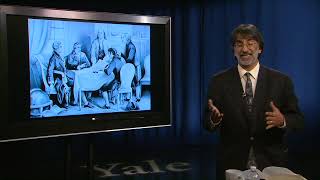
The same two parties have run America since the 1850s. Akhil Reed Amar draws on Duverger's law to explain why the two-party system is so hard to dislodge. This lecture shows party structure written into law: balance requirements on independent agencies like the Federal Election Commission, and the seating and committee rules of Congress. Amar then turns to political science, explaining how single-member districts, required by statute since 1842, plus one president, senator, and governor at a time, push the system toward two parties, and why a vote for a third-party candidate can end up helping your least favorite. Chapters: 00:00 Party balance in independent agencies 02:33 Parties built into the structure of Congress 05:15 Duverger's law 09:23 Why third-party votes get wasted 11:18 A self-stabilizing duopoly 13:45 Adams and Jefferson in the picture 📚 Learning objectives: After watching, you'll be able to: - Describe how party balance is written into independent agencies and Congress - Explain Duverger's law and its prediction of a two-party equilibrium - Analyze how single-member districts stabilize the two-party system - Evaluate the wasted-vote logic facing third-party voters 📺 Watch the full playlist on YouTube: https://www.youtube.com/playlist?list=PLABHWcbOLwlY 🎓 Enroll on Coursera for assessments and a certificate: https://www.coursera.org/learn/unwritten-constitution 🌐 Explore more learning opportunities on Yale Online: https://online.yale.edu/courses/americas-unwritten-constitution

Israëlische aanvallen op Gaza: 19 Palestijnen komen om
VRT NWS
·
· 1m44s
Vrijdag zei de Amerikaanse president Donald Trump nog dat er een doorbraak op til is voor vrede in Gaza. Maar op het terrein is daar allerminst iets van te merken. Het voorbije weekend zijn bij verschillende Israëlische aanvallen zeker 19 Palestijnen omgekomen. Daar zijn ook kinderen bij. Volgens Israël waren het allemaal Hamas-doelwitten. #HetJournaal Meer van onze video's zien? Abonneer je hier: https://www.youtube.com/vrtnws Jullie hebben allemaal het recht om jullie mening te geven, maar heb respect voor elkaar. Reacties waarin je scheldt of iemand persoonlijk aanvalt, worden verwijderd.
Interpreting Government Practices, Part 2 | America's Unwritten Constitution with Akhil Reed Amar
YaleCourses
·
· 29m20s
The text never fixes the size of the House or the Court, or spells out how each body votes. Akhil Reed Amar shows how practice and an unstated default of majority rule fill that space. This lecture traces the House settling at 435, Congress's power over the Court's size (and FDR's failed court-packing plan), and why majority rule is the Constitution's baseline, with a close look at the filibuster and the constitutional option. Amar closes with four case studies: the legislative veto and the independent counsel, which broke the text and failed, and the Saxby fix and independent agencies, which fit it and survived. Chapters: 00:00 How big should the House and the Court be 04:03 FDR's court-packing plan 06:22 Majority rule as the default 07:55 The filibuster and Senate Rule 22 16:46 The legislative veto and independent counsel 23:22 The Saxby Fix and independent agencies 28:07 Potter Stewart and recess appointments 📚 Learning objectives: After watching, you'll be able to: - Explain how majority rule operates as the Constitution's unstated default - Analyze the constitutional basis for reforming the Senate filibuster - Compare the House, Senate, and Supreme Court in size and voting rules - Assess why the legislative veto and independent counsel failed while the Saxby fix and independent agencies survived 📺 Watch the full playlist on YouTube: https://www.youtube.com/playlist?list=PLABHWcbOLwlY 🎓 Enroll on Coursera for assessments and a certificate: https://www.coursera.org/learn/unwritten-constitution 🌐 Explore more learning opportunities on Yale Online: https://online.yale.edu/courses/americas-unwritten-constitution

Joining the Party, Part 1 | America's Unwritten Constitution with Akhil Reed Amar
YaleCourses
·
· 24m16s
The Constitution never mentions political parties, yet the two-party system is as fixed a feature of America as the Mississippi River. Akhil Reed Amar explains the paradox. This lecture shows how the original presidential rules, where the runner-up became vice president, courted disaster once parties emerged, as the Adams-Jefferson contests of 1796 and 1800 revealed. Amar traces how the Twelfth Amendment rebuilt the system for two parties, and reads the later amendments, from the antislavery Reconstruction measures to women's suffrage and the twenty-second and twenty-fifth, as products of partisan practice. Chapters: 00:00 The two-party system as a fixed feature 01:23 Madison, Federalist 10, and partisanship 03:37 The original electoral college 05:12 The elections of 1796 and 1800 09:39 The 12th Amendment 11:34 Partisan amendments: the 13th, 14th, 15th 17:48 Party practice in later amendments 📚 Learning objectives: After watching, you'll be able to: - Explain why the original Constitution did not anticipate political parties - Trace how the Twelfth Amendment adapted presidential selection to a two-party world - Analyze how later amendments reflect partisan practice - Assess the claim that partisanship is built into the constitutional system 📺 Watch the full playlist on YouTube: https://www.youtube.com/playlist?list=PLABHWcbOLwlY 🎓 Enroll on Coursera for assessments and a certificate: https://www.coursera.org/learn/unwritten-constitution 🌐 Explore more learning opportunities on Yale Online: https://online.yale.edu/courses/americas-unwritten-constitution

Interpreting Government Practices, Part 1 | America's Unwritten Constitution with Akhil Reed Amar
YaleCourses
·
· 24m22s
Britain has a constitution too, just not a written one. Akhil Reed Amar uses that comparison to show how unwritten practice fills the gaps in America's terse text. This lecture examines how government is actually constituted where Article I and III run thin. Amar details Congress's inherent powers of oversight, subpoena, and contempt, including the founding-era case of Robert Randall, whom the House itself arrested, tried, and jailed, later upheld in Anderson v. Dunn. He also works through recess appointments to the judiciary and the puzzle of how a new House organizes itself every two years. Chapters: 00:00 What is a constitution 03:45 Congress and the separation of powers 05:22 Congress's inherent power to jail for contempt 14:02 Recess appointments to the judiciary 18:03 How the House convenes itself on Day 1 Learning objectives: After watching, you'll be able to: - Explain how unwritten practice fills gaps in the constitutional text - Describe Congress's inherent powers of oversight and contempt - Trace the congressional contempt power through Anderson v. Dunn - Analyze how the House of Representatives organizes itself at the start of each term 📚 About the Course: This course is designed to teach you some of the basic tool and techniques for constitutional interpretation. Course Takeaways: An introduction to basic techniques of constitutional interpretation. 📺 Watch the full playlist on YouTube: https://www.youtube.com/playlist?list=PLABHWcbOLwlY 🎓 Enroll on Coursera for assessments and a certificate: https://www.coursera.org/learn/unwritten-constitution 🌐 Explore more learning opportunities on Yale Online: https://online.yale.edu/courses/americas-unwritten-constitution

Bonus: The Constitution and Same-Sex Marriage | America's Unwritten Constitution
YaleCourses
·
· 10m20s
Yale TA, Bradley, traces the road to the Supreme Court on same-sex marriage and asks how Professor Amar's reading of the Constitution would decide it. This bonus lesson follows the legal path from California's Proposition 8 through United States v. Windsor to the circuit split that pushed the issue toward the Supreme Court. Bradley then applies Amar's birthright equal-citizenship theory, arguing bans on same-sex marriage discriminate on an immutable trait, and points to the anti-nobility, bill-of-attainder, and ex post facto clauses as further textual support. Chapters: 00:00 The 14th Amendment and same-sex marriage 00:52 Proposition 8 and its backstory 02:03 United States v. Windsor 03:13 How a circuit split forces the Court's hand 05:52 Amar's argument from the word "born" 08:19 Three more clauses against marriage bans 📚 Learning objectives: After watching, you'll be able to: - Explain how Proposition 8 and Windsor shaped the same-sex marriage debate - Describe how a circuit split can compel Supreme Court review - Analyze the birthright equal-citizenship reading of the Fourteenth Amendment - Identify additional clauses Amar might cite for marriage equality 📺 Watch the full playlist on YouTube: https://www.youtube.com/playlist?list=PLABHWcbOLwlY 🎓 Enroll on Coursera for assessments and a certificate: https://www.coursera.org/learn/unwritten-constitution 🌐 Explore more learning opportunities on Yale Online: https://online.yale.edu/courses/americas-unwritten-constitution

Bonus: Walker v. Sons of Confederate Veterans | America's Unwritten Constitution
YaleCourses
·
· 13m41s
When Texas refused a Confederate flag license plate, was it censoring a citizen or just choosing its own words? A Yale TA breaks down the free speech case Walker v. Sons of Confederate Veterans. This bonus lesson walks through the two questions before the Supreme Court: whether a specialty license plate is government speech or private speech, and, if private, whether Texas engaged in viewpoint discrimination by rejecting the design. The TA lays out both sides' arguments, distinguishes the plate from a public monument, and flags an apparent inconsistency in Texas's position, then leaves viewers with questions to debate. Chapters: 00:00 The parties and the license plate 02:26 Free speech and incorporation 03:17 Government speech or private speech 04:27 Texas's case for government speech 06:22 SCV's case for private speech 08:42 The viewpoint discrimination test 11:26 Inconsistencies in Texas's arguments 📚 Learning objectives: After watching, you'll be able to: - Distinguish government speech from private speech - Explain why that distinction changes the applicable free speech standard - Describe the doctrine of viewpoint discrimination - Evaluate the competing arguments in Walker v. Sons of Confederate Veterans 📺 Watch the full playlist on YouTube: https://www.youtube.com/playlist?list=PLABHWcbOLwlY 🎓 Enroll on Coursera for assessments and a certificate: https://www.coursera.org/learn/unwritten-constitution 🌐 Explore more learning opportunities on Yale Online: https://online.yale.edu/courses/americas-unwritten-constitution

Conclusion and Farewell | America's Unwritten Constitution with Akhil Reed Amar
YaleCourses
·
· 27m37s
Akhil Reed Amar closes the course by drawing its threads together: America's constitution is not one thing but four, and the written text runs through all of them. This final lecture reviews the whole journey, from the terse written text to the unwritten higher-law principles, the way government is actually constituted, and the tools and techniques of interpretation. Amar thanks viewers, points toward further reading including the Federalist Papers, and closes with a challenge: as democracy spreads and the oceans no longer isolate America, the next generation may need to imagine constitutional self-government on a global scale. Chapters: 00:00 Thanks and farewell 02:02 What the course covered 05:14 Four elements of a constitution 10:08 What to read next 12:58 A challenge from the preamble 17:07 Toward a democratic world constitutionalism 23:41 Open education and we the people 📚 Learning objectives: After watching, you'll be able to: - Summarize the four elements that together make up America's constitution - Explain how the written text connects to unwritten principles and practices - Identify further reading, including the Federalist Papers - Reflect on the challenge of extending constitutional democracy globally 📺 Watch the full playlist on YouTube: https://www.youtube.com/playlist?list=PLABHWcbOLwlY 🎓 Enroll on Coursera for assessments and a certificate: https://www.coursera.org/learn/unwritten-constitution 🌐 Explore more learning opportunities on Yale Online: https://online.yale.edu/courses/americas-unwritten-constitution

Introduction to the Unwritten Constitution | America's Unwritten Constitution with Akhil Reed Amar
YaleCourses
·
· 21m18s
Phrases like separation of powers, checks and balances, and the rule of law never appear in the Constitution, yet they anchor American law. Akhil Reed Amar explains how. This introduction lays out the plan for the second half of the course: a set of tools and techniques for going beneath, beyond, and behind the written words while staying faithful to them. Amar uses freedom of speech to preview several of these methods, from reading the document as a whole to weighing lived tradition and case law, and closes with the puzzle that opens the course: who presides at the vice president's impeachment trial? The aim throughout is to supplement the text without ever supplanting it. Chapters: 00:00 From the written to the unwritten Constitution 03:16 The vice president's impeachment puzzle 04:24 Where narrow literalism breaks down 06:00 The Ninth Amendment and unenumerated rights 08:05 Ground rules: tools and techniques of interpretation 11:21 Free speech across the techniques 17:36 The companion book and reading between the lines 📚Learning objectives: After watching, you'll be able to: - Explain what Amar means by an "unwritten constitution" - Identify core principles that the written text never states in so many words - Describe several techniques for locating free speech beyond the First Amendment - Distinguish faithful supplementation of the text from supplanting it 📺 Watch the full playlist on YouTube: https://www.youtube.com/playlist?list=PLABHWcbOLwlY 🎓 Enroll on Coursera for assessments and a certificate: https://www.coursera.org/learn/unwritten-constitution 🌐 Explore more learning opportunities on Yale Online: https://online.yale.edu/courses/americas-unwritten-constitution

Following Washington's Lead, Part 2 | America's Unwritten Constitution with Akhil Reed Amar
YaleCourses
·
· 20m9s
Washington's precedents settled powers the text left blank, but even he overreached once. Akhil Reed Amar marks the line between a gloss on ambiguity and a clear textual violation. This lecture works through Washington's neutrality proclamation, which established the president as the nation's voice in foreign policy, and the point where it went too far by implying a presidential power to create criminal law, later rejected in Hudson and Goodwin. Amar then turns to the removal power: the Decision of 1789 confirmed that presidents may fire cabinet officers at will, a rule the text never states plainly but everyone now accepts. Chapters: 00:00 When Washington's precedent controls 03:37 The Neutrality Proclamation 05:35 Where Washington went too far 07:58 The power to fire cabinet officers 12:13 The Decision of 1789 16:30 Washington's First Inaugural 📚 Learning objectives: After watching, you'll be able to: - Explain how the neutrality proclamation established the president as the voice of foreign policy - Identify where Washington overstepped by implying a power to create criminal law - Trace the presidential removal power to the Decision of 1789 - Assess how early precedent settles questions the text leaves open 📺 Watch the full playlist on YouTube: https://www.youtube.com/playlist?list=PLABHWcbOLwlY 🎓 Enroll on Coursera for assessments and a certificate: https://www.coursera.org/learn/unwritten-constitution 🌐 Explore more learning opportunities on Yale Online: https://online.yale.edu/courses/americas-unwritten-constitution

Following Washington's Lead, Part 1 | America's Unwritten Constitution with Akhil Reed Amar
YaleCourses
·
· 23m34s
Article II is short and vague, yet presidents do far more than it lists. Akhil Reed Amar argues the missing details were left for one man to fill in: George Washington. This lecture explains why the framers under-specified the presidency: they had no clear model between a governor and a king, the job resists a tidy description, and they were drafting Article II around the man everyone expected to hold it first. Amar shows how much of executive power rests on Washington's precedents rather than the text, using the power to recognize foreign governments and to send secret envoys as examples. Chapters: 00:00 Where the text of Article II gives out 03:44 Why the presidency was left vague: George Washington 05:38 The many tasks a president performs 10:23 The Constitution as a play written for Washington 16:18 The recognition power in foreign affairs 19:49 Secret envoys and treaty negotiations 📚 Learning objectives: After watching, you'll be able to: - Explain why Article II leaves executive power under-specified - Describe how the framers drafted the presidency around George Washington - Trace the recognition power and secret diplomacy to Washington's precedents - Analyze how presidential practice glosses ambiguous constitutional text 📺 Watch the full playlist on YouTube: https://www.youtube.com/playlist?list=PLABHWcbOLwlY 🎓 Enroll on Coursera for assessments and a certificate: https://www.coursera.org/learn/unwritten-constitution 🌐 Explore more learning opportunities on Yale Online: https://online.yale.edu/courses/americas-unwritten-constitution

Remembering the Ladies, Part 2 | America's Unwritten Constitution with Akhil Reed Amar
YaleCourses
·
· 25m11s
The Nineteenth Amendment says nothing about marriage, the First Lady, or juries, yet it reaches all of them. Akhil Reed Amar traces its unwritten implications. Continuing the feminist Constitution, this lecture follows women's suffrage into rules of marital domicile, the rise of the political spouse from Eleanor Roosevelt onward, and the changed dynamics of presidential succession. Amar rereads Griswold and Roe as laws enacted before women could vote, and argues that jury service, eligibility for office, and the right to run for president all follow from the logic of equal political participation, closing with Abigail Adams's plea to remember the ladies. Chapters: 00:00 The reverse enactment argument 02:08 What the 19th Amendment implies for marriage 02:53 First Ladies from Abigail to Eleanor 06:55 Rethinking Griswold and Roe 08:55 Laws that entrench women's disabilities 15:10 "Too sentimental for jury duty" 21:31 Abigail Adams and three revolutions 📚 Learning objectives: After watching, you'll be able to: - Trace implications of the Nineteenth Amendment for marriage and domicile - Describe how women's suffrage reshaped the roles of First Lady and vice president - Compare Griswold and Roe through the lens of women's equality - Explain why jury service and eligibility for office follow from the right to vote 📺 Watch the full playlist on YouTube: https://www.youtube.com/playlist?list=PLABHWcbOLwlY 🎓 Enroll on Coursera for assessments and a certificate: https://www.coursera.org/learn/unwritten-constitution 🌐 Explore more learning opportunities on Yale Online: https://online.yale.edu/courses/americas-unwritten-constitution
Remembering the Ladies, Part 1 | America's Unwritten Constitution with Akhil Reed Amar
YaleCourses
·
· 23m22s
📚The Constitution claims supremacy because the people ordained it. Akhil Reed Amar shows how the Nineteenth Amendment, once adopted, quietly unsettles that whole story. This lecture opens the chapter on America's feminist Constitution. Amar lays out the popular sovereignty theory that makes the Constitution supreme, then argues that women's suffrage calls into question the fairness of a founding and Reconstruction in which women had no vote. Using a hypothetical Violence Against Women Act, he contends that courts should hesitate to strike down laws protecting women's equality on the strength of an overwhelmingly male legislative history. Chapters: 00:00 The techniques so far, and remembering the ladies 05:00 Popular sovereignty and constitutional legitimacy 07:39 How the 19th Amendment unsettles the story 08:56 The Violence Against Women Act hypothetical 13:16 Why a male legislative history shouldn't control 18:02 Free speech, Reconstruction, and hidden implications 📚 Learning objectives: After watching, you'll be able to: - Explain the popular sovereignty theory behind constitutional supremacy - Describe how the Nineteenth Amendment unsettles that theory - Analyze Amar's argument for reading women's-equality laws broadly - Assess why an overwhelmingly male legislative history should carry less interpretive weight 📺 Watch the full playlist on YouTube: https://www.youtube.com/playlist?list=PLABHWcbOLwlY 🎓 Enroll on Coursera for assessments and a certificate: https://www.coursera.org/learn/unwritten-constitution 🌐 Explore more learning opportunities on Yale Online: https://online.yale.edu/courses/americas-unwritten-constitution

Whose Constitution Do We Actually Live In? | America's Unwritten Constitution
YaleCourses
·
· 23m0s
When the written Constitution is ambiguous, Akhil Reed Amar argues, the symbolic texts fill the gaps. He walks through six of them and what each still decides today. This lecture shows the Declaration's "no taxation without representation" at work in McCulloch and the dormant commerce clause, the Federalist Papers confirming national security as a founding purpose, and the Northwest Ordinance's anti-colonial principle bearing on questions like Puerto Rican statehood. Amar then reads the Fourteenth Amendment's "born equal" through the Gettysburg Address, contrasts desegregation with the fuller integration of Brown and King's dream, and argues we live in Lincoln's Constitution, not Jefferson's. Chapters: 00:00 The Declaration and taxation without representation 02:53 The Dormant Commerce Clause 05:16 The Federalist Papers and national security 06:42 The Northwest Ordinance and statehood 11:01 The Gettysburg Address and the 14th Amendment 14:05 Brown, King, and the pull toward integration 19:06 We live in Lincoln's house 📚 Learning objectives: After watching, you'll be able to: - Explain how the Declaration's no-taxation-without-representation informs McCulloch and the dormant commerce clause - Describe the Northwest Ordinance's anti-colonial principle and its bearing on statehood - Analyze how the Gettysburg Address shaped the Fourteenth Amendment's idea of birth equality - Compare desegregation and affirmative integration in Brown and King's "I Have a Dream" 📺 Watch the full playlist on YouTube: https://www.youtube.com/playlist?list=PLABHWcbOLwlY 🎓 Enroll on Coursera for assessments and a certificate: https://www.coursera.org/learn/unwritten-constitution 🌐 Explore more learning opportunities on Yale Online: https://online.yale.edu/courses/americas-unwritten-constitution

Honoring the Icons, Part 1 | America's Unwritten Constitution with Akhil Reed Amar
YaleCourses
·
· 28m18s
Ask any audience, left or right, north or south, to name America's defining texts, and the same short list comes back. Akhil Reed Amar calls it the symbolic constitution. This lecture makes the case that a set of iconic texts supplements the written Constitution: the Declaration of Independence, the Federalist Papers, the Northwest Ordinance, the Gettysburg Address, Brown v. Board, and King's "I Have a Dream." Amar shows how they form a connected system, nearly all traceable to Thomas Jefferson and Abraham Lincoln, and how party politics helped raise them into a shared American creed. Chapters: 00:00 The Constitution as unifying symbol 01:25 A game: name the iconic American texts 06:47 First point: the symbolic constitution exists 11:16 How the texts connect to each other 13:26 Jefferson, Lincoln, and the two-party system 18:31 How the texts connect to the written Constitution 📚Learning objectives: After watching, you'll be able to: - Define the symbolic constitution and identify its canonical texts - Explain why Americans across party and region converge on the same texts - Trace the network linking these texts to Jefferson and Lincoln - Describe how these iconic texts connect to the written Constitution 📺 Watch the full playlist on YouTube: https://www.youtube.com/playlist?list=PLABHWcbOLwlY 🎓 Enroll on Coursera for assessments and a certificate: https://www.coursera.org/learn/unwritten-constitution 🌐 Explore more learning opportunities on Yale Online: https://online.yale.edu/courses/americas-unwritten-constitution

Tijgermug slaat toe in Suriname
NOS
·
· 1m20s
In Suriname is chikungunya uitgebroken. Het is de grootste uitbraak sinds 2016. Het virus wordt verspreid door de tijgermug en veroorzaakt klachten zoals gewrichtspijn, misselijkheid en koorts. Suriname gooit alles in de strijd om de uitbraak in te dammen. Zoals spuitwagens en een huis-aan-huiscampagne om de bewustwording te vergroten. #suriname #virus #tijgermug #nosnieuws

Putting Precedent in Its Place, Part 2 | America's Unwritten Constitution with Akhil Reed Amar
YaleCourses
·
· 23m32s
The Constitution, not the Supreme Court, is the supreme law of the land. Akhil Reed Amar works out what that means for when precedent should stand and when it should fall. This lecture returns to remedies, arguing that the exclusionary rule lacks a proper fit because Fourth Amendment wrongs were meant to be answered by tort suits, not by freeing the guilty. Amar then sets out a limited role for precedent: binding on lower courts, a starting point and persuasive authority for the Supreme Court, and controlling where reliance interests or popular acceptance have taken hold, as with paper money and Miranda. He reads Casey and Dickerson to fit this account. Chapters: 00:00 The exclusionary rule and remedies 04:04 The Fourth Amendment's real remedy: tort suits 06:19 The twins and remedial fit 08:42 What the Constitution says about precedent 10:41 Vertical precedent and persuasive authority 14:45 Reliance interests and new rights 20:08 Casey and stare decisis 📚 Learning objectives: After watching, you'll be able to: - Explain why the exclusionary rule lacks a proper remedial fit - Describe how tort suits served as the founding-era Fourth Amendment remedy - Assess when the Supreme Court may depart from its own precedent - Analyze the roles of reliance interests and popular acceptance in the weight of precedent 📺 Watch the full playlist on YouTube: https://www.youtube.com/playlist?list=PLABHWcbOLwlY 🎓 Enroll on Coursera for assessments and a certificate: https://www.coursera.org/learn/unwritten-constitution 🌐 Explore more learning opportunities on Yale Online: https://online.yale.edu/courses/americas-unwritten-constitution

Putting Precedent in Its Place, Part 1 | America's Unwritten Constitution with Akhil Reed Amar
YaleCourses
·
· 25m38s
"Judicial power" appears in the Constitution but is never fully defined. Akhil Reed Amar breaks it into five components and uses them to reread the Warren Court. This lecture distinguishes the power to interpret, to implement, to render a binding judgment (res judicata), to set precedent (stare decisis), and to remedy. Amar shows how the distinction between interpreting equality and implementing it explains puzzles in Brown v. Board: why the Court shifted the burden of proof onto segregation and why it confined its 1954 holding to education, waiting until Loving v. Virginia in 1967 to strike down bans on interracial marriage. Chapters: 00:00 Judicial power and the unwritten Constitution 04:24 Five components of judicial power 09:45 Brown as interpretation versus implementation 14:33 Why Brown stopped at education 19:11 School prayer: separation versus equality 22:11 One person, one vote as clean implementation 📚 Learning objectives: After watching, you'll be able to: - Identify the five components of judicial power - Distinguish interpreting the Constitution from implementing it - Explain why Brown shifted the burden of proof and limited its holding to education - Apply the interpretation-implementation distinction to school prayer and voting rights 📺 Watch the full playlist on YouTube: https://www.youtube.com/playlist?list=PLABHWcbOLwlY 🎓 Enroll on Coursera for assessments and a certificate: https://www.coursera.org/learn/unwritten-constitution 🌐 Explore more learning opportunities on Yale Online: https://online.yale.edu/courses/americas-unwritten-constitution

Confronting Modern Case Law, Part 2 | America's Unwritten Constitution with Akhil Reed Amar
YaleCourses
·
· 28m13s
Akhil Reed Amar argues the Warren Court got most things right, then singles out the exclusionary rule as the place it genuinely made law up. Continuing the case-law prism, this lecture defends the school-prayer decisions as protecting religious liberty and equality, criticizes the exclusionary rule of Mapp v. Ohio for freeing the guilty and departing from lived practice, and traces one person, one vote from Reynolds v. Sims back to the Republican Government clause and Section 2 of the Fourteenth Amendment. Amar closes by weighing the Warren Court as a whole: faithful to the Constitution's spirit, even when it reached for the wrong clause. Chapters: 00:00 School prayer and religious equality 04:56 Why the exclusionary rule goes too far 10:55 Voting rights and one person, one vote 16:00 The Republican Government Clause 18:39 The world before the Warren Court 21:54 A different defense of the Warren Court 23:24 How both sides now claim the Warren Court 📚 Learning objectives: After watching, you'll be able to: - Explain the constitutional grounds for ending school-sponsored prayer - Critique the exclusionary rule against innocence protection and lived practice - Trace one person, one vote to the Republican Government clause and the Fourteenth Amendment - Evaluate the Warren Court's overall fidelity to the written Constitution 📺 Watch the full playlist on YouTube: https://www.youtube.com/playlist?list=PLABHWcbOLwlY 🎓 Enroll on Coursera for assessments and a certificate: https://www.coursera.org/learn/unwritten-constitution 🌐 Explore more learning opportunities on Yale Online: https://online.yale.edu/courses/americas-unwritten-constitution

Confronting Modern Case Law, Part 1 | America's Unwritten Constitution with Akhil Reed Amar
YaleCourses
·
· 31m3s
Critics said the Warren Court invented rights; defenders said the text didn't matter. Akhil Reed Amar offers a third account, measuring the decisions against the text itself. This lecture treats case law as a prism for reading the Constitution and puts the Warren Court to the test. Amar grounds Brown v. Board and its companion Bolling v. Sharpe in the anti-nobility clauses and the Fourteenth Amendment's guarantee of equal birth status, then examines how the Bill of Rights came to apply against the states through the privileges or immunities clause, and defends the free-speech holding of New York Times v. Sullivan. Chapters: 00:00 Case law as a prism on the Constitution 04:52 The Warren Court's six areas 07:15 Brown v. Board of Education 14:06 The history: Radical Republicans and equality 16:50 Was separate really equal 20:43 Incorporating the Bill of Rights against the states 27:39 New York Times v. Sullivan and free speech 📚 Learning objectives: After watching, you'll be able to: - Describe how case law serves as a prism for reading the constitutional text - Explain the textual basis for Brown v. Board and Bolling v. Sharpe - Analyze how the Fourteenth Amendment applies the Bill of Rights against the states - Assess the free expression holding of New York Times v. Sullivan An introduction to basic techniques of constitutional interpretation. 📺 Watch the full playlist on YouTube: https://www.youtube.com/playlist?list=PLABHWcbOLwlY 🎓 Enroll on Coursera for assessments and a certificate: https://www.coursera.org/learn/unwritten-constitution 🌐 Explore more learning opportunities on Yale Online: https://online.yale.edu/courses/americas-unwritten-constitution
Hearing the People, Part 2 | America's Unwritten Constitution with Akhil Reed Amar
YaleCourses
·
· 22m12s
Why does the Constitution single out the home for special protection, and why did privacy replace property as the guiding idea? Akhil Reed Amar traces the shift. Continuing the lived Constitution, this lecture follows the move from property to privacy through Justice Harlan's reading of the Third and Fourth Amendments, the home-life cases from Stanley v. Georgia to gun rights and the Kelo takings dispute, and the egalitarian logic behind Gideon's right to counsel. Amar then returns to the Eighth Amendment, where the word "unusual" invites courts to count evolving practice on juvenile and diminished-capacity death sentences, and argues for grounding these rights in privileges and immunities rather than substantive due process. Chapters: 00:00 Harlan's argument in Griswold 02:40 From property to privacy 06:29 Gideon and equal access to counsel 08:33 Constitutional protection of the home 12:23 The Kelo case and just compensation 16:58 Cruel and unusual punishment by counting 20:01 Naming the right constitutional words 📚 Learning objectives: After watching, you'll be able to: - Explain the shift from property to privacy as an organizing constitutional idea - Describe how the home receives special protection across several amendments - Analyze how "unusual" in the Eighth Amendment invites courts to count evolving practice - Assess why privileges and immunities may justify unenumerated rights better than substantive due process 📺 Watch the full playlist on YouTube: https://www.youtube.com/playlist?list=PLABHWcbOLwlY 🎓 Enroll on Coursera for assessments and a certificate: https://www.coursera.org/learn/unwritten-constitution 🌐 Explore more learning opportunities on Yale Online: https://online.yale.edu/courses/americas-unwritten-constitution

Hearing the People, Part 1 | America's Unwritten Constitution with Akhil Reed Amar
YaleCourses
·
· 26m55s
Nothing in the text guarantees your right to testify in your own defense, and at the founding no court allowed it. Akhil Reed Amar explains how it became a basic right. This lecture opens the chapter on America's lived Constitution: rights the people establish through custom and daily practice. Amar reads the Ninth Amendment's promise of unenumerated rights and shows how courts "count" evolving state practice to recognize them, from the right to testify and proof beyond reasonable doubt to the privacy line running through Griswold, Eisenstadt, and Lawrence v. Texas. He also explains why Roe v. Wade, out ahead of state practice, proved so contested. Chapters: 00:00 Unwritten rights and the Ninth Amendment 03:32 Finding implicit rights in the text 08:05 Counting how ordinary people live 09:42 The right to testify in your own defense 17:58 Substantive due process and Griswold 21:01 Lawrence v. Texas and counting the states 25:11 Why Roe v. Wade was different 📚 Learning objectives: After watching, you'll be able to: - Explain how the Ninth Amendment supports unenumerated rights - Describe the "counting" method courts use to recognize new rights - Trace the right to testify and proof beyond reasonable doubt from founding practice to today - Analyze the privacy cases from Griswold through Lawrence v. Texas - Distinguish Roe v. Wade from rights that tracked lived practice 📺 Watch the full playlist on YouTube: https://www.youtube.com/playlist?list=PLABHWcbOLwlY 🎓 Enroll on Coursera for assessments and a certificate: https://www.coursera.org/learn/unwritten-constitution 🌐 Explore more learning opportunities on Yale Online: https://online.yale.edu/courses/americas-unwritten-constitution

Heeding the Deed, Part 2 | America's Unwritten Constitution with Akhil Reed Amar
YaleCourses
·
· 23m31s
The Republican Government clause sat quiet for decades, then became the engine of Reconstruction. Akhil Reed Amar traces how the deed of amending reshaped its meaning. Continuing the enactment method, this lecture follows the process that produced the Fourteenth and Fifteenth Amendments: former Confederate states held to high democratic standards, required to enfranchise free Black citizens, and monitored by federal power that echoes the later Voting Rights Act. Amar closes with the national draft, arguing that what looked unconstitutional to Daniel Webster in 1812 became settled law only after the army's role in the Union changed. Chapters: 00:00 The Republican form of government clause 03:52 Narrow versus broad readings 07:49 How Reconstruction reinterpreted the clause 14:29 The Voting Rights Act connection 16:29 Was a national draft constitutional 21:08 The 1917 draft poster 📚 Learning objectives: After watching, you'll be able to: - Explain how the Republican Government clause was reinterpreted after the Civil War - Trace the enactment process behind the Fourteenth and Fifteenth Amendments - Analyze the constitutional basis for federal enforcement of voting rights - Assess why a national draft came to be seen as constitutional over time 📺 Watch the full playlist on YouTube: https://www.youtube.com/playlist?list=PLABHWcbOLwlY 🎓 Enroll on Coursera for assessments and a certificate: https://www.coursera.org/learn/unwritten-constitution 🌐 Explore more learning opportunities on Yale Online: https://online.yale.edu/courses/americas-unwritten-constitution

Heeding the Deed, Part 1 | America's Unwritten Constitution with Akhil Reed Amar
YaleCourses
·
· 22m59s
Some constitutional principles come not from the words but from the deed: how the Constitution was actually ordained. Akhil Reed Amar reads the enactment itself. This lecture turns from the text to the doing. Amar shows how the ratification of 1787 and 1788 played out as an epic act of free speech up and down the continent, and how simple majority rule carried the day in every state convention, including a 30-27 vote in New York. Both principles were baked into the constitutional cake, and Amar draws out a live implication: on any given day, a simple majority of senators has the power to change the chamber's entrenched filibuster rules. Chapters: 00:00 The Constitution as a deed, not just a text 02:03 Free speech baked into the founding 07:22 Contrast with the Declaration of Independence 14:07 Majority rule and the ratifying conventions 20:49 What this means for the Senate filibuster 📚 Learning objectives: After watching, you'll be able to: - Explain the "heeding the deed" technique of reading enactment rather than text alone - Describe how free speech shaped the 1787-88 ratification process - Trace majority rule from the state ratifying conventions to Senate procedure - Apply the enactment argument to the modern debate over filibuster reform 📺 Watch the full playlist on YouTube: https://www.youtube.com/playlist?list=PLABHWcbOLwlY 🎓 Enroll on Coursera for assessments and a certificate: https://www.coursera.org/learn/unwritten-constitution 🌐 Explore more learning opportunities on Yale Online: https://online.yale.edu/courses/americas-unwritten-constitution

Reading Between the Lines, Part 2 | America's Unwritten Constitution with Akhil Reed Amar
YaleCourses
·
· 26m43s
Can North Carolina jail a speaker for criticizing slavery, or a state indict a sitting president? Akhil Reed Amar answers both with a single structural principle. Continuing the holistic method, this lecture extends McCulloch v. Maryland to explain why a state cannot tax a national bank, a line of reasoning that runs into the dormant commerce clause. Amar then works through a free speech hypothetical set in 1850, before the Fourteenth Amendment, and argues that popular sovereignty gives Americans broad free speech nationwide. The recurring idea: a part cannot govern the whole, and no one can judge their own case. Chapters: 00:00 Why the impeachment puzzle matters 04:51 Can states tax the national bank 08:46 The Lincoln Abraham free speech hypothetical 13:57 Popular sovereignty and a broader free speech principle 17:04 Can a state prosecute a sitting president 22:29 The Andrew Johnson impeachment picture 📚 Learning objectives: After watching, you'll be able to: - Apply structural reasoning to limits on state power, including the dormant commerce clause - Explain why a state cannot prosecute a sitting president - Compare free speech protection before and after the First and Fourteenth Amendments - Assess how the part-versus-whole principle protects national elections 📺 Watch the full playlist on YouTube: https://www.youtube.com/playlist?list=PLABHWcbOLwlY 🎓 Enroll on Coursera for assessments and a certificate: https://www.coursera.org/learn/unwritten-constitution 🌐 Explore more learning opportunities on Yale Online: https://online.yale.edu/courses/americas-unwritten-constitution

Reading Between the Lines, Part 1 | America's Unwritten Constitution with Akhil Reed Amar
YaleCourses
·
· 23m35s
Read literally, the Constitution seems to let the vice president preside at his own impeachment trial. Akhil Reed Amar shows why that cannot be the right answer. This lecture introduces holistic reading: interpreting the Constitution as one whole document rather than word by word. Amar traces the absurdity canon to Blackstone, the era's leading legal authority, and applies it to the impeachment puzzle and to the rule that no one can be a judge in their own case. He then turns to McCulloch v. Maryland, where John Marshall upheld a national bank with no "bank clause" by reading the document as a whole in light of its purposes. Chapters: 00:00 From written to unwritten Constitution 01:18 Who presides at the vice president's impeachment 05:15 Blackstone and the absurdity canon 09:56 No one can be a judge in their own case 11:52 Why the chief justice presides at presidential trials 18:10 McCulloch v. Maryland and the missing bank clause 📚 Learning objectives: After watching, you'll be able to: - Explain the technique of reading the Constitution holistically - Trace Blackstone's absurdity canon to the vice presidential impeachment puzzle - Analyze how McCulloch v. Maryland justifies a national bank without a bank clause - Distinguish the main object of a law from its absurd, peripheral applications 📺 Watch the full playlist on YouTube: https://www.youtube.com/playlist?list=PLABHWcbOLwlY 🎓 Enroll on Coursera for assessments and a certificate: https://www.coursera.org/learn/unwritten-constitution 🌐 Explore more learning opportunities on Yale Online: https://online.yale.edu/courses/americas-unwritten-constitution

Americans SPEND More On GAMBLING Than All Entertainment COMBINED
 Breaking Points
·
· 14m0s
Breaking Points
·
· 14m0s
Krystal and Saagar discuss American gambling skyrocketing as New York sues Kalshi. Sign up for a PREMIUM Breaking Points subscriptions for full early access to uncut shows and LIVE AMAs with the hosts every week: https://breakingpoints.supercast.com/ Merch Store: https://shop.breakingpoints.com/ To listen to Breaking Points as a podcast, check them out on Apple and Spotify Apple: https://podcasts.apple.com/us/podcast/breaking-points-with-krystal-and-saagar/id1570045623 Spotify: https://open.spotify.com/show/033kFeszOZEgO3Wy6ziXKR Instagram: https://www.instagram.com/breakingpoints.yt Facebook: https://www.facebook.com/people/Breaking-Points/61575893472315/ #news #politics #youtube

Supporters weer ouderwets ambitieus op Ajax Open Dag
 AT5
·
· 2m36s
AT5
·
· 2m36s
Duizenden supporters van Ajax verzamelden zich vandaag in en rond de Johan Cruijff Arena voor de jaarlijkse open dag. In het stadion zijn de selecties van zowel de vrouwen- als de mannentak gepresenteerd. Een stralende zon en lange rijen bij alle activiteiten die door de club georganiseerd zijn. Zo staan fans te wachten voor een kijkje in de spelersbus, of voor een potje voetbal op het veld naast het stadion. "Heel leuk en speciaal", lachen twee jonge fans die net een balletje hebben getrapt. In het stadion worden in de middag de selecties gepresenteerd van zowel de Ajaxvrouwen als van de mannen. De ogen zijn gericht op de nieuwe aankopen van technisch directeur Jordi Cruijff. De meest recente aanwinst kan rekenen op veel enthousiasme: de 30-jarige Duitser Julian Brandt is voor het eerst in Ajaxshirt te bewonderen. Voor veel fans die rond het stadion lopen is het een transferzomer die tot nu toe zorgt voor blijdschap. Een supporter is blij met de meest recente aankoop: "Brandt was heel mooi omdat het zo stil is gebeurd. Niemand wist ervan. Blind is gewoon een oude legende. Een ster die herrezen is uit de dood, terugkomt en ons kampioen gaat maken hopelijk." Even verderop staan kraampjes waar de verschillende supportersgroepen van de club hun eigen shirts, stickers en andere artikelen verkopen. Daar is ook een speciale wand door Ultras Amsterdam ingericht waar geïnteresseerden met een spuitbus aan de gang kunnen om zich voor even spandoekenmaker te wanen. "Ik vind het wel mooi dat ze dit organiseren met graffiti", aldus een jongen die net zijn spuitbus neerzet. "Dat je een beetje kan voelen hoe het is om zelf die doeken te maken. Wel vet eigenlijk." De supporters zijn op sportief gebied heel hoopvol, en dat is de laatste jaren wel eens anders geweest. "We worden wel kampioen, dit jaar is ons jaar", vertelt een supporter. Een ander: "De treble moet lukken." Voor de meesten is het winnen van de landstitel wel het overduidelijke doel, maar toch is ook de Conference League en de nationale beker winnen iets wat hoort bij de doelstelling van dit seizoen zegt een andere fan. " Ajax gaat altijd voor de prijzen, elke prijs." ❌ ❌ ❌ AT5 - Echt Amsterdams Nieuws Abonneer hier op ons youtubekanaal: https://www.youtube.com/AT5 Tips of opmerkingen? Whatsapp: 06 511 909 38 Telefoon: 020 555 1155 Volg AT5: www.at5.nl Instagram: instagram.com/at5.nl Facebook: facebook.com/at5nl Twitter: twitter.com/at5