
Bored? Watch a guy try to repair electronics
 ·
· 12m27s
Normally we ride mountain bikes, but today we're going to fix some electronics. I hope you enjoy this one! I'm a part owner of Clik. We make better, easier valves, backwards compatible with Presta. https://clikvalve.com Get Early Videos & Behind the Scenes! 🚲 http://bermpeak.substack.com Berm Peak Merch https://bermpeak.com Check out my second channel https://www.youtube.com/channel/UCOpP5PqrzODWpFU961acUbg Berm Peak Playlist https://bit.ly/2jXkMEq Berm Creek Playlist https://bit.ly/2lzA56O Instagram https://www.instagram.com/sethsbikehacks Facebook https://www.facebook.com/sethsbikehacks Music in this video is from http://share.epidemicsound.com/trQSg Advertising disclosure: All of these videos contain products, logos, or mentions associated with Diamondback Bicycles. Whether or not the video itself was sponsored by Diamondback, they do support this channel, and by extension, every video on it.

What Do Alien Civilizations Look Like? The Kardashev Scale
 ·
· 11m41s
You can find our beautiful education posters, useful notebooks and cozy sweaters in our shop now: https://kgs.link/shop-126 Sources & further reading: https://sites.google.com/view/sourceskardashevscale/ The observable universe is a big place that has been around for more than 13 billion years. Up to two trillion galaxies made up of something like 20,000 billion billion stars surround our home galaxy. In the milky way alone scientists assume there are some 40 billion earth like planets in the habitable zone of their stars. When we look at these numbers it is hard to imagine that there is nobody else out there. OUR CHANNELS ▀▀▀▀▀▀▀▀▀▀▀▀▀▀▀▀▀▀▀▀▀▀▀▀▀▀ German: https://kgs.link/youtubeDE Spanish: https://kgs.link/youtubeES French: https://kgs.link/youtubeFR Portuguese: https://kgs.link/youtubePT Arabic: https://kgs.link/youtubeAR Hindi: https://kgs.link/youtubeHI Japanese: https://kgs.link/youtubeJA Korean: https://kgs.link/youtubeKO HOW CAN YOU SUPPORT US? ▀▀▀▀▀▀▀▀▀▀▀▀▀▀▀▀▀▀▀▀▀▀▀▀▀▀ This is how we make our living and it would be a pleasure if you support us! Get Products designed with ❤️ https://shop.kgs.link Join the Patreon Bird Army 🐧 https://kgs.link/patreon DISCUSSIONS & SOCIAL MEDIA ▀▀▀▀▀▀▀▀▀▀▀▀▀▀▀▀▀▀▀▀▀▀▀▀▀▀ TikTok: https://kgs.link/tiktok Reddit: https://kgs.link/reddit Instagram: https://kgs.link/instagram Twitter: https://kgs.link/twitter Facebook: https://kgs.link/facebook Discord: https://kgs.link/discord Newsletter: https://kgs.link/newsletter OUR VOICE ▀▀▀▀▀▀▀▀▀▀▀▀▀▀▀▀▀▀▀▀▀▀▀▀▀▀ The kurzgesagt voice is from Steve Taylor: https://kgs.link/youtube-voice OUR MUSIC ♬♪ ▀▀▀▀▀▀▀▀▀▀▀▀▀▀▀▀▀▀▀▀▀▀▀▀▀▀ 700+ minutes of kurzgesagt soundtracks by Epic Mountain: Spotify: https://kgs.link/music-spotify Soundcloud: https://kgs.link/music-soundcloud Bandcamp: https://kgs.link/music-bandcamp Youtube: https://kgs.link/music-youtube Facebook: https://kgs.link/music-facebook The soundtrack of this video: Soundcloud: https://bit.ly/2Ezt6Ek Bandcamp: https://bit.ly/3gwZzJP If you want to help us caption this video, please send subtitles to subtitle@kurzgesagt.org You can find info on what subtitle files work on YouTube here: https://support.google.com/youtube/answer/2734698?hl=en-GB&ref_topic=7296214 Thank you! 🐦🐧🐤 PATREON BIRD ARMY 🐤🐧🐦 ▀▀▀▀▀▀▀▀▀▀▀▀▀▀▀▀▀▀▀▀▀▀▀▀▀▀ Many Thanks to our wonderful Patreons from http://kgs.link/patreon who support us every month and made this video possible: Taimur Ijaz, Tony, Michael Baughman, Andrew Hui, Sleepy, Kyle Wayman, Ryan Newsome, Jeremy Southgate, Anthony Stellato, Cartasiand, MabodofuTK, Manuel Mayer, Christine, Thomas Mann, Brandie Andrews, Ricardo Anjos, JR 1, William Marshall, Desirae Pulido, asher flatt, Garrett, 김sha, Ryan Collier, Jan Sjögren, Giorgio Bettineschi, Nick W, Gabriela, Calum Calder, Adam Haspel, Arthur Pemberton, mark faber, Aidan Izuagbe, Andrew Whitman, Nadia Guarracino, Murat Kuş, Zyra Nembhard, Will Jones, Pawel Kozlowski, Coen John, Daniel Moxham, Shanice Codner, Spyro, Brian Monahan, Joris Oosterhuis, Hari prasanth, Maarten Jacobs, Brian Chan, Sanjay Upreti, Richard Selfridge, Marc-André Dubois, Greg Sullivan, Tassos Kanellakopoulos, Daniel Küster, Austin Fenton, Michael Levin, Conrad Mera, Philip Schillmaier, Claas Fandré, Alex Porter, Thomas Krause, Thorsten Karras, Elora Vink, Vincent M, Patrick Gormley, Jasson Schrock, Erorus, Bradley Kinder, david harvey, Nick Smit, Zachary Rice, Lanae, Gijs Cremers, Rhys Patterson, TasteofChoklit, Justin Griffith, Christopher Cone, Rylo, Bryan Reckamp, Feldrick, William Grunow, Russell Wiggins, Leigh Candalino, Matthew Stanford, Sun, Valeriy Whaler, John Paine, Alex Cimpean, Valerie-Maria Oberreiter, Mariya, ClownWhosFeelnDown, Isaac Hewins, Raymond Tse, Lucas Mendelson, Ovi Postel, Saru, Chris Gelme, Andrew Podolecki, Dennis, Sirik Loosman, Bumbrazz, Joshua Westgate, Gaëtan Séverac, yourcheapdate, Calin Tuns, Nicholas Broad, Marcel Thekook, James DuBoise, Lars Naurath, Joris Crevecoeur, Lars Comstock, Kevin Walsh, Matthew Bae, Jackson Mehr, Thomas Roggina, António Martins, Dimas Herlambang, James, Luke Wolf, Gilbert McCray, Ingmi Eißfeld, Caleb D, RJ, Filippo Guiducci, Luiz Siqueira, Luc Leonard, massimo ales, Theo Wolfe, Julian Rodriguez, Callan McLoughlin, Tommaso Caudullo, Happy Juice, Julian Ma, Robert Erickson, Henry Shew, Kayla Ford, Rémi Pichon, Wyatt Powell, MelissaBee, Emily T, Milo Vermeulen, Benjamin

2" Fowler Showman's Traction Engine
 ·
· 6m35s
I have changed the drawings to the horn plate and spectical plates, and marked out ready for drilling, I cleaned of the black as it was coming off on my fingers and used Dykem blue layout fluid

Molulo perdana 😎🥰 DJ Pulo,vj Erni,vj,achy,vj egi🥰
 ·
· 22m56s
Setelah 4 bulan tidak ad acara lulo krna covid 19 alhmndulillah semalam bisa di izinkn lag molulo tarian tolaki sulawesi tenggara

Great Minds - Part 4 - Hegel: The Phenomenology of Geist
 ·
· 44m43s
You can find The Phenomenology of Spirit here https://amzn.to/3zTT3rq This is the official YouTube channel of Dr. Michael Sugrue. Please consider subscribing to be notified of future videos, as we upload Dr. Sugrue's vast archive of lectures. Dr. Michael Sugrue earned his BA at the University of Chicago and PhD at Columbia University.

Big Yellow Taxi (original key) Ukulele Tutorial - Joni Mitchell
 ·
· 14m31s
PLEASE SUBSCRIBE & LEAVE A COMMENT IF YOU LIKED THIS VIDEO :) Download Pdf Chart: https://www.patreon.com/posts/39978057 WEBSITE: https://www.gracieterzian.com/ SPOTIFY: https://spoti.fi/3eGXwAP PATREON: https://www.patreon.com/GracieTerzian FACEBOOK: https://www.facebook.com/GracieTerzianMusic INSTAGRAM: https://www.instagram.com/gracieterzian/ TWITTER: https://twitter.com/gracieterzian

Homochirality: Why Nature Never Makes Mirror Molecules
 ·
· 18m32s
The first 500 people to use this link will get 2 free months of Skillshare Premium Membership: https://skl.sh/stevemould10 Molecules of biological origin always have a fixed handedness or chirality. For example you only ever see right handed sugars and left handed amino acids in nature. But why? Credits: Meteorite image - Art Bromage - https://commons.wikimedia.org/wiki/File:Murchison_meteorite.jpg RNA and DNA images - Sponk - https://commons.wikimedia.org/wiki/File:Difference_DNA_RNA-EN.svg Viking lander video - MASA You can buy my books here: https://stevemould.com/books You can support me on Patreon here: https://www.patreon.com/stevemould just like these amazing people: Joseph Galliera Nathan Williams Matthew Cocke Glenn Watson Mark Brouwer Joseph Rocca Joël van der Loo Doug Peterson Yuh Saito Rashid Al M Andrew Reeder Twitter: http://twitter.com/moulds Instagram: https://www.instagram.com/stevemouldscience/ Facebook: https://www.facebook.com/stevemouldscience/ Buy nerdy maths things: http://mathsgear.co.uk

Making superconductors
 ·
· 45m39s
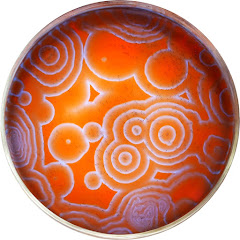
Go to https://expressvpn.com/nilered and find out how you can get 3 months free. A few years ago, I saw a video about superconductors and it looked like anti-gravity magic. So, I decided to try and make some superconductors myself and to see if I could re-create the effect myself. In particular, I'll be making a YBCO superconductor, which is one of the few practical high-temperature superconductors. Procedures: 1) One with potential problem: https://bit.ly/3fjdX70 2) One I followed: https://bit.ly/2DaNEmb ■ Pre-order the NileRed BZ Reaction Kit - https://inqfactory.com/nilered ------------------------------------------------------------------------------- Merch - https://nilered.tv/store ------------------------------------------------------------------------------- Join the community: Patreon - https://www.patreon.com/nilered Discord - https://discord.com/invite/3BT6UHf NileRed Newsletter - https://nile.red/home#newsletter You can also find me here: Facebook - https://m.facebook.com/NileRed2 Instagram - https://m.instagram.com/nile.red Twitter - https://mobile.twitter.com/NileRed2 Nile talks about lab safety: https://youtu.be/ftACSEJ6DZA Music in credits (Walker by SORRYSINES): https://soundcloud.com/sorrysines/walker

Minor CAGED Scales - All 5 Positions + PDF
 ·
· 9m25s
Minor CAGED Scales: The CAGED system for guitar doesn't have to be about "Cheesy cowboy chords" It's a powerful system that can be adapted to any style, and it as applicable to minor keys as it is to major keys, as I show this week. 00:00 Introduction 02:01 Position 1 Pentatonic, Chord and Scales 03:37 Position 2 Pentatonic, Chord and Scales 04:35 Position 3 Pentatonic, Chord and Scales 06:06 Position 4 Pentatonic, Chord and Scales 07:18 Position 5 Pentatonic, Chord and Scales 08:32 Summary Grab the PDF from here... https://bit.ly/2DnTrVl Support me on Patreon... https://www.patreon.com/SixStringsAttachedTV Photo by Nihal Demirci on Unsplash

Hardware interrupts
 ·
· 27m36s
More on the 6502 computer: https://eater.net/6502 Support these videos on Patreon: https://www.patreon.com/beneater or https://eater.net/support for other ways to support. ------------------ Social media: Website: https://www.eater.net Twitter: https://x.com/beneater Patreon: https://patreon.com/beneater Reddit: https://www.reddit.com/r/beneater Special thanks to these supporters for making this video possible: Adrien Friggeri, Alexander Wendland, Andrew Vauter, Anson VanDoren, Anthanasius, Armin Brauns, bapu, Ben Dyson, Ben Kamens, Ben Williams, Bill Cooksey, Binh Tran, Bouke Groenescheij, Bradley Pirtle, Bryan Brickman, Carlos Ambrozak, Christopher Blackmon, Daniel Jeppsson, Daniel Sackett, Daniel Tang, Dave Burley, Dave Walter, David Brown, David Clark, David House, David Sastre Medina, David Turnbull, David Turner, Dean Winger, Dmitry Guyvoronsky, Dušan Dželebdžić, Dzevad Trumic, Emilio Mendoza, Eric Brummer, Eric Busalacchi, Eric Dynowski, Eric Twilegar, Erik Broeders, Eugene Bulkin, fxshlein, George Miroshnykov, Harry McDow, HaykH, Hidde de Jong, Ian Tait, Ingo Eble, Ivan Sorokin, Jason DeStefano, Jason Specland, JavaXP, Jay Binks, Jayne Gabriele, Jeremy A., Jim Kelly, Jim Knowler, Jim Van Meggelen, Joe OConnor, Joe Pregracke, Joel Jakobsson, Joel Messerli, Joel Miller, Johannes Lundberg, John Fenwick, John Meade, Jon Dugan, Joseph Locke, Joshua King, Kefen, Kenneth Christensen, Kent Collins, Koreo, Lambda GPU Workstations, Larry, Lucas Nestor, Lukasz Pacholik, Maksym Zavershynskyi, Marcus Classon, Martin Roth, Mats Fredriksson, Matt Alexander, Matthäus Pawelczyk, melvin2001, Michael Burke, Michael Garland, Michael Tedder, Michael Timbrook, Miguel Ríos, Mikel Lindsaar, Nicholas Counts, Nicholas Moresco, Örn Arnarson, Paul Pluzhnikov, Paul Randal, Pete Dietl, Philip Hofstetter, Randy True, Ric King, Richard Wells, Rob Bruno, Robert Diaz, sam raza, Sam Rose, SonOfSofaman, Stefan Nesinger, Stefanus Du Toit, Stephen Kelley, Stephen Riley, Stephen Smithstone, Steve Jones, Steve Gorman, Steven Pequeno, TheWebMachine, Tom Burns, Vlad Goran, Vladimir Kanazir, Warren Miller, xisente, Yusuke Saito

ALL OF ME by John Legend | Easy Guitar Tab | Solo Chords
 ·
· 3m16s
Guitar Tab of ALL OF ME by John Legend | easy guitar lesson with chords, solo and tutorial TAB https://www.guitarnick.com/all-of-me-legend-easy-guitar-tab.html

REPAIRING the Flip-Clock Cassette Deck - Pioneer CT-50T
 ·
· 34m39s
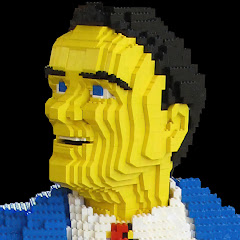
My month long mission to get an unusual ‘Junk’ cassette deck ready for its close-up. Earlier video about Pioneer decks in the 1970s https://youtu.be/4ONtCoB0L70 ---------------SUBSCRIBE------------------ http://www.youtube.com/user/Techmoan?sub_confirmation=1 -------------Merchandise----------------- https://teespring.com/stores/techmoan-merch -------------SUPPORT--------------- This channel can be supported through Patreon https://www.patreon.com/techmoan *******Patrons usually have early access to videos******* ----------Outro Music----------- Over Time - Vibe Tracks https://youtu.be/VSSswVZSgJw ------Outro Sound Effect------ ThatSFXGuy - https://youtu.be/5M3-ZV5-QDM ------AFFILIATED LINKS/ADVERTISING NOTICE------- All links are Affiliated where possible. When you click on links to various merchants posted here and make a purchase, this can result in me earning a commission. Affiliate programs and affiliations include, but are not limited to, the eBay Partner Network & Amazon. I am a participant in the Amazon Services LLC Associates Program, an affiliate advertising program designed to provide a means for sites to earn advertising fees by advertising and linking to AMAZON Sites (including, but not limited to Amazon US/UK/DE/ES/FR/NL/IT/CAN)

What is Einstein's Equivalence Principle?
 ·
· 8m55s
To check out the physics courses that I mentioned (many of which are free!) and to support this channel, go to https://brilliant.org/Sabine/ and create your Brilliant account. The first 200 will get 20% off the annual premium subscription. In this video I explain what the equivalence principle is, how it connects special relativity with general relativity, and why it's got nothing to do with the idea that the earth is flat. A good starting point for the reference that I mention at 7:39 is this paper: Nonequivalence of equivalence principles Eolo Di Casola, Stefano Liberati, Sebastiano Sonego Am. J. Phys. 83, 39 (2015) https://aapt.scitation.org/doi/10.1119/1.4895342

Internet Comment Etiquette: "Adrenochrome"
 ·
· 11m26s
Limited time! Go to https://NordVPN.com/bigmoney or use code BIGMONEY to get 70% off a 3 year plan plus 1 additional month free. Opera Voiceover: John Brancy (https://www.youtube.com/johnbrancy) "Big Money Salvia City" by Hot Dad https://www.youtube.com/watch?v=7qShjz-gOYI Gentleman Erik Intro Pic by http://www.twitter.com/SentientPizzaB http://www.neongrizzly.com/commentiquette http://www.patreon.com/commentiquette http://www.twitter.com/commentiquette

Types of Data | Understanding Medical Research
 ·
· 11m9s
Data in a medical study comes in a few types, and the type determines how it gets analyzed. This video covers categorical, continuous, and ordinal data, what a normal distribution is, and how qualitative data is handled. Chapters: 00:00 Goals and a car lot full of data 01:59 Categorical data 02:46 Continuous data 03:32 Ordinal data 04:38 Normal and non-normal distributions 07:39 Why the distribution matters 08:22 Qualitative data 10:32 Take-home points Learning objectives: After watching, you'll be able to: - Classify variables as categorical, continuous, or ordinal - Explain what "normally distributed" means and recognize a skewed distribution - Describe what qualitative data adds and why it does not fit standard statistical tests 📺 Watch the full playlist on YouTube: https://www.youtube.com/playlist?list=PLh9mgdi4rNewVyTec_MVGxIbNSEeMhEsZ 🎓 Enroll on Coursera for assessments and a certificate: https://www.coursera.org/learn/medical-research 🌐 Explore more learning opportunities on Yale Online: https://online.yale.edu/courses/understanding-medical-research-your-facebook-friend-wrong

The Biggest Secret in Medicine: Relative vs Absolute Risk | Understanding Medical Research
·
· 10m33s
A drug advertised as cutting heart attack risk by 36 percent may help one patient in a hundred, and both numbers are true. This video covers relative risk, absolute risk difference, and number needed to treat. Chapters: 00:00 Goals and two slot machines 01:32 Population effects versus individual effects 02:25 Lipitor and the 36 percent claim 03:17 Death during triathlons 04:28 Absolute risk difference versus relative risk 05:56 Number needed to treat 06:58 Aspirin, CT scans, and what counts as worth it 08:14 The biggest secret in medicine 09:57 Take-home points Learning objectives: After watching, you'll be able to: - Distinguish relative risk from absolute risk difference in a drug claim - Calculate number needed to treat from an absolute risk difference - Weigh a treatment's cost and side effects against its number needed to treat 📺 Watch the full playlist on YouTube: https://www.youtube.com/playlist?list=PLh9mgdi4rNewVyTec_MVGxIbNSEeMhEsZ 🎓 Enroll on Coursera for assessments and a certificate: https://www.coursera.org/learn/medical-research 🌐 Explore more learning opportunities on Yale Online: https://online.yale.edu/courses/understanding-medical-research-your-facebook-friend-wrong

Averages by Other Names | Understanding Medical Research
·
· 11m19s
An average can be a mean or a median, and which one a study uses tells you what shape its data has. This video covers means, medians, standard deviation, and the interquartile range, and how to read them in a medical paper. Chapters: 00:00 Goals 00:35 Blackjack and the house edge 01:16 A histogram of blackjack winnings 02:37 Mean and standard deviation 04:55 Mean and standard deviation in a medical study 06:17 Non-normal data and the median 08:16 Interquartile range 10:20 Take-home points Learning objectives: After watching, you'll be able to: - Define mean, median, standard deviation, and interquartile range - Interpret what a standard deviation says about the spread of a group in a study - Explain why a median summarizes skewed data better than a mean 📺 Watch the full playlist on YouTube: https://www.youtube.com/playlist?list=PLh9mgdi4rNewVyTec_MVGxIbNSEeMhEsZ 🎓 Enroll on Coursera for assessments and a certificate: https://www.coursera.org/learn/medical-research 🌐 Explore more learning opportunities on Yale Online: https://online.yale.edu/courses/understanding-medical-research-your-facebook-friend-wrong

Confounding | Understanding Medical Research
·
· 15m16s
Confounding is the reason so many observational studies report links that are not real. This video covers what a confounder is, why randomization protects a trial from it, and what it means when researchers say they controlled for a variable. Chapters: 00:00 Introduction 00:47 Does drinking lower your GPA? 04:35 What a confounder is 07:09 Controlling for confounders 09:03 Why randomized trials are protected 09:38 Spot the confounder 11:31 Vitamin D and heart health 12:40 Breastfeeding and IQ 14:31 Take-home points Learning objectives: After watching, you'll be able to: - Define a confounder as a variable linked to both the exposure and the outcome - Explain why random assignment removes confounding in a randomized trial - Identify likely confounders in a reported association and check whether the authors adjusted for them 📺 Watch the full playlist on YouTube: https://www.youtube.com/playlist?list=PLh9mgdi4rNewVyTec_MVGxIbNSEeMhEsZ 🎓 Enroll on Coursera for assessments and a certificate: https://www.coursera.org/learn/medical-research 🌐 Explore more learning opportunities on Yale Online: https://online.yale.edu/courses/understanding-medical-research-your-facebook-friend-wrong

The Randomized Controlled Trial | Understanding Medical Research
·
· 14m59s
Randomized controlled trials are the gold standard of medical evidence because randomization balances measured and unmeasured confounders. This video covers what double-blind and placebo-controlled mean, the PICO framework, how to read Table 1, and the pitfalls of blinding and loss to follow-up. Chapters: 00:00 Introduction and goals 00:43 A randomized trial on campus 02:10 Fish, pregnancy, and an observational study 03:39 Confounders and how randomization fixes them 05:43 Double-blind, placebo-controlled, clinical trial 08:23 PICO: population, intervention, control, outcome 10:02 Table 1 and Figure 1 13:00 Pitfalls of randomized trials 14:39 Take-home points Learning objectives: After watching, you'll be able to: - Explain why randomization balances both measured and unmeasured confounders - Define double-blind, placebo-controlled, and clinical trial as they appear in study titles - Use the PICO framework, Table 1, and the Figure 1 flow diagram to read a randomized trial 📺 Watch the full playlist on YouTube: https://www.youtube.com/playlist?list=PLh9mgdi4rNewVyTec_MVGxIbNSEeMhEsZ 🎓 Enroll on Coursera for assessments and a certificate: https://www.coursera.org/learn/medical-research 🌐 Explore more learning opportunities on Yale Online: https://online.yale.edu/courses/understanding-medical-research-your-facebook-friend-wrong

Generalizability | Understanding Medical Research
·
· 10m9s
Generalizability asks whether the people in a study resemble the people you actually want to know about. This video covers the ways a sound study can still come from the wrong sample and the questions to carry into any paper: who was studied, and who do you care about? Chapters: 00:00 Introduction 00:48 A campus survey on beach reads 02:37 Right question, wrong sample 03:25 Study population too specific 05:01 Doctors and smoking, 1954 06:31 Wrong population entirely 08:21 Mice are not humans 09:31 Take-home points Learning objectives: After watching, you'll be able to: - Describe generalizability and how it depends on the sample matching the population of interest - Classify a study's generalizability problem as too narrow a population, the wrong population, or a non-human model - Judge whether a study that generalizes poorly should still count as evidence 📺 Watch the full playlist on YouTube: https://www.youtube.com/playlist?list=PLh9mgdi4rNewVyTec_MVGxIbNSEeMhEsZ 🎓 Enroll on Coursera for assessments and a certificate: https://www.coursera.org/learn/medical-research 🌐 Explore more learning opportunities on Yale Online: https://online.yale.edu/courses/understanding-medical-research-your-facebook-friend-wrong

The Case-Control Study | Understanding Medical Research
·
· 9m59s
Case-control studies start with people who already have the outcome and look backward for exposures. This video covers why the design suits rare diseases, how it goes wrong when controls come from the wrong population, and the trap of recall bias. Chapters: 00:00 Introduction and goals 00:38 A rare disease: vampirism 01:42 Finding the cases first 02:45 Oral contraceptives and blood clots 04:22 The Achilles' heel: choosing controls 06:18 Coffee and gastric cancer: the wrong controls 08:28 Pitfalls: confounding and recall bias 09:36 Take-home points Learning objectives: After watching, you'll be able to: - Explain how a case-control study starts from the outcome and looks backward for exposures - Justify choosing a case-control design when an outcome is rare or the cause is unknown - Assess whether a study's controls come from the same theoretical cohort as its cases 📺 Watch the full playlist on YouTube: https://www.youtube.com/playlist?list=PLh9mgdi4rNewVyTec_MVGxIbNSEeMhEsZ 🎓 Enroll on Coursera for assessments and a certificate: https://www.coursera.org/learn/medical-research 🌐 Explore more learning opportunities on Yale Online: https://online.yale.edu/courses/understanding-medical-research-your-facebook-friend-wrong

Statistics as an Onion | Understanding Medical Research
·
· 12m37s
Most medical statistics are a ratio of ratios, and peeling back the layers always lands on a simple count. This video covers why a count means little without a denominator and defines relative risk, hazard ratio, and odds ratio. Chapters: 00:00 Goals: from counts to risk ratios 00:49 Who drinks the coffee in the office 01:51 Count, ratio, ratio of ratios 02:52 Homicide counts and the missing denominator 05:00 Comparing ratios across groups 07:50 Relative risk, hazard ratio, odds ratio 10:20 Risk versus odds 12:08 Take-home points Learning objectives: After watching, you'll be able to: - Trace a relative risk back through ratios to the underlying counts - Explain why a missing denominator makes a raw count misleading - Interpret relative risk, hazard ratio, and odds ratio when reading a study 📺 Watch the full playlist on YouTube: https://www.youtube.com/playlist?list=PLh9mgdi4rNewVyTec_MVGxIbNSEeMhEsZ 🎓 Enroll on Coursera for assessments and a certificate: https://www.coursera.org/learn/medical-research 🌐 Explore more learning opportunities on Yale Online: https://online.yale.edu/courses/understanding-medical-research-your-facebook-friend-wrong

Studies of Diagnostic Tests | Understanding Medical Research
·
· 13m40s
Accuracy is a terrible way to judge a diagnostic test. This video covers the two by two contingency table, sensitivity and specificity, positive and negative predictive value, and why a test result only means something in the context of disease prevalence. Chapters: 00:00 Introduction and goals 00:44 A 95 percent accurate test 02:17 The two by two table 03:33 Accuracy, defined and debunked 04:37 Positive and negative predictive value 06:22 Sensitivity and specificity 08:45 HIV testing in a high-prevalence group 10:49 The same test in a low-prevalence group 13:05 Take-home points Learning objectives: After watching, you'll be able to: - Explain why accuracy alone says little about a diagnostic test - Define sensitivity, specificity, positive predictive value, and negative predictive value using a two by two table - Interpret a positive test result in light of disease prevalence in the tested population 📺 Watch the full playlist on YouTube: https://www.youtube.com/playlist?list=PLh9mgdi4rNewVyTec_MVGxIbNSEeMhEsZ 🎓 Enroll on Coursera for assessments and a certificate: https://www.coursera.org/learn/medical-research 🌐 Explore more learning opportunities on Yale Online: https://online.yale.edu/courses/understanding-medical-research-your-facebook-friend-wrong


Meta-Analysis: Fondue or Clam Chowder? | Understanding Medical Research
·
· 13m6s
Meta-analysis is often called the top of the evidence pyramid, but it is only as good as what goes into the pot. This video covers how studies are pooled with a weighted average, how to read a forest plot, and what I-squared and funnel plots reveal about heterogeneity and publication bias. Chapters: 00:00 Introduction and goals 00:44 Combining state graduation rates 03:02 Fondue vs clam chowder 03:37 A study of studies 04:57 Forest plot: spinal manipulation for back pain 06:17 Randomized trials mixed with observational studies 07:38 Heterogeneity and the I-squared statistic 10:22 Publication bias and the funnel plot 12:41 Take-home points Learning objectives: After watching, you'll be able to: - Describe a meta-analysis as a weighted average of studies asking the same question - Interpret a forest plot, the I-squared statistic, and a funnel plot - Critique a meta-analysis for mixed study quality, high heterogeneity, and publication bias 📺 Watch the full playlist on YouTube: https://www.youtube.com/playlist?list=PLh9mgdi4rNewVyTec_MVGxIbNSEeMhEsZ 🎓 Enroll on Coursera for assessments and a certificate: https://www.coursera.org/learn/medical-research 🌐 Explore more learning opportunities on Yale Online: https://online.yale.edu/courses/understanding-medical-research-your-facebook-friend-wrong

Choosing a Statistical Test | Understanding Medical Research
·
· 11m21s
Choosing a statistical test comes down to two facts: what type of data the exposure is and what type the outcome is. This video covers the chart that maps data types to tests, with the chi-square test, Student's t-test, and Pearson correlation as worked examples. Chapters: 00:00 Goals and the right tool for the job 01:43 Is 175 different from 180? 02:49 Why medicine is not coin flips 03:26 Exposure type, outcome type, and the master chart 05:53 Chi-square: a progeria drug trial 07:32 Student's t-test: flibanserin 09:22 Correlation: empathy and politics by specialty 10:40 Take-home points Learning objectives: After watching, you'll be able to: - Explain what researchers mean when they say two results are or are not "different" - Identify the two pieces of information needed to choose a statistical test - Recognize when a chi-square test, Student's t-test, or Pearson correlation fits the data 📺 Watch the full playlist on YouTube: https://www.youtube.com/playlist?list=PLh9mgdi4rNewVyTec_MVGxIbNSEeMhEsZ 🎓 Enroll on Coursera for assessments and a certificate: https://www.coursera.org/learn/medical-research 🌐 Explore more learning opportunities on Yale Online: https://online.yale.edu/courses/understanding-medical-research-your-facebook-friend-wrong

Causality | Understanding Medical Research
·
· 15m25s
Correlation is not causation, but it is not not causation either. This video covers why causal claims sit at the center of medical science and how the Bradford Hill criteria help you weigh the evidence when a randomized trial is impossible. Chapters: 00:00 Introduction 01:38 Why causality matters in medicine 02:26 Causality weasel words 03:24 Correlation versus causation 04:18 No causation without variation 06:34 The Bradford Hill criteria 11:45 Applying the criteria: sugary drinks and obesity 14:26 Take-home points Learning objectives: After watching, you'll be able to: - Explain why causality, rather than correlation, is what lets medicine change an outcome by changing an exposure - Identify causality weasel words such as "linked to" and "associated with" in reporting on medical studies - Apply the Bradford Hill criteria to assess whether an observational finding supports a causal claim 📺 Watch the full playlist on YouTube: https://www.youtube.com/playlist?list=PLh9mgdi4rNewVyTec_MVGxIbNSEeMhEsZ 🎓 Enroll on Coursera for assessments and a certificate: https://www.coursera.org/learn/medical-research 🌐 Explore more learning opportunities on Yale Online: https://online.yale.edu/courses/understanding-medical-research-your-facebook-friend-wrong

The Cohort Study | Understanding Medical Research
·
· 9m49s
Cohort studies are the most common design in the medical literature: a defined group with a measured exposure is followed forward to see who reaches which outcome. This video covers prospective versus retrospective cohorts, two real examples, and the design's limitations. Chapters: 00:00 Introduction and goals 00:40 The ultimate marathon 01:17 A cohort study as a marathon 03:15 Prospective vs retrospective cohorts 05:04 Alcohol and stroke: a cohort study 06:30 When a randomized trial is impossible 08:01 Limitations of cohort studies 09:16 Take-home points Learning objectives: After watching, you'll be able to: - Describe how a cohort study follows a defined group from a baseline exposure to an outcome - Distinguish prospective from retrospective cohort designs and what each can measure - Identify the main limitations of cohort studies, including confounding, loss to follow-up, and rare outcomes 📺 Watch the full playlist on YouTube: https://www.youtube.com/playlist?list=PLh9mgdi4rNewVyTec_MVGxIbNSEeMhEsZ 🎓 Enroll on Coursera for assessments and a certificate: https://www.coursera.org/learn/medical-research 🌐 Explore more learning opportunities on Yale Online: https://online.yale.edu/courses/understanding-medical-research-your-facebook-friend-wrong

Multiple Comparisons | Understanding Medical Research
·
· 16m44s
Multiple comparisons are how a study of a drug that does nothing can still report a statistically significant result. This video covers why every study needs one pre-specified primary outcome, the Bonferroni correction, and why food frequency questionnaire studies deserve skepticism. Chapters: 00:00 Introduction 00:25 A fortune teller's trick 03:04 The 0.05 threshold and one hypothesis 04:17 Testing 50 hypotheses on a sugar pill 05:44 One primary hypothesis per study 06:43 Acupuncture for infant colic 08:43 The Bonferroni correction 10:43 ISIS-2 and astrological signs 13:20 The food frequency questionnaire 15:28 Take-home points Learning objectives: After watching, you'll be able to: - Explain why testing many hypotheses at a 0.05 threshold guarantees some false positives - Apply the Bonferroni correction to set a stricter significance threshold for multiple tests - Assess a study by locating its pre-specified primary outcome and how secondary results are framed 📺 Watch the full playlist on YouTube: https://www.youtube.com/playlist?list=PLh9mgdi4rNewVyTec_MVGxIbNSEeMhEsZ 🎓 Enroll on Coursera for assessments and a certificate: https://www.coursera.org/learn/medical-research 🌐 Explore more learning opportunities on Yale Online: https://online.yale.edu/courses/understanding-medical-research-your-facebook-friend-wrong

Time-to-Event Analysis: Only the Strong Survive | Understanding Medical Research
·
· 14m41s
Survival data breaks the rules of ordinary statistics because survivors are more likely to keep surviving. This video covers the Kaplan-Meier curve, the hazard ratio, the proportional hazards assumption, and how to read the number at risk beneath a survival curve. Chapters: 00:00 Introduction and goals 00:34 Firefly 01:41 Survival data is not normal 02:31 Survivors survive 03:52 The Kaplan-Meier curve 05:42 TV show survival by network 07:34 The hazard ratio 09:12 Survival analysis in randomized trials 10:24 The number at risk Learning objectives: After watching, you'll be able to: - Explain why time-to-event data is not normally distributed - Interpret a Kaplan-Meier curve and a hazard ratio - Distinguish deaths from loss to follow-up and staggered enrollment when reading the number at risk 📺 Watch the full playlist on YouTube: https://www.youtube.com/playlist?list=PLh9mgdi4rNewVyTec_MVGxIbNSEeMhEsZ 🎓 Enroll on Coursera for assessments and a certificate: https://www.coursera.org/learn/medical-research 🌐 Explore more learning opportunities on Yale Online: https://online.yale.edu/courses/understanding-medical-research-your-facebook-friend-wrong

Effect Modification and Mediation | Understanding Medical Research
·
· 14m3s
Effect mediation and effect modification sound alike and behave very differently. This video covers why adjusting for a mediator erases a real causal effect, how effect modification differs from a difference in baseline risk, and the rule to adjust for confounders but never for anything on the causal pathway. Chapters: 00:00 Introduction 01:08 The beef jerky experiment 01:53 Salt as a mediator 04:20 Never adjust for the causal pathway 05:55 Pregabalin, pain, and sleep 07:27 Mediation versus modification 10:22 What effect modification looks like 11:34 Topiramate and gene variants 12:58 Take-home points Learning objectives: After watching, you'll be able to: - Distinguish a mediator on the causal pathway from a confounder - Explain why adjusting for a mediator removes a real causal effect - Recognize effect modification and tell it apart from a difference in baseline risk 📺 Watch the full playlist on YouTube: https://www.youtube.com/playlist?list=PLh9mgdi4rNewVyTec_MVGxIbNSEeMhEsZ 🎓 Enroll on Coursera for assessments and a certificate: https://www.coursera.org/learn/medical-research 🌐 Explore more learning opportunities on Yale Online: https://online.yale.edu/courses/understanding-medical-research-your-facebook-friend-wrong

Sampling: The Secret Sauce of Statistics | Understanding Medical Research
·
· 16m55s
Sampling is how a study estimates something about a whole population without measuring everyone, and it is why every result carries uncertainty. This video covers margins of error, how bigger samples narrow an estimate, and how a huge sample can make a trivial difference look significant. Chapters: 00:00 Goals and two sacks of gold coins 03:23 Every study is a sample 04:24 Margin of error in polling 05:24 Coin flips and sample size 07:41 Flipping 10, 1,000, and a million times 11:11 When a study is too precise 13:45 Nonrandom samples 16:26 Take-home points Learning objectives: After watching, you'll be able to: - Explain how a sample is used to estimate a value for a whole population - Interpret a margin of error and describe how it shrinks as the sample grows - Assess whether a study's sample is random enough to apply to you or the people you care about 📺 Watch the full playlist on YouTube: https://www.youtube.com/playlist?list=PLh9mgdi4rNewVyTec_MVGxIbNSEeMhEsZ 🎓 Enroll on Coursera for assessments and a certificate: https://www.coursera.org/learn/medical-research 🌐 Explore more learning opportunities on Yale Online: https://online.yale.edu/courses/understanding-medical-research-your-facebook-friend-wrong

The Power and the Problem With the P-Value | Understanding Medical Research
·
· 18m16s
The P-value decides whether a medical study counts as significant, and it is misread constantly. This video covers what the P-value actually measures, why 0.05 is arbitrary, why statistical significance is not clinical significance, and why prior probability shapes the interpretation. Chapters: 00:00 Goals and a suspicious quarter 03:09 Defining the P-value and 0.05 03:57 Statistical versus clinical significance 05:05 Sample size and the null hypothesis 08:07 How different is different? 10:49 The mistake everyone makes 13:38 Prior probability: seat belts versus astrology 16:05 A real study: Lipitor and kidney injury 17:26 Take-home points Learning objectives: After watching, you'll be able to: - Define the P-value and the null hypothesis in plain language - Distinguish statistical significance from clinical significance - Interpret a P-value in light of the prior probability that the finding is real 📺 Watch the full playlist on YouTube: https://www.youtube.com/playlist?list=PLh9mgdi4rNewVyTec_MVGxIbNSEeMhEsZ 🎓 Enroll on Coursera for assessments and a certificate: https://www.coursera.org/learn/medical-research 🌐 Explore more learning opportunities on Yale Online: https://online.yale.edu/courses/understanding-medical-research-your-facebook-friend-wrong

The Interpretation of Negative Studies | Understanding Medical Research
·
· 15m50s
A study with a P-value above 0.05 is called negative, but many of those studies are simply underpowered, and the difference matters. This video covers what makes a study truly negative, how to check the confidence interval against the minimum clinically important difference, and how power calculations work. Chapters: 00:00 Goals and a street survey 01:00 A p-value of 0.83 02:03 Negative versus underpowered 04:01 A music therapy trial for autism 05:35 Minimum clinically important difference 07:53 Reading the confidence interval 11:43 Two worked examples 13:37 Power calculations 15:06 Take-home points Learning objectives: After watching, you'll be able to: - Distinguish a truly negative study from an underpowered one - Explain why the minimum clinically important difference is the key to reading a negative result - Use a confidence interval to judge whether a study could have detected a meaningful effect 📺 Watch the full playlist on YouTube: https://www.youtube.com/playlist?list=PLh9mgdi4rNewVyTec_MVGxIbNSEeMhEsZ 🎓 Enroll on Coursera for assessments and a certificate: https://www.coursera.org/learn/medical-research 🌐 Explore more learning opportunities on Yale Online: https://online.yale.edu/courses/understanding-medical-research-your-facebook-friend-wrong

Surrogate Endpoints | Understanding Medical Research
·
· 14m46s
Surrogate endpoints are measurable stand-ins, such as cholesterol or blood pressure, used in place of the outcomes patients actually care about. This video covers why researchers use them, the conditions a perfect surrogate would have to meet, and why birth, death, and quality of life are the only hard outcomes. Chapters: 00:00 Introduction 00:42 Why do you care about your GPA? 02:58 Surrogate outcomes in medicine 03:29 Why surrogates are popular 05:47 Rules for a perfect surrogate 07:32 PSA and prostate cancer 08:55 Hepatitis C and SVR 24 11:17 Flecainide: a cautionary tale 12:57 The FDA's list of accepted surrogates 13:29 The three hard outcomes Learning objectives: After watching, you'll be able to: - Define a surrogate endpoint and explain why trials so often rely on one - List the conditions a perfect surrogate marker would need to satisfy - Evaluate whether a reported outcome is a hard outcome or a surrogate for one 📺 Watch the full playlist on YouTube: https://www.youtube.com/playlist?list=PLh9mgdi4rNewVyTec_MVGxIbNSEeMhEsZ 🎓 Enroll on Coursera for assessments and a certificate: https://www.coursera.org/learn/medical-research 🌐 Explore more learning opportunities on Yale Online: https://online.yale.edu/courses/understanding-medical-research-your-facebook-friend-wrong

Fraud | Understanding Medical Research
·
· 13m57s
Fraud in medical research is possible because the whole enterprise runs on trust. This video covers two real cases, the forms fraud takes (fabrication, falsification, plagiarism, omission, and redundant publication), and why replication is the safeguard that matters. Chapters: 00:00 Introduction 00:33 The money crystal pitch 02:18 Why people commit fraud 02:42 The prayer and IVF study 05:49 The MMR vaccine and autism paper 08:18 Forms of fraud 08:54 Detecting fraud 10:07 Large industry-sponsored trials 11:08 Foreign study sites 13:14 Take-home points Learning objectives: After watching, you'll be able to: - List the forms research fraud can take, from fabrication to redundant publication - Explain why peer review and well-written methods cannot by themselves rule out fraud - Judge an extraordinary claim by whether it has been independently replicated 📺 Watch the full playlist on YouTube: https://www.youtube.com/playlist?list=PLh9mgdi4rNewVyTec_MVGxIbNSEeMhEsZ 🎓 Enroll on Coursera for assessments and a certificate: https://www.coursera.org/learn/medical-research 🌐 Explore more learning opportunities on Yale Online: https://online.yale.edu/courses/understanding-medical-research-your-facebook-friend-wrong

Time-Based Biases | Understanding Medical Research
·
· 14m53s
Immortal time bias, lead-time bias, and length-time bias all come from the same mistake: letting information from the future leak into the start of a study. This video covers how to spot each one and the rule to never use future information in a statistical model. Chapters: 00:00 Time-based biases 00:34 The survival stone study 02:47 Academy Award winners and immortal time 05:43 Self-monitoring blood glucose 07:52 Never use future information 09:44 Lead-time bias 12:23 Length-time bias 13:59 Take-home points Learning objectives: After watching, you'll be able to: - Define immortal time bias, lead-time bias, and length-time bias - Trace how assigning future information at baseline makes an ineffective treatment look protective - Explain how baseline-only data, time-varying analysis, and randomization each remove a time-based bias 📺 Watch the full playlist on YouTube: https://www.youtube.com/playlist?list=PLh9mgdi4rNewVyTec_MVGxIbNSEeMhEsZ 🎓 Enroll on Coursera for assessments and a certificate: https://www.coursera.org/learn/medical-research 🌐 Explore more learning opportunities on Yale Online: https://online.yale.edu/courses/understanding-medical-research-your-facebook-friend-wrong

Adjustment | Understanding Medical Research
·
· 11m44s
Adjustment is the main tool for making observational data behave more like a randomized trial. This video covers how statistical adjustment cuts the link between a confounder and an outcome, how to read a multivariable model, and why unmeasured confounders remain out of reach. Chapters: 00:00 Why adjustment exists 00:33 Rosé and height 03:06 Stratification 03:52 Multivariable adjustment 04:29 Fresh fruit and heart disease 07:04 Reading an adjusted result 08:29 Limits of adjustment 10:55 Take-home points Learning objectives: After watching, you'll be able to: - Explain how stratification and multivariable adjustment remove the influence of a measured confounder - Identify the dependent variable, independent variable, and covariates in a published regression - Weigh the limits of adjustment, including linear assumptions and poorly measured or unmeasured confounders 📺 Watch the full playlist on YouTube: https://www.youtube.com/playlist?list=PLh9mgdi4rNewVyTec_MVGxIbNSEeMhEsZ 🎓 Enroll on Coursera for assessments and a certificate: https://www.coursera.org/learn/medical-research 🌐 Explore more learning opportunities on Yale Online: https://online.yale.edu/courses/understanding-medical-research-your-facebook-friend-wrong

Information Bias | Understanding Medical Research
·
· 12m12s
Information bias is a catch-all name for one problem: something in the study was measured wrong, often differently in one group than another. This video covers detection bias, co-intervention bias, confirmation bias, and social desirability bias, along with the design fixes that help. Chapters: 00:00 Information bias as mismeasurement 00:38 Recording answers wrong 02:05 Detection and ascertainment bias 04:24 Self-reported cell phone use 05:31 Co-intervention bias and acupuncture 08:14 Measuring blood pressure in SPRINT 09:54 Confirmation and social desirability bias 11:45 Take-home points Learning objectives: After watching, you'll be able to: - Explain why information bias reduces to mismeasurement, and why differential mismeasurement is worse - Identify detection, co-intervention, confirmation, and social desirability bias in published studies - Examine a study's methods to judge whether the exposure or the outcome was the mismeasured variable 📺 Watch the full playlist on YouTube: https://www.youtube.com/playlist?list=PLh9mgdi4rNewVyTec_MVGxIbNSEeMhEsZ 🎓 Enroll on Coursera for assessments and a certificate: https://www.coursera.org/learn/medical-research 🌐 Explore more learning opportunities on Yale Online: https://online.yale.edu/courses/understanding-medical-research-your-facebook-friend-wrong

Statistical Brain Teasers | Understanding Medical Research
·
· 18m31s
Statistical paradoxes in medical research hide in plain sight. This video covers Berkson's bias, the Will Rogers phenomenon, stratified versus overall results, the Hawthorne effect, survivor bias, regression to the mean, and confounding by indication. Chapters: 00:00 Statistical brain teasers 00:40 Berkson's bias and dating 04:35 The Will Rogers phenomenon 07:23 Stratified versus overall results 11:21 The Hawthorne effect 13:10 Helmets and survivor bias 15:50 Regression to the mean 17:17 Confounding by indication and wrap-up Learning objectives: After watching, you'll be able to: - Describe Berkson's bias, the Will Rogers phenomenon, the Hawthorne effect, survivor bias, and regression to the mean - Explain why results stratified by stage or severity can disagree with the overall result - Examine a non-randomized study for enrollment thresholds, observation effects, and selection that could explain its findings 📺 Watch the full playlist on YouTube: https://www.youtube.com/playlist?list=PLh9mgdi4rNewVyTec_MVGxIbNSEeMhEsZ 🎓 Enroll on Coursera for assessments and a certificate: https://www.coursera.org/learn/medical-research 🌐 Explore more learning opportunities on Yale Online: https://online.yale.edu/courses/understanding-medical-research-your-facebook-friend-wrong

Selection Bias | Understanding Medical Research
·
· 15m28s
Selection bias is what happens when the people in a study are no longer the people you actually want to know about, and unlike confounding it cannot be adjusted away. This video covers online polls, low response rates, the healthy worker effect, loss to follow-up, and why intention to treat is the standard for randomized trials. Chapters: 00:00 Bias in the statistical sense 01:40 Bias versus confounding 02:46 Toward or away from the null 03:51 What selection bias is 04:45 Polls and survey response rates 07:25 The healthy worker effect 08:25 Loss to follow-up 11:52 Per-protocol versus intention to treat 14:47 Take-home points Learning objectives: After watching, you'll be able to: - Distinguish bias from confounding and explain why bias cannot be adjusted away once the data are collected - Identify selection bias in online polls, low-response surveys, and studies with differential loss to follow-up - Explain why intention-to-treat analysis, not per-protocol analysis, is the standard for randomized trials 📺 Watch the full playlist on YouTube: https://www.youtube.com/playlist?list=PLh9mgdi4rNewVyTec_MVGxIbNSEeMhEsZ 🎓 Enroll on Coursera for assessments and a certificate: https://www.coursera.org/learn/medical-research 🌐 Explore more learning opportunities on Yale Online: https://online.yale.edu/courses/understanding-medical-research-your-facebook-friend-wrong

Matching | Understanding Medical Research
·
· 11m45s
Matching pairs each exposed person in an observational study with an unexposed person who looks like them, then follows both. This video covers why matching removes a confounder, what it cannot do about unmeasured ones, and the trap of over-matching. Chapters: 00:00 Matching as specialized adjustment 00:27 Speed dating for narcissists 03:17 Induction of labor and C-sections 05:44 How the matched study worked 07:44 What matching cannot fix 09:16 When matching is worth it 10:06 Over-matching 11:18 Take-home points Learning objectives: After watching, you'll be able to: - Describe how matching in an observational study removes a measured factor as a confounder - Examine a matched study for unmatched participants and the population its results actually apply to - Identify over-matching when a matching variable sits causally downstream of the exposure 📺 Watch the full playlist on YouTube: https://www.youtube.com/playlist?list=PLh9mgdi4rNewVyTec_MVGxIbNSEeMhEsZ 🎓 Enroll on Coursera for assessments and a certificate: https://www.coursera.org/learn/medical-research 🌐 Explore more learning opportunities on Yale Online: https://online.yale.edu/courses/understanding-medical-research-your-facebook-friend-wrong

Propensity Scoring | Understanding Medical Research
·
· 15m33s
Propensity scoring is a statistical method for handling confounding by indication, the problem that people who get a drug differ from people who do not. This video covers the four-step process, a real statin study where the result reversed after matching, and the limits that only randomization overcomes. Chapters: 00:00 Propensity scoring 00:49 Guessing students from their clothes 03:45 What a propensity score predicts 05:14 Confounding by indication 06:32 The four-step process 07:37 Propensity scores versus matching 09:36 Statins and heart attacks 12:03 Interpreting propensity results 13:50 Limitations and take-home points Learning objectives: After watching, you'll be able to: - Explain what a propensity score is and how it addresses confounding by indication - Compare propensity score matching with conventional matching and multivariable adjustment - Critique a propensity-matched study that claims to be interpretable like a randomized trial 📺 Watch the full playlist on YouTube: https://www.youtube.com/playlist?list=PLh9mgdi4rNewVyTec_MVGxIbNSEeMhEsZ 🎓 Enroll on Coursera for assessments and a certificate: https://www.coursera.org/learn/medical-research 🌐 Explore more learning opportunities on Yale Online: https://online.yale.edu/courses/understanding-medical-research-your-facebook-friend-wrong
Putting It All Together | Understanding Medical Research
·
· 9m54s
Reading a medical study well comes down to asking how it fits with everything else we already know. This closing video reviews the six big concepts of the course and the frame of mind to bring to any new study: interested but skeptical. Chapters: 00:00 Wrapping up the course 00:45 The buried hatchet 02:12 Context and replication 03:24 Significance and prior probability 04:40 Three hard outcomes 05:15 Observational versus randomized 06:19 Confounding versus bias 07:06 Absolute versus relative risk 08:12 Final take-home points Learning objectives: After watching, you'll be able to: - Summarize the six core concepts for interpreting a medical study - Explain why a single study, positive or negative, is never the final word - Judge a new finding against prior probability and the broader scientific consensus 📺 Watch the full playlist on YouTube: https://www.youtube.com/playlist?list=PLh9mgdi4rNewVyTec_MVGxIbNSEeMhEsZ 🎓 Enroll on Coursera for assessments and a certificate: https://www.coursera.org/learn/medical-research 🌐 Explore more learning opportunities on Yale Online: https://online.yale.edu/courses/understanding-medical-research-your-facebook-friend-wrong

Ranchers Lost Horses Invade Our Campsite
 ·
· 5m49s
We were woken up by the noise of rustling bushes the day after 4th of july. I grabbed my phone and 4 horses walked out. They came right up to our tent and I thought for sure me and my bro were going to get trampled. Then they kept walking away and coming back for 30 minutes to eat more tasty grass. Then as soon as they walked away for good a rancher came to the top of the mountain looking for them saying that the horses were scared of fireworks the night before and ran off.
Learn to Design and Prototype a Chair with Only a Few Tools | Woodworking Project
 ·
· 16m17s
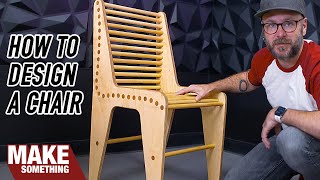
Designing and prototyping a dining chair made out of dowel rods and plywood. And easy woodworking project using only a jigsaw, drill and router. Brought to you by Rockler Woodworking and Hardware: https://www.rockler.com ★ TOOLS / SUPPLIES ★ Portable Drill Guide: https://www.rockler.com/rockler-portable-drill-guide Portable Drill Guide with Vise: https://www.rockler.com/rockler-portable-drill-guide-with-vise Jigsaw: https://www.rockler.com/bosch-js470e-70a-d-handle-jigsaw Compact Router: https://www.rockler.com/dewalt-dwp611pk-compact-router Pattern Bit: https://www.rockler.com/pattern-flush-trim-router-bit-1-2-diameter-x-1-height-1-4-shank Forstner Bit: https://www.rockler.com/rockler-high-carbon-steel-forstner-bits-imperial-sizes-1-4-to-2-1-8-lengths-3-8-shank Dowel Rods: https://www.rockler.com/dowel-rods-birch-36-choose-size Roundover Bit: https://www.rockler.com/roundover-beading-router-bits-1-2-inch-shank Glue Keeper: https://www.rockler.com/rockler-silicone-glue-keeper Glue Brushes: https://www.rockler.com/rockler-silicone-micro-glue-brush-set ★ ALL THE LINKS ★ Music by Me: https://goo.gl/fgyup2 Patreon Support / Extra Content: http://patreon.com/picciuto T-Shirts / Books / Stickers / Plans: https://makesomething.tv/ My Other YouTube Channel: https://www.youtube.com/c/makesomething2 Making It Podcast: http://makingitpodcast.com ★ FOLLOW ME ★ https://twitter.com/drunkenwood https://instagram.com/MakeSomethingTV https://www.facebook.com/MakeSomethingTV https://www.pinterest.com/MakeSomethingTV David Picciuto PO Box 2499 Toledo, OH 43606

Does the NES Have a Secret Master System Port? | Nostalgia Nerd
 ·
· 12m30s
Go to https://www.brilliant.org/NostalgiaNerd to sign up for free. And also, the first 200 people will get 20% off their annual premium membership. Ahhh, yes, the NES, a think of blocky curiosity. On the bottom of the NES is a rectangular insert, and behind that lies, well, an expansion slot. This video explores the NES expansion slot as well as some of the rumours surrounding it. 🔗Video Links🔗 NES Tweet video: https://www.youtube.com/watch?v=S38jQMs5wAk 🏆 Support 🏆 Support my channel, get exclusive videos & perks, as well as an ad and sponsor free experience at https://www.patreon.com/nostalgianerd from just $1 🏪 NN Shop & Affiliate Links! 🏪 My eBay Shop: https://nnerd.es/NerdShop (Now Re-open!) My Retro Tech book: http://nnerd.me/HVFtSB (2nd edition is out!) Desk Shelves for Retro Computers: http://nnerd.me/RetroShelves (Because you're worth it) 🍻 Share/Like 🍻 If you wish to share this video in forums, social media, on your website, or ANYWHERE else, please do so! It helps tremendously with the channel! Also, giving a thumb up or down also helps with visibility on Youtube. Many thanks! 📟 Subcribe 📟 Click to Subscribe: https://nnerd.es/2K4TYvX 📱 Join me on Social Media 📱 🐥 http://www.twitter.com/nostalnerd 🎮 http://www.twitch.tv/nostalgianerd 👱🏼📘 http://www.facebook.com/nostalnerd 📸 http://www.instagram.com/nostalgianerd 🌍 http://www.nostalgianerd.com 🎥 Equipment 🎥 Lumix G6 with Vario 14-42mm Lens Nikon D3200 with 40mm Macro Corel Video Studio Ultimate 2019 Corel Paint Shop Pro 2019 Blue Snowball Microphone 📜 Resources 📜 In video links and references are provided where possible. If you believe I have forgotten to attribute anything, please let me know (drop me an email via. the about page on Youtube or send me a tweet), so I can add it here. Apologies if I have missed anything out, it takes time to make these videos and therefore it can be easy to forget things or make a mistake. Errors and omissions excepted. Some material in this video may be used under Fair Dealing / Fair Use. Where under section 107 of the Copyright Act of 1976 (UK: Sections 29 and 30 of the Copyright, Designs and Patents Act 1988), allowance is made for purposes including parody, quotation, criticism, comment, news reporting, teaching, education and research. Fair Dealing / Fair use is a use permitted by copyright statute that might otherwise be infringing.

Vampire the Masquerade - Bloodlines Retrospective
 ·
· 33m40s
A look back at Troika Game's final title: the cult classic rpg Vampire the Masquerade - Bloodlines. A game full of good looking goth girls, succulent sewer rats and general depravity, but most important of all... good rpg design. Patreon https://www.patreon.com/NeverKnowsBestYoutube Contact me neverknowsbestquestions@gmail.com

Fietswinkel.nl commercial
 ·
· 0m21s

Why is America leading in Covid cases? The Truth Revealed
 ·
· 14m56s
America is perceived as the strongest and most powerful country in the world. However many Americans are now asking the same question. Why is America leading in covid cases? In this video we take a look at two fundamentals reasons on why America has struggled in containing the virus. If you'd like to support the channel / 如果你想支持我的频道: ☕ Buy me a coffee: https://www.buymeacoffee.com/cyrusjanssen 🧧 WeChat / 微信: https://prnt.sc/u3inr6 📺 Subscribe To My Channel as I bring you more insights into China and the world through the eyes of an American expat https://www.youtube.com/cyrusjanssen?sub_confirmation=1 🐦 Connect on Twitter: https://twitter.com/thecyrusjanssen 🎥 Products I use to Produce my Vlogs: Tripod: https://amzn.to/2OUz2dh Camera: https://amzn.to/2M9pWqx Microphone: https://amzn.to/2u1oJNs Lighting: https://amzn.to/2UWkSw8